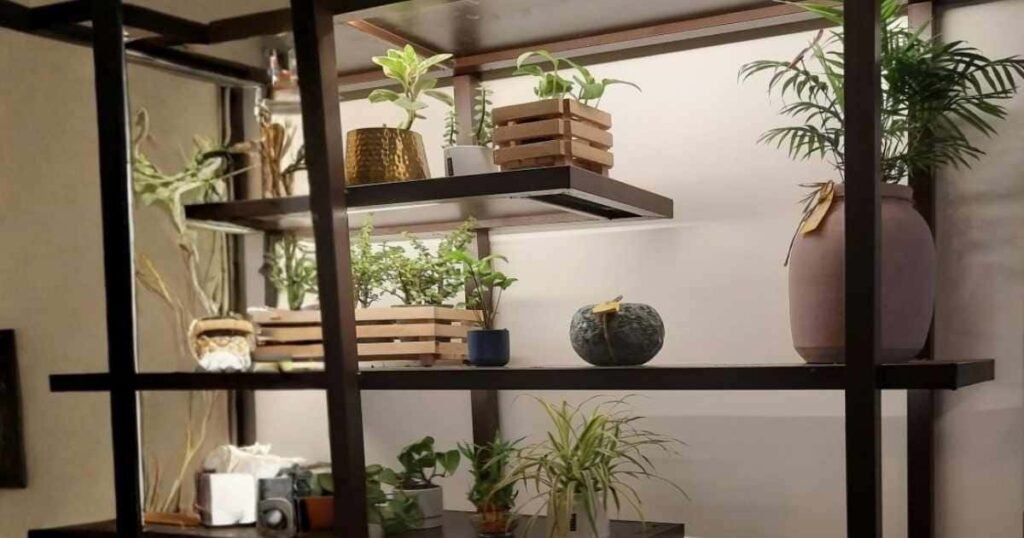
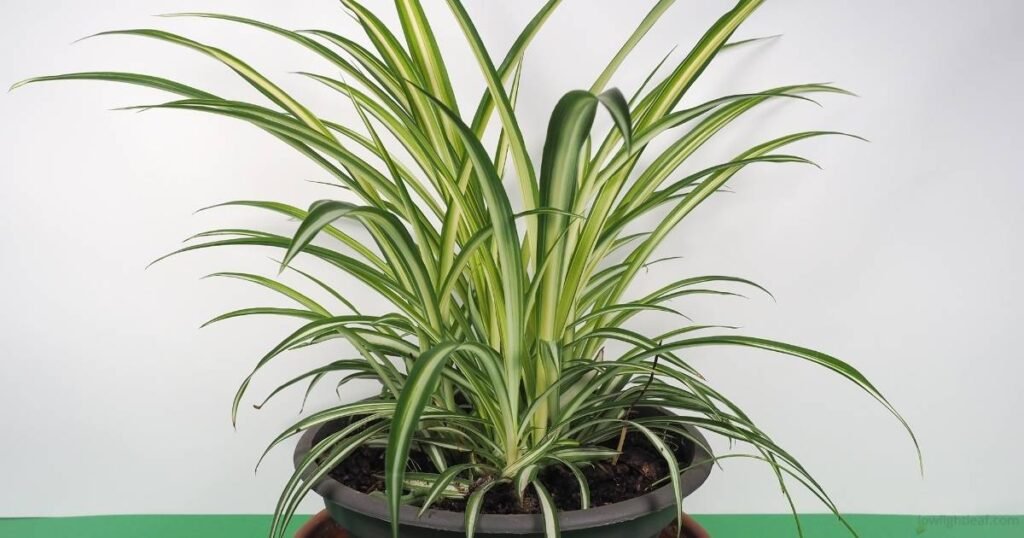
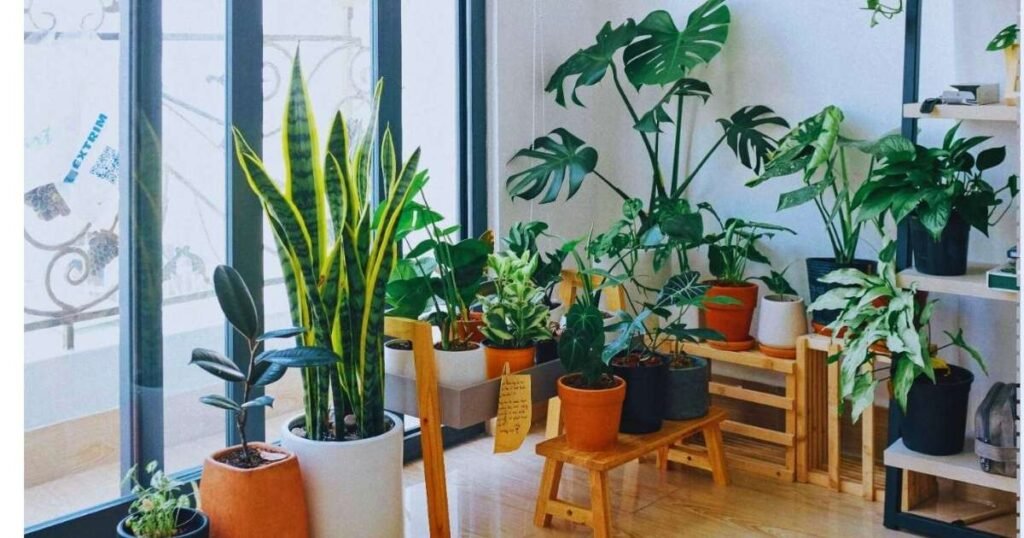
A parlor palm (Chamaedorea elegans) is one of the few palms that copes with low light: NC State Extension suggests a north- or east-facing window. Water it when the surface of the soil is dry, keep it between 50 and 80°F, and expect slow growth. The ASPCA lists it as non-toxic to cats and dogs.
That low-light tolerance has a limit, though. A dim room keeps it alive; to grow, it still needs bright, indirect light.
What is a parlor palm?
The parlor palm is a small understory palm native to southern Mexico and northern Central America, where it grows in the shade of larger trees. The NC State Extension plant toolbox calls it one of the most sought-after indoor palms because it thrives in conditions other plants can’t take, like dry air and dim light.
Victorian parlors gave it the name. According to the RHS, these palms were given pride of place in the parlor, where they thrived despite the low light, and the RHS has given the species its Award of Garden Merit. The genus name means roughly “gift of the ground,” a nod to its low stature, according to NC State.
One detail explains a lot about how it behaves: each plant has a single stem. What you buy is usually several plants grown together in one pot, which both NC State and the RHS point out.
How much light does a parlor palm need?
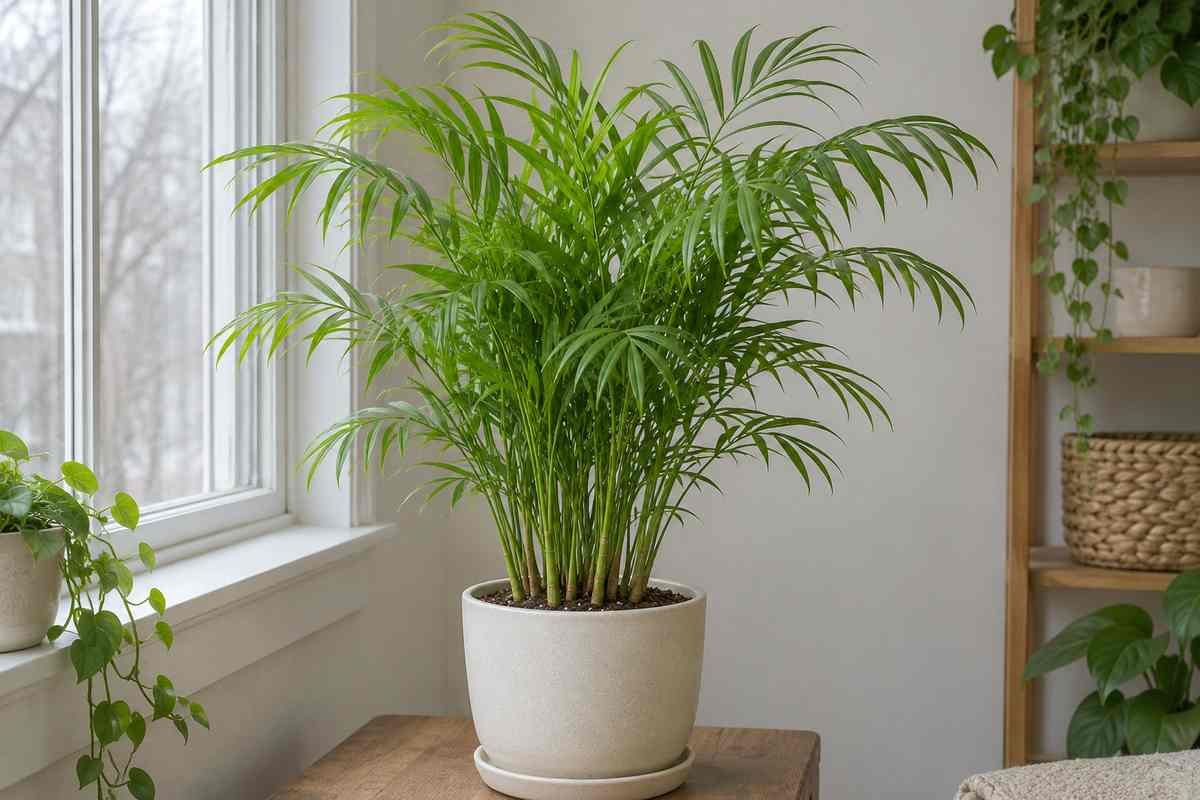
A parlor palm needs bright, indirect light to grow well, but it tolerates low light. NC State recommends keeping it near a north- or east-facing window if possible. Partial shade is fine with slower growth, says the RHS, but too little light causes yellow leaves and poor growth.
Direct sun is the other limit. According to the RHS, it scorches the leaves, especially in summer.
That’s why this palm would have suited the north-facing apartment I lived in for years better than most. In practice that means a spot right beside the window rather than a corner across the room. In an r/plantclinic thread about a parlor palm kept in a low-light spot that wasn’t putting out new growth, one reply was blunt:
“It’s never gonna grow if it doesn’t get any light. I’m honestly surprised it’s alive”
– r/plantclinic (1 upvote)
If you’re not sure whether a spot is bright enough, the DLI calculator gives you a number to compare. The guide to north facing window plants covers what else grows in that kind of light, and a grow light fills the gap in a room with no window at all.
Parlor palm care: water, soil, warmth and feeding
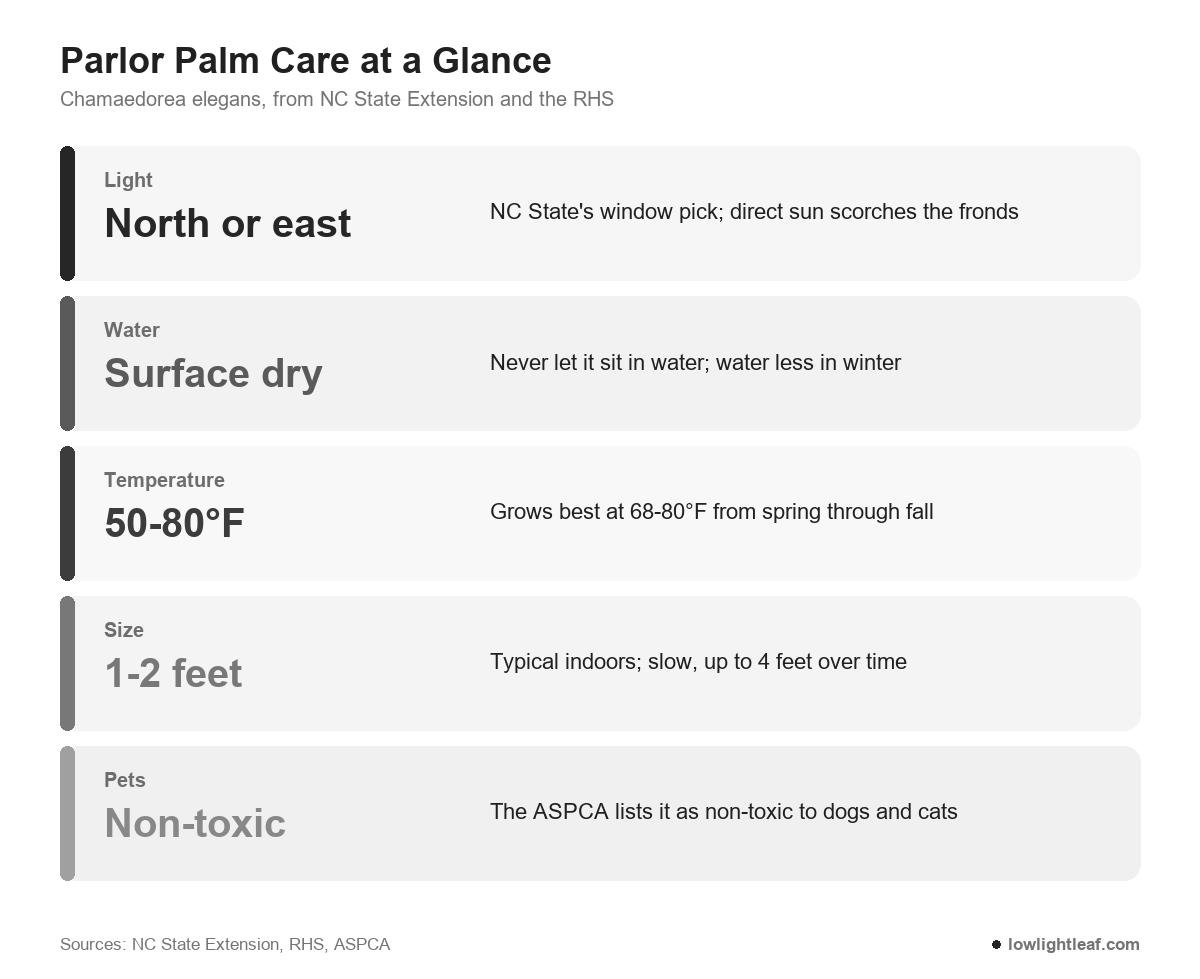
Water. Water when the surface of the soil is dry, and check with a finger below the surface before you do, the RHS advises. Never let the pot sit in water, since that leads to root rot, and water less in winter when growth slows. NC State puts it the same way: let the soil dry slightly between waterings. It can handle drought for short periods but grows more lushly in moist soil.
One RHS point I’d underline, because I hadn’t seen it elsewhere: hard tap water is alkaline and can brown the leaves over time, so it recommends rainwater at room temperature where you can.
Soil. The RHS suggests a light, fast-draining acidic mix, such as three parts peat-free ericaceous compost to one part perlite. NC State describes a humus-rich houseplant or container mix.
Temperature and humidity. The RHS gives 50 to 80°F as the range, with 68 to 80°F ideal from spring through fall. It doesn’t need high humidity, but the RHS recommends misting regularly, since dry air can brown the leaf tips and misting helps keep red spider mites away. NC State says to keep it out of cold drafts from windows, doors and vents.
Feeding. A balanced liquid feed once a month from spring to fall, per the RHS. NC State says not to feed in winter.
How big does a parlor palm get, and how do you make it grow faster?
A parlor palm usually stays 1 to 2 feet tall and grows slowly, reaching up to 4 feet over time, according to the RHS. NC State says stems can reach 5 feet indoors but are usually smaller. Given good conditions and a few years, it can fill out, as one owner put it:
“They’re awesome. Take care of them and they get huge. I’ve had mine for almost four years and it’s the size of a beach ball!”
– r/houseplants (4 upvotes)
You can’t make it a fast grower, but the RHS’s notes on poor growth point to what helps:
- More light: low light leads to weaker growth.
- Less water: overwatering damages or kills the roots.
- A slightly bigger pot, only when needed: repot in spring once the roots are densely crowded, into a pot about 1 inch wider. Overpotting can lead to root rot. NC State says every other year is generally enough.
- Monthly feeding from spring to fall.
Parlor palm problems: brown tips, yellow fronds and dying stems
Brown leaves. The RHS lists overwatering, underwatering, hard tap water and direct sun as causes, and dry air for brown tips. Work through those in order before treating for anything else.
Yellow leaves. Too little light, per the RHS. The general guide to yellow leaves helps rule out watering if the light seems fine.
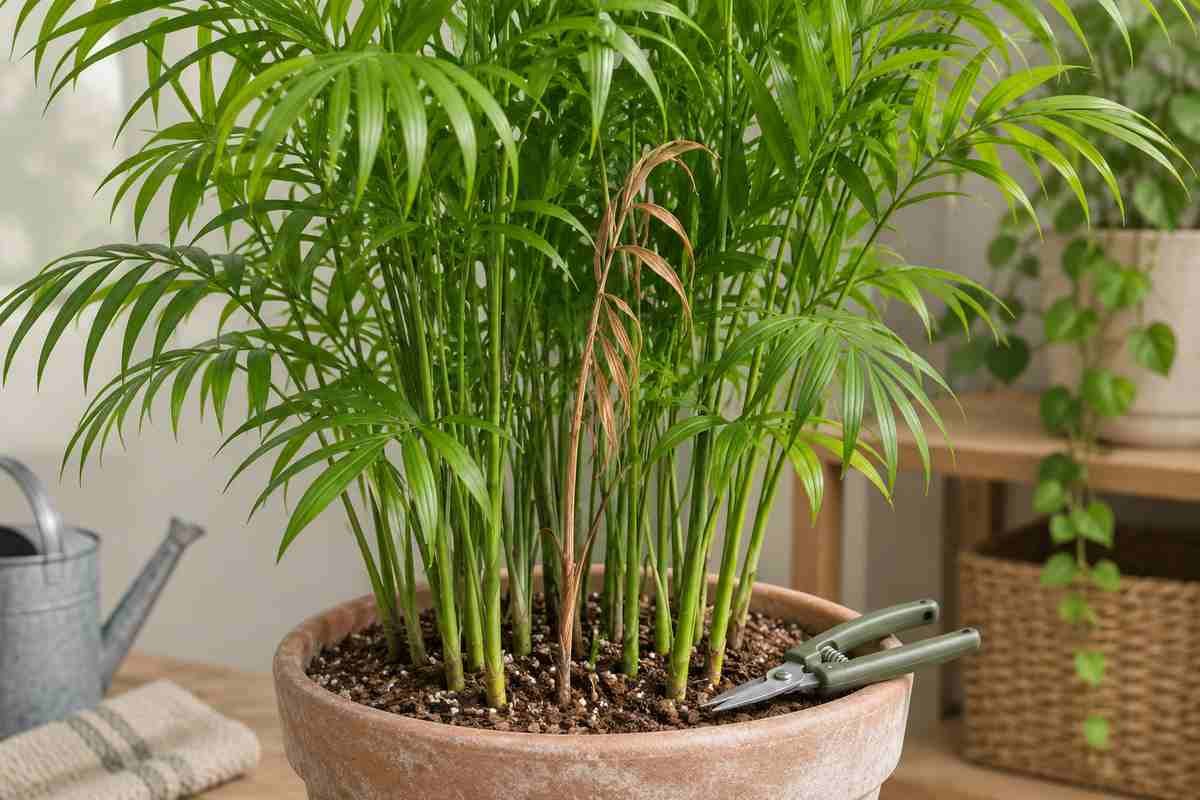
A few stems dying in a full pot. NC State has a simple explanation. It says that growers put three or more plants in one pot for a fuller look, and that over time some stems are out-competed and die. Trim them at the base; the RHS says removing old, dying fronds is the only pruning it needs.
Pests. NC State names red spider mites and mealybugs and says misting and wiping with a damp cloth can prevent or remove them. The RHS adds scale insects and black smut. If mealybugs take hold, the guide to getting rid of mealybugs walks through it.
How do you propagate a parlor palm?
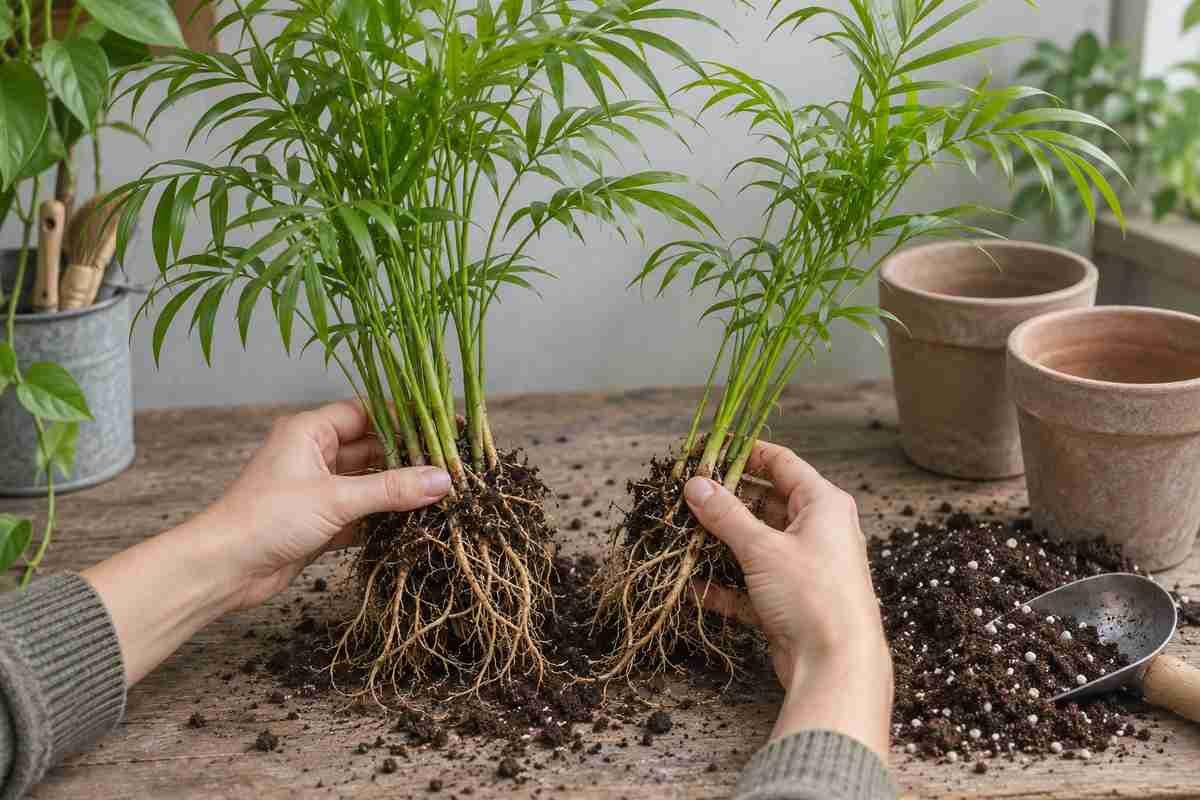
You propagate a parlor palm by dividing a pot of several stems, because a single stem doesn’t branch. The RHS method:
- Take the clump out of its pot.
- Gently pull the root ball apart into two or more smaller plants, each with one or more stems and plenty of roots.
- Pot each piece in the acidic, fast-draining mix described above.
Seed is possible but slower. Plants are either male or female, so you need both for the small black fruits to form, and the RHS recommends a heated propagator for sowing. NC State notes that the fruit pulp contains crystals that can irritate sensitive skin, so handle any fruit with care.
Is a parlor palm safe for cats and dogs?
Yes. The ASPCA parlor palm entry lists Chamaedorea elegans as non-toxic to dogs and cats, under other names too: miniature fish tail dwarf palm, good luck palm and bamboo palm. NC State also says it isn’t hazardous for pets.
My cat, Miso, is why every plant here gets checked against the ASPCA list first, and the parlor palm passes. It’s on the list of pet friendly indoor plants, and the plant toxicity checker covers more than a hundred others if you want to compare.
Give a parlor palm the brightest indirect spot you have, water only when the surface dries, and leave it in its pot until the roots fill it. It will put up with a dim room. It just won’t grow much there.

Ellie Marsh
Houseplant grower who spent years in a north-facing apartment. Writes practical care guides for low light homes, checked against extension and botanical garden sources.