Last updated on November 10, 2026
The Song of India plant is a variegated form of Dracaena reflexa that copes with low light but grows best in bright, indirect light, in moist, well-drained mix and a warm room. NC State Extension also says it doesn’t tolerate the fluoride and chlorine in tap water, which is where most brown tips start.
In a dim apartment it will survive. Staying full and leafy down to the soil is another matter, and that comes down to light.
What a Song of India plant is
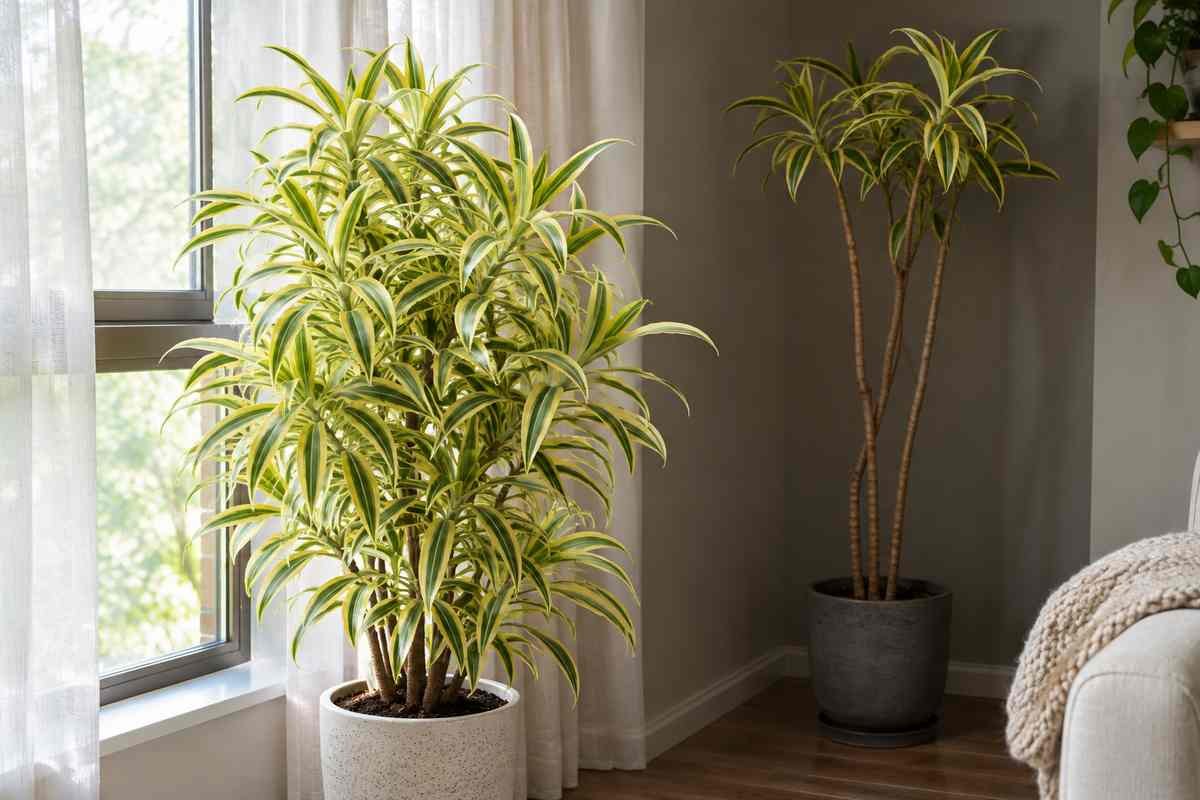
Song of India is a cultivar of Dracaena reflexa, a shrub from Northeast Mozambique to Madagascar that grows 3 to 6 feet tall indoors, according to NC State. Its leaves are creamy with a green central stripe; ‘Song of Jamaica’ is the green-and-lime version of the same plant.
It sits in the same genus as the Janet Craig and the corn plant, but it behaves a little differently. If you’re comparing the two for a darker room, the Janet Craig page covers the dracaena that tolerates the least light, and the dracaena care hub lays out the whole family side by side.
Light for a Song of India plant in a dim home
A Song of India plant tolerates low light but grows best in medium light. University of Missouri Extension says Dracaena reflexa is popular for its tolerance of low light and does best in a medium range of 250 to 1,000 foot-candles. NC State lists bright, indirect sunlight as its preference.
Clemson Extension explains what the difference looks like. It says the foliage of Dracaena reflexa stays dense to the base only if the plant gets enough light, and that a dracaena moved from dim light to a brighter spot grows thicker, stronger leaves faster. So in a dark corner the likely result is not a dead plant but bare stems with leaves bunched at the top, because the lower foliage only stays dense when the light is good enough to support it.
Too much sun is a problem of its own. NC State says direct sun can scorch or fade the leaves, so give it the brightest spot you have that stays out of direct sun.
I lived with north light for years and used a grow light for the darkest corners, which is the simplest fix if your Song of India is going bare at the base. The DLI calculator can tell you whether a spot is closer to low or medium light.
Water, fluoride and brown tips
Water a Song of India when the surface of the soil is dry, then water thoroughly. Let it drain. Clemson says dracaenas should dry slightly between waterings and shouldn’t get cold water, and NC State asks for room-temperature filtered water because the plant doesn’t tolerate fluoride or chlorine.
Fluoride is the usual suspect. It’s the reason brown tips are so common on this genus, and Clemson describes fluoride injury as yellowing tips or margins and dead, scorched patches, and gives three ways to prevent it:
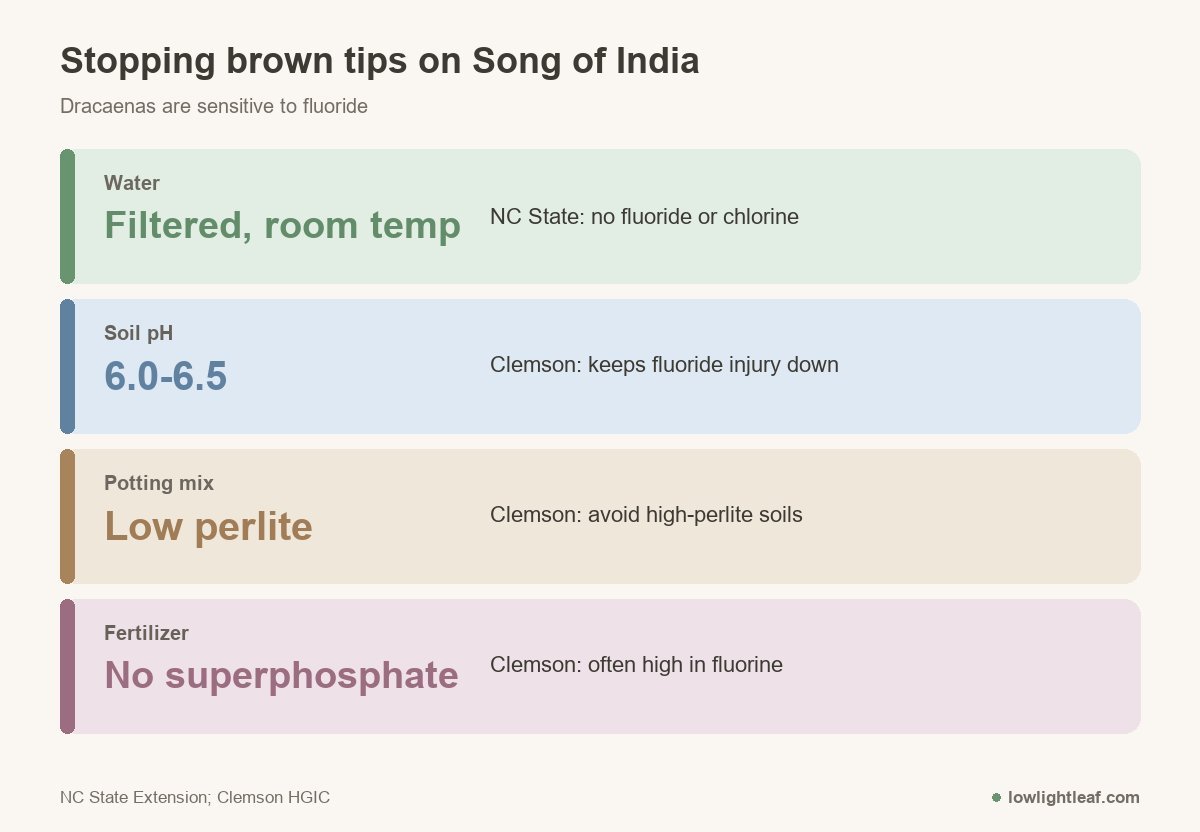
- Avoid potting soils with a high percentage of perlite.
- Keep the soil pH between 6.0 and 6.5.
- Skip fertilizers that contain superphosphate, which often carry high levels of fluorine.
That perlite point is worth flagging, because NC State suggests adding perlite or sand for drainage. Both can be true: if your water is fluoridated, lean on sand for drainage and keep perlite to a small share of the mix.

Not every brown tip is fluoride, though. Clemson says dry tips and edges are usually low humidity, and that tips can also burn from heavy feeding. NC State adds that yellow leaves come from both overwatering and underwatering, and that overwatering leads to root rot. Feed once a month in spring and summer with a balanced liquid fertilizer, as NC State suggests; it doesn’t call for feeding the rest of the year.
Warmth and humidity
Keep it warm. NC State gives 65 to 75°F and high humidity, and says to avoid cold drafts and sudden temperature changes. Clemson’s range for dracaenas is 60 to 70°F by day, with nights about 10°F cooler. Winter air is the usual weak spot. Clemson says indoor humidity in winter probably drops below 30 to 40 percent, and that a sudden loss of many leaves can follow temperature changes or drafts. NC State suggests a humidifier or a tray of wet pebbles, and the humidity page has more options for a dry apartment.
Pruning a leggy plant and rooting the cuttings
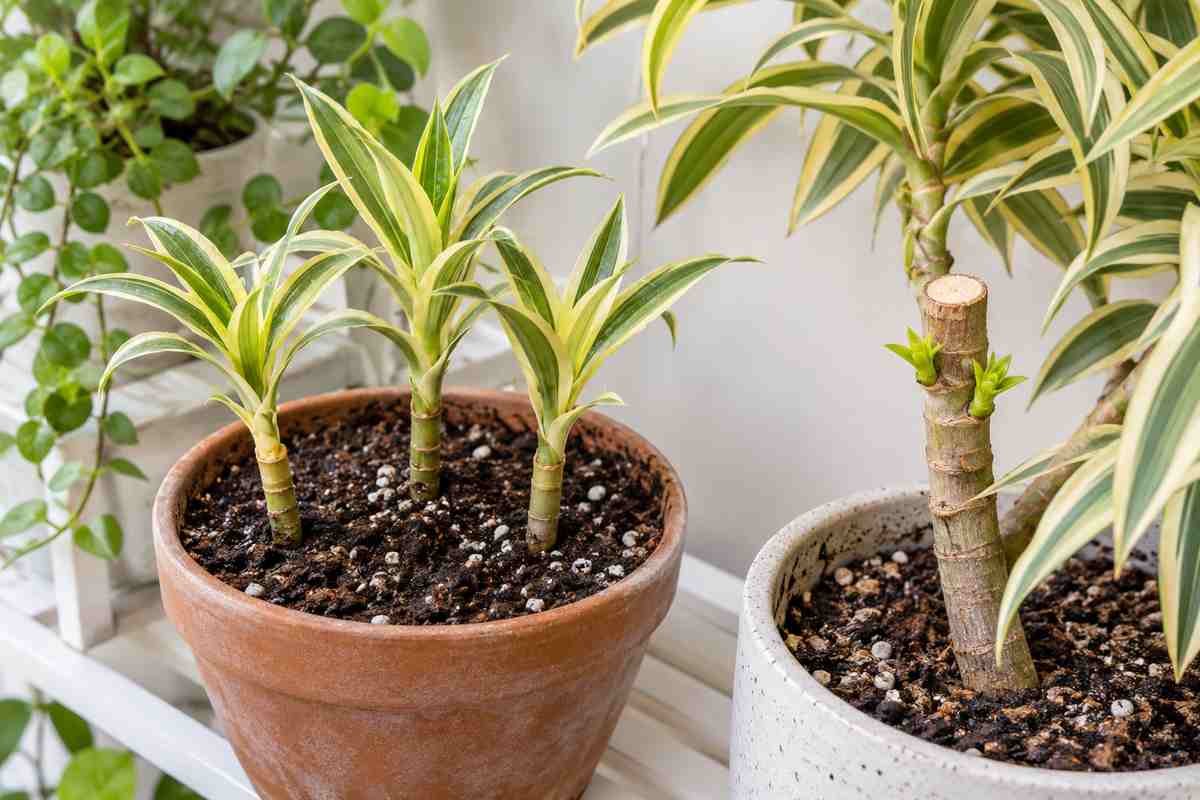
A leggy Song of India can be cut back, and the pieces root. Clemson lists tip or stem cuttings, air layering and rooting basal shoots in spring or late summer as ways to propagate dracaenas, and NC State recommends stem cuttings for this one.
When someone found a Song of India in a grocery-store bouquet and asked how to propagate it, one reply made the soil route sound easy:
“It is dracaena. I propagated mine in soil. I didn’t even try to propagate in water. There are 5 of them. All rooted successfully.”
– r/houseplants (3 upvotes)
- In spring or late summer, the windows Clemson gives for rooting shoots, cut a leafy stem tip from a bare, stretched stem.
- Set it in moist, well-drained potting mix and keep it warm and in bright, indirect light.
- Water with filtered water, as you would the parent, and keep the mix lightly moist while it roots.
Growers in the same discussions say a trimmed dracaena sprouts new growth points where it was cut. Move the parent into better light at the same time, since Clemson ties dense foliage to enough light.
Is Song of India toxic to cats and dogs?
Yes. The ASPCA lists dracaena as toxic to dogs and cats because of saponins, with vomiting (sometimes with blood), depression, loss of appetite, drooling and, in cats, dilated pupils as the signs. NC State also tags Dracaena reflexa as poisonous if eaten and a problem for cats and dogs.
With Miso in the apartment, a dracaena goes where the leaves can’t be reached from a chair or a windowsill. The plant toxicity checker lists the dracaena family with the rest of the common houseplants.
Song of India will hold on in low light; it only looks full when the light is better.

Ellie Marsh
Houseplant grower who spent years in a north-facing apartment. Writes practical care guides for low light homes, checked against extension and botanical garden sources.