Last updated on October 16, 2026
To increase humidity in a house, run a humidifier that has a humidistat, keep the moisture from showers, cooking and air-dried laundry indoors, and give thirsty plants their own humid spot under glass or beside the humidifier. In winter, stop at 30 to 40 percent relative humidity, the range North Dakota State University Extension recommends. The EPA says never to humidify past 50.
Knowing how to increase humidity in house air is the easy half. The harder half is the ceiling, because the moisture you add heads for the coldest surface in the house, and in January that’s the window glass. Start with where to stop, then work through the free fixes, the humidifier, the cleaning and the plants.
How high should you raise it? Your windows decide
Aim for 30 to 40 percent in winter. NDSU Extension says humidity above about 40 percent raises the chance of condensation on windows and other cool surfaces, while anything below about 30 percent leads to dry skin and nasal passages. ENERGY STAR gives the same 30 to 40 percent for the heating season in colder climates.
Your windows set the real limit. In NDSU’s numbers, a double-pane window in a house held at 40 percent should start to fog once it drops below zero outside, and triple-pane glass holds out until it’s closer to minus 40°F. In a deep cold snap, the University of Minnesota Extension figure of 25 percent is the safer target. UMN says that in cold winter conditions humidity has to stay low to prevent condensation and damage to the house’s structure.
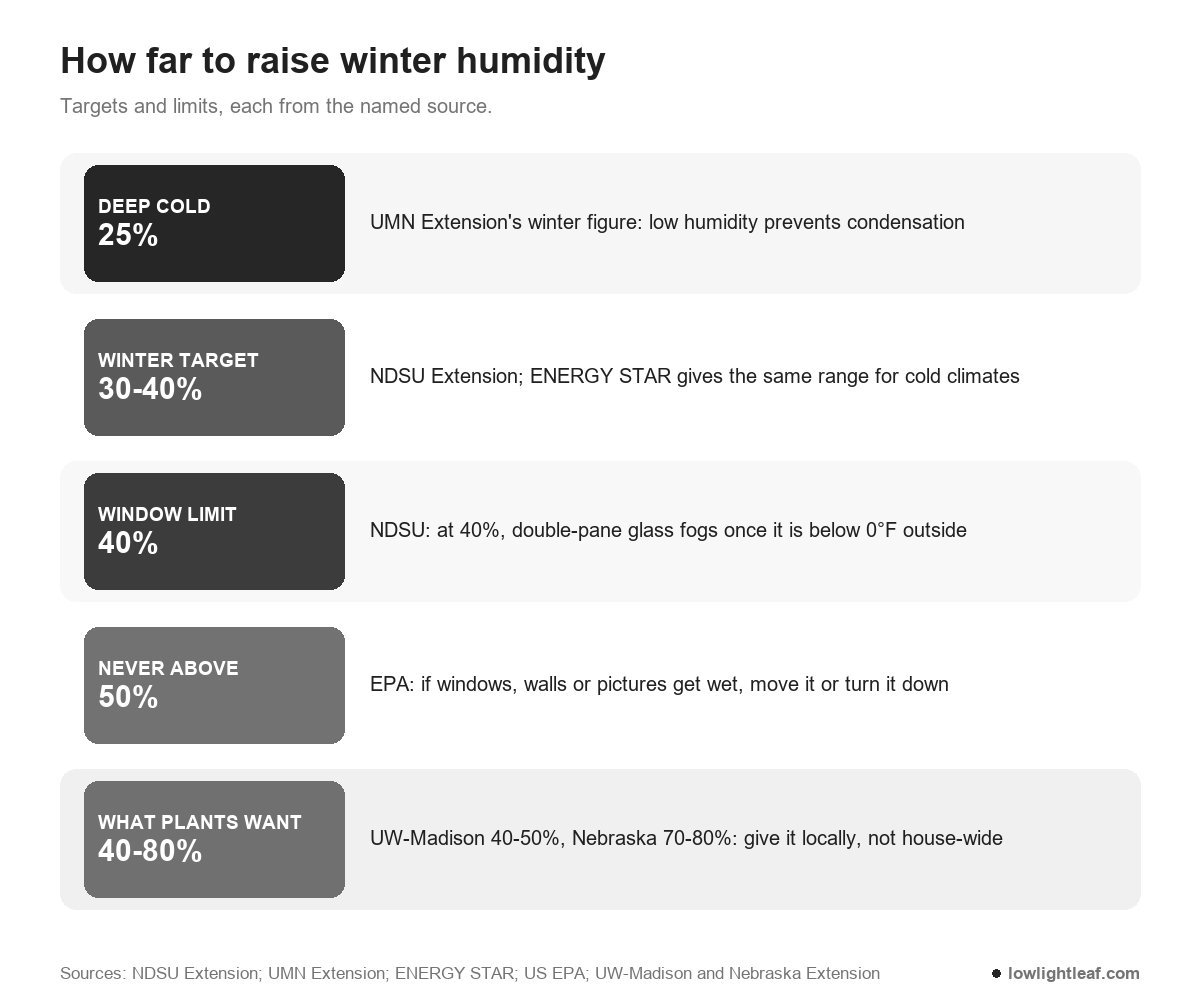
The EPA sets the hard cap. Its fact sheet on using and caring for home humidifiers says not to humidify above 50 percent, since higher humidity can encourage dust mites and mold. The test it offers is visual: if water condenses on windows, walls or pictures, move the humidifier, lower its humidistat or run it less.
“This year, I bought an ultrasonic humidifier for my home. It definitely boosted humidity well and was super quiet, but I’ve run into some problems that I didn’t expect: \-Mold issues I kept it near the window and recently noticed black mold spots on the curtain and even on the wall. At first, I blamed myself for forgetting to close the window when it rained… but after my husband looked into it, we realized the real culprit was the humidifier constantly pushing moisture into that corner.” [excerpt — 1,465 characters in full]
– r/BuyItForLife, December 2025 (89 upvotes)
That corner is the thing to avoid. Keep the unit away from the window and outside walls, and don’t let carpets, drapes or tablecloths near it get damp, which the EPA warns about too.
Is 29 percent humidity in a house bad? It sits one point under NDSU’s 30 percent floor. Not a crisis. If your lips crack or every doorknob shocks you, a few more points are worth adding. If the windows already fog at 29, the glass has told you this week’s limit.
Check the hygrometer first
Make sure the number is real before you chase it. NDSU warns that mechanical hygrometers are frequently off by more than 20 percent, and prices hygrometers at $5 to $25 at most hardware stores. Its check takes one evening: seal the hygrometer in a plastic bag with a cup holding half a cup of water and a quarter cup of table salt, leave it about 12 hours at room temperature, and it should read about 75 percent. Note how far off yours is and treat later readings as roughly that far off too.
No machine yet? How to increase humidity in house rooms for free
You can humidify a room without a humidifier by keeping the water you already use indoors. University of Minnesota Extension lists bathing, cooking, dishwashing and breathing as household moisture sources. In a damp summer they’re the problem. In a dry winter they’re free help, so start with the biggest.
- Let shower steam into the house. After a hot shower, open the bathroom door so the steam drifts into the hall. That’s the opposite of my advice on how to lower humidity in house air, so do it only while the reading sits under 30 percent and no window or wall shows water. Once glass fogs, go back to the fan.
- Dry laundry on a rack indoors. ENERGY STAR lists laundry drying among the high-load conditions in its wettest category of homes. In January that load works for you. Set the rack in the driest room, away from a cold outside wall.
- Cook with the lid off. A simmering pot puts steam into the kitchen. Keep the range hood running for gas burners and smoke.
- Let the dishwasher air-dry. Open the door when the cycle ends so that water evaporates into the kitchen.
- Stop the drafts. UMN’s winter fix for a damp house is to open a window a little so cold, dry air comes in. A drafty house does that all season. UMN doesn’t put a number on it, but the same logic says weatherstripping helps a dry house hold the moisture you add.
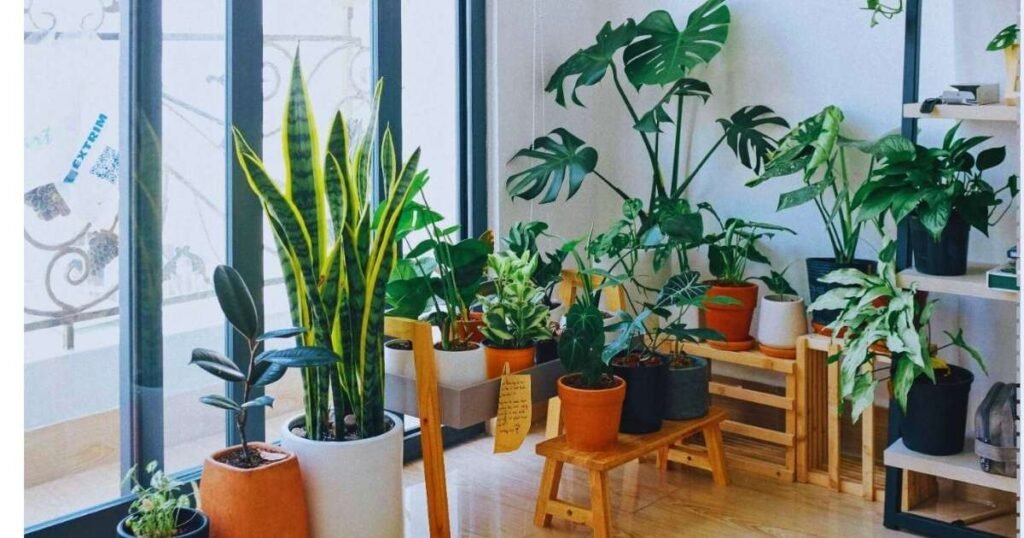
Plants and bowls of water sit at the bottom on purpose. Penn State Extension says grouped plants help, with the effect depending on how many plants there are and how big the space is, and that water evaporating from a pebble tray spreads through the whole room with almost no overall effect. A few pots won’t move a living room’s number.
Which humidifier, and what water to put in it
For most homes, an evaporative humidifier or a steam vaporizer is the cleaner pick. The EPA’s fact sheet says ultrasonic and impeller “cool mist” models generally produce the greatest dispersions of microorganisms and minerals from their tanks. Evaporative and steam models generally disperse less, and the EPA doesn’t expect either to put out substantial amounts of minerals.
- Evaporative: a fan blows air through a wet wick, belt or filter, and the moisture leaves invisibly.
- Steam vaporizer: heats water into steam; “warm mist” models cool it before it leaves. The EPA says to keep steam vaporizers out of children’s reach.
- Ultrasonic and impeller: make a visible cool mist with vibration or a spinning disk, and need the strictest water and cleaning habits.
- Whole-house: mounted on a hot-air furnace. Penn State says it helps both people and houseplants, though it won’t reach ideal plant levels.
Water matters most in the ultrasonic and impeller types. The EPA says they’re very efficient at spraying tap-water minerals into the air, which shows up as “white dust” on furniture, and that mineral scale in the tank can become a breeding ground for microorganisms. Use bottled water labeled “distilled.” Spring, artesian and mineral water haven’t had their minerals removed. Demineralization cartridges vary widely in how well they work; white dust means yours isn’t.
Buy one with a built-in humidistat, or keep a hygrometer near it, and set it to the number your windows allow. Of all the extras, the humidistat is the one worth paying for. To raise humidity in a room, not the whole house, Nebraska Extension points to a portable unit.
Keeping the tank clean
A humidifier tank holds standing water, so the EPA treats cleaning as part of using one. Its schedule for portable units:
- Every day, empty the tank, wipe every surface dry and refill with fresh water.
- Every third day, empty it and scrub off any scale, deposits or film.
- Disinfect with the manufacturer’s cleaner, or a 3% hydrogen peroxide solution if the manual names nothing.
- Rinse with several changes of tap water so no cleaner goes into the air.
- At season’s end, clean it, dry every part and store it somewhere dry.
“what’s causing this in my humidifier? it was pink/yellow and slimy.. it’s cleaned every two days. should i be concerned?”
– r/CleaningTips, July 2026 (464 upvotes)
Every two days misses the EPA’s daily step, which is emptying and drying the tank, not only scrubbing it. The EPA also says to stop using a humidifier and contact a physician if you have breathing symptoms you think are tied to it, even when you follow the cleaning directions.
Plants that want more: how to increase humidity for plants locally
Raise humidity around the plants, not across the whole house. Many houseplants favor 40 to 50 percent, says University of Wisconsin-Madison Extension, and Nebraska Extension puts 70 to 80 percent as generally best for plants. Colorado State Extension notes that heated homes often drop under 10 percent, against 70 to 90 percent in most tropical plants’ native climates. A house held at 70 percent would soak its own windows, so the plants have to get theirs locally.
Brown, crispy leaf edges and tips are a common sign of low humidity, Nebraska says, and plants near heating vents lose more water, per Colorado State. Move them away from vents and radiators first. It costs nothing, and it’s the step to try before buying anything for a browning prayer plant.
Then the local methods, strongest first:
- Glass. A terrarium or a glass or clear plastic cloche recycles humidity around the plant, Penn State says. It’s the strongest local fix for small ferns and fussy tropicals; these are the plants that do well in a closed terrarium.
- A humidifier beside the group. UW-Madison calls humidifiers a great way to raise humidity for plants. Parked near a cluster, one lifts the air they sit in, while a hygrometer by the coldest window keeps the house under its ceiling.
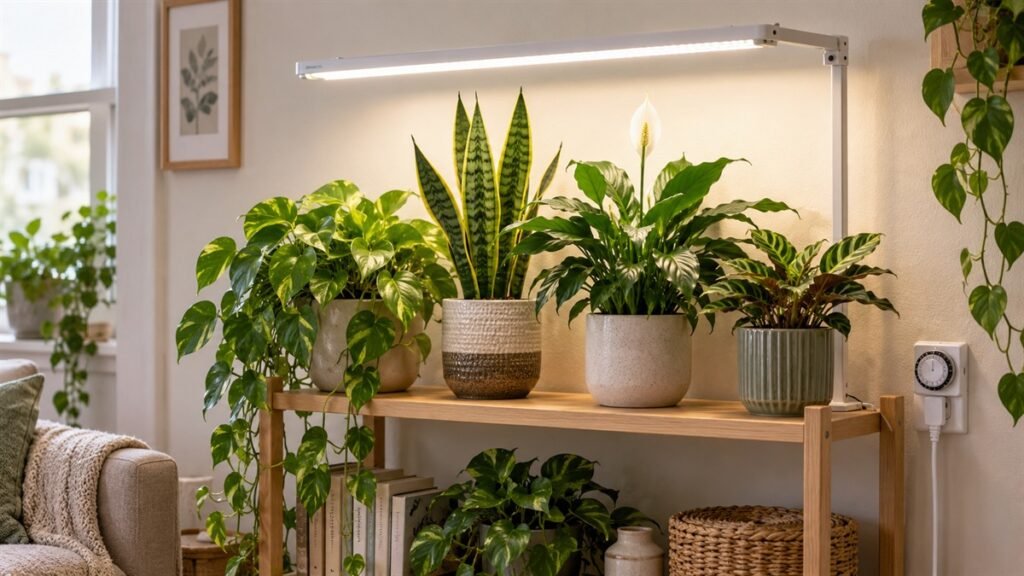
- Grouping. Plants release water through tiny openings in their leaves, and Nebraska says a group creates a small pocket of slightly higher humidity.
- Pebble trays, with a caveat. UW-Madison and Nebraska both suggest them for the air right around the pot, with the water kept below the pot’s base. Penn State found the evaporated water spreads through the room with almost no overall effect. Treat a tray as a small local help, nothing more.
“enclosure is the only way. Some will says that pebble trays are the answer- I’ve got really good humidity sensors and they don’t. If it’s small enough- you can use tupperware lids or cut up plastic soft drink bottles.”
– r/houseplants, December 2025 (31 upvotes)
Misting is the one to drop. UW-Madison says any gain is quickly lost, and Nebraska says you’d need to mist every few minutes to matter, with constantly wet leaves more prone to leaf spot diseases. Penn State puts the effect at minutes, just until the water evaporates.
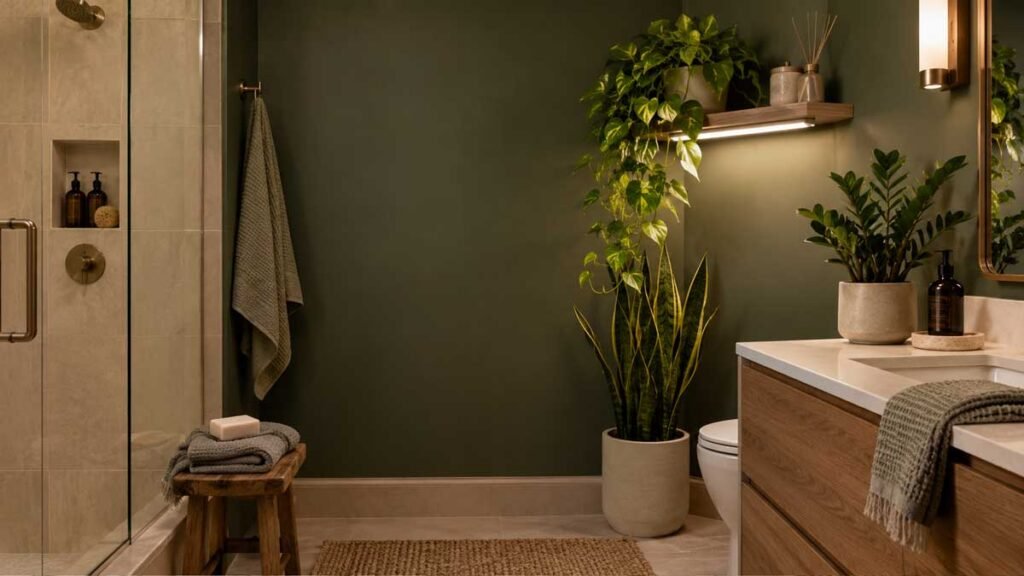
The bathroom is a maybe. Penn State says its humidity depends on how often the shower runs, so measure it first, and it points out that bathrooms often lack light. After years in a north-facing apartment, light is the thing I’d check first; these are the plants that cope with a bathroom. And if the house feels comfortable to you, Penn State says your plants should tolerate it through winter.
Short answers
Why is my house so dry in winter?
A house gets dry in winter because cold outdoor air holds less moisture and heating removes more, Penn State Extension says, so indoor humidity easily falls below 30 percent. Nebraska Extension makes the same point about furnaces producing warm, dry air. Drafts make it worse by trading your air for the outdoor kind.
Will a bowl of water or a wet towel humidify a room?
A bowl of water or a wet towel humidifies a room only slightly. No source here measured a bowl, but Penn State’s pebble-tray finding is the closest test: water evaporating from a tray spreads through the room with almost no overall effect. A full rack of wet laundry is a far bigger surface. A humidifier on a humidistat is the version you can actually set and stop.

Ellie Marsh
Houseplant grower who spent years in a north-facing apartment. Writes practical care guides for low light homes, checked against extension and botanical garden sources.