Last updated on October 16, 2026
Why is my snake plant drooping? Most often because it has been watered too much and the roots are starting to rot. The Royal Horticultural Society names overwatering as the main problem with these plants, and the NYBG Mertz Library links mushy leaves to either rot or frost. Low light makes tall leaves flop too, but that’s the less urgent cause.
I’ve kept snake plants for years in a north-facing apartment, and the urge with a drooping plant is always to water it. Don’t, at least not until you’ve touched it.
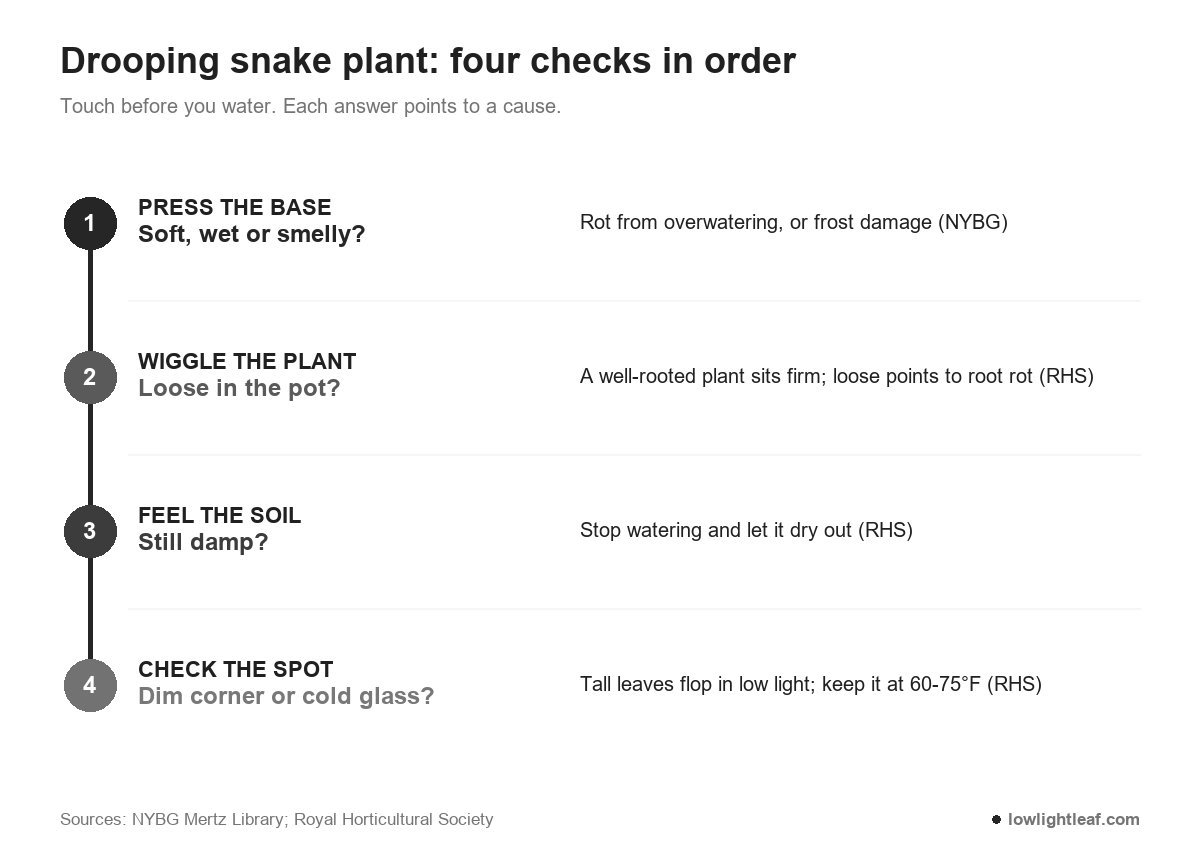
Why is my snake plant drooping? Four checks in order
Work through these before you change anything. The order is mine, not a published protocol: it starts with the checks that take seconds and catch the most damaging cause.
- Press the base of a drooping leaf between your thumb and finger. Firm means the leaf itself is sound. Soft, watery or smelly points to rot from overwatering, or to frost if the plant sat against cold glass, the two causes NYBG gives for mushy leaves.
- Wiggle the plant gently in its pot. The RHS says a healthy plant is firmly anchored without much wobble, a sign it’s well-rooted and unlikely to have root rot. A plant that rocks loose has lost roots.
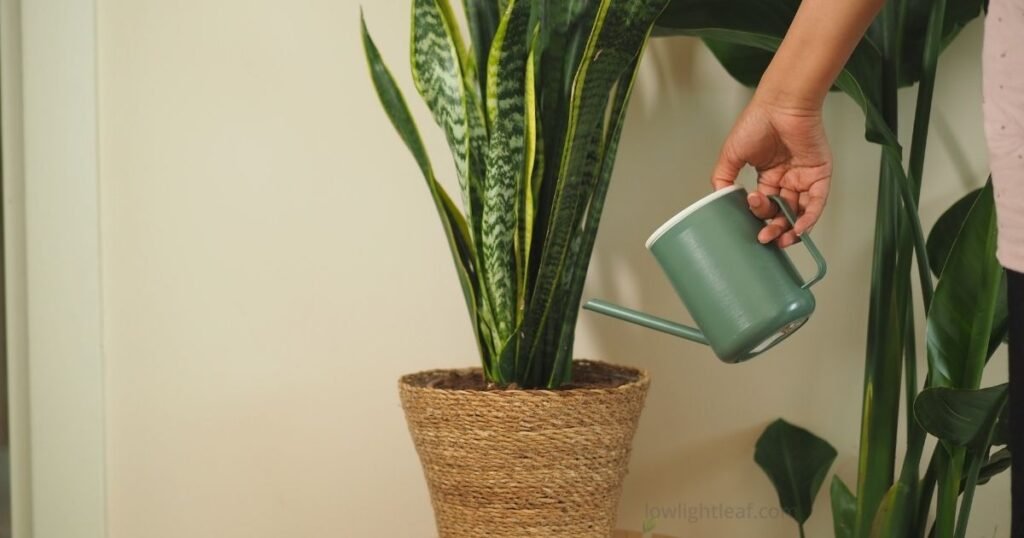
- Push a finger into the soil, as the RHS suggests before every watering. Still damp days after you watered? Stop watering and let it dry.
- Look at where it sits. A dim corner explains long, firm leaves bending over. A windowsill in winter or a cold draft explains limp, mushy ones.
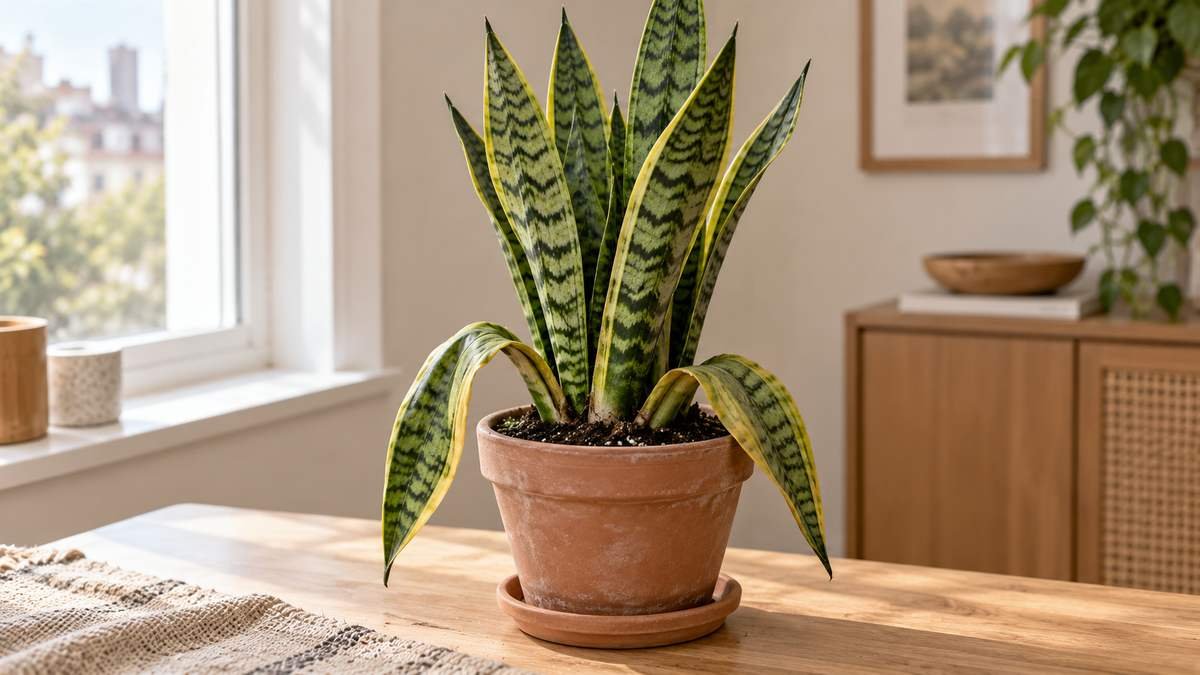
A firm base, a steady plant and dry soil mean the roots are fine. In that case, look at light and the pot below.
A soft, smelly base: overwatering and root rot
A snake plant with root rot droops because the roots holding it up and feeding it water have died. NC State Extension says the roots rot if the plant is overwatered, UGA Extension says overwatering may be the biggest disease threat, and Clemson warns of root rot and soggy leaves when it’s watered too often.
NYBG lists four usual causes: overwatering, not cutting back water in winter, a pot that’s too large, and blocked drainage holes. That last one is easy to miss when a plant comes in a decorative pot.
“My snake plant has been just fine after having it for almost a year now, but i missed exactly one day of watering and suddenly it’s drooping. The biggest leaf disconnected from the rest with just a small tug, I’m not sure what i did wrong. I got it from one of my friend’s family friends as a gift for helping them move furniture, it had been Living in their bathroom and being just fine. I was told to water it every other week, so that’s what I’ve been doing. The pot doesn’t have any drainage hol…” [excerpt — 888 characters in full]
– r/plantclinic, July 2026 (87 upvotes)
Every other week, in a pot without drainage holes, is exactly the pattern NYBG warns about. The droop looked sudden, but every one of those waterings landed in a pot with nowhere to drain.
Here’s how to rescue it, following NYBG’s root rot advice:
- Take the plant out of its pot and rinse or brush the soil away with tepid water so you can see the roots.
- Look for roots that are slimy, mushy or smelly. Healthy ones are firm.
- Cut the rotted roots off above the damage with a sterilized knife.
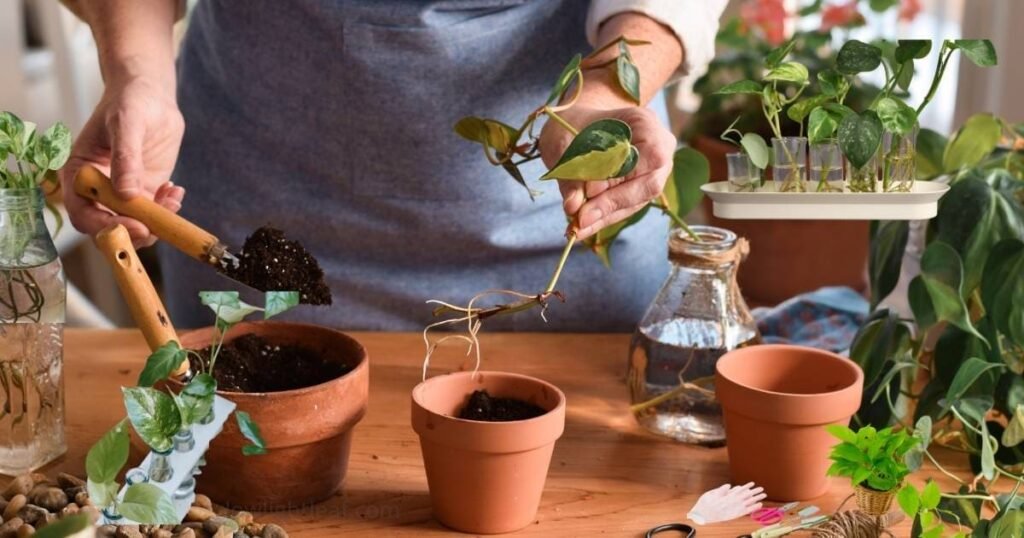
- Repot in a clean container just large enough for what’s left, using fresh, fast-draining succulent soil. A bagged cactus mix works, and best soil for snake plant has the home mixes.
- Hold off watering until the soil has dried, and from then on check it with a finger before each watering.
Know when to stop. NYBG says that if the crown above the soil has gone soft or smelly, or most of the root mass is rotten, the plant is very unlikely to recover. Any small offsets with their own healthy roots can be potted up on their own and kept.
Firm leaves bending: too little light
Long leaves that stay firm but bend partway up usually need more light, not less water. The RHS notes that taller snake plants kept in particularly low light may flop, and that plants in shade often grow taller leaves. Clemson adds that in low light they grow more slowly and need less water, so a dim spot raises the rot risk too.
“Was it originally in a place with lower light and then moved to the window after it grew thin? Snake plant leaves will grow really thin if they’re not getting enough light. They stretch to try to find light. So when it’s moved to a better place the leaf gets wide. That unfortunately doesn’t work if the base of the leaf is thin so it flops over from the weight. You could try trimming a little at a time and letting it recover in-between so you get nice wide leaves that can support themselves”
– r/houseplants, May 2026 (27 upvotes)
Move the plant closer to a window, out of harsh midday sun, which the RHS warns can scorch the leaves. In the darkest corners of my apartment, a grow light does the job a window can’t. Turn the pot a quarter each time you water, as the RHS suggests, so it doesn’t lean toward the glass. Light and spacing are covered in snake plant light requirements.
Limp after a cold night
Snake plant leaves that go limp and mushy after a cold spell may have been chilled, not overwatered. NYBG points out that even plants on indoor windowsills can freeze near the glass in winter. The RHS keeps them at 60 to 75°F (15 to 24°C) and out of cold drafts, and NC State says they tolerate cool temperatures around 50 degrees.
Move the plant back from the glass. Cut off any leaves that stay mushy at the base, as the RHS advises for damaged leaves, and wear gloves because the sap irritates skin.
The whole plant tipping over
If the whole plant leans and not just one leaf, check the roots first. The RHS treats a leaning plant as a sign of possible root rot. If the roots are sound, the plant may simply be top-heavy: Penn State says the weight of tall leaves can topple the plant, especially when the soil is dry, and both Penn State and UGA recommend a heavy pot for tall varieties.
“Is that pot able to drain? If not you’re drowning it. What is the condition of the rhizome/tubers and roots? What is the lighting condition for this plant? This is a plant that needs A LOT of light. This plant looks like it’s stretched to the max. I would replant in something the same height but wider. repot in a very chunky soil with large perlite and bark and find out what the sweet spot is for the soil to almost dry out in the plant’s environment.”
– r/houseplants, December 2025 (62 upvotes)
That’s the right order: drainage, roots, light, then the pot.
Will drooping snake plant leaves stand back up?
Usually not. NYBG’s advice for floppy leaves the plant can no longer support is to prune them, and the RHS suggests propping them up with a wire hoop or bamboo canes and string if you’d like to keep them.
If you cut, NYBG’s limits are worth following:
- Remove no more than a quarter of the plant’s total leaf surface at once.
- Cut each leaf just above the soil with a sterile blade, and keep the cut dry while it calluses.
- Spring is the best time, when the plant is starting new growth. Later in the year, expect slower results.
“I would put it in sunlight and water weekly (but only so much that it dries before next watering). At least you didn’t put it in a bigger pot, that’s really good. It’s dried up so bad that the floppy leaves won’t stand on their own anymore, cut (and root) if they bother you. And root rot? If you leave it in that darkness where it is in the picture, very possible. Skip the problems by giving adequate sun and water. These are easy if you give them that. You got this.”
– r/SnakePlants, April 2026 (5 upvotes)
Pruning only helps if the cause is fixed. NYBG makes the same point: correct the conditions first, so the new leaves come in sturdy.
Drooping snake plant FAQ
Why is my snake plant drooping after repotting?
A snake plant drooping after repotting is often sitting in too much wet soil. NYBG lists a pot that’s too large as a root rot cause, and the RHS says the new pot should be only slightly larger than the old one. The steps are in repotting a snake plant.
What does an overwatered snake plant look like?
An overwatered snake plant has soft, soggy leaves, watery or mushy at the base and often with a bad smell, which is how Clemson and NYBG put it. Yellowing usually comes with it; snake plant yellow leaves goes through those causes.
Is a drooping snake plant thirsty?
Sometimes, but check before you assume it. In winter, NYBG waters only when the leaves slightly lose some rigidity, so a thirsty plant feels a little less firm, not mushy. Clemson waters every 2 to 4 weeks in the growing season and every 4 to 6 weeks in fall and winter.
What can I give my snake plant to perk it up?
Nothing from a bottle fixes a droop. Penn State feeds snake plants monthly at half strength during the growing season, but feeding isn’t a repair. What helps is drier soil, more light, a warmer spot or a heavier pot, depending on which check failed.
When a snake plant droops, water is the last thing to reach for. Press the base, wiggle the pot and feel the soil first, and you’ll usually find the soil was too wet all along. For a schedule that fits a dim room, see how often to water a snake plant.

Ellie Marsh
Houseplant grower who spent years in a north-facing apartment. Writes practical care guides for low light homes, checked against extension and botanical garden sources.