Last updated on October 11, 2026
Pothos is one of the easiest houseplants to propagate, which is why it’s often recommended for beginners learning how to grow new plants from cuttings. With the right pothos propagation method, a single healthy vine can quickly develop roots in water or soil and grow into a brand-new plant with very little effort. The key is knowing where to cut pothos, how each propagation stage works, and which conditions encourage faster root growth indoors.
Whether you’re propagating pothos in water, planting cuttings directly in soil, or trying multiple propagation methods to see what works best, this guide covers the simple techniques that help healthy vines root successfully.
To learn how to keep your pothos healthy before propagation, read our full guide on growing Pothos indoors.
Best Propagation Time
Propagation is the process of growing a new plant from a cutting of the mother plant. The best time for propagation and pothos cuttings is when the mother plant is mature and forms long, hanging stems.
Detailed guidance on houseplant propagation, including pothos, is available at Penn State Extention-Propagating Houseplants.
“ Want to multiply your pothos effortlessly? Follow these simple propagation methods to get started today.”
Essentials of Propagation
Pothos propagation requires very few simple tools;
- Sharp Scissors – to neatly cut the stems
- Water-filled glass – to hold fresh cutting
- Pot for Planting – to transfer rooted cuttings
- Sphagnum Moss – ideal for moisture-retentive propagation
- Well-draining Soil – to support healthy growth
- Root hormone – optional, but helps boost root development
Best Methods for Propagating Pothos
If you want to grow more pothos plants from a single healthy plant, propagation is the easiest and most effective way to do so. Pothos is a beginner-friendly houseplant that roots quickly and does not require special tools or experience.
There are several reliable methods for propagating pothos, and each method works well when done correctly. Below, we’ve explained the best and most commonly used pothos propagation methods to help you choose the one that suits you best.
- Propagate Pothos in Water
- Propagate Pothos in soil
- Propagate Pothos In Sphagnum Moss
Pothos Propagation in Water
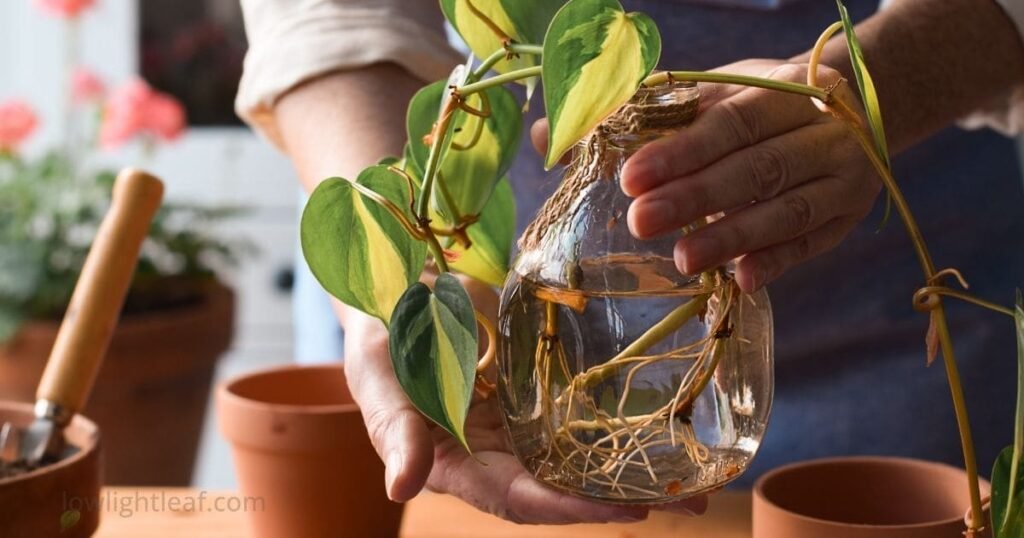
Propagating pothos plants is the most favourite method for beginners.
➦ To begin, select a vine with mature, heart-shaped leaves for cutting.
➦ Once you have selected your cutting, gently remove the bottom leaves. It helps direct the plant’s energy toward root development, allowing roots to grow deeper, stronger, and healthier.
➦ After removing the leaves, place the prepared cutting in water in a clear glass for several weeks. Ensure nodes are submerged while leaves remain above water.
➦ During this period, leave the cutting in water for more than 2 weeks. To promote root growth, keep the glass in a warm, indirect-light location and mist the plant to keep it fresh.
Finally, once the roots are long and healthy, transfer the cutting to well-draining, moist soil. This helps your newly propagated pothos to settle and keep growing beautifully. If the new plant settles in but fails to produce fresh leaves afterward, why new Pothos leaves may stop appearing can help you assess what is happening.
Pothos Propagation in Soil
Soil propagation and water propagation are quite similar; however, soil propagation allows the plant to adapt quickly to its permanent growing medium. Follow the steps below for the best results:
➦ To start with, healthy Vine Cutting. Using clean, sharp scissors, cut a strong stem from the mother plant, making sure it has at least one or two nodes.
➦ After cutting the stem, remove the bottom leaves, leaving only one or two at the top. Ensure nodes remain exposed, as they will help form a new plant for your collection.
➦ Now, with your cutting prepared, dip it in rooting hormone to help protect it from rot and fungal infection.
➦ Then, plant the cutting in the soil. Always select a pot with drainage holes, fill it with a well-draining soil for Pothos, and make a small hole in the centre. Place the cutting into the hole and gently pat the soil around it to keep the cutting upright and secure.
➦ After planting cuttings, keep the soil moist by watering appropriately. Proper moisture will support healthy root growth and help the cutting establish itself successfully.
Pothos Propagation In Sphagnum Moss
Sphagnum moss is a natural, dried moss that comes from wetlands. However, it retains a large amount of moisture while still allowing air circulation, which helps plants develop healthy roots without rotting.
➦ To begin, soak the Sphagnum moss in water for 30 minutes. This step ensures the moss is fully rehydrated and ready for propagation.
➦ Meanwhile, as the moss soaks, cut the vine with a sharp pair of scissors.
➦ Once the cutting is ready, remove the bottom leaves from the stems. Then, gently pull off excess leaves so the nodes are clearly exposed for root development.
➦ After this process, take the soaking Moss out of the water and drain the water from the Sphagnum Moss as much as possible.
➦ Afterwards, place the pothos cutting in Sphagnum Moss, just as you would plant it in soil. Gently press the moss around the nodes to eliminate air pockets and provide proper support.
➦ At this stage, make Sphagnum Moss moist. Especially during the initial days, to encourage root formation.
➦ Wait about a month for the roots of the cutting to become 2 or 3 inches long. Once this happens, move the rooted cutting into the soil. Provide a bright, warm environment for continued healthy growth.
Variegated Pothos and its propagation
Variegated pothos is a term that describes when the pothos shows more than one colour in the same leaf. This happens mainly because pothos leaves contain less chlorophyll. Variegated pothos gives its leaves a marble-like, patterned look, which is unique and decorative.
Because of this, many indoor gardeners propagate rare and variegated pothos varieties to create more layered and visually interesting indoor plant collections over time. Propagation of Variegated pothos is quite similar to that of normal pothos:
➦ Start with a healthy, clearly variegated Vine Cutting, with the help of a sharp and clean pair of scissors.
➦ Then, remove the Bottom Leaves by doing this, the following nodes will be exposed.
➦ Next, place the pothos in water or sphagnum moss in soil. Alternatively, if you prefer soil propagation, first dip the cut end in rooting hormone, then place it in well-draining soil.
➦ Give the cutting and soil, Sphagnum Moss or water, where you kept cutting, the best environment to survive. For example, bright indirect light, warmth, and clean water or a moist medium will significantly improve survival and root development.
➦ Lastly, after 3 weeks or a month, once the cutting has produced 2 or 3 inches of root, place the rooted cutting in the soil.
Important Note:
Variegated pothos are difficult to maintain; the variegation of the leaves can fade if the new plant doesn’t receive enough light. Insufficient light during this stage can also show up as Pothos leaves turning yellow rather than just faded variegation, so it’s worth checking both possibilities. However, every variegated pothos grows slower than the normal pothos, and not every variegated pothos propagates and develops strong roots easily.
Advantages of Pothos Propagation in Water
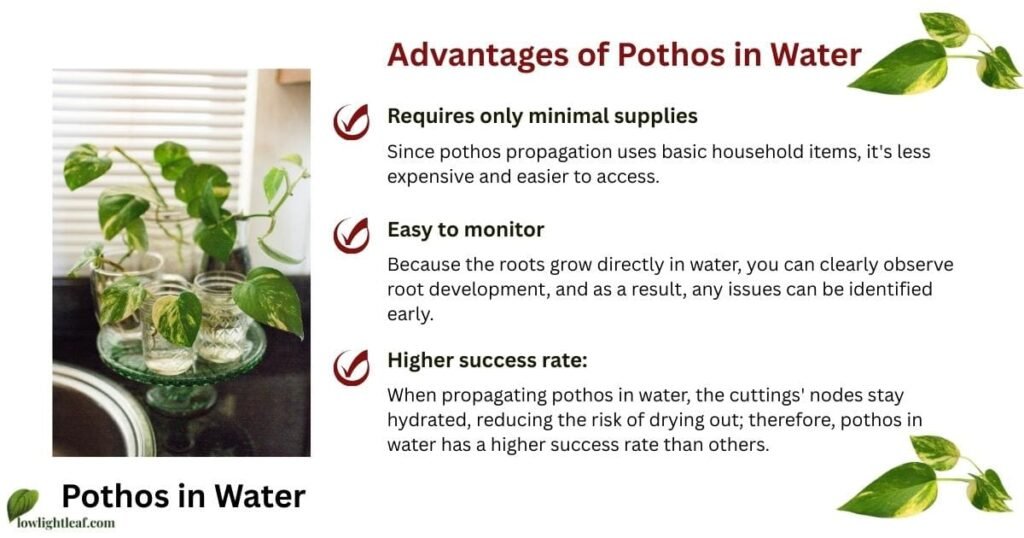
Pothos propagation in water is an easy and beginner-friendly method that requires only basic household items. Since roots grow directly in water, you can easily monitor their development and spot problems early. The cuttings stay well-hydrated, which increases the success rate and supports many of the practical pothos plant benefits indoor growers appreciate long term. Plus, it’s a mess-free process, making it perfect for indoor propagation.
You may also enjoy our article Best Houseplant that thrive in low light.
Tips for Ideal Growth
For lush and healthy growth, pothos needs a few key factors to be properly balanced:
➦ Keep it in bright and indirect light; it can survive in low light, but in low light, growth may slow down, and variegation may fade.
➦ Use the well-draining soil for pothos, because this will prevent water from sitting around the pot and cause root rot. Moreover, use the pot with drainage holes.
➦ Water when the leaves of the pothos start to droop (this is a sign of the pothos’ water requirement), how often your pothos actually needs it depends on light, season, and pot size.
➦ Furthermore, pothos require warm temperature and moderate humidity; that’s why keep it away from air conditioners. Occasionally, misting can yield better results.
➦ Use a balanced liquid fertiliser in the summer and spring seasons to protect the plant from the disease and grow ideally.
A suitable light setup for Pothos cuttings can also make it easier to maintain steady growth while new roots are developing.
FAQs About Pothos Propagation
Where should you cut pothos for propagation?
Cut just below a healthy node, since roots develop from these small joints along the vine. Each cutting should have at least one node and a few healthy leaves.
What is the easiest pothos propagation method for beginners?
Water propagation is usually the easiest method for beginners because it allows you to monitor root growth clearly before moving the cutting into soil.
How long does pothos propagation take?
Pothos cuttings normally begin forming roots within 1–2 weeks. Stronger roots that are ready for planting usually develop within 3–4 weeks under warm indoor conditions.
Can pothos cuttings stay in water permanently?
Yes, pothos can continue growing in water for long periods if the water is refreshed regularly and the plant receives enough indirect light.
Why are my pothos cuttings not rooting?
Pothos cuttings often struggle to root because of low light, cold temperatures, unhealthy nodes, or stagnant water. Healthy cuttings root best in warm conditions with bright indirect light.
How can you make pothos cuttings root faster?
Keep the cuttings warm, place them in bright indirect light, and make sure the nodes stay moist or submerged. Healthy vines with active growth usually root more quickly.
Can pothos propagate directly in soil?
Yes, pothos can root directly in moist potting soil. Soil propagation reduces transplant shock because the roots adapt to soil from the beginning.
Can pothos grow from a single leaf?
No, pothos leaves cannot grow roots or new vines without a node attached to the cutting. A healthy node is necessary for successful propagation.

Ellie Marsh
Houseplant grower who spent years in a north-facing apartment. Writes practical care guides for low light homes, checked against extension and botanical garden sources.
Explore more: