Last updated on October 15, 2026
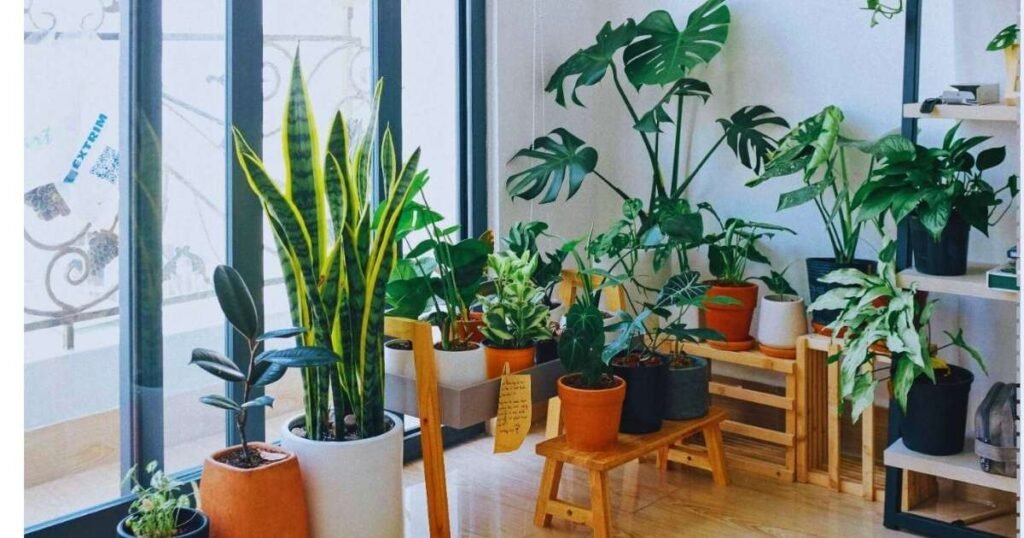
North facing window plants need to be low- to medium-light plants placed close to the glass. University of Illinois Extension puts the spot directly in front of a north window at about 150 foot-candles, medium light, and a few feet back at about 75, low light, which suits snake plant, peace lily, Chinese evergreen and heartleaf philodendron.
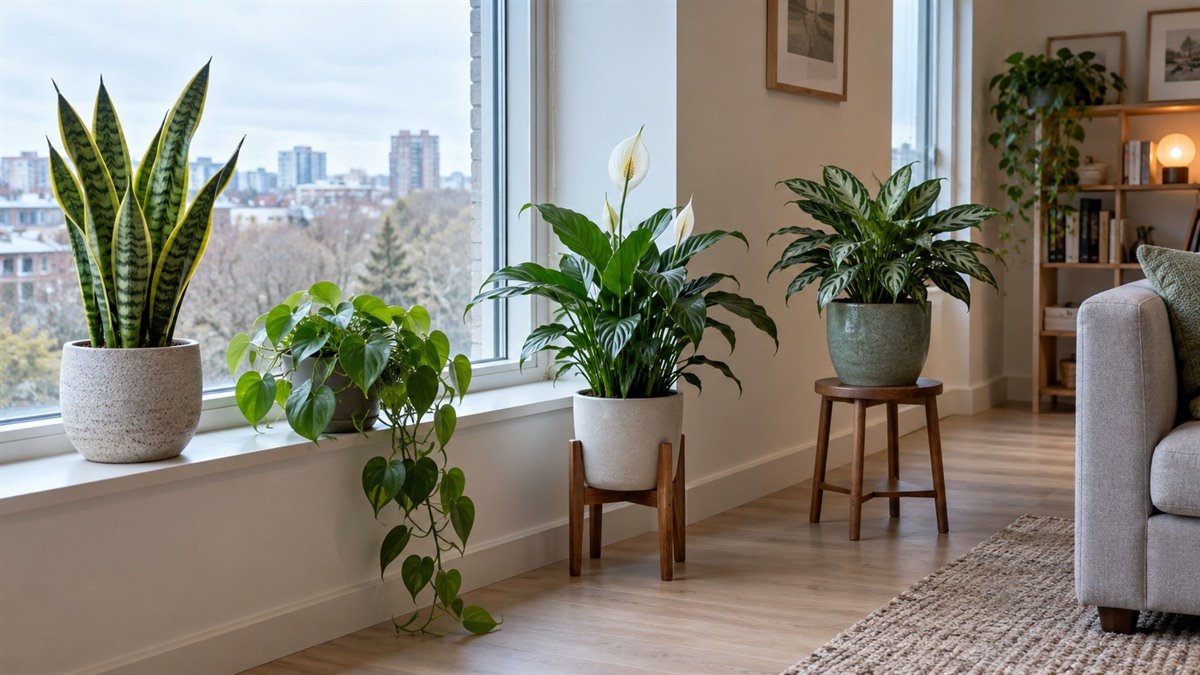
I lived for years in a north-facing apartment where most of the “easy” plants slowly gave up. What I didn’t understand then is that distance from the glass mattered more than which plant I bought.
How much light a north window gives
A north window gives steady, indirect light with little or no direct sun, and the amount drops fast as you move away from it. Three extension services describe it a little differently:
- University of Illinois: about 150 foot-candles directly in front, about 75 a few feet away.
- University of Florida: an unshaded north window falls in the 100 to 500 foot-candle “medium” band, but it may never reach even 400 at midday.
- University of Maryland: north-facing windows are low light, 25 to 100 foot-candles.
The ranges overlap more than they conflict. Outdoor shade, curtains, screens and dirty glass all cut the light, Maryland notes, so an unshaded north window can reach medium light while one behind a tree stays low.
Surviving and growing look very different in a north room.
“Ive got a north facing window in my bedroom and I’d like to have one or two plants there to brighten it up. My issue is that I’ve HAD plants there, but every time I move them to my living room with west facing windows, they start REALLY thriving. Every time I do research and see “X” plant loves low/indirect light! Its just not true??? From online anecdotal evidence and my own experience. Like how snake plants are advertised as “throw them in a corner and they’ll live” but when they get SUNLIGHT…” [excerpt — 610 characters in full]
– r/houseplants, September 2026 (74 upvotes)
North window plants by distance from the glass
Match each plant to where it will actually sit, using the ratings from Illinois’s houseplant list and Maryland’s low-light examples.
| Where it sits | About how much light | Plants rated for it |
|---|---|---|
| Directly in front of the glass | About 150 foot-candles, medium (Illinois) | Pothos, spider plant, prayer plant, dracaena, rubber plant, peperomia, arrowhead vine (Illinois medium) |
| A few feet back from the glass | About 75 foot-candles, low (Illinois); 25-100 (Maryland) | Snake plant, peace lily, Chinese evergreen, heartleaf philodendron, parlor palm, Boston fern (Illinois low); ZZ plant, cast iron plant (Maryland low) |
| To the side of the window | Darker than it looks (Iowa State) | Treat as the row above, or lower |
| Across the room | Often too dim to grow houseplants (Iowa State) | Move the plant closer or add a grow light |
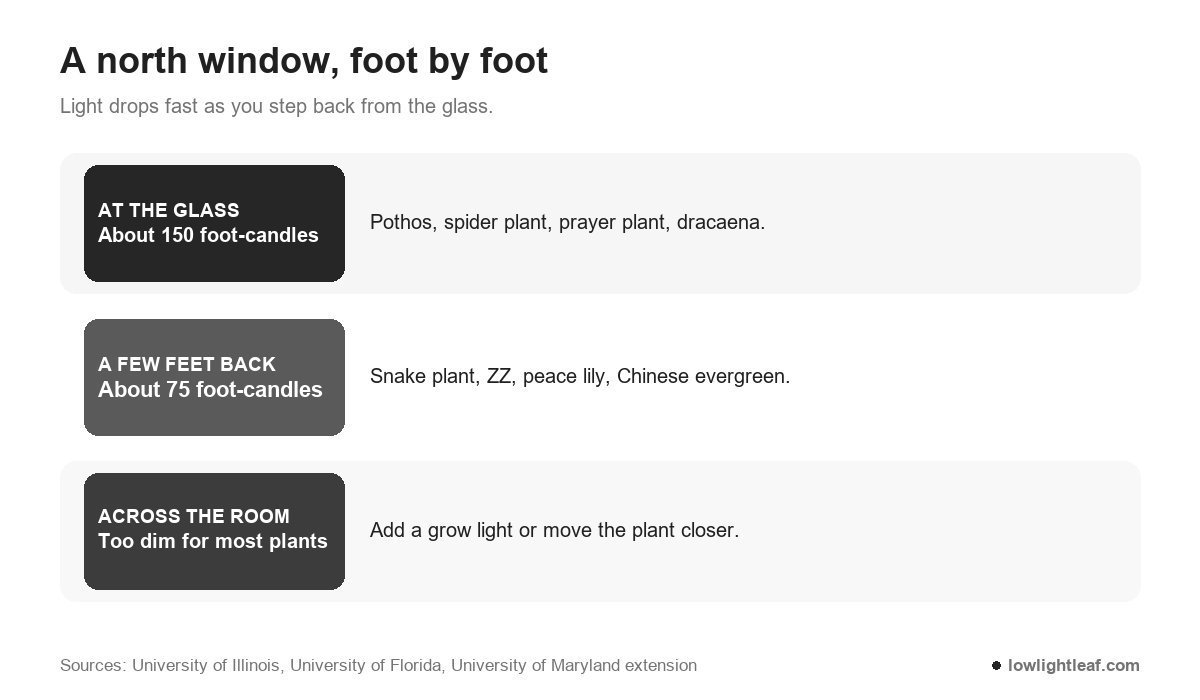
Two quick rules help with anything not on the list. Penn State Extension notes that plants with darker green leaves usually handle low light better, so a plain green form of a plant suits a north window better than a heavily variegated one. And a plant rated medium belongs right at the glass, not on a shelf across from it.
A plant that’s only getting light bounced around the room is a common sight in north rooms. When one owner asked whether a rubber tree would last in theirs, the reply was direct:
“I will point out that it’s barely getting light from any window. It’s getting indirect light bounced around the room. No, that’s not enough. Put it directly in front of the window. If you have enough plants to justify it, a $20 to $50 light meter will be a reliable way to know how bright the spot is. Human eyes are bad at estimating light. Cameras auto-adjust exposures. You are aiming for 10,000 lux for the majority of the day for a tree like that. I estimate you have between 100 to 400 lux the…” [excerpt — 527 characters in full]
– r/houseplants, July 2026 (50 upvotes)
Measure it before you buy
First, confirm which way the window faces. A phone’s compass app settles it in seconds, and a window that leans northeast or northwest behaves slightly differently from a true north one, which is one more reason to measure rather than assume.
Measure the light at the spot you have in mind, at midday, before you buy a plant for it. Florida calls a hand-held digital light meter the best tool, as long as it reads in foot-candles or lux and is accurate to one foot-candle, and Iowa State says light meter apps and even cameras can give a reading.
If you’d rather not measure, watch the plant. Iowa State’s signs of too little light are dropping leaves, flowers that never form, and growth that is pale, spindly or slow. Bleached or browning leaves mean the opposite, too much light.
Moving into a north-facing place with a big collection is a real worry, and it’s a common one.
“I need to vent. We just signed a lease for a year in our new apartment, and all of our windows are north-facing. I’m honestly so upset about it. I have over 100 plants and I’m very attached to them. They’re basically my only hobby, and I worry they may all die. They were so happy in our old apartment, and this apartment actually has huge windows, which I was really excited about, but ALL of them are north-facing. I do have grow lights, but I wasn’t using them at all in our old apartment because…” [excerpt — 626 characters in full]
– r/houseplants, September 2026 (11 upvotes)
The answer is the same as in the table: crowd the medium-light plants at the glass, keep the low-light ones a few feet back, and plan on a grow light for anything that has to sit farther away.
Watering and humidity in a north room
Plants in a north room need less water than the same plants in a bright one, since University of Minnesota Extension says plants in less light grow more slowly and use less water, so feel the soil instead of watering on a fixed day.
“Do not water on a schedule, check the soil on a schedule. Generally you water when the soil is either somewhat or bone dry depending on the plant, but as u/CdnTreeGuy89 noted, it depends on the substrate, the plant itself, the light your plant is getting, and the *size* of the plant. A rootbound Monstera getting full sun in very chunky well-draining soil is going to dry out quickly, so you will want to water a bit more. A baby pothos in a massive pot in a closet, in badly draining soil, will ta…” [excerpt — 742 characters in full]
– r/houseplants, January 2026 (18 upvotes)
Winter adds dry air. Iowa State says most houseplants grow best at 40 to 50% humidity, and homes can drop to 10% in winter. It also warns against trapping plants between a curtain and the glass, where temperatures swing from warm to cold overnight.
North facing window plants FAQ
Are north facing windows good for plants?
North facing windows are good for low-light plants and fine for medium-light ones placed right at the glass. Iowa State calls them an option for plants that grow well without bright indirect light, and Illinois puts the spot in front of the glass at medium light.
What is the best plant for a north-facing room?
Snake plant, ZZ plant, peace lily and Chinese evergreen are the safest picks, since Illinois or Maryland rate each of them for low light. If you have a big, unshaded north window, pothos and spider plant can go right at the glass.
Can tall plants grow in a north window?
Yes, if they’re rated for low or medium light and stand within a few feet of the glass, such as rubber plant, dracaena and fiddle leaf fig (medium in Illinois’s list) or parlor palm (low).
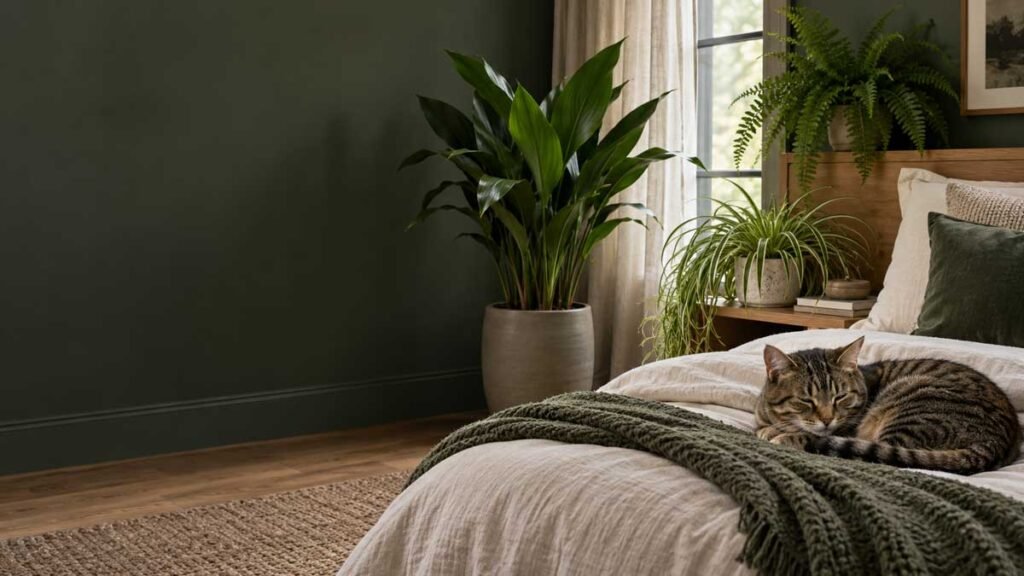
For more plants that cope with dim rooms, see low light indoor plants. If a bedroom is your north room, the window-by-window picks are in best plants for bedroom.

Ellie Marsh
Houseplant grower who spent years in a north-facing apartment. Writes practical care guides for low light homes, checked against extension and botanical garden sources.