Last updated on November 3, 2026
Why are my plant leaves turning yellow? Overwatering is the most common reason: University of Maryland Extension calls it the number one reason indoor plants fail. Dry soil, too little light, a lack of nitrogen, pests and plain old age can all turn leaves yellow too, and where the yellow starts on your plant tells you which one you’re dealing with.
So before you water, feed or repot, look at which leaves are changing. A few yellow leaves at the bottom of an otherwise healthy plant mean something very different from yellow leaves at the top.
Why are my plant leaves turning yellow? Check which leaves first
Which leaves turn yellow first is the quickest clue you have. The RHS, UC Statewide IPM and Penn State Extension each sort yellowing by which leaves it hits first, and they agree on most of it.
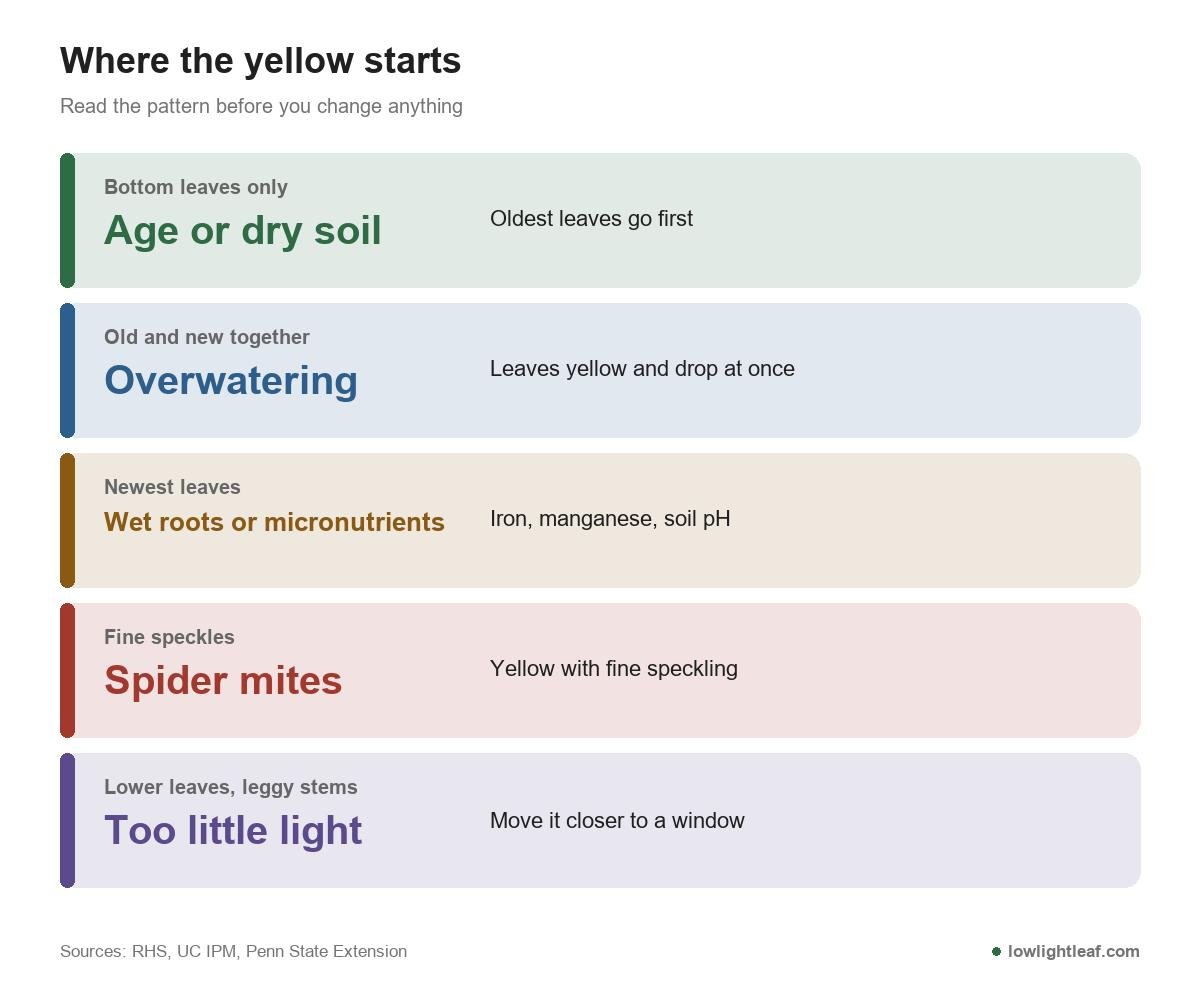
- Only the oldest, lowest leaves. The RHS says the older leaves at the base of a dry plant often yellow and fall first. Penn State lists natural aging here too, along with a pot-bound plant and a shortage of nitrogen, magnesium or potassium.
- Old and new leaves at the same time. The RHS links this pattern to overwatering, usually with leaves dropping as they yellow.
- The newest leaves. UC IPM points to overwatering, a soil pH problem or a micronutrient shortage. Penn State names iron and manganese, plus too much fertilizer.
- Yellow with fine speckling. UC IPM ties this to spider mites.
- Lower leaves yellowing on a stretched, spindly plant. The RHS describes this as too little light.
The sources split on one point. The RHS and UC IPM put low light under older, lower leaves, while Penn State’s table lists low light under young leaves. In practice, a plant far from a window with weak new growth is short of light either way.
Overwatering, the most common reason leaves turn yellow
Overwatering turns leaves yellow by starving the roots of air. University of Maryland Extension explains that excess water reduces oxygen in the soil, damages the fine roots and leaves the plant unable to take up water. That’s why an overwatered plant can look thirsty. Its main symptom, per the same source, is wilting or yellowing of the lower and inner leaves.
This is also why watering more often makes things worse. A wilting, yellowing plant looks dry, so it gets another drink, and the roots get less air still. One r/plantclinic reply caught exactly that sequence:
“soil does look pretty moisture retaining and wet though, and there looks to be some rot in the upper root area, so maybe overwatering could be it edit: you say in the description yesterday it was 1 yellowing leaf, then you watered it and today it’s 3 more yellowing, so sounds like the issue to me”
– r/plantclinic, September 2026 (23 upvotes)
If your plant sits in dense, slow-draining mix or a full saucer, that adds to the problem. UC IPM lists poor drainage, compacted soil and overwatering together as causes of poor root health.
Check the soil and roots before you change anything
Checking the soil and roots takes a few minutes and settles the water question without guessing. These steps come from University of Maryland Extension, Illinois Extension and the RHS:
- Lift the pot. Potting mix gets lighter as it dries, so compare the weight with how it felt right after watering.
- Use a stick on big pots. Push a dowel to the bottom of the pot. Moist soil sticks to it or darkens it.
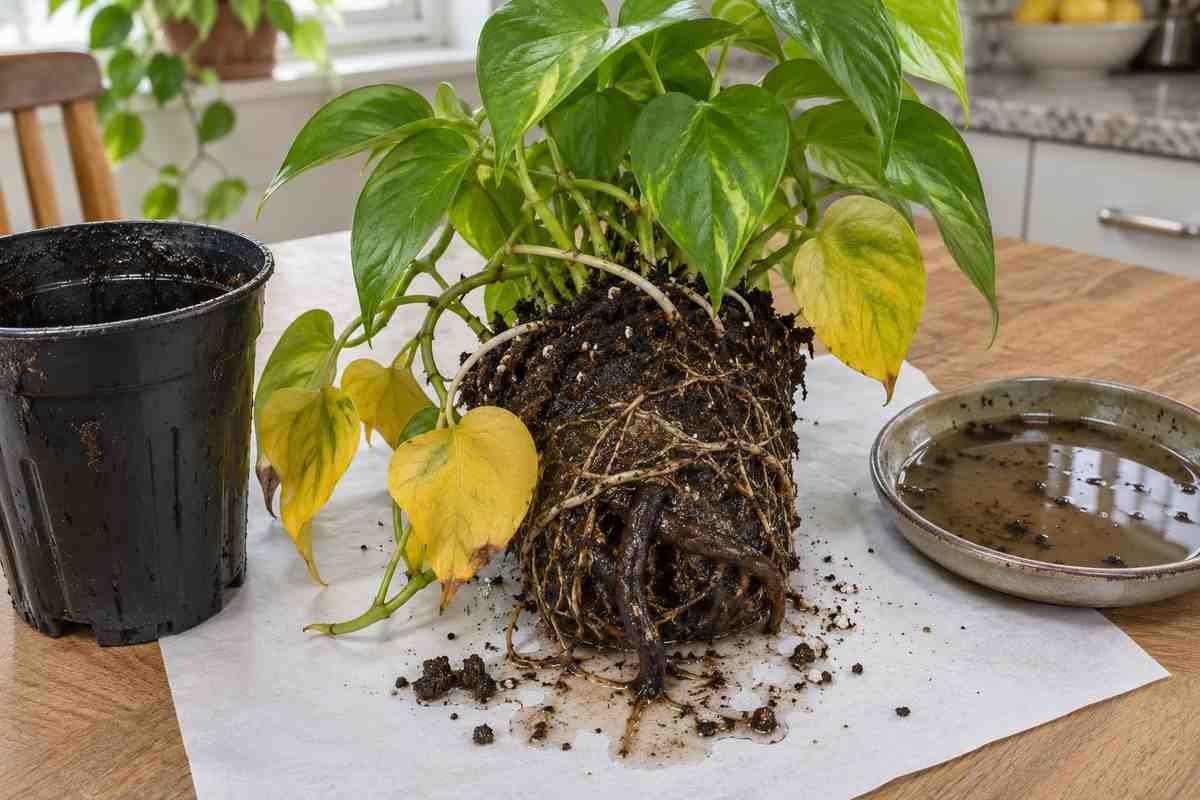
- Look at the roots. Slide the plant out of its pot. Illinois Extension says dark brown to black roots mean the plant is overwatered, and the RHS adds that overwatered roots are dark and mushy.
- Check the bottom of the pot. The RHS suggests lifting the plant out to see whether water has collected in the base.
- Empty the saucer. Maryland Extension advises pouring off any water that collects under the pot.
If the soil is wet and the roots are dark, stop watering and let the mix dry before you water again. If the soil is dry and pulling away from the sides of the pot, Maryland Extension notes it may take several waterings to wet it through. Our mold in plant soil guide covers the white fuzz that often turns up on mix that stays wet.
Light, food and other causes of yellow leaves
If the roots are healthy and the soil isn’t soggy, look at light next. The RHS lists pale leaves and weak, spindly growth as signs of too little light, and suggests moving plants closer to south- or west-facing windows over winter. That slow, lower-leaf yellowing is the one I’d watch for most in a north-facing apartment like the one I lived in. A plant several feet from a north window may need a grow light, and our grow lights for indoor plants guide covers distance and hours.
Food comes after light and water, not before. Illinois Extension says fertilizer and household pesticides are not an appropriate first response to a struggling houseplant. UC IPM does list insufficient fertilizer, especially nitrogen, as a cause of yellow-green older leaves, so a plant that hasn’t been fed in a long time and is yellowing evenly from the bottom may need it.
A few other causes from the same sources:
- A recent move. Illinois Extension says yellowing after a move may fade as the plant adjusts. UC IPM adds that a sudden change in light, temperature or humidity can cause leaf drop.
- Drafts. The RHS lists draughts among the causes of yellowing.
- A pot-bound plant. Both UC IPM and Penn State name crowded roots.
- Brown tips with the yellow. UC IPM says brown tips usually come from too much fertilizer, salt buildup, or soil that’s too dry or too wet.
When yellow leaves are normal
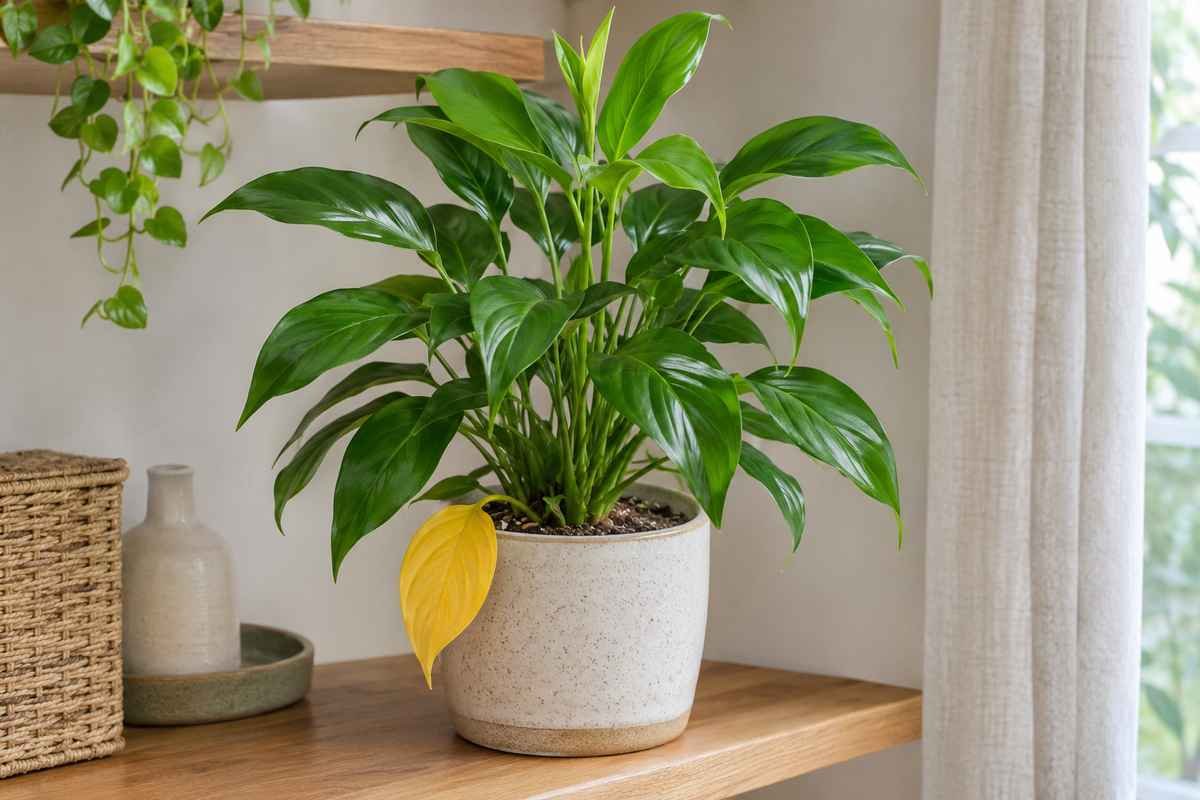
Yellow leaves are normal when only one or two of the oldest leaves at the base are going, and the rest of the plant looks healthy. Penn State lists natural aging among the causes of old leaves turning yellow. One r/houseplants reply put it simply:
“If they are at the bottom, they will die off naturally over time. If no other leaves are showing signs of distress this is a normal part of growth for this plant.”
– r/houseplants, December 2025 (3 upvotes)
What you should watch is the pace. A leaf every few weeks while new ones keep coming is turnover. Several at once, or yellowing that climbs the plant, is a sign to go back to the soil and root check.
Can yellow leaves turn green again?
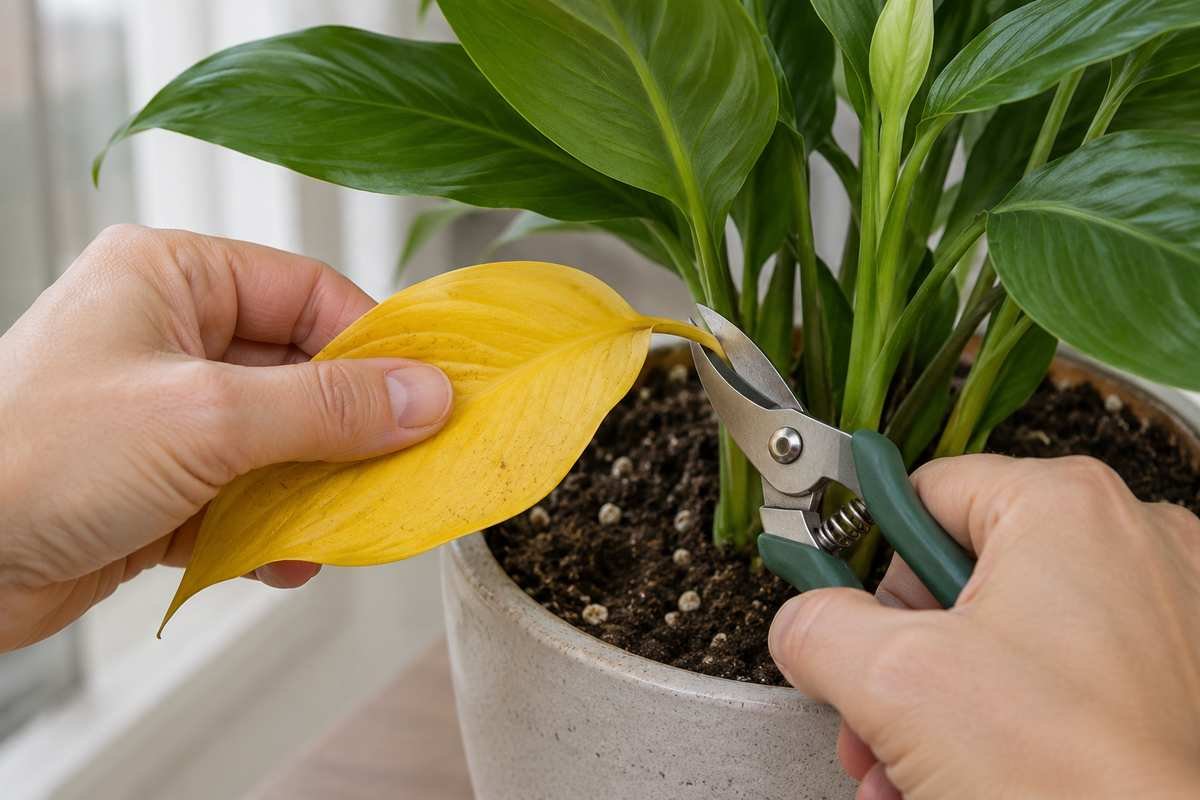
No. A leaf that has turned completely yellow won’t turn green again. The RHS says completely yellow leaves won’t recover and can be cut off with clean secateurs. It also advises keeping leaves that are still mostly green until the plant has put out a fresh flush of growth, since those leaves are still feeding it.
The plant itself can recover. The RHS notes that many houseplants bounce back quickly once their growing conditions improve. Judge your fix by the new leaves, not the old ones. University of Maryland Extension warns that if the stress isn’t relieved, yellow leaves may turn brown, so brown spreading through yellow leaves means the cause is still there.
Yellow leaves on a specific plant
If you know which plant you have, these guides go further than a general list can:
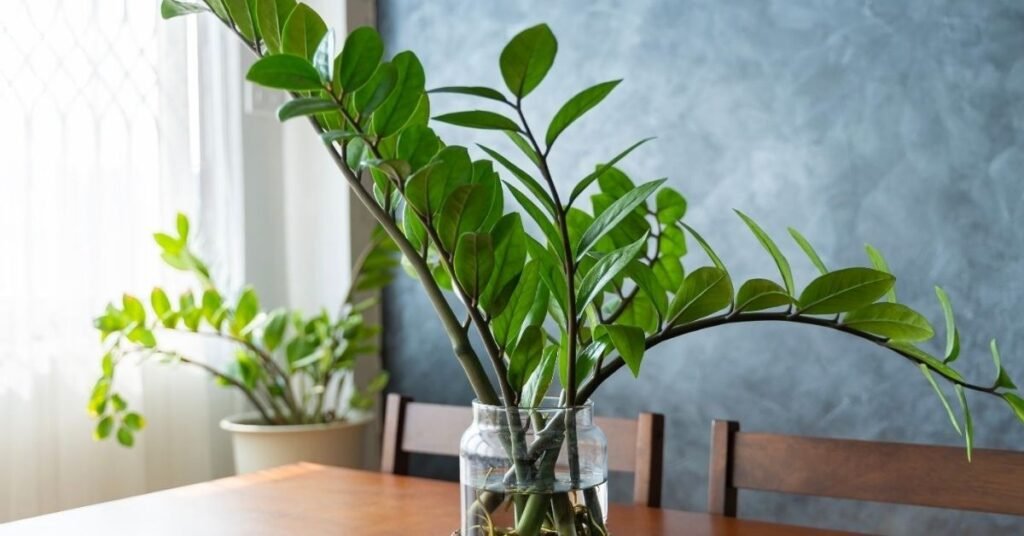
- ZZ plant yellow leaves: a quick diagnosis chart, yellowing after repotting and root rot recovery.
- Pothos yellow leaves: the common causes, when yellowing is normal and a recovery plan.
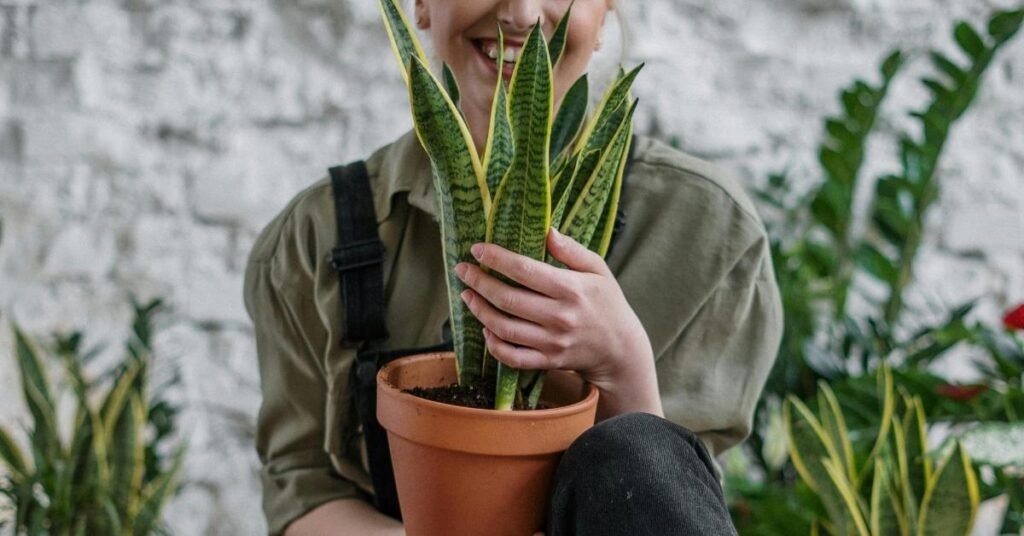
- Snake plant yellow leaves: including soft, mushy yellow leaves and yellowing after repotting.
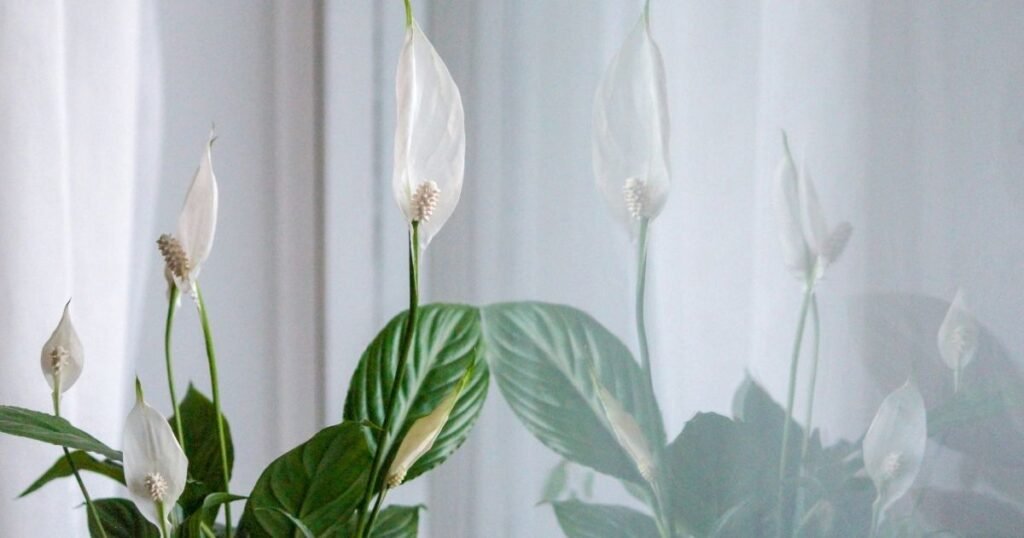
- Peace lily yellow leaves: including yellow leaves with brown tips.
- Spider plant yellow leaves: including yellow pups and plants rooting in water.
A yellow leaf is a record of something that already happened. The next few leaves will tell you whether you fixed it.

Ellie Marsh
Houseplant grower who spent years in a north-facing apartment. Writes practical care guides for low light homes, checked against extension and botanical garden sources.