Last updated on October 11, 2026
Pothos yellow leaves can have several causes. The most common is a moisture problem, too much water, too little, or soil that drains poorly, though light, nutrients, temperature, pests, and simple aging can all cause it too. The right fix depends on which leaves are affected, how they feel, and what the soil is doing right now. One or two yellow leaves near the base of an actively growing plant are rarely a concern. Widespread, rapid, or new-growth yellowing usually means something needs correcting. Before you change anything, diagnose the pattern rather than guessing. That’s the fastest way to identify the actual cause and choose the right fix. Pothos easy-care nature and adaptability are part of what makes it such a popular indoor plant.
How to Diagnose Pothos Yellow Leaves Before You Try to Fix Them
Most pothos advice jumps straight to a list of causes. But yellowing is a symptom, not a diagnosis. The same symptom can point to very different causes. Soft yellow leaves and crispy yellow leaves rarely mean the same thing, even though both are yellow. Diagnosing first saves you from fixing the wrong problem.
Start With These 5 Quick Clues
Use these clues to narrow down the likely cause before changing your Pothos care routine.
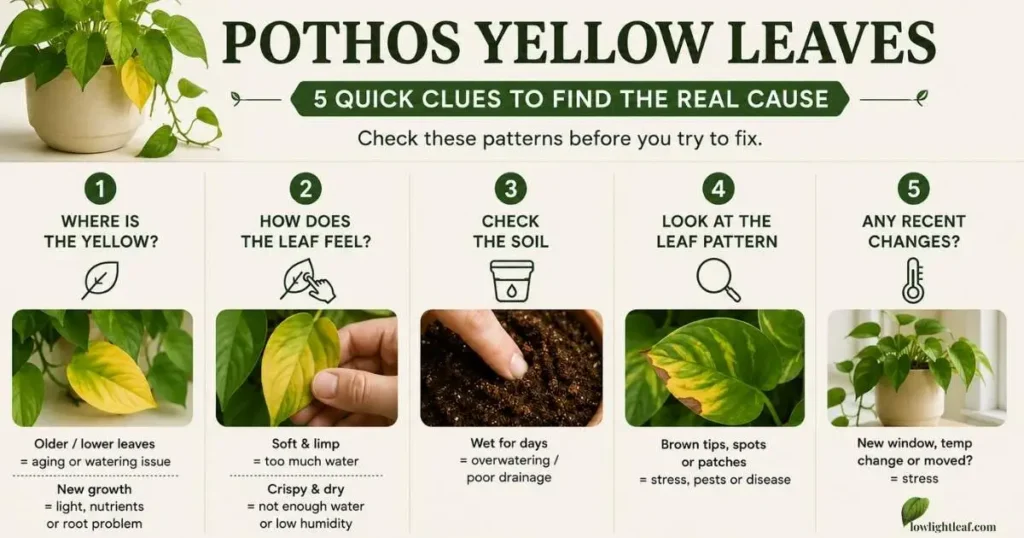
- Which leaves are yellow? Older, lower leaves can fit natural aging or watering stress, while yellowing in new growth points more toward light, nutrients, or a root problem.
- Where is the yellowing spreading? Yellowing limited to the bottom, top, one side, or the whole plant can provide another clue about the underlying stress.
- What does the leaf feel like? Soft and limp usually points toward excess moisture, while dry and crispy tissue usually points toward too little moisture.
- What does the soil feel like right now? Soil that stays wet for several days after watering, or becomes bone dry and pulls away from the pot’s edge, can quickly narrow down the possibilities.
- Has anything changed recently? A repot, new fertilizer, a move to a different room, or a seasonal change can all trigger yellowing that has nothing to do with your everyday routine.
Together, these clues can narrow the diagnosis before you change anything.
Quick Symptom → Likely Cause → First Clue
| Symptom | Most Likely Cause | First Clue |
|---|---|---|
| Soft, limp yellow leaves | Overwatering | Roots and soil moisture |
| Crispy, dry yellow leaves | Underwatering | When the soil last dried out |
| Only older, bottom leaves | Natural aging | Whether new growth is still healthy |
| New leaves yellowing | Nutrient, light, or root issue | Light levels and root condition |
| Yellow with brown spots | Sunburn, disease, or pests | Leaf undersides and sun exposure |
| Yellow and curling | Water or environmental stress | Soil moisture and recent light/temperature change |
| Yellow leaves falling off | Natural aging (few leaves) or stress (several at once) | Leaf age and how many are affected |
| Yellow leaf edges or tips | Dryness or nutrient pattern | Whether the rest of the leaf is healthy |
| Whole plant yellowing at once | Root or broader environmental stress | Roots first, then recent changes |
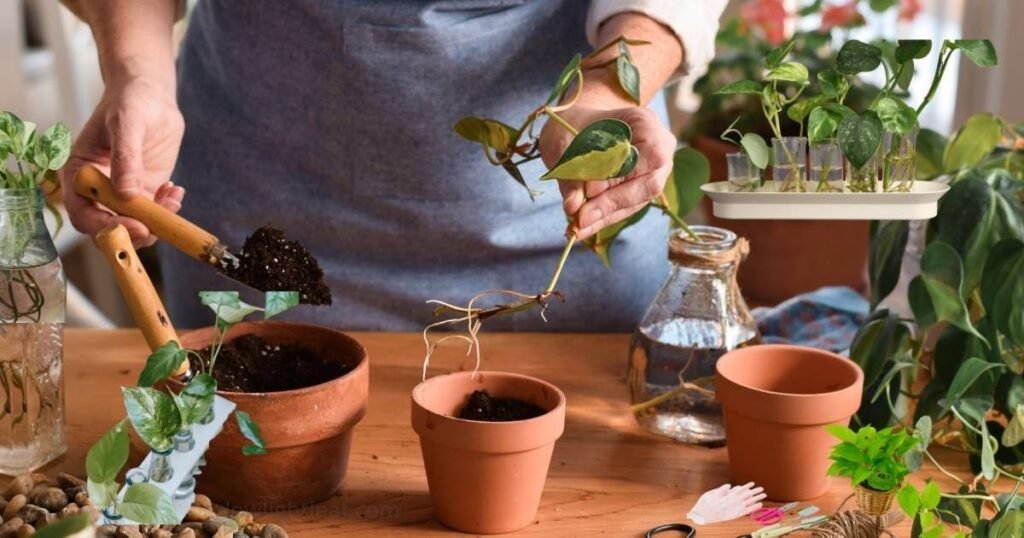
Yellow and brown together rarely point to one single cause. The brown pattern is what narrows it down. Crispy brown tips or edges usually point toward dryness or environmental stress. Brown spots or patches lean more toward sun exposure, pests, or disease. Soft, mushy brown tissue suggests excess moisture or root damage. Yellowing that progresses into brown with leaves dropping soon after usually means the underlying stress has been building for a while rather than just starting. If the plant has healthy stems left after severe damage, propagating healthy Pothos cuttings can be a practical way to preserve it.
The Most Common Reasons Your Pothos Leaves Are Turning Yellow
The sections below break the main causes down by the clues that distinguish one from another, so you can focus on the explanation that best matches your Pothos. Leaf texture, where the yellowing starts, how quickly it spreads, and what changed around the plant can help separate watering problems from light, nutrient, root, pest, or environmental stress. Start with the most common causes below, then use the symptoms and diagnostic clues to narrow down which one fits your plant.
Overwatering (Most Common Cause)
Could overwatering still be the problem if the soil looks dry today? The answer can still be yes. Roots damaged by past overwatering can leave the plant recovering from moisture stress even after the soil surface has dried. Overwatering rarely means you gave the plant too much water in one sitting. It usually means the soil stayed wet for too long between waterings.
Roots need oxygen from the surrounding soil, and constantly saturated soil pushes that oxygen out. Starved of it, roots stop functioning properly, and the leaves respond by yellowing, often turning soft or limp rather than crispy.
Signs that overwatering is more likely:
- Soil is still wet several days after watering.
- The pot has a musty or sour smell.
- Stems near the soil line feel mushy or look blackened.
- Fungus gnats hover around persistently damp soil. They are a moisture indicator, not the cause of yellowing.
- Water is sitting in the saucer after watering.
What to do: Let the top portion of the soil dry before watering again, confirm the pot actually drains, and empty any water collecting underneath. If the plant continues to decline despite appropriate watering, inspect the roots for damage instead of repeatedly adjusting your watering schedule.
Underwatering
Underwatering shows up differently. Instead of soft tissue, you’ll usually see dry, crispy yellow leaves, sometimes with drooping vines and soil that has pulled away from the sides of the pot. When water is scarce for too long, the plant pulls resources from its older leaves to protect new growth, which can lead to yellowing in those older leaves.
The soil test can narrow this down quickly: if the soil is dry well below the surface and the pot feels noticeably light, underwatering is the more likely explanation.
What to do: Water thoroughly until it runs from the drainage hole, rather than giving small sips that only wet the surface.
Inconsistent Watering
Sometimes it isn’t overwatering or underwatering specifically, it’s the swing between the two. Letting the soil go bone dry, then soaking it heavily, repeatedly puts the plant through a stress cycle that can cause yellowing even when neither extreme happens all the time. If your watering habits have been irregular lately, return to a consistent watering routine once the soil dries, instead of alternating between prolonged dryness and heavy soaking.
What to do: Let the soil guide your watering rather than following a fixed calendar. Avoid letting the mix become completely dry for long periods or keeping it constantly saturated, and water thoroughly when the plant actually needs it.
Poor Drainage & Heavy Soil
Can poor drainage cause yellow leaves even if you’re watering correctly? Yes. A pot without drainage holes, a container that’s much larger than the root system, or a dense, compacted soil mix can all keep roots sitting in moisture far longer than intended. It can create the same prolonged-moisture conditions that make overwatering harmful, even when your watering routine itself is reasonable.
What to do: Make sure the pot has working drainage holes, use a well-draining soil mix with amendments such as perlite or orchid bark when appropriate, and avoid moving the plant into a much larger container simply to give the roots more room.
Root Rot
Persistent excess moisture can create the conditions that lead to root rot. At this stage, roots turn brown, black, or mushy, and the smell from the potting mix becomes noticeably unpleasant. Because damaged roots can no longer take up water or nutrients effectively, yellowing can spread or worsen as the root damage progresses.
How can you tell if yellow leaves are caused by root rot? Gently remove the plant from its pot and inspect the root system. Look for these differences:
- Healthy roots: firm and pale.
- Damaged roots: brown or black, mushy, falling apart, or accompanied by a sour smell.
What to do: Trim away the affected roots and repot the plant in fresh, well-draining soil.
Is It a Light Problem?
Light can create two opposite yellowing patterns, so understanding your Pothos light requirements can help distinguish gradual yellowing from prolonged darkness from localized damage caused by harsh direct sun. The location of the yellowing and the plant’s recent light exposure usually reveal which one you’re dealing with.
Too Little Light
Pothos tolerates low light, but extended low-light conditions can limit healthy growth. In a very dark location, growth slows, chlorophyll production drops, and leaves can yellow as a result. There’s a secondary effect worth knowing: dim light also slows how quickly soil dries out, which quietly raises your odds of accidental overwatering even if your watering amount hasn’t changed.
If your space receives limited natural light, choosing plants suited to those conditions can also help prevent light-related stress.
Too Much Direct Sun
At the other extreme, harsh direct sun, especially through an unfiltered south-facing window in the afternoon, can scorch foliage. This usually shows up as uneven yellow patches or bleaching concentrated on the side of the plant facing the window, sometimes with crisped edges. Moving the plant back from the glass or filtering the light with a sheer curtain can reduce further light stress without requiring you to relocate the plant entirely.
Nutrient Problems That Cause Yellow Leaves
Nutrient Deficiency
Shortage of nutrients can cause yellowing, but they are less likely than watering or light problem. Check those factors first, especially if the roots are waterlogged or damaged, because adding fertilizer at that stage can put additional stress on the plant. The pattern of yellowing can then help narrow down which nutrient may be involved.
Too Much Fertilizer
Did the yellowing start soon after you fertilized? If so, fertilizer stress becomes more likely, especially if you’re also seeing brown tips or a white crust on the soil. Overfeeding can produce symptoms that look similar to a nutrient deficiency. Excess fertilizer salts build up in the soil, especially with frequent feeding or mineral-heavy water, and can show up as yellowing, browned tips, or even a visible white crust on the soil surface.
What to do: Flush the soil thoroughly with plain water and pause fertilizer until the plant shows signs of recovery.
Environmental Stress That Can Turn Pothos Leaves Yellow
Temperature and humidity can contribute to yellowing, but they usually leave clues that distinguish them from other Pothos care problems. Look for a connection between the yellowing and a nearby temperature or humidity change before treating it as a watering problem.
Cold Stress
Cold drafts from an exterior door, a poorly sealed window, or an air-conditioning vent can stress pothos enough to cause yellowing, particularly in leaves closest to the draft. Move the plant away from the draft source to reduce repeated exposure.
Heat Stress
Heat stress creates a different pattern. Leaves near a heating vent or radiator tend toward dry, crispy yellowing rather than the paler tone associated with cold. In either case, move the plant away from the source of the temperature stress.
Low Humidity
Low humidity on its own is rarely the reason for widespread yellowing. What it typically causes instead is crispy leaf tips and browned edges. If that’s what you’re seeing rather than broad yellowing across the plant, humidity is worth addressing, but treat it as a tips-and-edges issue rather than a first suspect when Pothos leaves are turning broadly yellow.
Pests and Diseases
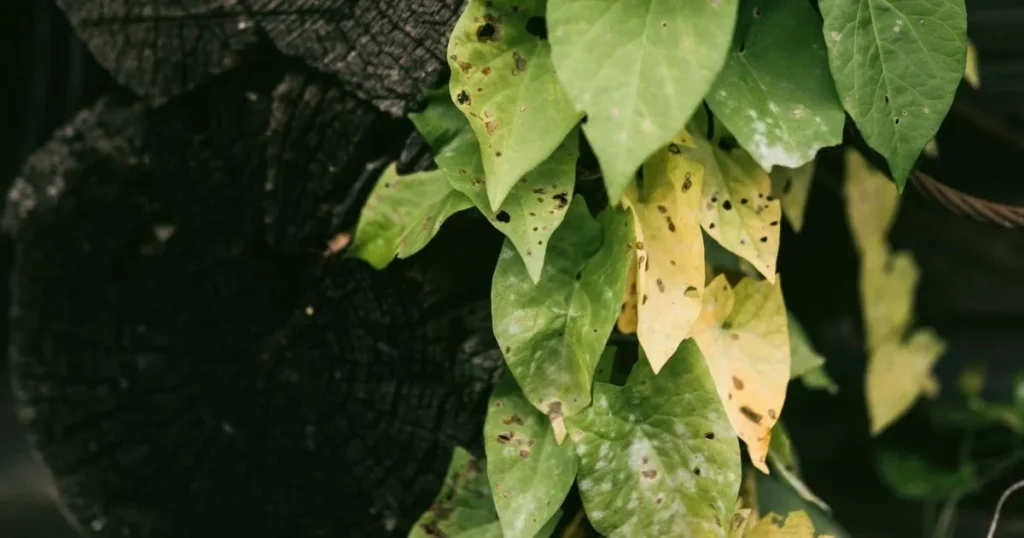
Pests and diseases can also cause Pothos leaves to yellow, but they usually leave additional clues that help separate them from watering or light problems. Check the leaves, undersides, stems, and soil for visible signs before assuming an infestation or disease is responsible.
Spider Mites, Mealybugs, and Scale
Sap-feeding pests weaken the plant gradually, and yellowing is often one of the later signs rather than the first. Spider mites in particular often cause fine yellow speckling across the leaf surface before more obvious damage appears. Also watch for fine webbing, small moving specks, cottony white clusters, or sticky residue, particularly on leaf undersides and where leaves meet the stem.
What to do: Isolate the affected plant while you identify and treat the pest, and inspect nearby plants for similar signs.
When Disease May Be the Cause
Bacterial or fungal leaf diseases can occasionally cause yellowing, usually paired with distinct spotting or lesions rather than clean, uniform yellow. If yellowing appears alongside unusual spotting or lesions that don’t fit the light or pest patterns already described, it’s worth investigating disease as a possibility rather than assuming the problem is watering.
What to do: Separate the plant from others and investigate the affected leaves before applying a treatment, especially if the spotting is spreading.
Other Situations That Can Cause Pothos Yellow Leaves
Not every case of Pothos yellow leaves fits the main causes above. Recent repotting, limited root space, growing the plant in water, or seasonal changes can alter how yellowing develops, so the timing and circumstances matter.
After Repotting
Can repotting make Pothos leaves turn yellow? Yes. Some yellowing after repotting can result from root disturbance and a changed environment. Mild yellowing can settle as the plant adjusts, provided the new setup has appropriate moisture, drainage, and light. Hold off on fertilizing immediately after repotting and keep watering and light consistent while the roots adjust.
Root-Bound Plant
A Pothos that’s outgrown its pot shows a different profile: roots circling densely inside the container, roots emerging from the drainage holes, soil that dries unusually fast, and stalled growth alongside the yellowing. If the yellowing is accompanied by other signs of slowed or stopped Pothos growth, it can help to look beyond the leaf symptom itself and consider the plant’s broader growing conditions. This calls for sizing up the pot rather than adjusting your watering habits.
Growing Pothos in Water
Pothos grown in water can still yellow, especially when the water has gone stale, the container has not been refreshed regularly, or the roots are under stress. Because there’s no soil to assess, inspect the roots directly and refresh the water regularly to monitor the plant’s condition.
Did the yellowing begin after moving a water-grown Pothos into soil? That transition asks the roots to adapt to a completely different growing environment, and some yellowing while they adjust isn’t unusual. Persistent or worsening yellowing afterward is worth investigating further, check moisture, drainage, and root health instead of assuming the transition alone explains it.
Seasonal Yellowing (Winter)
Can Pothos leaves turn yellow in winter? Yes, especially when lower light slows growth and the plant uses less water than it did during warmer months. Watering at the same pace you did over summer, even without meaning to, can effectively overwater the plant during a season when it needs less. Reduce watering frequency based on how quickly the soil dries rather than following the summer schedule.
Pothos is not the only houseplant that can develop this symptom; you can also see similar changes in Peace Lily leaves.
Is Yellowing Ever Normal?
Not every yellow-looking Pothos leaf signals stress. Before changing watering, light, or fertilizer, check whether the color is part of the plant’s normal aging or natural variegation.
Natural Aging
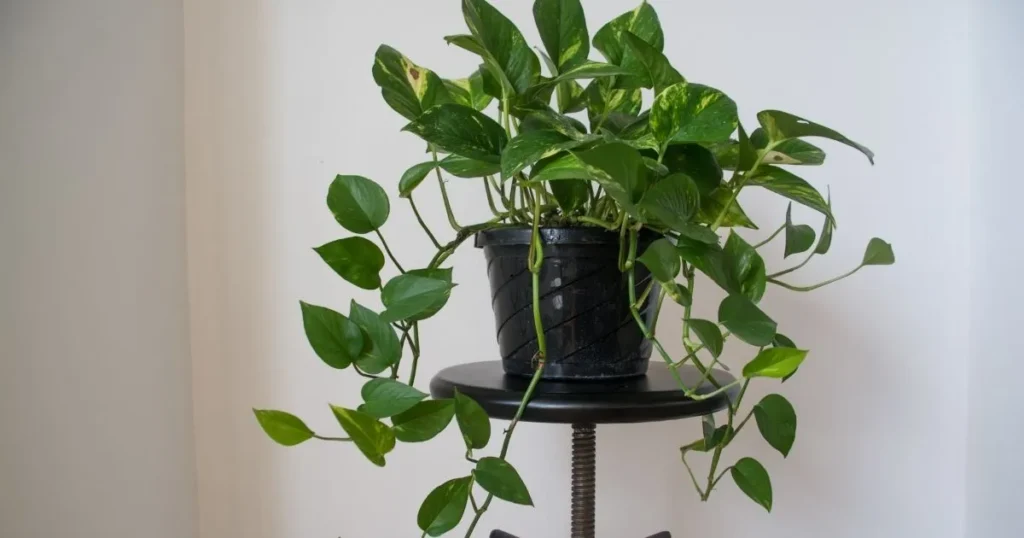
An occasional yellow leaf near the base of an otherwise healthy, actively growing plant can be normal as the plant naturally sheds older foliage and directs resources toward new growth. This usually needs no corrective change; you can remove the leaf once it releases easily.
Are one or two older leaves dropping, or are several leaves yellowing and falling together? That distinction matters. Isolated, occasional leaf drop from the base fits natural aging, while multiple leaves falling around the same time points toward a care issue worth working through the diagnostic steps above.
Natural Leaf Color vs. Yellowing
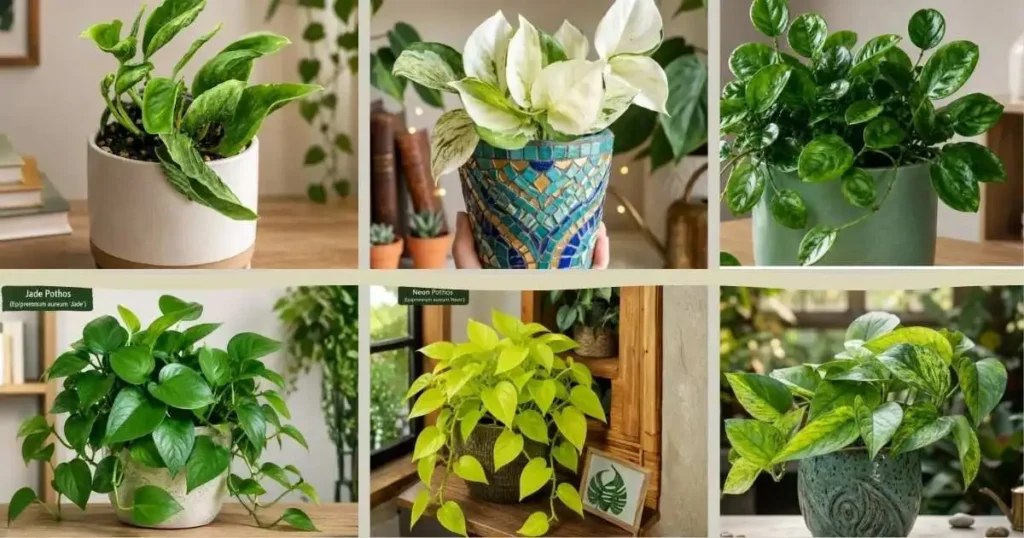
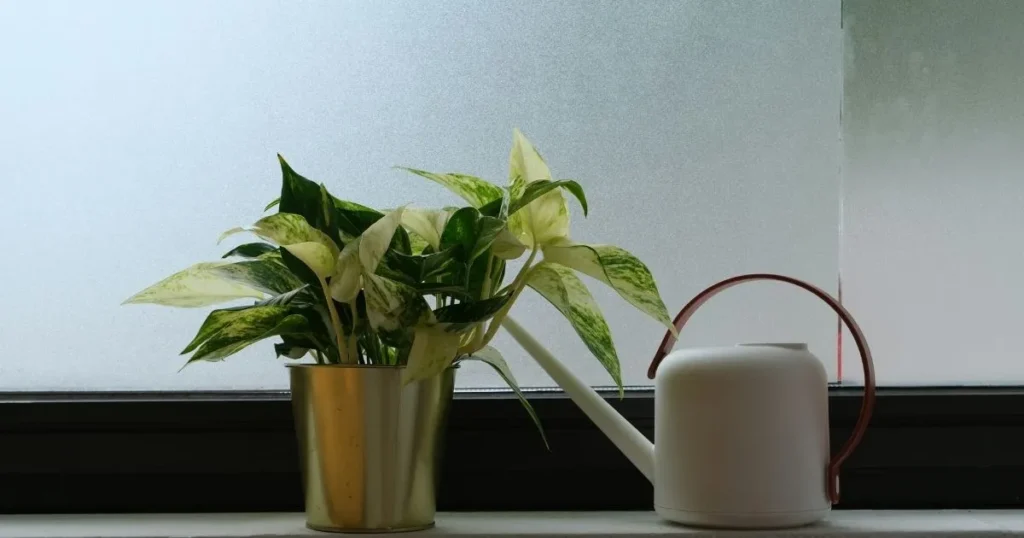
Is the yellow color actually natural for your Pothos variety? Natural coloration can look like yellowing if you’re judging the leaf by color alone. Neon Pothos is naturally a bright chartreuse, while Golden and Marble Queen varieties naturally show yellow or cream variegation patterns.
The key is whether the color matches the variety’s normal pattern or is spreading into tissue that was previously green. Healthy variegation remains part of the established pattern, while true yellowing can spread and may be accompanied by softness, drooping, or other signs of stress.
Can Pothos Yellow Leaves Turn Green Again?
No. Once a Pothos leaf has turned fully yellow, that leaf will not regain its original green color. The useful question is whether the Pothos plant itself is recovering: if you correct the cause of the yellowing, the remaining healthy foliage can stay green and new leaves can emerge normally.
A few damaged leaves can therefore remain yellow while the plant is still improving. Judge recovery by new growth, the spread of yellowing, and the condition of the remaining leaves, an already yellow leaf won’t turn green again, so it isn’t a useful recovery marker.
Should You Remove Pothos Yellow Leaves?
Should you remove a yellow leaf from your Pothos? If the leaf is completely yellow, you can remove it because it is no longer contributing much to the plant. Use clean, sharp scissors and cut the leaf stem close to the vine without damaging nearby growth.
If only part of a Pothos leaf has yellowed, leave it in place while you correct the underlying problem. The remaining green tissue can still support the plant, and removing partially healthy foliage too early creates unnecessary leaf loss. If several leaves are yellowing at once, fix the underlying cause first, pruning alone won’t solve it.
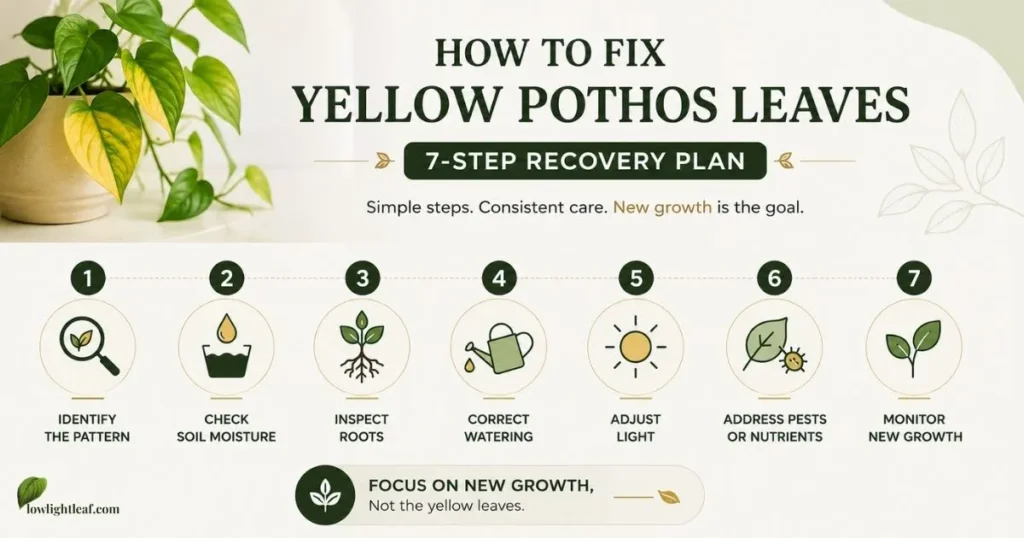
How to Fix Yellow Pothos Leaves (Step-by-Step Recovery Plan)
How to Prevent Pothos Leaves From Turning Yellow
- Water based on how the soil actually feels, not a fixed schedule, and learn when to water Pothos based on its soil and growing conditions.
- Confirm the pot drains properly and empty standing water after watering.
- Keep your Pothos in bright, indirect light rather than deep shade or harsh direct sun.
- Fertilize only when the plant’s condition and growth support it, rather than using fertilizer as a default response to yellow leaves.
- Address low humidity when you see persistent crispy tips or browned edges, rather than treating humidity as the first cause of widespread yellowing.
- Check leaves and stems periodically for early pest signs so an infestation can be caught before damage spreads.
- Repot only when the Pothos genuinely needs more room, rather than moving it into a much larger container unnecessarily.
- Reduce watering frequency as growth slows in winter, using soil moisture to guide the timing.
FAQs: Pothos Yellow Leaves
Why are my Pothos leaves turning yellow and brown?
Yellow and brown Pothos leaves can result from several types of stress. Crispy brown tips or edges often point toward dryness or environmental stress, while brown spots or patches can be associated with harsh light, pests, or disease. Soft, mushy brown tissue is more concerning for excess moisture or root damage. Look at the leaf pattern, soil moisture, and recent light or environmental changes before choosing a fix.
What does yellowing with curled Pothos leaves mean?
Yellowing combined with curling usually points toward water or environmental stress rather than one specific cause. Start with the soil several inches down and consider whether the plant has recently experienced a change in watering, light, or temperature. Dry soil with crispy tissue points toward insufficient moisture, while wet soil with soft yellow leaves suggests excess moisture.
New Pothos leaves turning yellow: what does it mean?
Yellowing in new Pothos growth deserves closer attention because natural aging normally affects older leaves first. Look at the plant’s light conditions, root health, and nutrient pattern. Pale or yellow new leaves can be associated with insufficient light, nutrient problems, or roots that are not functioning properly, so avoid assuming that normal aging is the cause.
Can Pothos leaves stay yellow even when the soil is dry?
Yes. Dry soil does not always mean the original cause was underwatering. A Pothos can still show yellow leaves after earlier excess moisture has damaged the roots, reducing their ability to take up water normally. Feel the soil below the surface and inspect the roots if the plant has also shown signs of prolonged wetness, unpleasant-smelling soil, or worsening yellowing.
How long does a Pothos take to recover from yellow leaves?
Recovery depends on what caused the yellowing and how much damage the Pothos has sustained. A corrected watering, light, root, pest, or nutrient problem can stop further yellowing, but already yellow leaves generally will not return to green. The most useful recovery signs are healthy new growth, stable remaining foliage, and no continued spread of yellowing.

Ellie Marsh
Houseplant grower who spent years in a north-facing apartment. Writes practical care guides for low light homes, checked against extension and botanical garden sources.
Explore more: