Last updated on September 27, 2026
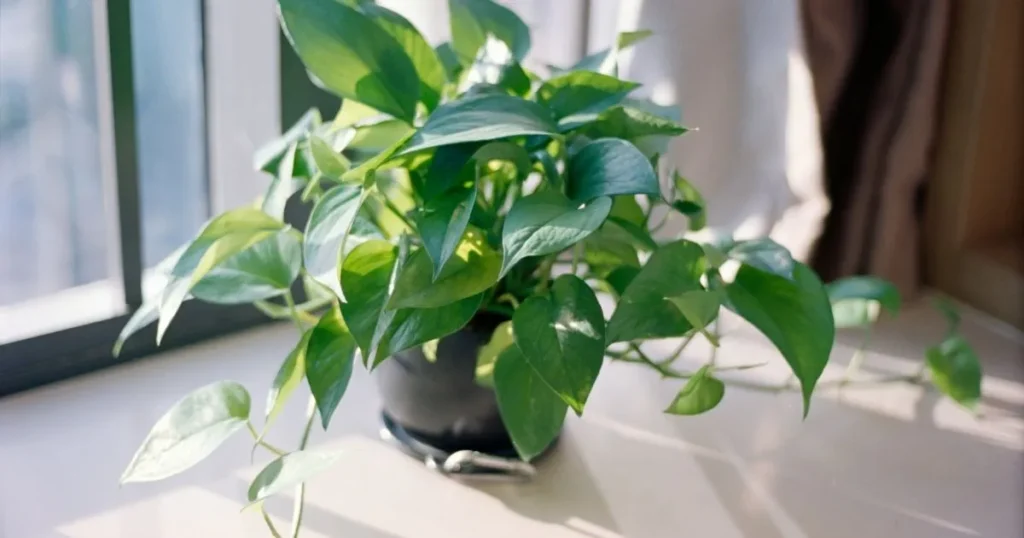
Pothos light requirements are best met with bright, indirect light, with roughly 4–6 hours a day serving as a practical guideline for most mature plants. The right amount depends on light intensity and distance from a window rather than a fixed number of hours. Pothos tolerates low light reasonably well, but growth slows, new leaves can become smaller, and variegated leaves often fade toward solid green. Prolonged, unfiltered direct sun can cause scorched leaves.
You’ll learn how to judge the light in your own space, choose the right window or placement, and tell from new growth whether the light is actually working.
Sources: the light levels, symptoms, and grow-light guidance below were checked against university extension guidance, including NC State Extension, Penn State Extension, University of Florida IFAS, and University of Minnesota Extension.
Pothos Light Requirements: The Light Progression Framework
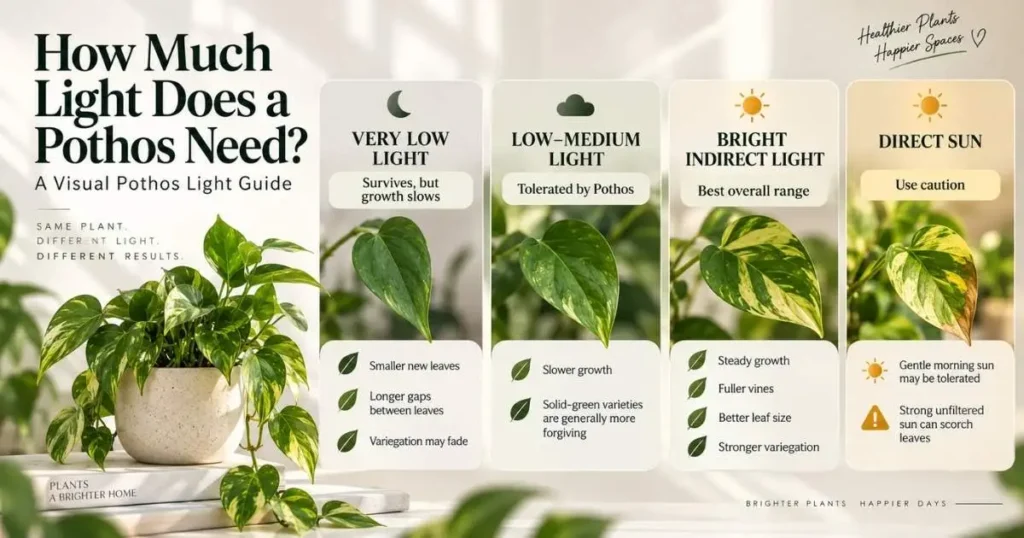
For pothos, it helps to think of indoor light as a range rather than simply calling a spot “bright” or “dim.” These four levels give you a practical way to judge the light reaching your plant.
| Light Level | What It Looks Like | Pothos Response |
|---|---|---|
| Very low | Far from any window, or heavily blocked by buildings, trees, or opaque curtains | Survives, but growth can become very slow |
| Low | A small or obstructed window, or a plant sitting several feet back from a brighter window | Tolerated long-term; slow growth |
| Bright indirect | Close to a window, out of the direct beam, often filtered through a sheer curtain | Generally the best growth zone |
| Direct sun | Unfiltered sunlight on the leaves for extended stretches | Scorch risk with sustained exposure |
Can Pothos Grow in Low Light? (Survive vs. Thrive)
Yes. Pothos is one of the more forgiving houseplants in low light, but surviving and thriving aren’t the same outcome. For dimmer rooms, other indoor plants suited to low-light conditions can also be worth considering.
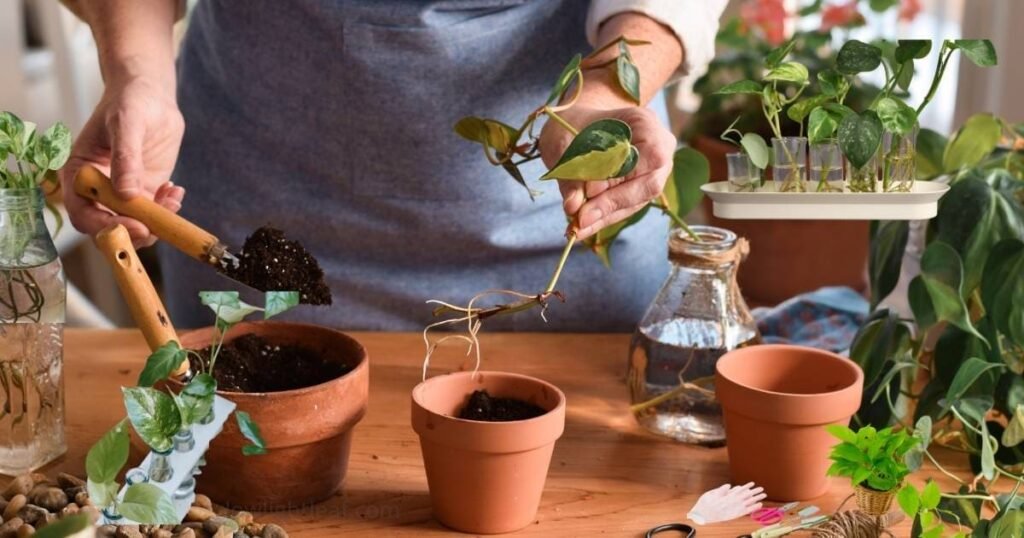
Low light can keep a pothos alive, but it usually isn’t the best setting if your goal is a fuller plant with stronger new growth. Newly rooted cuttings also need enough light to establish steady growth, but moving them abruptly into intense direct light can cause stress. This is especially useful to keep in mind when propagating Pothos cuttings, since new plants still need suitable light while they establish.
What Does Bright Indirect Light Actually Look Like?
Bright indirect light means the room is bright, but direct sun doesn’t fall directly on the leaves for extended periods. Look for these signs:
- You can read comfortably without turning on a lamp.
- Your hand casts a soft, blurry shadow above the leaves, not a sharp outline.
- The plant has a clear line of sight to open sky, even without a direct sunbeam.
- Leaves aren’t noticeably heating up through the afternoon from direct sun.
A room can look bright to your eyes while providing relatively little usable light to a plant. Use the shadow and sky-view cues above as practical starting points rather than judging brightness by eye alone. If the light seems suitable but your Pothos still struggles, check your Pothos soil to see whether it is staying wet for too long or drying unusually fast.
How Can I Tell if My Pothos Spot Gets Enough Light?
You can test your Pothos’s growing spot in under a minute.
1. Run a quick shadow test.
Hold your hand about 12 inches above the leaves around midday. This is a rough visual test, not a precise measurement. A sharp, well-defined shadow usually means the light is stronger and more directional. A diffuse shadow is more typical of bright indirect light, while a barely visible shadow suggests relatively low light for Pothos.
2. Check the spot at different times of day.
Light shifts from morning to afternoon, especially near east- or west-facing windows. A location that seems suitable for Pothos in the morning may receive much stronger sun later in the day, so understanding the pothos plant’s broader growing needs can help you judge whether the placement is actually suitable.
3. Judge the result by new growth over 3–4 weeks, rather than by older leaves.
Leggy growth or scorched tissue won’t repair itself, and older leaves may not regain lost variegation. Instead, watch whether new Pothos leaves develop with better spacing, size, and color. If the light seems suitable but new growth remains slow or stops altogether, look at other possible causes of stalled Pothos growth.
If a dimmer room is your only option, consider solid-green or lightly variegated cultivars, since these types generally tolerate lower light better.
Which Window Best Meets Pothos Light Requirements?
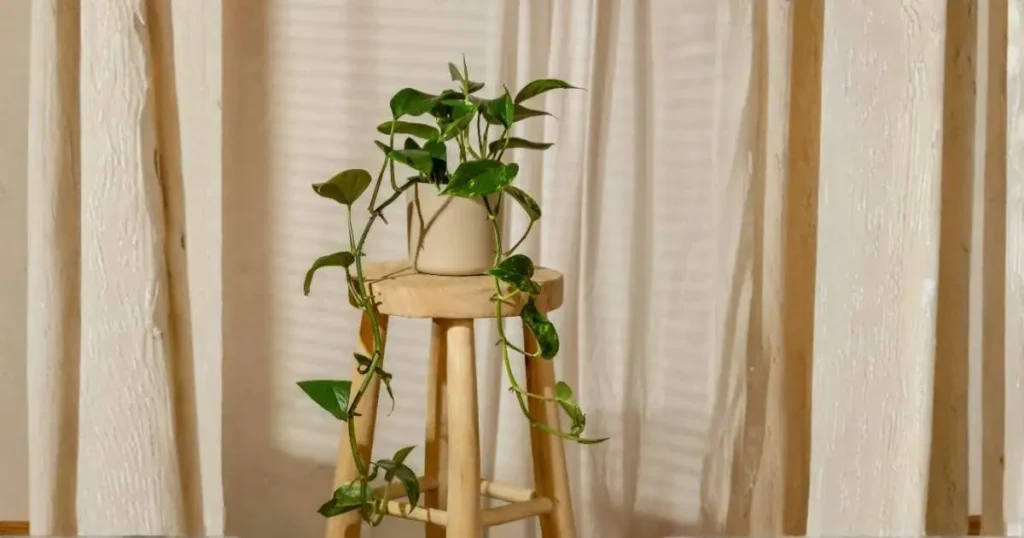
Window direction is a useful starting point, but it does not determine the light your Pothos actually receives. Window size, distance from the glass, outdoor obstructions, season, and curtains or blinds can all change the result. A large, unobstructed north-facing window can sometimes provide more usable light than a small south-facing window shaded by trees.
| Window Direction | Typical Light | Practical Placement |
|---|---|---|
| North | Lower to moderate indirect light | Benefits from being close to the window |
| East | Moderate to bright indirect light | Works close to the window |
| West | Bright indirect to stronger direct exposure | Use distance or a sheer curtain if afternoon sun is harsh |
| South | Bright to very bright; direct sun possible | Filter or increase distance if leaves receive harsh direct sun |
North-facing windows tend to provide softer, lower-intensity light. This can work well for Pothos, particularly solid-green cultivars, although growth may be slower.
East-facing windows are often an easy choice because they provide gentler morning sunlight followed by indirect light.
West-facing windows can become much more intense in the afternoon, particularly during summer.
South-facing windows can provide the strongest natural light indoors. Once filtered, they may suit heavily variegated cultivars that benefit from brighter indirect conditions, while unfiltered afternoon sun can scorch Pothos foliage.
Trees, overhangs, and neighboring buildings can substantially reduce usable light, even at a south-facing window. When comparing two windows, check the light at leaf height and at different times of day before choosing the better location.
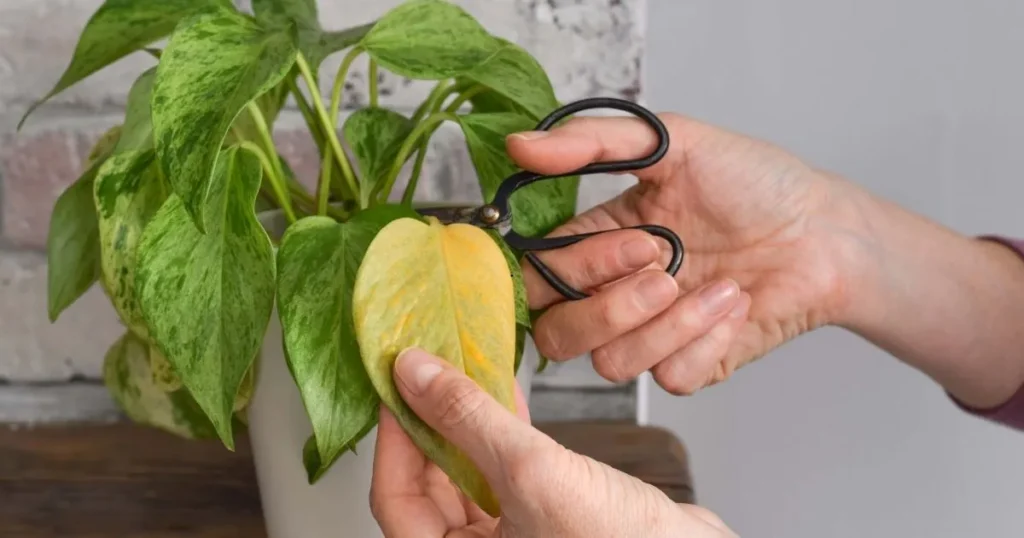
Can Pothos Get Too Much Light? Strong, unfiltered sunlight can scorch Pothos leaves, especially during intense afternoon exposure. If foliage develops pale or bleached patches that become brown and crispy, move the plant farther from the strongest light or filter the sun. If your Pothos has been growing in low light, increase its exposure gradually rather than moving it straight into strong direct sun. When Pothos leaves start turning yellow, though, light is only one of several possible causes.
Light Measurement: What PPFD, DLI, and Foot-Candles Mean for Pothos
You don’t need a light meter to choose a good spot for Pothos. Measurements become useful when you’re comparing two locations or trying to understand why a plant isn’t responding as expected.
The practical rule
PPFD changes with distance from the light source. If you use a meter, measure at leaf height, not somewhere else in the room. Compare readings from the actual spots where you could place your Pothos to better understand whether the location meets your pothos light requirements.
What Pothos research tells us
UF/IFAS guidance shows that Pothos can tolerate surprisingly low indoor light, but tolerating low light is not the same as maintaining the best leaf size and color.
- Around 50 foot-candles: Pothos can tolerate very low interior light.
- Around 150 foot-candles or more: better color and leaf size are supported.
- In separate UF/IFAS testing, ‘Pearls and Jade’ Pothos performed well at 100 foot-candles over three months.
These figures are useful reference points, not universal targets for every Pothos, room, window, or cultivar.
How to use the numbers
If two spots look similar, measure both at the height of the Pothos leaves. Use the readings to understand the difference, then watch the plant’s new growth over time to see whether the location is actually working.
Can a Grow Light Replace Natural Light for Pothos?
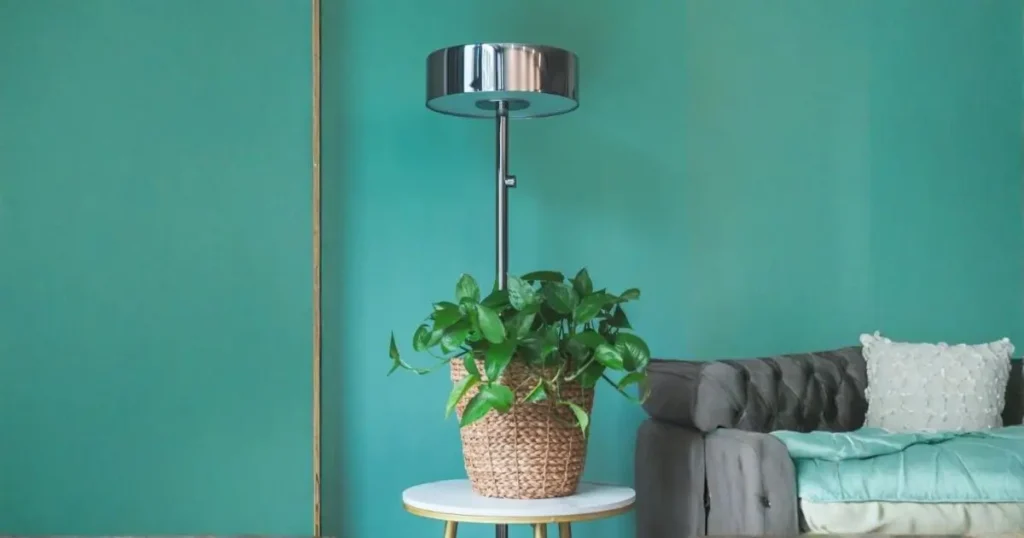
Yes. A grow light can provide the additional light Pothos needs when daylight is too weak or unavailable. It can supplement an otherwise marginal location or serve as the primary light source in a windowless space.
| Situation | Is Daylight Enough? | Practical Response |
|---|---|---|
| Pothos already receives adequate daylight | Normally yes | Keep the current placement and monitor new growth |
| The plant is in a consistently dim location | Mostly no | Add supplemental lighting |
| A heavily variegated Pothos receives marginal light | May not be enough | Consider additional light if new leaves lose variegation or growth slows |
| Windowless room or interior office | Not on daylight alone | Use consistent artificial lighting |
| Winter daylight becomes noticeably weaker | May become insufficient | Add light if new growth slows or color fades |
Think of artificial light as a substitute when daylight is unavailable and a supplement when it is simply inadequate. If your Pothos is already producing healthy new growth in its current spot, there is no need to add another light source.
Does Light Affect How Often You Water Pothos? Yes. Brighter conditions generally cause Pothos to use water faster, while lower light slows drying. If you move the plant to a significantly brighter or dimmer spot, adjust how often you water Pothos plant based on how quickly the plant dries out.
How Many Hours of Light Does Pothos Need Per Day?
A mature Pothos can use roughly 4–6 hours of bright, indirect light as a practical starting point, but those hours do not need to be continuous. What matters is the quality and intensity of the light reaching the leaves across the day.
A few hours near a bright window can provide more usable light than spending much longer in a dim part of the room. Treat 4–6 hours as a practical guideline, not a timer-based requirement. Window direction, distance, obstructions, and seasonal changes can all alter the amount of usable light Pothos receives.
Why Is My Pothos Growing Long Vines With Few Leaves?
Long gaps between leaves can indicate insufficient light, but a trailing vine is not automatically a light problem. Low light becomes more likely when recent growth is smaller, spacing is increasing, and the vine is stretching toward a light source.
Check the New Growth
Compare the newest leaves with the older ones. If recent leaves are getting smaller while the gaps between them increase, the Pothos may be receiving too little usable light. If the leaves remain healthy and well-sized while the plant simply produces long trailing stems, that may reflect its natural growth habit rather than a lighting problem.
How Do I Fix Leggy Pothos Growth?
Move the Pothos closer to bright, indirect light rather than placing it suddenly in strong direct sun. If natural light remains weak, supplemental lighting can help. Existing gaps will not close after the light improves. Judge the change by the new growth that follows, along with other signs of healthy Pothos growth and care.
Do Different Pothos Varieties Need Different Light?
Yes. The variety can change how much light is useful for maintaining color and strong growth, but the basic target remains bright, indirect light. Mostly green Pothos generally tolerate lower light better, while heavily variegated types tend to benefit from a brighter position. The amount of light can also affect how different Pothos varieties maintain their color and patterning, especially among cultivars with more noticeable variegation.
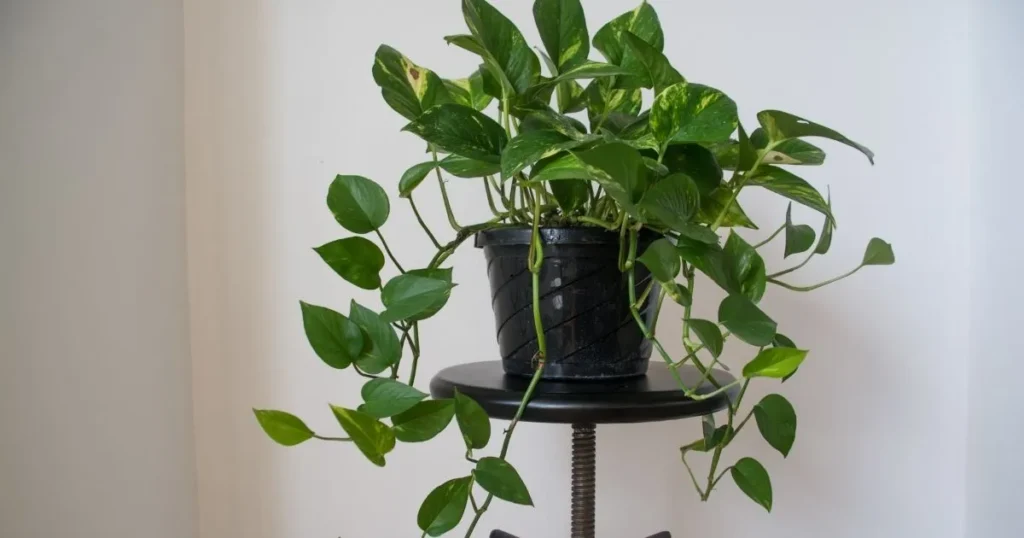
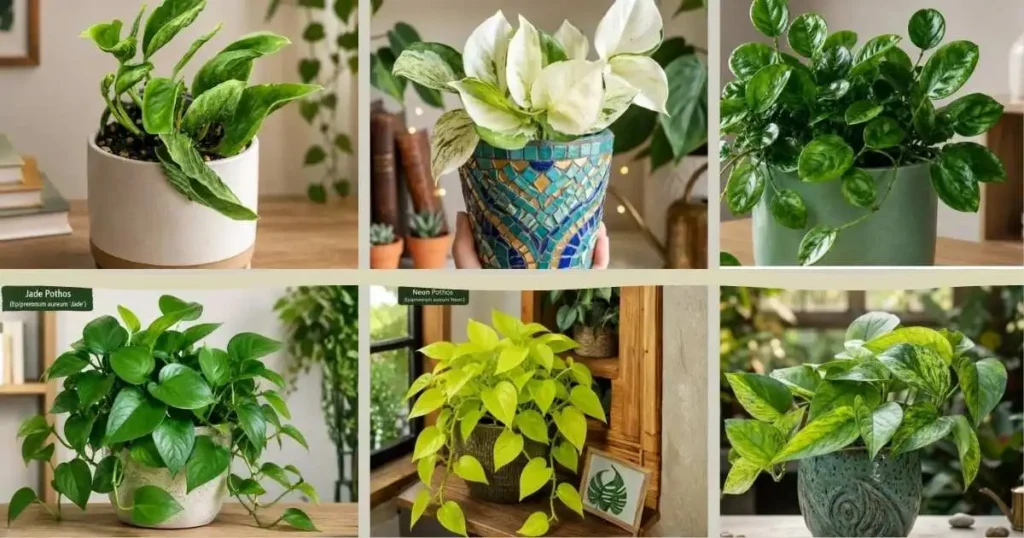
Golden Pothos is relatively adaptable, so it can handle lower light better than many highly variegated types. However, brighter indirect light generally supports stronger growth and more noticeable yellow coloration.
Neon Pothos is naturally chartreuse rather than white- or cream-variegated. Give it good indirect light to maintain its vivid color, but don’t treat direct sun as a way to make the foliage brighter.
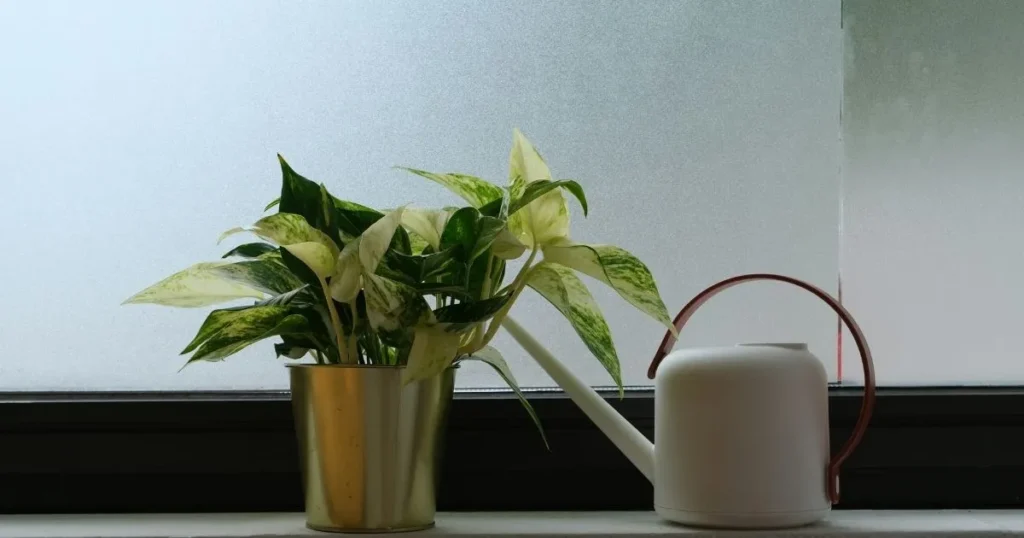
Marble Queen, Manjula, N’Joy, Pearls & Jade, and Snow Queen have more conspicuous pale variegation, so a brighter indirect position is generally the better choice. If new leaves become noticeably greener in a dim location, low light may be contributing to the change. UF/IFAS production guidance specifically notes that low light can reduce color in variegated Pothos.
Jade Pothos is a useful comparison because its solid-green foliage is generally more forgiving of lower light. That doesn’t mean it prefers a dark corner; brighter indirect light still provides a better environment for active growth. NC State Extension lists Jade among Epipremnum aureum cultivars and describes the species as preferring bright, indirect light while tolerating low light. That adaptability is one reason Pothos works so well as an indoor plant across different rooms and growing conditions.
Cebu Blue needs a separate note. It is Epipremnum pinnatum, not Epipremnum aureum, and NC State recommends bright, indirect light for it. So don’t apply the white-variegation rule to Cebu Blue simply because it is commonly grouped with “Pothos” in plant searches.
Satin Pothos, also called Silver Pothos, usually refers to Scindapsus pictus, not true Pothos (Epipremnum aureum). Its light preference also centers on bright indirect light, but it is a different plant and shouldn’t be treated as a Pothos cultivar.
Does Brighter Light Make Pothos Leaves Bigger?
It can support larger, stronger new growth, but light isn’t the only factor. Mature foliage also depends on the plant’s age and whether the vine is allowed to climb. NC State notes that Pothos given support and adequate light can begin producing larger, mature leaves, so increasing light alone isn’t a guarantee of large foliage.
How to Use a Grow Light for Pothos: Distance, Hours & Setup
A grow light can provide consistent supplemental light when your Pothos does not receive enough usable natural light. Distance, daily duration, and light intensity at the foliage matter more than the wattage printed on the fixture.
How far should a grow light be from Pothos?
Start at about 12–24 inches from the foliage, then adjust according to the fixture’s intensity and the plant’s response. If the nearest leaves develop pale or bleached areas, move the light farther away. If new growth remains small or stretched, the light may be too weak or too far from the plant.
How many hours should a grow light be on for Pothos?
Use supplemental lighting for roughly 12–14 hours per day as a practical starting point. A timer helps maintain a consistent schedule, and Pothos should have a regular dark period overnight. University of Minnesota Extension recommends 12–14 hours of supplemental light for foliage houseplants.
Does grow-light wattage matter for Pothos?
Wattage alone does not show how much usable light reaches the leaves. Fixture intensity, distance, coverage, and the light source all affect the result. A higher-wattage light placed too far away may provide less useful light at the foliage than a suitable fixture positioned closer.
How do I know a grow light is helping my Pothos?
Watch the new growth. Larger leaves, shorter gaps between leaves, steadier growth, and stronger coloration indicate that the lighting is helping. If new growth remains small or widely spaced, adjust the light’s distance, intensity, or daily duration rather than judging the setup from older leaves.
If your Pothos continues producing healthy new growth, there is no need to change its position simply because the season has changed.
FAQs: Pothos Light Requirements
Why Is My Pothos Leaning Toward the Window?
Pothos naturally grows toward a stronger light source, a response called phototropism. A slight lean is normal, but persistent stretching toward the window can indicate uneven or insufficient light. If you also see longer gaps between leaves or smaller new leaves, move the Pothos toward a brighter location.
Does Pothos Need More Light in Winter?
Sometimes. Shorter days and seasonal changes in sunlight can reduce the usable light reaching an indoor Pothos. If new growth becomes slower or more stretched, move the plant toward a brighter safe location or add supplemental lighting. If healthy new growth continues, there is no need to move it simply because the season changed.
Can Pothos Grow Without Natural Sunlight?
Yes. Pothos can grow without natural sunlight when it receives adequate artificial plant lighting. Ordinary room lighting is usually insufficient for sustained healthy growth, so a consistent grow-light setup is needed in a windowless space.
How Do I Know if My Pothos Is Getting Enough Light?
Judge the new growth rather than the room’s brightness alone. Healthy new leaves, reasonable spacing, and steady growth suggest the light is adequate. Small leaves, increasingly long gaps, or slow growth can indicate that the plant needs more usable light.
Explore more:

Muddsir Munir
Houseplant enthusiast researching and writing about indoor plants, helping beginners grow spider plants, snake plants, and more with confidence.