Last updated on November 24, 2026
Cebu Blue is a cultivar of Epipremnum pinnatum, not the golden pothos that most apartments have. It keeps narrow, silver-blue leaves for as long as it trails, and only matures into split foliage when it climbs. It is toxic if eaten, so it does not belong at cat height.
What Cebu Blue Is: Epipremnum pinnatum, Not Golden Pothos
Cebu Blue pothos is a selection of Epipremnum pinnatum, a different species from golden pothos (E. aureum). The trade also sells it as dragon-tail plant and silver vine. Same genus and same aroid family, different plant, which is why its leaves stay narrow and blue-green instead of turning broad and heart-shaped.
- Species: Epipremnum pinnatum
- Common trade names: Cebu Blue, dragon-tail plant, silver vine
- Leaf: narrow, pointed, with a silver-blue cast
- Habit: trails from a basket or climbs a pole
- Toxicity: toxic if ingested
That species difference is the part most care advice skips. Golden pothos tolerates a shaded shelf, keeps working in less light, and forgives a missed watering. E. pinnatum is a climber from the same forests, and its mature form expects to run up a trunk. In a pot it survives either way. What changes is the leaf.
People ask whether Cebu Blue is a real pothos. In the trade, yes. Pothos is a common name for Epipremnum, and Cebu Blue sits in the same genus as the marble queen on a windowsill. In botanical terms it is a separate species, which is exactly why the two look nothing alike. The pothos variety guide sorts the rest of the group the same way.
Juvenile vs Mature Leaves: Why a Moss Pole Changes Everything
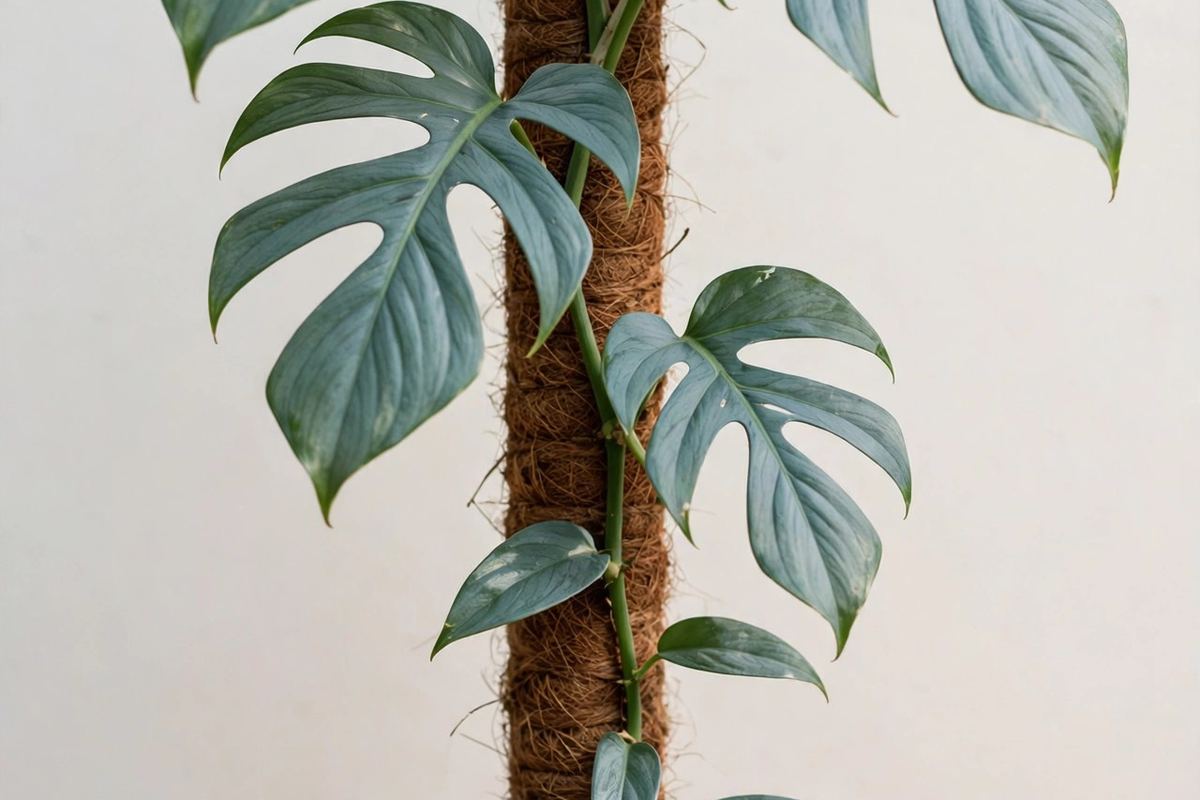
A trailing Cebu Blue stays juvenile. NC State’s plant toolbox notes that cultivated plants usually keep the juvenile leaf, and that given a totem or moss pole the leaves mature and split the way the species does in the wild. The change is a response to climbing, not a reward for age.
| Juvenile (trailing) | Mature (climbing) | |
|---|---|---|
| Leaf shape | Narrow, lance-shaped, pointed | Larger and wider, with deeper lobes |
| Splits | None | Deep splits reaching toward the midrib |
| Growth habit | Hangs, or vines along a shelf | Climbs, gripping with aerial roots |
| What triggers it | Nothing; a hanging vine can stay this way for years | A rough vertical surface plus bright, indirect light |
| Typical setting | Hanging basket, top of a bookcase | Moss pole, coir totem, rough trellis |
A hanging vine never gets the chance.
The first time I staked a pothos I expected a bigger version of the same leaf and got something closer to a different plant. A Cebu Blue does the same thing with a narrower leaf at every stage. The vine has to find the surface, attach with aerial roots, and put on size before any split appears, which is why a plant that has spent years in a hanging basket can look much like the day it was bought.
What it needs is a surface the roots can grip: coir, sphagnum wrapped on a pole, or a rough board. A smooth stake gives the vine nothing to hold, and it will keep hanging. Bright, indirect light matters too, because a mature leaf is expensive to build.
Starting a pole in the pot you already have is simpler than repotting. Push a coir pole to the bottom, lean the longest vine against it, and tie it loosely with twine until the aerial roots take hold. After that the vine holds itself, and the ties can come off.
A plant that climbs far enough can do what a windowsill pothos almost never does. A grower in r/pothos posted a flowering Cebu Blue with fruit that looked, in their words, “a lot like Monstera deliciosa fruit.”
“This is my Epipremnum pinnatum Cebu Blue that has recently flowered and developed fruit that I have only just noticed!”
– r/pothos, August 2026 (59 upvotes)
None of that is a reason to rush. A pole is worth adding because the leaf shape is the point of this cultivar, not because the vine owes you splits on a schedule.
Cebu Blue vs Baltic Blue
Both are sold as Epipremnum pinnatum cultivars, and the care is the same: bright indirect light, a free-draining mix, and something to climb. Baltic Blue is the name that has circulated more recently, and shops use the two loosely. Leaf color is where the argument starts, because photos taken under grow lights push both toward teal and a stressed plant can look bluer than a well-grown one.
The reliable difference at purchase is the grower’s label, not the tint in a listing photo. Short of a side-by-side from one propagator, that is the only honest way to sort them. If you already own a plant sold as Baltic Blue, treat it as a Cebu Blue for light, water and repotting. If the label is missing, you have a blue-toned E. pinnatum and the same plan works.
Cebu Blue Pothos: Light and Watering
Give it bright, indirect light and let the top of the mix dry before you water again. An east or west window suits it. Deep shade keeps it alive but slows new growth, and direct summer sun through glass can scorch the leaves.
In my north-facing apartment the brightest spot is a shelf beside a grow light, and that is where a Cebu Blue would go. A spot where you can read a book at noon without turning on a lamp is bright enough for this vine.
Watering is the usual aroid routine: soak, drain, then wait. Lift the pot. A light pot means dry mix, a heavy one means wait a few more days. Roots need air as much as water, so a cachepot that holds the runoff is the fastest route to yellow leaves. Any standard houseplant mix works if it drains. Add perlite or bark when the bag feels dense, and use a pot with a hole. Fertilizer is a summer habit, not a year-round one, and a plant that is not pushing new growth does not need it at all.
Repot when roots crowd the drainage hole, not on a calendar. One pot size up is enough. A jump to a much larger pot leaves wet mix around roots that cannot use it yet.
Yellow Leaves and Other Common Problems
Yellow leaves on a Cebu Blue usually mean the roots are staying wet, the light is too low, or the vine is cold. A lower leaf yellowing now and then on a long vine is normal aging. Several at once, with soft stems, points at the soil.
Wet roots
Yellow, soft leaves that drop when you touch them, plus a sour smell at the pot rim, is the classic overwatering pattern. Stop watering, check the drainage hole, and slide the root ball out to look. Brown, mushy roots need trimming; firm white ones are fine.
Too little light
Pale yellow new leaves, long gaps between leaves, and a vine that reaches toward the window all point the same way. Move it closer to the glass or add a lamp. A grower answering the same complaint in r/houseplants put it plainly:
“It needs more light. It is not directly in front of the window, for starters, where it should be.”
– r/houseplants, 2026
Cold and drafts
A vine near a winter window can yellow on the side facing the glass. Move it a foot inward. The light loss is small and the leaf loss stops.
Brown tips and pests
Dry air and fertilizer salts show up as brown tips, which you can trim without hurting the vine. Mealybugs and spider mites are the two pests I check for, both on the underside of leaves and in the joints. Wipe them off with a damp cloth and repeat weekly until they stop coming back.
The yellow leaves guide walks through the same causes on the other pothos cultivars, which behave alike.
Propagating Cebu Blue
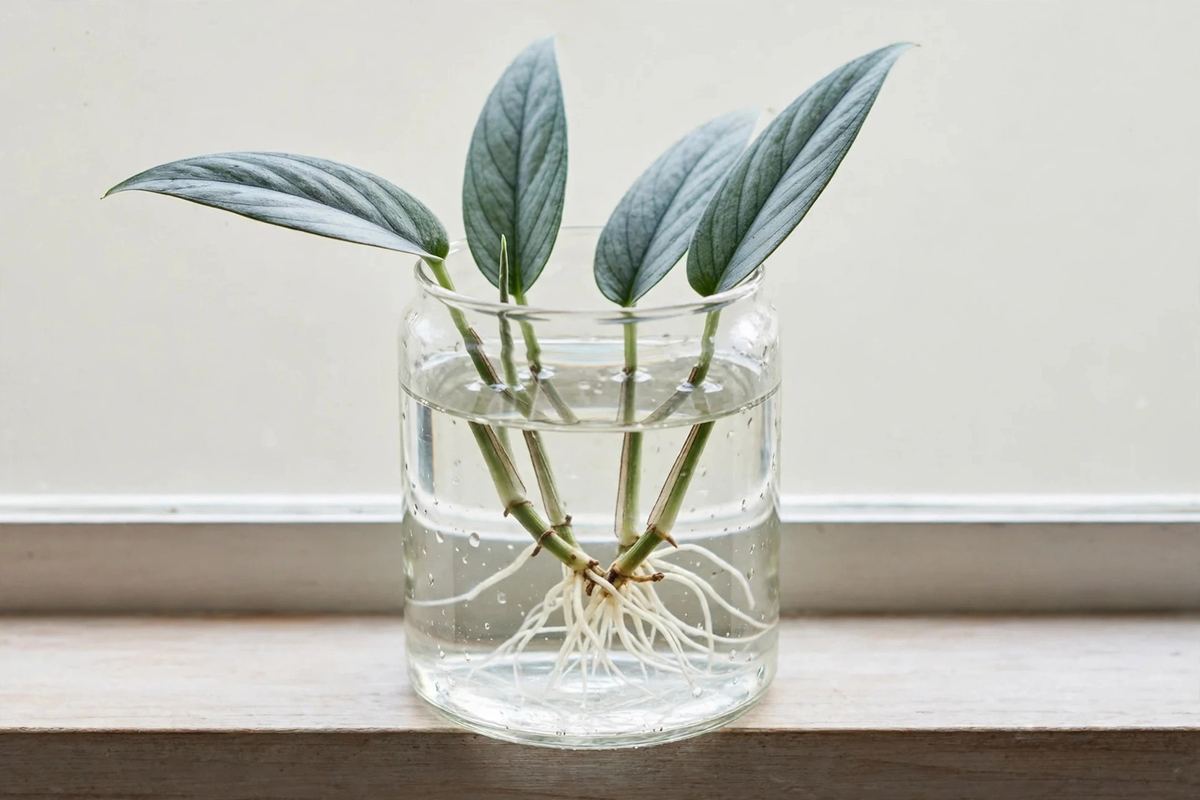
Cut a vine below a node, strip the lowest leaf, and root the cutting in water or damp mix. Each node can produce one new vine. Roots usually show in a couple of weeks in warm weather; pot the cutting when they are an inch or two long.
Use a clean blade. Cut between nodes rather than through one, and give a two-node piece the extra node as insurance. In water, change the glass every few days so it stays clear, and keep the cutting out of direct sun while it roots.
Here is the part that connects back to the leaf change. A rooted cutting taken from a trailing vine will trail too. Give the new plant a pole from the start if you want mature leaves, and keep it in bright light. The pothos propagation guide has the water-to-soil timing for the genus.
Is Cebu Blue Toxic to Cats?
Yes. Cebu Blue is an Epipremnum, and the genus contains insoluble calcium oxalate crystals that irritate a cat’s mouth and throat. ASPCA’s golden pothos entry lists that plant as toxic to cats. There is no separate Cebu Blue entry, so treat this one as the same risk.
Chewing causes drooling, pawing at the mouth, and sometimes vomiting. The crystals are insoluble, so the damage is local irritation rather than a systemic poisoning, but a cat that has eaten a leaf should still be watched.
Miso ignores most of my plants and has never shown interest in a trailing vine, which is luck rather than a plan. A hanging basket above jumping height, or a shelf the cat cannot reach, is the only version I trust.
If you have a pole and a cat, put the pole in a room the cat does not use, and keep the trailing plant higher than the sofa. The ASPCA entry for golden pothos is the closest official check for the genus.

Ellie Marsh
Houseplant grower who spent years in a north-facing apartment. Writes practical care guides for low light homes, checked against extension and botanical garden sources.