Last updated on November 18, 2026
Marble queen pothos needs bright, indirect light to hold on to its white marbling. NC State Extension says low light can cost a pothos its variegation, and The Spruce adds that the white variegation is the reason this one can’t cope with dim rooms the way plain green pothos can.
That makes placement the biggest decision you’ll make for a marble queen pothos. Watering, soil and trimming matter, and they’re covered below, but a plant in the wrong spot slowly turns into a green pothos with a fancy tag.
How much light does marble queen pothos need?
Medium to bright indirect light. NC State Extension describes pothos as preferring bright, indirect light, and The Spruce says a marble queen can’t tolerate low light. Long stretches of harsh direct sun can burn the delicate leaves, so a bright window with a sheer curtain beats a bare sill.
In a north-facing room, the plant belongs right at the glass or under a grow light, not in the corner you’d happily give a jade pothos. NC State lists ‘Jade’ as a solid dark green cultivar that does well in low light, which makes it the one to pick if your room is truly dim.
The pothos light guide covers how pothos in general handle different windows.
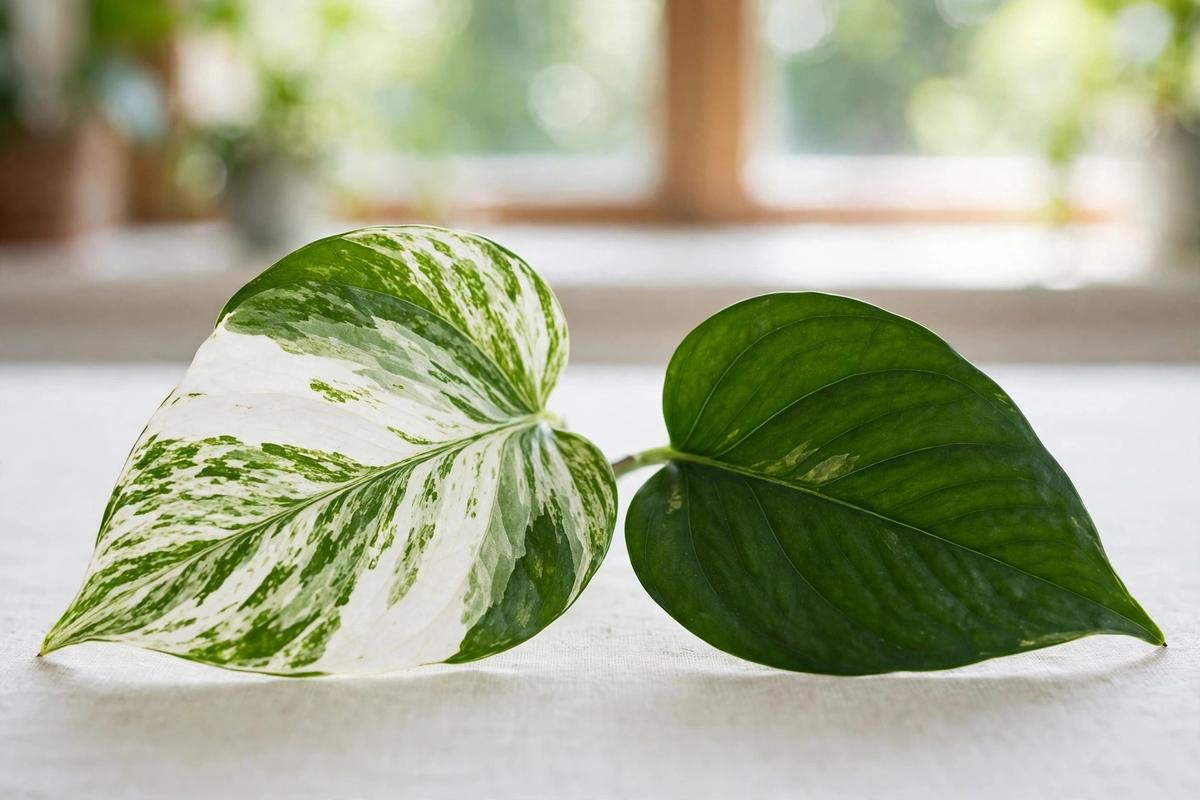
Why is my marble queen pothos turning green?
Almost always because it’s short on light. NC State Extension lists loss of variegation as a result of low light, and The Spruce says a leaf that looks bleached or plain can mean the plant isn’t getting enough. Move it somewhere brighter and judge the plant by the leaves that grow next.
That last part is easy to get wrong. A leaf that has already unfurled green stays green, so a plant that looks no better a week after the move hasn’t failed the test. The new growth is the readout, and it can take a while to show up. Give it a few weeks of steady light before you decide anything.
You also don’t have to cut off an all-white leaf in a panic. The Spruce says they don’t need removing and that one or two can be normal. A very pale leaf may simply be the plant asking for more light.
If a white leaf looks powdery instead of papery, that points to powdery mildew, not light.
How can you tell marble queen from golden, neon and snow queen pothos?
Look at the color of the marbling. NC State Extension describes ‘Marble Queen’ as green leaves and stems marbled with white, ‘Golden Pothos’ as golden, yellow-green variegated leaves, ‘Neon’ as yellow leaves and ‘Snow Queen’ as highly variegated green and white. White marbling means queen; yellow means golden or neon.
A Reddit reply under a photo of a plant sold as a marble queen made the same call in one line:
“It kinda looks like golden pothos but golden pothos has yellower marbling. If it’s whiter in person it’s queen”
– r/pothos (19 upvotes)
Snow queen is the one that gets confused with it, since both are green and white. Names get swapped on plant tags, so ask which one it is before you pay. The pothos varieties guide lines up the rest of the family.
How often should you water marble queen pothos?
When the potting mix has dried out, not on a schedule. NC State Extension advises letting a well-drained mix dry between waterings, and it names root rot and blackened leaf margins as what overwatering looks like. Push a finger into the soil first, and see the pothos watering guide for how light and season change the rhythm.
Pot size is the other half of the watering story, because a big pot full of wet soil stays wet for longer than the roots can use. A Reddit commenter looking at a struggling marble queen put it bluntly:
“She’s swimming in that pot. With such high variegation it’s going to be difficult for those roots to survive”
– r/pothos (29 upvotes)
The Spruce recommends repotting only when roots show at the drainage hole or the soil surface, and moving up to a pot just a few inches wider. For the mix, it suggests an aroid or soilless blend, or equal parts potting soil, perlite and orchid bark. The pothos soil guide goes through the options.
Trimming, rooting cuttings and feeding
Pothos is forgiving about haircuts. NC State Extension says to prune the stems back to keep the plant bushy, because over time the leaves yellow and drop and end up bunched at the tips of long bare vines.
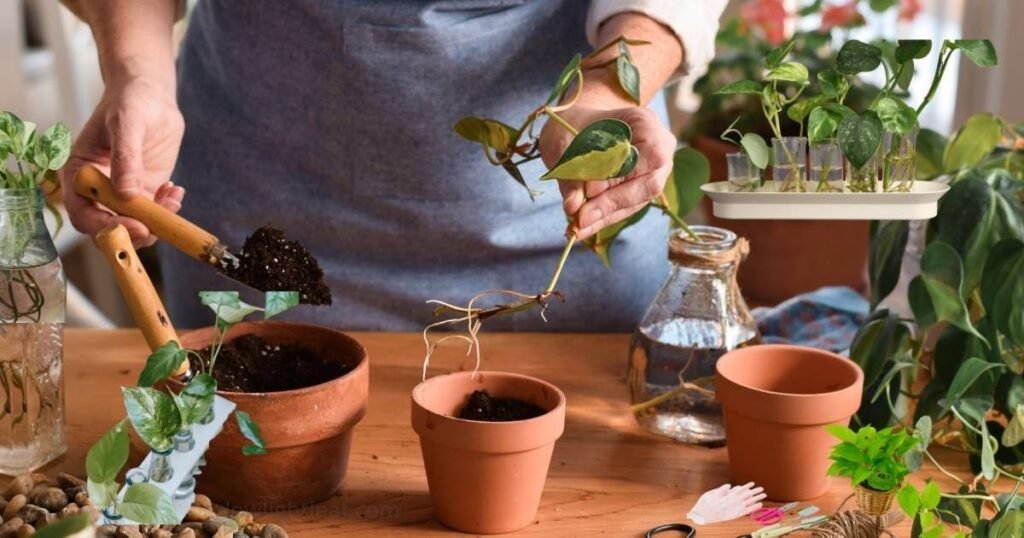
The same page notes that vines root easily in water. For cuttings, The Spruce takes stems with four to five nodes, strips the lowest leaves, sets them in a jar of water in bright indirect light and changes the water weekly. Once the roots are at least an inch long, the cutting goes into pre-moistened soil. Step-by-step detail is in the pothos propagation guide.
Feeding and warmth are low-stakes. NC State suggests fertilizing every other month and skipping the winter dormant stretch, plus a humidifier or a pebble tray if the air is dry. The Spruce warns that marble queen doesn’t like temperatures below 50°F, so keep it away from cold glass in winter.
Is marble queen pothos safe for cats and dogs?
No. NC State Extension rates pothos a medium severity poison and tags it a problem for cats, dogs and horses.
The ASPCA files pothos under its common name, devil’s ivy. With a cat named Miso at home, that’s the list I check before a plant comes in. Hang it high or skip it. More detail is in the pothos and cats guide.
Marble queen pothos FAQ
Is marble queen pothos rare?
No. The Spruce calls it one of the most common pothos varieties, after golden and jade, and says garden centers, nurseries and plant shops usually stock it. If a seller pitches one as a rare find, check the marbling against the description above before paying extra.
How long do the vines get?
The Spruce lists a mature size of about 10 feet long indoors. NC State says the trailing and climbing vines of pothos in general can grow as long as 40 feet. With a pot on a shelf and regular trimming, you’ll hold yours well below either number.

Ellie Marsh
Houseplant grower who spent years in a north-facing apartment. Writes practical care guides for low light homes, checked against extension and botanical garden sources.