Last updated on July 22, 2026
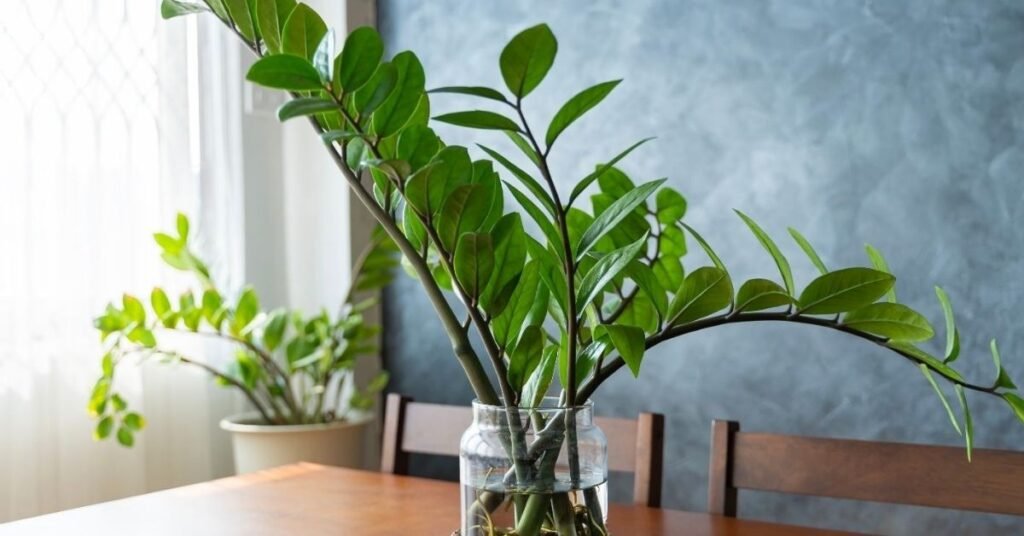
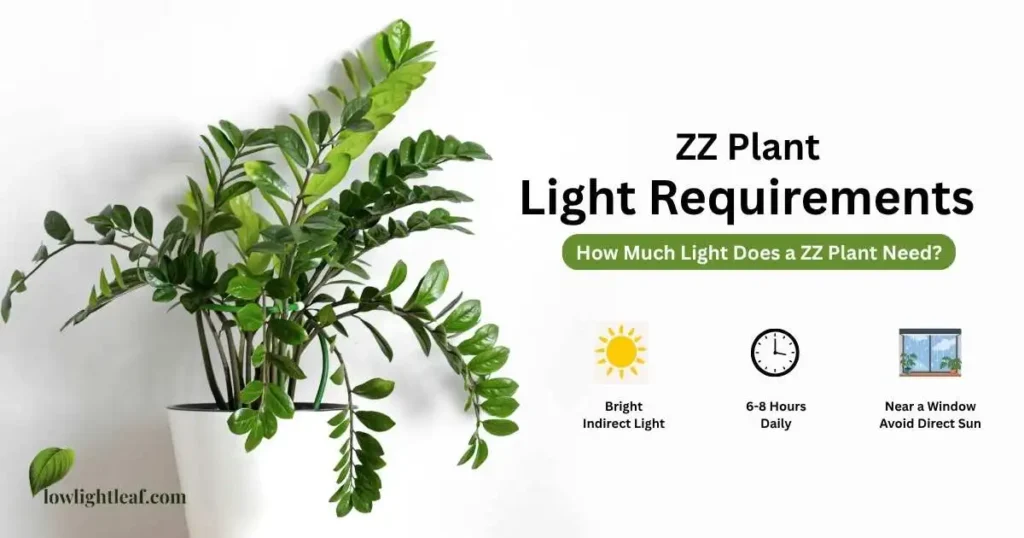
“Low-light tolerant” does not mean “no-light tolerant” and that one misunderstanding is one of the most common reasons ZZ plants struggle indoors. ZZ plant light requirements are simple once you know the difference between surviving and thriving. While your Zamioculcas zamiifolia can survive in a dim corner, it grows best in bright, indirect light, where it produces stronger stems, healthier foliage, and regular new growth instead of slowly relying on the energy stored in its rhizomes.
If you’re wondering how much light a ZZ plant needs, where to place it indoors, whether it can grow in low light, or when a grow light is worth using, this guide covers everything you need to know. You’ll also learn how to recognize the early signs of too little or too much light so you can keep your ZZ plant healthy and growing for years.
What Kind of Light Does a ZZ Plant Need?
Understanding the right ZZ plant light requirements starts with knowing the difference between the conditions it tolerates and the conditions where it truly thrives, a key part of caring for a ZZ plant indoors. ZZ plants grow best in bright, indirect light, not low light, despite what the label often implies. In its native East African habitat, Zamioculcas zamiifolia grows beneath forest canopy where light is filtered and dappled.
What Does Bright Indirect Light Look Like?
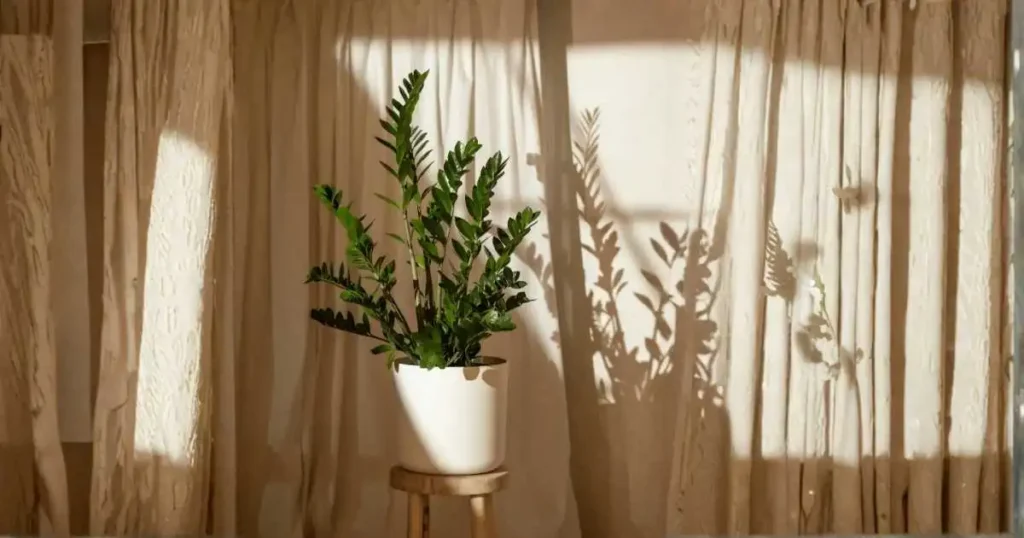
Bright indirect light means the room is bright enough to read comfortably without turning on a lamp, but your ZZ plant stays out of direct sunlight. In most homes, that’s about 2 to 4 feet from an east- or north-facing window, or a little farther back from a south- or west-facing window with a sheer curtain filtering the light.
In these conditions, your ZZ produces sturdier stems, fuller foliage, and more frequent new growth. It holds its compact shape rather than reaching and stretching.
Can a ZZ Plant Grow in Low Light?
Yes. A ZZ plant can survive in low light, but it won’t grow well there. New leaves stay smaller, new shoots become less frequent, and the plant gradually loses the fullness and glossy appearance it develops in brighter conditions.
What “Low Light” Actually Means Indoors
Low light indoors means a north-facing room, a spot well back from any window, or a space lit mainly by overhead artificial lighting. ZZ plants retain their healthy appearance in these conditions longer than most houseplants, but healthy new growth is much slower.
Leggy stems with wide spacing between the leaves are a sign your ZZ plant is stretching toward a brighter light source rather than growing in its naturally compact form.
Among houseplants that can realistically live under standard fluorescent overhead lighting or in rooms with small north-facing windows, ZZ plants are one of the more reliable choices. They won’t grow quickly there, but they continue looking healthy longer than many alternatives.
The beginner low-light placement guide covers room-by-room decisions for low-light homes and offices.
How Does Low Light Actually Affect a ZZ Plant?
ZZ plants tolerate low light because of their thick underground rhizomes, which store energy reserves. In good light, those reserves stay topped up. In a dim corner, the plant draws them down slowly, looking healthy for months before declining suddenly. Those same rhizomes can be divided during propagation, while stem and leaf cuttings offer other ways to grow new ZZ plants. Low light tolerance is a survival mechanism, not a preference.
Does a ZZ Plant Need Direct Sunlight?
No. Direct sunlight is not necessary and can damage a ZZ plant. Harsh afternoon light through south- or west-facing windows can scorch ZZ leaves. Leaves exposed to intense sun may develop yellow or white patches, crispy brown edges, or lose their rich glossy appearance. Scorched tissue doesn’t recover. The plant will push healthy new growth once conditions improve, but affected leaves won’t heal.
Now that you know the ideal conditions, let’s look at the exact ZZ plant light requirements in terms of daily light exposure.
How Much Light Does a ZZ Plant Need Each Day?
A useful indoor target is 6 to 8 hours of indirect brightness per day. Duration and intensity both count. A ZZ plant in a poorly lit room can sit under light for 8 hours and still not reach the threshold it needs, because the intensity is too low for meaningful photosynthesis.
A plant near an east-facing window in a naturally bright room will usually meet this without any extra effort. One pushed several feet back in a dim hallway probably won’t, regardless of how long the overhead light stays on.
Can a ZZ Plant Survive Without Any Light?
No plant survives complete darkness indefinitely. Without light, a ZZ plant eventually uses the energy stored in its rhizomes just to stay alive. New growth becomes weak and pale because the plant can’t produce enough chlorophyll through photosynthesis. It may survive in darkness longer than many houseplants, but without a reliable light source, healthy growth eventually stops. The rhizomes buy time. They don’t replace light.
If your room gets only limited natural light, choosing plants suited to low-light spaces can make placement much easier.
Signs Your ZZ Plant Isn’t Getting Enough Light
Low-light stress develops gradually, so it’s easy to miss until the plant’s appearance noticeably changes.
Leggy Stems, Leaning Growth, and Smaller Leaves
Long, widely spaced stems are one of the clearest signs that your ZZ plant isn’t receiving enough light. The stems may lean toward the nearest window, and new leaves often stay noticeably smaller than older ones.
Dull Foliage and No New Stems Through the Season
Don’t confuse normal light-green new growth with fading from low-light stress—fresh ZZ leaves naturally darken as they mature.
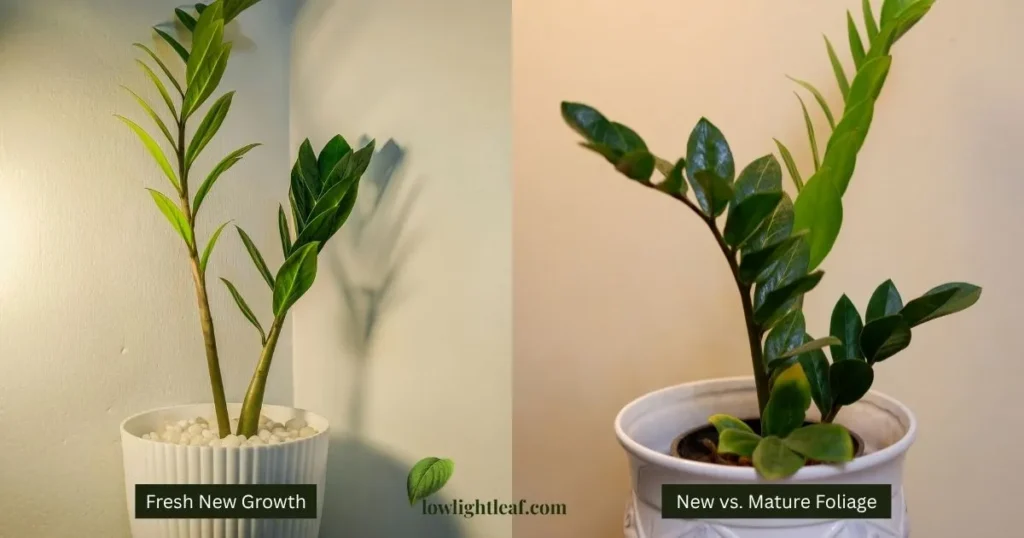
A ZZ plant in good light has deep, glossy leaves. In insufficient light, that gloss fades and the color lightens.
If your ZZ plant hasn’t produced a single new stem through an entire spring-to-summer growing season, read our guide on why your ZZ plant is not growing to rule out low light, watering, dormancy, and other common causes.
How to Fix Low-Light Problems
Move the plant toward a brighter window gradually over one to two weeks rather than all at once. A sudden jump to much brighter conditions can stress a plant adjusted to dimness. If no suitable window exists, a full-spectrum LED grow light is the practical fix. Rotate the pot every two to three weeks to keep all sides evenly lit.
If those stretched or pale leaves are also turning yellow, see what causes yellow leaves on a ZZ plant to separate light stress from watering problems and other common issues.
Can a ZZ Plant Get Too Much Light?
Yes. Direct sun causes real damage, often faster than it looks. Too much light produces a completely different set of symptoms from too little.
Signs of ZZ Plant Sunburn and Light Stress
- Yellow or whitened patches where direct sun has burned leaf tissue
- Crispy brown edges along leaf margins
- Leaves that look faded or bleached instead of rich green
- Leaves curling inward to reduce surface area
Scorch damage is permanent on the affected leaves. Trim them off, move the plant to filtered indirect light, and let it stabilize. New growth will come in healthy once direct sun exposure is removed.
How to Prevent Sun Damage
Pull the plant back from the glass or place a sheer curtain between it and the window. Morning sun through an east-facing window is generally safe, lower angle, softer intensity. Afternoon sun through south- or west-facing windows is where most ZZ plant scorch damage happens.
Worth noting: eyes adjust to brightness automatically, so a spot that looks fine to you can still be delivering more direct light than your plant can handle. If your ZZ isn’t growing and the light looks bright but not harsh, checking whether it receives any direct beam during the day is worth doing.
Meeting ZZ plant light requirements is often more about placement than choosing the brightest room in your home.
Where to Place a ZZ Plant Indoors
Best Window Direction for a ZZ Plant
| Window Direction | Light Quality | Best Approach |
| East-facing | Soft morning sun, consistent indirect brightness | Ideal — safe and steady year-round |
| North-facing | Bright indirect, no direct sun | Very good — lowest scorch risk |
| West-facing | Strong afternoon sun | Works with sheer curtains or 3–4 feet back |
| South-facing | Strongest light year-round | Keep 4–6 feet back or filter with a curtain |
East-facing windows are the most forgiving. Soft morning light followed by indirect brightness through the rest of the day closely mirrors the filtered canopy light of the ZZ plant’s natural habitat.
How Far From a Window Should a ZZ Plant Sit?
East window: 1 to 3 feet from the glass; right at the windowsill is fine if there’s no direct sun patch
North window: As close to the glass as possible, north light is gentle enough that proximity helps
South or west window: 4 to 6 feet back, or closer with a sheer curtain in place
One thing to keep in mind: A room that looks bright to you might be delivering far less to your plant. If your ZZ is not growing through the season despite seeming well placed, the actual light reaching the plant, not how the room looks, is worth questioning.
Room-by-Room ZZ Plant Placement
Living room: Usually the best spot. Larger windows and consistent daily light make it the most natural home. Two to four feet from an east or north window is a solid target.
Bedroom: Works when the window delivers reasonable indirect light. Blackout curtains and small windows are the main limiting factors. A small grow light on a timer handles the gap.
Office: ZZ plants are well suited to offices with consistent overhead lighting and some natural daylight. Growth will be slower unless the plant also receives some natural light or a small grow light.
Bathroom: Only viable with a real window. Without any natural light and no grow light, decline sets in gradually over several months as rhizome reserves run low.
If you’re choosing between a ZZ plant and a snake plant for the same spot, that guide covers how both handle each window direction and room condition.
Does a ZZ Plant Need a Grow Light?
A grow light becomes useful only when natural ZZ plant light requirements can’t be met indoors. Use a grow light when your space genuinely can’t supply enough natural indirect light, such as in windowless rooms, dim north-facing apartments, or during winter when natural light remains limited for months.
What Kind of Grow Light Works for ZZ Plants
ZZ plants don’t need high-intensity lighting. Lower-wattage, full-spectrum options are enough:
- Full-spectrum LED grow light at 5000K to 6500K color temperature
- Clip-on or adjustable pole lights work well for single plants on a desk or shelf
- Small LED panels (16W to 25W) handle larger plants or grouped setups
Position the light 12 to 18 inches above the plant. Too close risks heat stress on upper leaves; too far drops intensity below useful levels.
How Long Should a Grow Light Run?
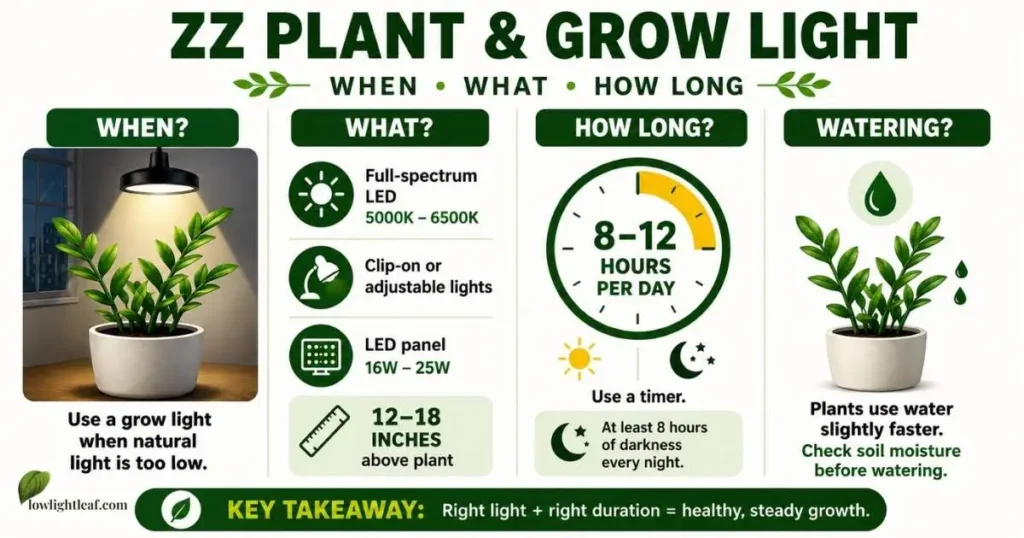
When using a grow light instead of natural daylight, aim for 8 to 12 hours per day, ideally on a timer. Consistency matters more than exact duration. Your ZZ plant also needs at least 8 hours of darkness each night, so avoid leaving the light on continuously.
Under grow lighting, a ZZ plant uses water slightly faster than in dim natural conditions. Our guide to watering a ZZ plant based on light levels explains how to adjust the timing for your actual setup.
How ZZ Plant Light Needs Change by Season
Summer: Watch the Afternoon Sun
In summer, the sun sits higher and hits windows at a more direct angle. A placement safe in spring can expose your ZZ plant to scorching direct sun by midsummer, especially near south- or west-facing windows.
Early warning signs are subtle: foliage losing its gloss or looking faintly washed out before any visible burn appears. A slight reposition or a sheer curtain is usually enough to fix it.
If you take your ZZ plant outdoors for summer, deep shade only. Even outdoor shade delivers far more light intensity than a typical indoor room, and a plant accustomed to indoor conditions can scorch without a slow transition.
Winter: The Same Window Delivers Less Light
Lower sun angles, shorter days, and overcast weeks reduce usable light through the same window your plant used comfortably all summer. A ZZ near a north-facing window that grew steadily in July may be genuinely light-starved by December. Practical winter adjustments:
- Move 1 to 2 feet closer to the glass
- Add a grow light on a timer (8 to 10 hours daily)
- Reduce watering, slower growth in lower light means soil dries more slowly, and overwatering risk rises with it
Less light means slower growth, slower water uptake, and soil that stays wet longer. Choosing soil that prevents excess moisture around ZZ roots becomes especially important when winter light drops and the pot takes longer to dry.
Do Different ZZ Varieties Have Different Light Needs?
Not all ZZ plant varieties respond to light in exactly the same way. While their basic light requirements are very similar, the amount of light they receive can noticeably affect leaf color, variegation, and overall appearance.
Here’s how the most popular ZZ varieties respond to different light conditions and what to expect as they mature.
Raven ZZ Plant Light Requirements
Like the classic ZZ plant, Raven ZZ adapts well to low light but develops its best color and strongest growth in bright, indirect light. The main difference is appearance rather than light tolerance.
Raven ZZ leaves emerge lime green before gradually turning deep purple-black as they mature. Without enough light, new leaves may stay green for much longer instead of developing their signature dark color. If your Raven ZZ isn’t darkening properly, light conditions are one of the first things to check, not the soil or your watering routine.
Black ZZ, Chameleon ZZ, and Variegated ZZ
Black ZZ and Chameleon ZZ have similar light needs to the classic ZZ plant. Bright, indirect light supports the best color development, while prolonged direct sun can damage the leaves.
The Variegated ZZ needs slightly more light than the classic. Its cream and yellow patterning is light-dependent, in dim conditions, the plant gradually reverts toward solid green as it prioritises chlorophyll over variegation. A brighter spot is essential if you want the pattern to stay.
Beyond their appearance, the benefits of growing ZZ plants indoors also explain why these varieties have become popular in modern homes and workspaces.
ZZ Plant Light Requirements – FAQs
Can a ZZ plant recover from too much sunlight?
Yes. Move the plant to bright, indirect light as soon as possible and trim any badly scorched leaves. Sun-damaged tissue won’t turn green again, but healthy new growth will appear once the plant is protected from direct sunlight.
Can I keep a ZZ plant under a grow light all year?
Yes. A full-spectrum LED grow light can be used year-round if your home doesn’t provide enough natural light. Run it for about 8 to 12 hours a day and give the plant at least 8 hours of darkness each night for healthy growth.
Why are my ZZ plant leaves turning pale instead of dark green?
Pale leaves usually indicate insufficient light, although watering problems can sometimes contribute. Move your ZZ plant to a brighter location with indirect light and check your watering routine before assuming it’s a nutrient issue.
Can I rotate my ZZ plant to help it grow evenly?
Yes. Rotating the pot every two to three weeks helps all sides receive similar light, preventing stems from leaning toward the window and encouraging a fuller, more balanced plant.
Final Thoughts
The right light won’t just keep your ZZ plant alive—it determines how well it grows, how often it produces new stems, and how healthy its foliage looks over time. Most light-related problems can be avoided simply by choosing the right location and making small adjustments as the seasons change.
Whether you’re growing a classic ZZ, a Raven ZZ, or a variegated variety, following the right ZZ plant light requirements will help you avoid common mistakes and enjoy stronger, healthier growth with far less guesswork.
Explore more:

Muddsir Munir
Houseplant enthusiast researching and writing about indoor plants, helping beginners grow spider plants, snake plants, and more with confidence.