Last updated on July 30, 2026
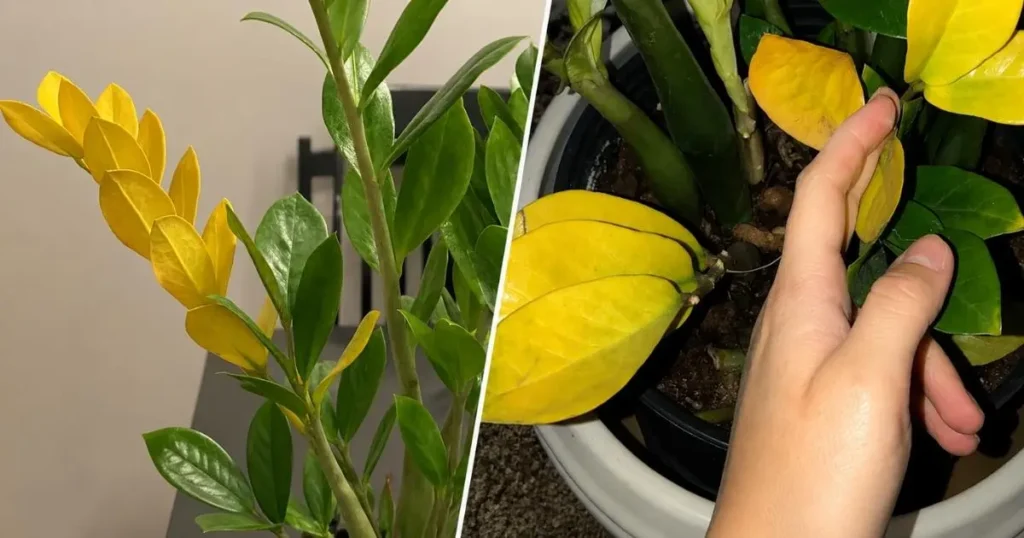
If you’ve spotted yellow leaves on your ZZ plant, you’re probably wondering whether you’re about to lose a plant that’s supposed to be nearly impossible to kill. Take a breath. In most cases, you have time to fix this. ZZ plant yellow leaves are almost always caused by overwatering and the root rot it triggers. But underwatering, too much direct sun, nutrient imbalances, pests, and even normal aging can all turn your Zamioculcas zamiifolia‘s glossy green leaves a sickly yellow. The good news: each cause leaves its own clues, and once you know what to look for, you can usually pinpoint the problem in a few minutes and start your plant on the road back to full health.
In this guide, you’ll learn how to tell normal leaf aging apart from a real problem, how to diagnose the exact cause in four simple steps, what’s actually happening inside your plant’s rhizomes when things go wrong, and exactly how to fix it, including one often-overlooked recovery detail: how long it usually takes to know whether your plant is actually recovering.
Is It Normal, or Is Something Wrong?
Before you panic, ask yourself one question: which leaves are yellowing, and what’s happening to the rest of the plant? This is one of the most overlooked parts of diagnosing ZZ plant yellow leaves and it’s the difference between a plant that’s perfectly fine and one that needs help right away.
When Yellow Leaves Are Completely Normal
ZZ plants are slow, steady growers. Like all houseplants, they naturally shed their oldest leaves over time. If only one or two of the oldest leaves at the base are turning yellow while the rest of the plant, especially any new growth, still looks healthy, you’re usually seeing normal aging, not a serious problem.
Case Study
A professional plant consultant reviewing this exact situation in a houseplant forum confirmed that a single yellowing leaf at the base is typical as older leaves die back with age, and that an occasional blemish elsewhere is just cosmetic.
A Seasonal Yellow Leaf Can Also Be Normal
There’s also a seasonal version of this same process. ZZ plants store water and energy in thick, potato-like rhizomes beneath the soil.
During winter, or during cooler months with lower light, the plant often slows down and enters a semi-dormant phase. At that point, it relies more on those stored reserves than on active growth.
When spring or warmer weather arrives and light levels improve, the plant starts growing again. As it pushes out fresh shoots, it may redirect some energy and nutrients away from older leaves, a normal part of ZZ plant’s regular care routine that often gets mistaken for a problem.
That’s why you might notice:
- an older leaf turning yellow
- a lower stem fading
- older growth declining while new shoots emerge from the base
It can look worrying, but sometimes it’s simply your ZZ plant reallocating resources to support fresh growth.
When ZZ Plant Yellow Leaves Mean You Need to Act
Yellow leaves are more likely to signal a real problem if you notice any of the following:
- Yellowing spreading across several leaves at once, not just one or two old ones
- New growth turning yellow
- Yellow leaves along with mushy stems
- Wet, soggy, or smelly soil
- A whole stem or shoot turning yellow all at once
If you’re seeing any of these signs, your ZZ plant turning yellow is probably not just normal aging, the same kind of stress signals show up across several other low-light houseplants that handle similar stress. Move on to the diagnostic steps below, because something is actively stressing the plant.
ZZ Plant Yellow Leaves Quick Diagnosis Chart
Scan for the symptom that matches what you’re seeing, then jump to that section below.
| Symptom | Most Likely Cause | What to Do |
|---|---|---|
| Only the lowest, oldest leaves turning yellow | Natural aging | Nothing needed — leave it, or trim once fully yellow |
| Yellow leaves + mushy stems + wet soil | Overwatering / root rot | Stop watering, check roots, follow recovery protocol |
| Yellow leaves + wrinkled stems + bone-dry soil | Underwatering / dehydration | Soak thoroughly, return to a regular watering rhythm |
| Yellow leaves + crispy brown patches | Sun scorch | Move to bright, indirect light |
| New leaves turning yellow (old leaves fine) | Iron deficiency | Check fertilizer routine, feed lightly in growing season |
| Yellow edges on leaves | Potassium deficiency | Feed a balanced houseplant fertilizer |
| Yellow leaves + webbing or cottony pests | Pest infestation | Isolate the plant, treat with neem oil or insecticidal soap |
| Yellowing that started after repotting | Transplant stress | Leave the plant alone, keep care steady, give it a few weeks |
| One whole stem turning yellow at once | Root rot on that stem, or natural die-back | Check the base of that stem and the roots beneath it |
Only the lowest, oldest leaves turning yellow
Cause — Natural aging
Do — Nothing needed, leave it or trim once fully yellow
Yellow leaves + mushy stems + wet soil
Cause — Overwatering / root rot
Do — Stop watering, check roots, follow recovery protocol
Yellow leaves + wrinkled stems + bone-dry soil
Cause — Underwatering / dehydration
Do — Soak thoroughly, return to a regular watering rhythm
Yellow leaves + crispy brown patches
Cause — Sun scorch
Do — Move to bright, indirect light
New leaves turning yellow (old leaves fine)
Cause — Iron deficiency
Do — Check fertilizer routine, feed lightly in growing season
Yellow edges on leaves
Cause — Potassium deficiency
Do — Feed a balanced houseplant fertilizer
Yellow leaves + webbing or cottony pests
Cause — Pest infestation
Do — Isolate the plant, treat with neem oil or insecticidal soap
Yellowing that started after repotting
Cause — Transplant stress
Do — Leave the plant alone, keep care steady, give it a few weeks
One whole stem turning yellow at once
Cause — Root rot on that stem, or natural die-back
Do — Check the base of that stem and the roots beneath it
This chart covers the most common patterns, but it’s only a starting point. Use the full walkthrough below to confirm the cause.
How to Diagnose Yellow Leaves on Your ZZ Plant in 4 Steps
Here’s a simple, sequential way to work through the most likely causes, in the order you should actually check them.
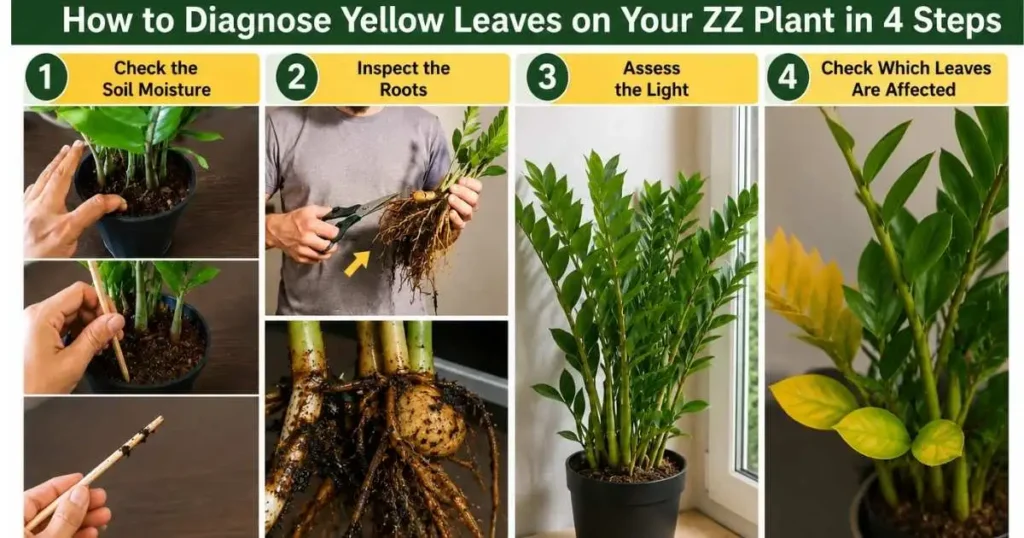
Step 1: Check the Soil Moisture
Push your finger an inch or two into the soil, or use a moisture meter. If it feels wet or has been damp for over a week, overwatering is likely the cause. Stop watering and let the soil dry out completely. If the soil is bone dry, underwatering or insufficient light could be the cause instead.
Step 2: Inspect the Roots
If overwatering seems likely, gently slide the plant out of its pot. Healthy ZZ plant roots and rhizomes are firm and white to light tan. Mushy, dark, or slimy roots with a foul smell mean root rot. Move straight to the recovery protocol further down this guide.
Step 3: Assess the Light
If the soil was bone dry and the roots looked healthy, check where your plant is sitting. ZZ plants tolerate low light well, but still need some bright, indirect light. New to growing in dim corners? A few beginner-friendly low-light tips can save you a lot of guesswork before you go further down the troubleshooting path. Too little light slows how fast the soil dries, quietly setting the stage for overwatering. Too much direct sun scorches leaves, turning them yellow and then brown. Either extreme can show up as yellowing.
Step 4: Check Which Leaves Are Affected
Finally, look at the pattern. Just the oldest, lowest leaves? Natural aging. New growth specifically? Usually a nutrient issue. Scattered randomly, maybe with tiny pests on the undersides? Likely an infestation rather than a watering or light issue.
Why Is Only One Stem of My ZZ Plant Turning Yellow?
It’s common to see just one stem affected while the rest of the plant looks healthy, and the cause depends on which stem it is.
Older, outer stem:
If it’s an older, outer stem, and the rest of the plant, especially newer growth, still looks fine, this is usually just that stem aging out and dying back naturally. ZZ plants don’t keep every stem forever.
Mushy stem or wet soil:
If the stem feels mushy or soft at the base, or the soil around it has stayed wet, that single stem may have localized root rot, even if the rest of the root system is healthy. Pull the plant and check the roots directly beneath it.
Yellowing after repotting:
If you’ve ever repotted a snake plant before, the process and the after-effects can feel very familiar here. A ZZ plant can react the same way to root disturbance, excess moisture, or a potting mix that suddenly stays wet for longer than it’s used to.
A newer shoot turning yellow:
If it’s a newer shoot turning yellow rather than an old one, pay closer attention. That usually points to a nutrient issue, root stress, or watering problem, since new stems aren’t expected to fade the way old ones do. If the shoot is healthy enough to save, this can also be a good moment to look into propagating a healthy new shoot before it weakens further.
What’s Causing Your ZZ Plant’s Yellow Leaves?
Overwatering and Root Rot
Overwatering is by far the most common cause of ZZ plant yellow leaves. ZZ plants store water in thick rhizomes, so they handle drought much better than soggy soil, it’s actually one of the reasons this plant is so low-maintenance, among other benefits of growing a ZZ plant. When the soil stays wet for too long, the roots start to suffocate and rot.
Common signs: mushy stems, sour-smelling soil, and dark, slimy roots.
Solution: Stop watering and let the soil dry out completely. If the rot is mild, this alone may be enough. If you found mushy or foul-smelling roots in Step 2, you’ll need the full recovery protocol later in this guide.
Underwatering and Dehydration
Underwatering can also cause ZZ plant yellow leaves, although it’s much less common than overwatering. In this case, the yellowing usually comes with limp, wrinkled, or wilting stems, because the rhizomes have used up much of their stored moisture and the plant is starting to dehydrate.
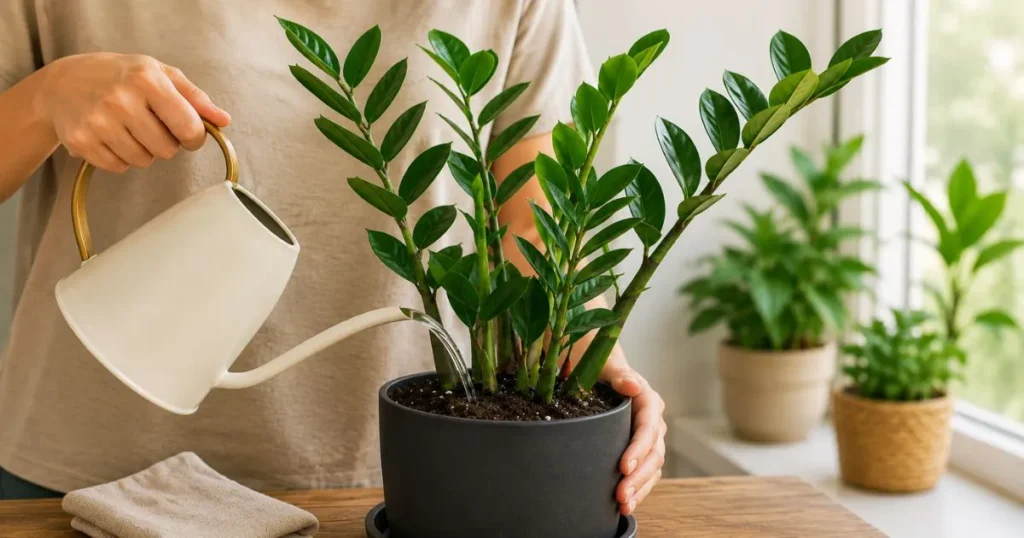
Solution: Give the plant a deep soak until water runs from the drainage holes, then return to a normal watering rhythm. If you’re unsure about watering your ZZ plant, following a consistent wet-and-dry cycle is the best way to prevent the problem from coming back.
Inconsistent Watering
ZZ plants prefer a fairly steady wet-dry cycle, so swinging between bone-dry soil and heavy soaking can stress the roots enough to trigger yellowing. It’s a stress response other low-light plants share too, snake plants develop yellow leaves for much the same reason. The problem isn’t just too much or too little water. It’s the constant shift between the two.
Solution: Check the soil regularly and water only when it’s actually dry enough, so the plant settles into a more consistent rhythm.
If yellowing keeps coming back and watering still seems to be the issue, our full ZZ Plant Watering Guide covers the ideal watering rhythm and soil-drying setup in more detail.
Too Much Direct Sunlight
Direct, intense sun can scorch ZZ plant leaves, and yellowing is often the first sign before the damaged areas turn brown and crispy. ZZ plants handle low light much better than harsh direct exposure, especially near a hot south- or west-facing window.
Solution: Move the plant to bright, indirect light a few feet back from a sunny window, or place it behind a sheer curtain. Knowing how much light a ZZ plant needs can help you prevent both sun scorch and problems caused by prolonged low-light conditions.
Too Little Light
Low light, by contrast, usually doesn’t yellow leaves directly. The bigger issue is that it slows growth and soil drying, which makes overwatering more likely. In some cases, it can also cause weak, pale new growth.
Solution: Keep the plant in bright, indirect light so the soil dries at a healthy pace without exposing the leaves to harsh sun.
Nutrient Deficiency
Sometimes yellow leaves mean your plant is missing a nutrient, and where the yellowing shows up is a real diagnostic clue.
Nitrogen deficiency shows up on older, lower leaves first, the same pattern shows up on a stressed peace lily.
Potassium deficiency appears along leaf edges.
Magnesium deficiency yellows the veins on older leaves while the tissue between them stays green.
Iron deficiency is the one to suspect if it’s your new leaves turning yellow instead.
Solution: Feed a balanced, diluted houseplant fertilizer during the growing season and follow the label closely. More isn’t better here.
Tap Water and Overfertilizing
Two less obvious causes worth a quick check. Untreated tap water contains chlorine, fluoride, and salts that build up in the soil over time and stress the roots. Overfertilizing causes the same kind of salt buildup from the other direction.
Solution: If you suspect tap water is part of the problem, switch to filtered water or leave the water out overnight before using it. If fertilizer buildup seems more likely, flush the soil with plain water and cut back on feeding for a while.
Pests
Pests usually target stressed ZZ plants, feeding on sap and gradually draining moisture and nutrients. Along with yellowing, you may also spot fine webbing from spider mites, cottony white mealybugs, small brown scale bumps on stems, or clusters of aphids on new growth with sticky residue nearby.
Solution: Isolate the plant and treat it with insecticidal soap or neem oil until the infestation is gone.
Got pets running around the house? Worth double-checking which indoor plants are actually pet-friendly before you treat it.
Fungal or Bacterial Disease
Disease is a less common cause of ZZ plant yellow leaves, but it’s more likely when the plant has been sitting in excess moisture. Watch for dark spots with yellow halos, soft mushy patches, fuzzy gray mold, or spots that keep spreading after damp conditions.
Solution: Improve airflow, avoid wetting the leaves, and trim off affected growth with sterilized scissors. If a bacterial issue seems likely, a diluted hydrogen peroxide solution can sometimes help disinfect the area.
What It Means When Yellow ZZ Leaves Turn Brown
Yellow leaves often turn brown if the underlying problem isn’t fixed. Yellowing is usually the early stage of leaf tissue stress, while brown means that tissue has started to die.
The pattern can help you narrow down the cause:
- Crispy brown tips or edges usually point to dehydration or dry conditions
- Soft brown patches are more often linked to rot or disease
- Whole leaves turning yellow, then brown can be the later stage of sun scorch or advanced overwatering
In most cases, brown areas don’t point to a new problem. They usually mean one of the issues above has been going on for longer.
Can Yellow ZZ Plant Leaves Turn Green Again?
Usually, no. Once a ZZ plant leaf has fully turned yellow, that tissue is too damaged to turn green again. The main exception is mild nutrient deficiency caught early. If the leaf is only starting to yellow and the plant quickly gets the missing nutrients, some improvement may be possible.
In most cases, though, the goal isn’t to make a yellow leaf green again. It’s to fix the underlying problem so the rest of the plant, especially new growth, stays healthy.
Why Is My ZZ Plant Turning Yellow After Repotting?
If your ZZ plant started turning yellow soon after repotting, transplant stress is the most likely cause. Even a careful repot disturbs the roots, and temporary yellowing is a common reaction while the plant settles in.
A couple of repotting-specific details are worth checking. A pot that’s too large for the current root system holds onto excess moisture longer than the roots can use, raising the same overwatering risk covered above. A denser potting mix that holds water longer than what the plant was used to can have the same effect.
Solution: Mostly, do nothing. Avoid fertilizing, moving, or fussing over the plant right after repotting. Keep its care routine steady and give it several weeks to settle in before expecting things to look normal again.
How long it takes: Mild transplant stress usually settles within 2–4 weeks. If yellowing is still spreading after that, or new growth is affected, check the roots instead of continuing to wait it out. If you grow peace lilies too, you may have seen how quickly they react after being moved to a new pot. ZZ plants are usually less dramatic.
Should You Cut Off Yellow Leaves?
In most cases, yes. Since fully yellow leaves usually won’t recover, removing them can tidy up the plant and help the plant focus on healthy new growth. The main exception is a very mild nutrient deficiency caught early.
To remove them properly, use sterilized scissors and cut the leaf stem cleanly near its base. Avoid removing more than about 20% of the plant’s total foliage at once, since taking too much can shock an already-stressed plant. If there’s more to remove, spread it out over a couple of weeks.
How to Fix an Overwatered ZZ Plant (Root Rot Recovery Protocol)
If you confirmed root rot back in Step 2 of the diagnostic process, here’s exactly how to bring your plant back from it:

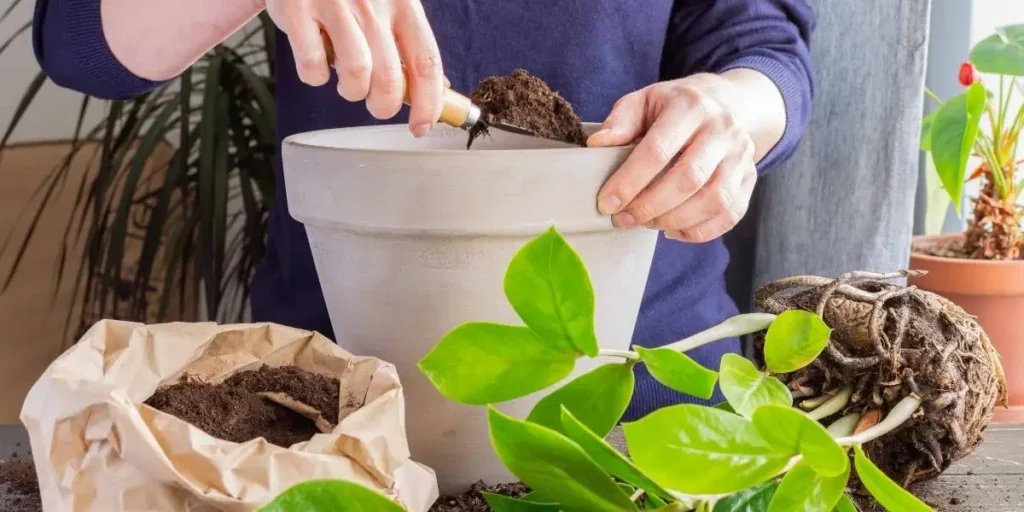
- Remove the plant from its pot and gently shake or brush off the old, wet soil.
- Inspect every root, and using sterilized scissors, trim away anything mushy, dark, or slimy. Healthy roots are firm and pale.
- Prepare a fresh, fast-draining soil mix for ZZ plants, standard potting soil with perlite and orchid bark works well, or a 50/50 mix of potting soil and cactus mix.
- Repot into a clean container with drainage holes, using the fresh mix.
- Withhold water for about a week, giving the roots time to recover without added moisture stress.
- Resume watering sparingly, letting the soil dry most of the way between waterings, and place the plant in good bright, indirect light.
How long recovery takes
Recovery is usually slow. In most cases, it takes four to eight weeks before you can tell whether the plant has stabilized and started producing healthy new growth. Try not to judge it too early. Give it that full recovery window first.
Not seeing any fresh shoots even after the recovery period? Here’s how to troubleshoot a ZZ plant that isn’t growing.
How to Stop ZZ Plant Yellow Leaves From Coming Back
Once you’ve fixed the immediate problem, a few habits make it much less likely that yellow leaves will return.
- Use a pot with drainage holes and a well-draining soil mix
- Let the soil dry properly between waterings, and cut back further in winter
- Keep the plant in bright, indirect light, not harsh sun or a very dark corner
- Fertilize lightly during active growth only
- Check leaves now and then for early signs of pests
If you want a reliable ZZ-specific care reference for getting the watering rhythm right, UConn’s ZZ plant care factsheet is a helpful companion,
FAQs: ZZ Plant Yellow Leaves
What does an overwatered ZZ plant look like?
An overwatered ZZ plant usually shows yellowing leaves, soft or mushy stems, and soil that stays wet for too long. If root rot has started, the potting mix may smell sour and the roots may look dark, slimy, or rotten instead of firm and pale.
Why is my ZZ plant turning yellow if I’m not overwatering?
If overwatering doesn’t seem to be the problem, yellow leaves can still be caused by too much direct sun, too little light, underwatering, nutrient deficiency, pests, fertilizer salt buildup, or simple natural aging. The yellowing pattern often gives the clearest clue.
Is it normal for ZZ plant yellow leaves to appear at the bottom of the plant?
Yes — if it’s just one or two of the oldest, lowest leaves and the rest of the plant still looks healthy, that’s usually normal aging. ZZ plants naturally shed older leaves over time, especially when the plant is putting energy into new growth.
Why are my ZZ plant’s leaves turning yellow and drooping?
Yellowing paired with drooping usually means the plant is under stress from a watering problem. Most often, that means overwatering and root stress, especially if the soil stays wet and the stems feel soft. If the soil is completely dry and the stems look limp or wrinkled, underwatering is the more likely cause.
Why are the tips of my ZZ plant leaves turning yellow or brown?
Yellow or brown leaf tips usually point to moisture stress or salt buildup rather than a whole-plant problem. Common triggers include underwatering, inconsistent watering, fertilizer buildup, or mineral-heavy tap water. If the tips feel dry and crispy, dehydration is more likely; if the damage spreads into soft brown patches, root or disease issues are more likely.
Explore more:

Muddsir Munir
Houseplant enthusiast researching and writing about indoor plants, helping beginners grow spider plants, snake plants, and more with confidence.