Last updated on July 30, 2026
ZZ plant benefits include low maintenance care, drought tolerance, low-light growth, and a clean, modern appearance that suits almost any room. If you’ve struggled to keep houseplants alive before, this plant can be a practical choice. It’s also a good option if you want greenery that doesn’t require constant attention.
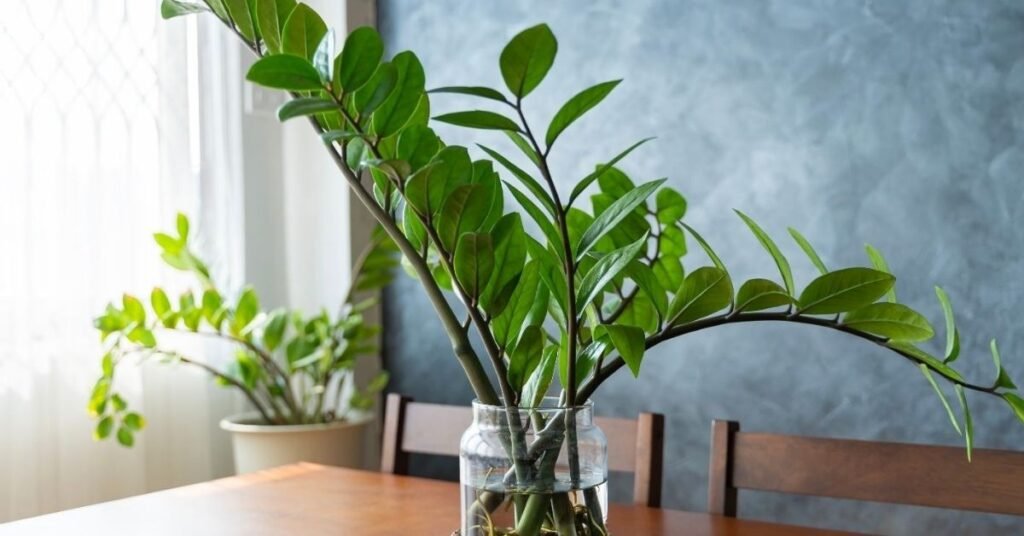
The ZZ plant, or Zamioculcas zamiifolia, offers more than attractive foliage. It may support indoor air quality and is traditionally associated with prosperity in Feng Shui and Vastu. It also adapts well to bedrooms, offices, and small apartments where you may want greenery that fits easily into your space.
In this guide, you’ll learn how these benefits can make everyday plant care easier. You’ll also discover a few important safety considerations if you have pets or young children at home.
| Benefit | ZZ Plant | Pothos | Snake Plant |
|---|---|---|---|
| Survives neglect | Best | Moderate | Good |
| Works in dark rooms | Best | Limited | Good |
| Air filtering | Xylene, toluene | Formaldehyde | Benzene, formaldehyde |
| Pet safe | No | No | No |
| Stays attractive year-round | Yes | Needs trimming | Yes |
| Office/low-light spaces | Best choice | Not ideal | Good choice |
| Beginner success rate | Very high | High | High |
What Are the Benefits of a ZZ Plant?
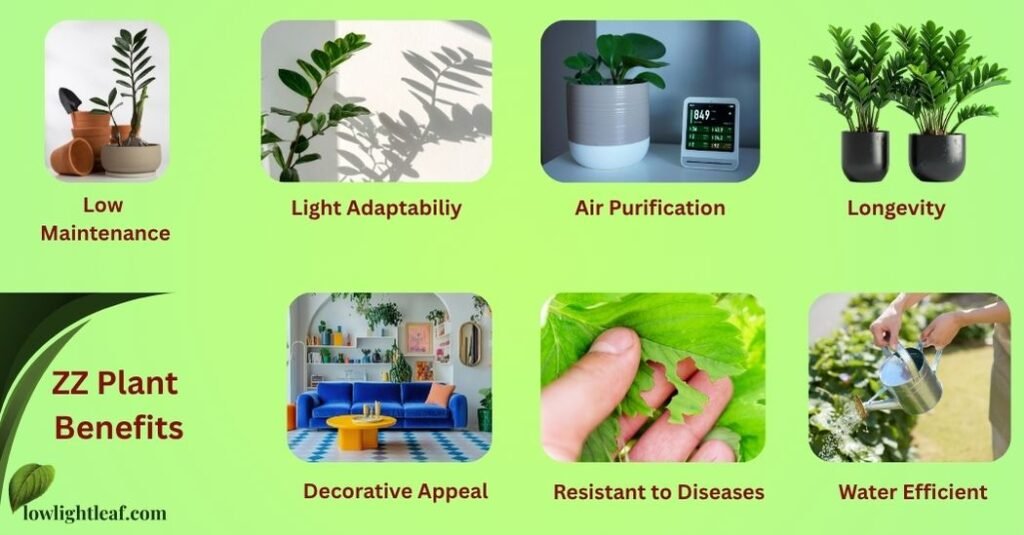
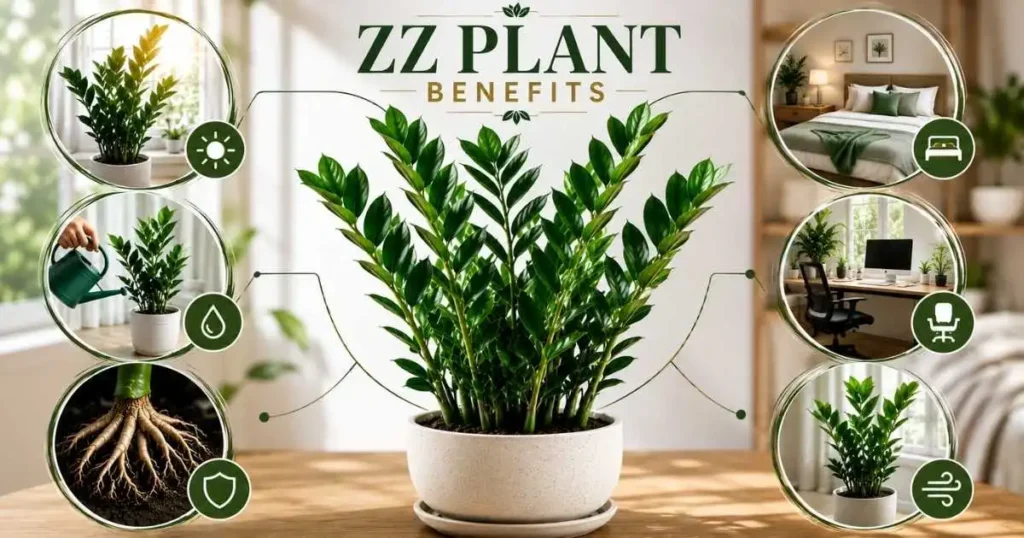
The biggest benefits of a ZZ plant are its adaptability, resilience, beginner-friendly care requirements, and long-lasting ornamental value as an indoor plant. These advantages make it a practical choice for people who want attractive greenery without constant upkeep. Of course, even resilient plants can occasionally stop growing. If that happens, learn what could be slowing its growth.
Most people don't give up on houseplants because they don't care enough. They give up because the plant needed more attention than their schedule allowed. The ZZ plant is popular because it removes much of that pressure. Unlike a fiddle-leaf fig or a fussy orchid, it doesn't punish you for missing a watering day or forgetting to rotate it toward the window.
Insight: Thick leaves and underground rhizomes help the plant store water, making it far more forgiving than many indoor plants. That's one reason so many beginners choose it as their first houseplant and successfully keep it alive.
ZZ Plant Benefits at Home
At home, this plant serves two purposes at once: it fills empty corners that get almost no light, and it may give your indoor air a small boost along the way. Few houseplants suited to challenging indoor spaces offer both benefits without demanding a bright window or constant attention.
Improves Indoor Air Quality
Some research suggests that houseplants, including this one, can help filter certain compounds out of indoor air through natural gas exchange in their leaves. It won't replace an air purifier or open window, but if you live in an apartment with limited airflow, having a few plants like this around adds a small, low-effort layer of support.
If you're interested in other beginner-friendly air-purifying houseplants, spider plants are another popular option for improving indoor spaces with minimal care.
Creates a Calmer Living Space
ZZ plants can help create a calmer living space by making indoor environments feel more welcoming and visually balanced. Many plant owners find that even a single plant can soften the look of a room and make it feel less empty or sterile. A ZZ plant near a reading chair or tucked beside a sofa does what an empty corner never could. The effect may be subtle, but it can make a space feel more comfortable and inviting over time.
Adds Beauty to Any Room
ZZ plants enhance indoor décor by adding structure, texture, and visual interest to almost any room. Their glossy foliage naturally draws attention, making them an easy focal point for console tables, shelves, and other display areas without overwhelming the space.
For plant lovers who enjoy decorative foliage, pothos is another attractive indoor plant known for its trailing vines, versatility, and beginner-friendly nature.
Ideal for Small Homes and Apartments
ZZ plants are well suited to small homes and apartments because they grow upright and take up very little floor space. If you're working with a compact layout, they fit easily into narrow hallways, small entryways, or unused corners without making the room feel crowded.
ZZ Plant Benefits in the Bedroom
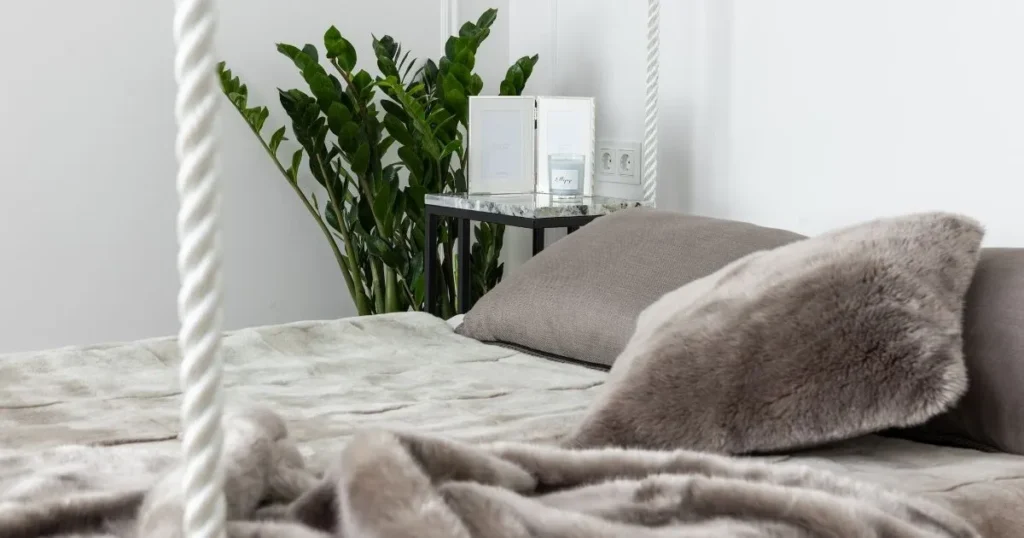
In a bedroom, low light and a lack of attention are usually a death sentence for houseplants, but this one handles it fine. It fits a sleeping space that rarely gets bright sun, without asking you to add another item to your nightly routine.
Supports a Peaceful Environment
A more peaceful bedroom atmosphere is one of the lesser-known benefits of keeping a ZZ plant indoors. No houseplant guarantees better sleep, but many people associate plants with relaxation, and a ZZ plant adds that visual softness without needing a spot near a window. For people who prefer a simple, comfortable sleeping space, that balance can be part of what makes the room feel more enjoyable to spend time in.
Performs Well in Low-Light Bedrooms
A ZZ plant remains healthy in bedrooms where many indoor plants struggle to grow consistently. Between blackout curtains, shaded windows, and room layouts that limit sunlight, bedrooms can be challenging spaces for houseplants, but this species adapts well to those conditions without requiring a brighter spot.
Why ZZ Plants Are So Easy to Grow
ZZ plant survives the mistakes that kill other houseplants because it tolerates low light, stores water in its rhizomes, and rarely attracts pests. In other words, it forgives the exact habits that usually doom a beginner's plant collection.
Thrives in Low-Light Conditions
One of the biggest advantages of a ZZ plant is its ability to stay healthy in rooms that receive very little sunlight. North-facing apartments, windowless offices, and dim hallways are all places where this plant holds up fine, making it one of the most reliable plants for darker spaces indoors, where sun-hungry species would slowly decline.
Stores Water and Tolerates Drought
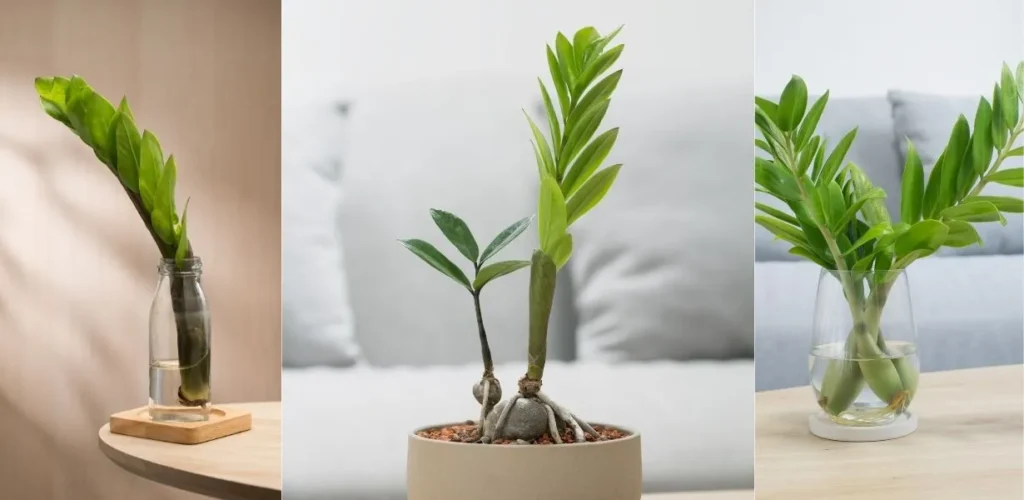
The plant stores water in underground rhizomes, which helps it stay healthy during dry periods. ZZ plants are highly drought tolerant and can go much longer between waterings than many popular houseplants. If you're away from home regularly or don't want to plan your week around a watering routine, this makes plant care far more forgiving. Those same rhizomes are also what make splitting one ZZ plant into several so easy. In fact, overwatering is usually a bigger risk for this species than occasional neglect.
Requires Very Little Maintenance
ZZ plants require very little ongoing care compared to many popular houseplants. No regular fertilizing schedule, no constant pruning, no repotting drama. A light feeding once or twice a year and an occasional wipe-down of the leaves covers it. For busy households, that low time commitment is often the deciding factor, and how to care for a ZZ plant shows just how simple the routine really is.
Perfect for Beginners
ZZ plants are ideal for beginners because they tolerate common care mistakes better than many indoor plants. That forgiving nature gives new plant owners time to learn without constantly worrying about every small error. Once it survives a few months of trial and error, confidence builds, it's worth exploring what other beginner-friendly plants work in low light, the options are more varied than most people expect..
Resistant to Common Indoor Plant Problems
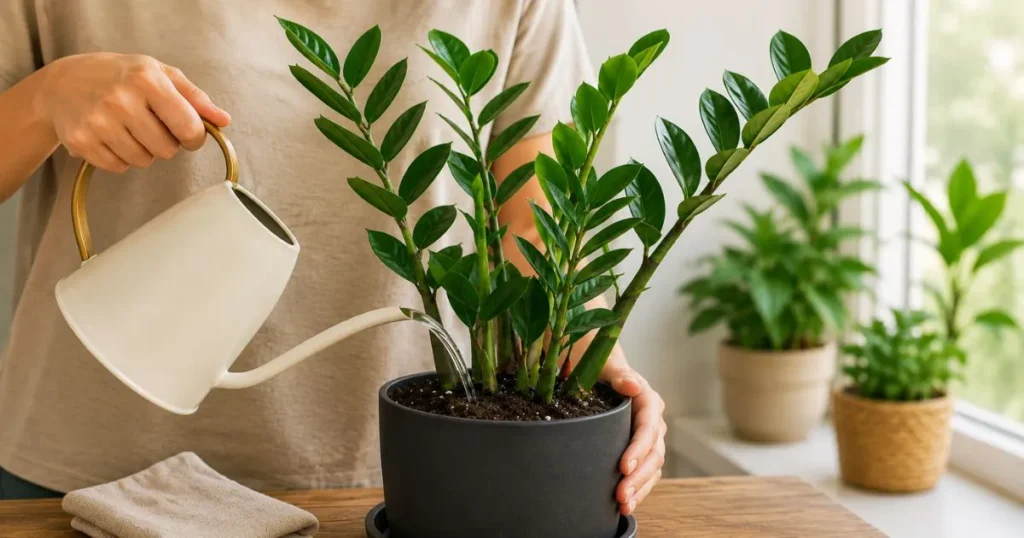
ZZ plants are less likely to experience pest infestations and recurring health issues than many indoor plants. Their tough, waxy leaves help discourage common pests, while proper drainage prevents most serious growing problems. Root rot is usually the only common issue, and it almost always comes down to poor drainage rather than the plant itself. Most watering mistakes are easy to avoid once you understand when the soil has actually dried out.
ZZ Plant Benefits for Offices and Workspaces
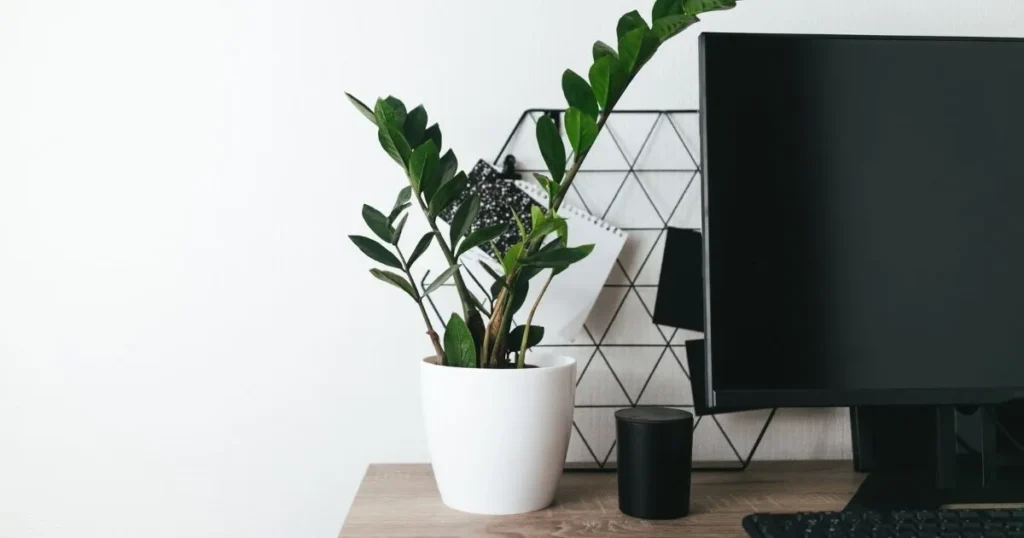
A ZZ plant fits naturally into office settings because it stays presentable with very little day-to-day attention and complements a wide range of professional interiors. Whether placed on a desk, in a reception area, or in a shared workspace, it provides greenery without adding to an already full schedule.
May Improve Focus and Productivity
Indoor plants are often associated with improved concentration, reduced mental fatigue, and a more pleasant work environment, although results vary from person to person. A few workplace studies point to a modest link between visible greenery and better focus or lower stress, the snake plant delivers similar results and is another strong option for office spaces.
Grows Well Under Artificial Light
Artificial lighting is enough to support healthy ZZ plant growth in offices and commercial spaces. This makes it a natural fit for cubicles, conference rooms, reception desks, and other areas where access to natural sunlight is limited. That's one reason it remains a common choice in workplaces designed around overhead lighting rather than windows.
To get the best results, it's worth understanding the ideal light conditions for a ZZ plant, even when growing it under artificial lighting.
ZZ Plant Feng Shui Benefits
In Feng Shui traditions, this plant is linked to prosperity and steady growth, largely because of its upright stems and rounded, coin-like leaves. Many practitioners place it in wealth-related corners of a home, though it's worth remembering these are cultural beliefs rather than scientific claims.
Symbol of Prosperity and Growth
Those rounded leaves are often compared to coins in Feng Shui interpretations, which is part of why the plant became a popular gift for business openings and housewarmings across several cultures. It's as much a tradition of generosity as it is about luck.
Best Feng Shui Placement for a ZZ Plant
Practitioners commonly suggest the southeast corner of a home or office, an area traditionally tied to wealth in Feng Shui layouts. Entryways and living rooms are popular too, since they're seen as the points where energy first enters a space.
ZZ Plant Benefits According to Vastu
According to Vastu principles, this plant is considered auspicious for encouraging positive energy and balance inside a home. Its evergreen, low-maintenance nature gets cited often as the reason it's tied to stability and good fortune in traditional Vastu practice.
Why ZZ Plant Is Considered Auspicious
Traditionally believed to bring resilience into a household, the plant's ability to survive rough indoor conditions gets used almost as a metaphor for endurance. These are cultural beliefs, not scientific ones, but they're still a common reason people choose to keep it.
Best Direction for a ZZ Plant
Vastu guidance generally points to the southeast or east section of a room, directions associated with growth and prosperity in Vastu Shastra. Some practitioners suggest skipping the northeast corner, which is traditionally reserved for more spiritual items instead.
Black Raven ZZ Plant Benefits
The Black Raven ZZ plant offers the same durability and easy-care qualities as the standard variety while adding dramatic, near-black foliage that creates a stronger visual impact indoors. Its unique color makes it a popular choice for modern interiors, offices, and minimalist spaces where traditional green houseplants may blend into the background.
How It Differs From Green ZZ Plants
The biggest difference between Black Raven and green ZZ plants is foliage color rather than care requirements. New leaves emerge bright green before gradually darkening to a deep purple-black shade, creating a contrast that standard ZZ plants don't offer. Care remains nearly identical between the two varieties, including the same well-draining soil mix for ZZ plants to keep excess moisture away from the rhizomes.
Lesser-Known Benefits of ZZ Plants
Most people know ZZ plants for their low-maintenance nature and ability to handle low-light conditions. However, it offers a few lesser-known advantages that make it more useful in everyday indoor spaces. The table below highlights some additional benefits that are often overlooked.
| Benefit | Description |
|---|---|
| May Help Reduce Background Noise | Dense foliage may slightly soften echoes and background noise in indoor spaces. |
| Retains Its Beauty Year-Round | Evergreen foliage keeps the plant attractive throughout the year without seasonal dieback. |
| Performs Well in Air-Conditioned Spaces | Tolerates dry indoor environments better than many tropical houseplants. |
ZZ Plant Disadvantages and Safety Concerns
There are a few things worth knowing before you buy one. The sap contains calcium oxalate crystals, which matters a lot if you've got pets or young kids wandering around the house, and it's worth knowing about before you bring one home.
Is ZZ Plant Toxic?
Yes, the ZZ plant is mildly toxic if ingested, mainly due to calcium oxalate crystals in its sap and leaves. Chewing on it can cause mouth irritation, swelling, or stomach upset in humans, though serious poisoning is rare. Washing your hands after handling the plant is a good precaution.
Is ZZ Plant Poisonous to Cats and Dogs?
Yes, this plant is considered toxic to cats and dogs if chewed or swallowed, according to the ASPCA Poison Control Center. Typical symptoms include drooling, vomiting, or irritation around the mouth. Fatalities are uncommon, but a vet visit makes sense if your pet shows symptoms after getting into the plant.
Safety Tips for Homes With Pets and Children
A high shelf, a hanging planter, or simply a room your pets and kids don't frequent reduces the risk significantly. It also helps to clean up fallen leaf debris quickly so nothing ends up in a curious toddler's hand or a cat's mouth. Most households with pets handle this through placement alone, without removing the plant.
If you share your home with curious cats or dogs, consider choosing safer alternatives for pet-friendly homes that offer greenery without the same toxicity concerns.
FAQs About ZZ Plant Benefits
Does ZZ Plant Purify Air?
The ZZ plant may modestly support indoor air quality by filtering certain airborne compounds through its leaves. Research on this is limited and results vary, so it should not replace proper ventilation or an air purifier, but it can complement both as part of a healthier indoor environment.
Is ZZ Plant Good for the Bedroom?
Yes, the ZZ plant works well in bedrooms because it tolerates low light and requires very little attention. Its compact growth and ability to adapt to indoor conditions make it a practical choice for dressers, nightstands, and other bedroom spaces.
What Are the Disadvantages of a ZZ Plant?
The main disadvantages of a ZZ plant are its mild toxicity if ingested and its sensitivity to overwatering. It can cause irritation if chewed by pets or children, and excess moisture may lead to root rot. The plant also grows relatively slowly compared to some other houseplants.
Is ZZ Plant Lucky at Home?
According to Feng Shui and Vastu traditions, the ZZ plant is often associated with prosperity, growth, and positive energy. While these beliefs are cultural rather than scientific, many people keep the plant at home because of its symbolic connection to good fortune.
What Is ZZ Plant Good For?
The ZZ plant is well suited for low-light spaces, busy households, offices, and beginner plant owners. Its drought tolerance, attractive foliage, and ability to adapt to indoor environments make it one of the most practical houseplants for everyday use.
Final Thoughts
The ZZ plant earns its popularity by fitting easily into everyday life. Whether you're new to houseplants or simply want greenery that doesn't become another responsibility, it offers a reliable balance of appearance, adaptability, and low effort.
Its long-lasting foliage, tolerance for typical indoor conditions, and cultural associations with prosperity have helped make it a favorite in homes and workplaces alike. Just remember to keep it out of reach of pets and young children. With that one precaution in mind, it's a plant most people can enjoy for years with very little trouble.
Explore more:

Muddsir Munir
Houseplant enthusiast researching and writing about indoor plants, helping beginners grow spider plants, snake plants, and more with confidence.