Last updated on October 11, 2026
A ZZ plant not growing doesn’t always mean something is wrong. If your Zamioculcas zamiifolia hasn’t produced a new stem in months, don’t assume it’s unhealthy. ZZ plants naturally grow much more slowly than many other houseplants. ZZ Plants are genuinely slow growers. A healthy one produces roughly 2 to 3 new stems per year, usually in short bursts during spring and summer, with stretches of nothing in between. The real concern is when your ZZ plant isn’t growing throughout an entire active growing season despite getting the light, warmth, and basic care it needs.
Whether your plant is dormant, adjusting to a new environment, recovering from root stress, or facing another common issue, the sections below will help you identify the cause and decide what to do next.
Is It Normal for a ZZ Plant to Grow Slowly?
Often, yes. Understanding how ZZ plants naturally grow can save you from fixing a problem that doesn’t actually exist. ZZ plants grow in spurts, not steadily. Growth picks up between spring and early fall, then slows dramatically as daylight hours shorten.
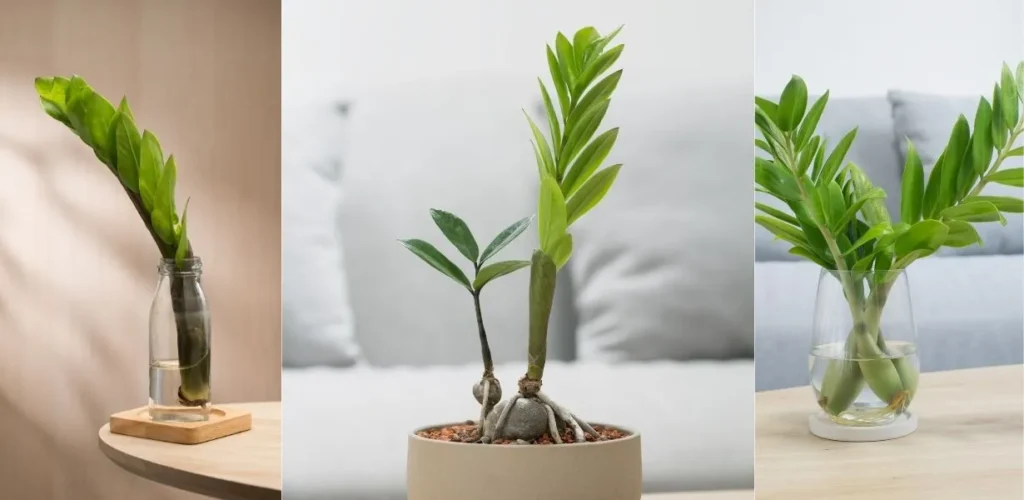
New shoots don’t emerge from existing stems. Every new stem begins as a spear that develops below the soil. It grows from a thick, potato-like rhizome that stores water and energy before sending new growth above the surface. Because of this, an actively growing ZZ plant can look unchanged for weeks or even months, before a new shoot appears.
How to Tell Normal Slow Growth From a Genuine Stall
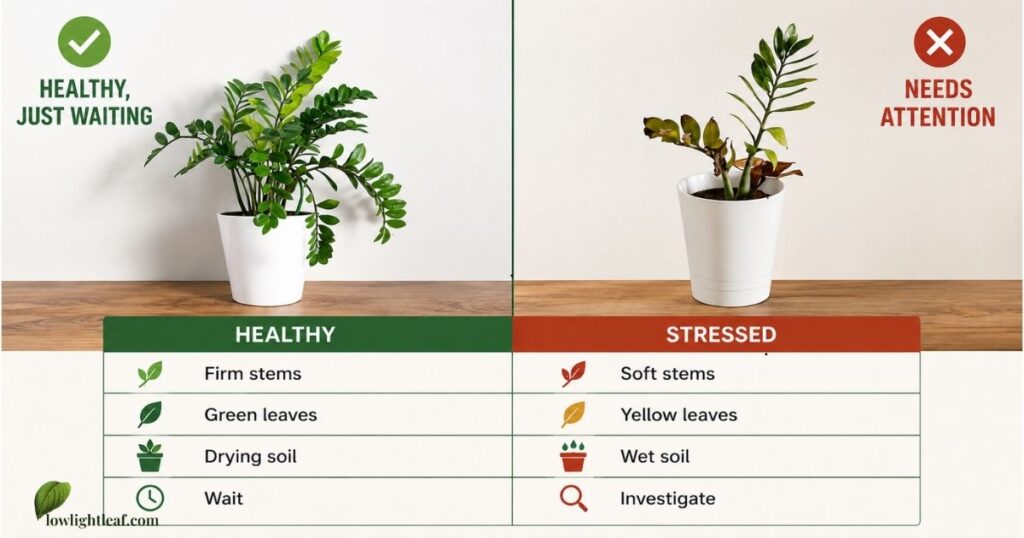
| Signal | Probably Fine | Worth Investigating |
|---|---|---|
| Stem firmness | Firm and upright | Soft or mushy at base |
| Leaf color | Deep, glossy green | Yellowing or pale |
| Last new shoot | A few months ago | No new shoots all growing season |
| Soil | Drying normally | Staying wet too long |
| Season | Fall or winter | Peak summer, still nothing |
| Smell | None | Foul or musty from soil |
| Rhizome feel | Firm and pale | Soft, brown, or foul-smelling |
Before You Diagnose: 3 Quick Checks
Before you assume something is wrong, start with these three quick checks. They explain most cases of a ZZ plant not growing.
1. Did it produce any new shoots between March and September?
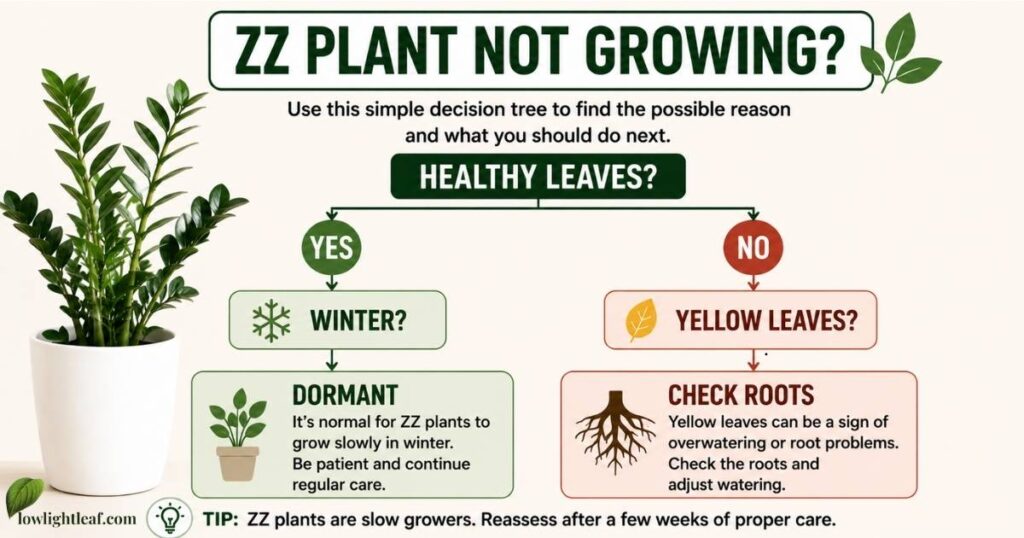
If it’s currently fall or winter, a pause in growth is often completely normal. ZZ plants routinely go quiet for four to five months. Active season with zero growth is a different story.
2. Is it in bright indirect light or just surviving in low light?
ZZ plants tolerate low light; they don’t actively grow in it. A plant in a dim corner may look healthy for years while producing almost nothing new. Consistent growth needs a bright window with indirect light.
3. Was it recently moved, repotted, or just brought home?
Any major change, such as a new pot, a new location, or bringing it home, can temporarily pause above-ground growth while the roots and rhizomes adjust. This is a common reason a ZZ plant stops growing, so we’ll look at it more closely below.
In many cases, you can identify the problem in less than a minute by answering these three questions.
Why Is My ZZ Plant Not Growing? 9 Causes to Check
1. Not Enough Light
Start here. If your ZZ plant isn’t growing and one condition is holding it back, it’s usually light. ZZ plants survive in low light, but surviving and actively growing are different things. For rhizomes to produce new spears, photosynthesis needs enough energy. In low light, the plant uses most of that energy just to maintain its existing leaves.
If you’re still figuring out what low light actually means indoors, understanding your room’s light conditions can help you avoid the same problem with other houseplants.
Signs this is the problem:
- No new shoots despite months in the same spot
- Stems leaning or stretching toward the window
- Leggy, elongated stems with wide gaps between leaves
- Growth appearing only on the window-facing side
What to do:
Move your ZZ plant closer to a bright window, an east-facing window is ideal, or a few feet back from a south-facing window with filtered light. If natural light isn’t available, place an LED grow light 12–18 inches above the plant for 6–8 hours a day. Light levels below 1,500 lux are usually too low for steady new growth. Rotate the pot 90° every two to three weeks to encourage even growth.
2. Seasonal Dormancy
If it’s fall or winter and your ZZ plant is alive but not growing, dormancy is the most likely reason and there’s usually nothing to fix.
Zamioculcas zamiifolia evolved in the seasonally dry forests of Eastern Africa, including Tanzania, Kenya, and Zimbabwe. It’s built for long low-energy periods followed by growth bursts when conditions improve. As indoor daylight shortens in autumn, the plant’s energy reserves drop and stem production naturally slows.
Dormant vs. actually struggling:
A dormant ZZ looks stable, stems firm, leaves glossy, no active decline. A struggling plant gets worse over time: yellowing spreads, stems soften, soil stays wet longer than it should.
What to do:
Ease back on watering, skip fertilizer until March, and leave the plant alone. New spears appear once spring light returns. This kind of seasonal slowdown isn’t unique to ZZ plants. Other slow-growing houseplants can pause for similar reasons, although the exact causes differ from species to species.
3. Overwatering Can Stall Growth Before Root Rot Develops
One thing many people miss: overwatering can stop ZZ plant growth before visible symptoms like yellow leaves appear. ZZ rhizomes already hold significant water internally. Wet soil on top of that cuts off oxygen from the root zone. Roots need oxygen to absorb nutrients. Without it, the plant can’t produce new spears. Growth stops first; yellow leaves come later.
Signs to look for:
- Pot staying heavy more than a week after watering
- Faint sour or musty smell from the soil
- Stems slightly soft at the soil line
- No new shoots despite good light
What to do:
Let the entire potting mix dry out, not just the surface, but the lower half of the pot. Lifting the pot is the most reliable check: a dry pot feels noticeably lighter. Not sure when the soil is dry enough to water again? See how light, season, and pot conditions affect how often your ZZ plant needs water.
4. Pot Problems: Too Big, Too Tight, or Post-Repot Recovery
Size of pot causes more growth problems than many people realise, and both extremes can slow growth.
Pot too large: Excess soil holds moisture longer than rhizomes need. The plant puts its energy into growing roots before producing new shoots. New growth slows, and the dampness raises root stress.
Root-bound: Once rhizomes run out of room, spear formation slows or stops. Signs include rhizomes pressing against the pot walls, water flowing straight through, soil drying unusually fast.
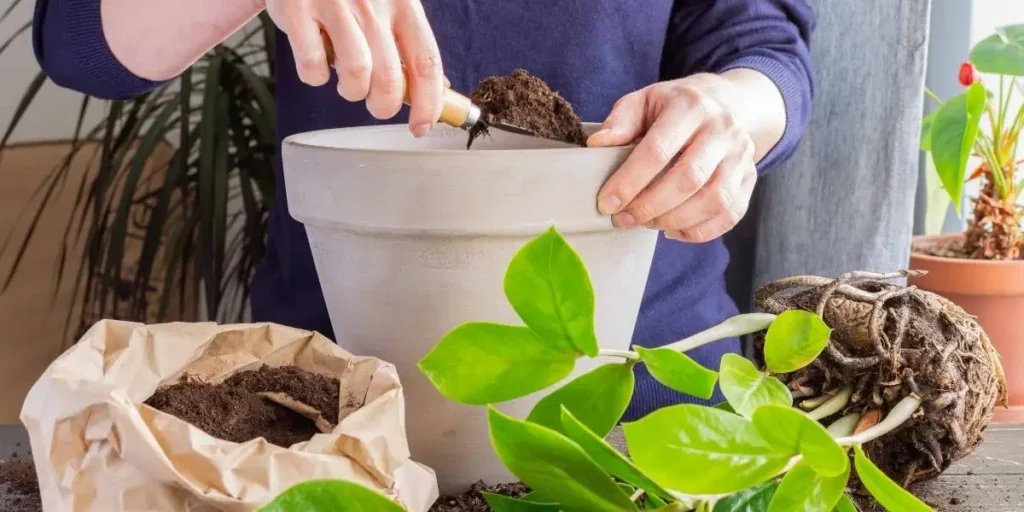
After repotting: A four-to-eight-week growth pause is normal, the plant rebuilds its root network before producing anything new. Repotting again resets that clock, one of the most common reasons a ZZ plant doesn’t resume growth.
What to do:
If root-bound, repot in spring into a pot only 1–2 inches wider. If recently repotted, wait out the full growing season. Terracotta dries faster than plastic, which helps reduce excess moisture.
5. Heavy or Compacted Soil
The soil itself can be the problem, even when watering and light are correct. Dense, moisture-retentive potting mix holds water around the rhizomes far longer than necessary. Over time it compacts and loses structure, reducing airflow around the roots. The result is much like overwatering: oxygen-depleted soil, stressed rhizomes, and no new growth, even with a careful watering routine.
Signs this is the issue:
- Water pools on the surface before absorbing
- Lower layers stay wet long after the surface looks dry
- Growth stalled after moving into a standard nursery mix
What to do:
Repot into a fast-draining mix. A mix of equal parts potting soil, perlite, and orchid bark works well. A pre-made cactus mix is a practical shortcut. Target pH 6.0–7.0. Avoid garden soil entirely. If you’re unsure which mix to use, see what makes a good soil mix for ZZ plants before repotting.
6. The Post-Purchase Pause
Newly bought ZZ plants often stop growing for weeks after coming home, and many owners don’t expect it. Nursery conditions are optimized: high light, controlled humidity, consistent feeding. Your home changes most of those variables at once. The plant isn’t struggling, it’s adjusting.
During this period, typically four to eight weeks, the plant prioritises root growth over new stems. Stems stay firm, leaves look healthy, there’s just no new activity yet. A ZZ plant not growing right after purchase is almost always due to this adjustment.
What to do:
Find a spot with good indirect light and leave it alone. Avoid repotting immediately, and hold off on fertilizing, the nursery soil already contains enough nutrients.
7. Growing Underground
A ZZ plant can appear completely unchanged while building roots and rhizomes beneath the surface. Every new stem starts as a spear forming from a rhizome underground. After repotting or division, this stage lasts longer because the plant rebuilds its root system.
This wait is even longer with cuttings, as new ZZ plant cuttings can spend months developing roots and rhizomes before a new shoot appears.
Signs this is what’s happening: Plant looks stable and healthy. Recently repotted or divided. Spring or early summer. No foul smell or soft tissue.
When to investigate: If there’s still no above-ground growth through an entire spring and summer in good conditions, it’s time to investigate. Gently lift the plant and inspect the rhizomes.
Healthy: firm, plump, and pale.
Problem: soft, brown, or foul-smelling.
8. Cold Temperatures and Drafts
Cold stress often stops growth without obvious leaf symptoms, just no new growth. Consistent growth happens between 65–85°F (18–29°C). Below 65°F, metabolic processes slow noticeably. Below 50°F (10°C), growth stops and cold tissue damage becomes a real risk.
The University of Florida’s ZZ plant growing guide notes that ZZ plants perform best in warm conditions, making prolonged cold a poor fit for active growth.
Common indoor cold sources:
- Windowsills dropping close to outdoor temperatures at night in winter
- AC vents blowing directly onto foliage in summer
- Cold concrete or tile floors chilling the root zone through the pot
- Exterior-facing walls in poorly insulated rooms
What to do:
Move to a consistently warm spot, away from drafts and vents. Temperature stability matters here, daily swings affect ZZ plants more than a room that’s slightly cool overall.
9. Nutrient Depletion
Fertilizer is usually the first thing people try when a ZZ plant isn’t growing. It should be closer to last.
Nutrient depletion is usually only a factor when: the plant has been in the same soil for two-plus years, it’s the active growing season, and light and watering are already correct. The clearest sign is uniformly pale or small new growth, different from the scattered yellowing caused by overwatering.
A common mistake: Feeding a plant that doesn’t have enough light. Without enough light, the plant can’t use the extra nutrients. Unused salts build up and put more stress on the roots. Sort the light first. The same logic applies to dormancy: never fertilize a resting plant, and skip feeding for six months after repotting.
How to feed correctly: Balanced fertilizer (10-10-10 or 20-20-20) at half strength, once a month from March to August only.
Why Is My ZZ Plant Not Growing New Shoots or New Leaves?
Every new ZZ stem and leaf begins as a spear forming from a rhizome. When the rhizomes are stressed or don’t have enough energy, new growth slows or stops.
The most common causes are the same: low light, dormancy, overwatering, post-repot recovery, and poor soil conditions. Two extra things to check:
If small nubs are visible at the base, those are developing spears. A cold draft, inconsistent watering, or moving the plant can stop them mid-process. Keep conditions stable and leave the plant alone while they develop.
Checklist when your ZZ plant isn’t producing new growth:
- Is it fall or winter?
- Is it getting bright indirect light, not just surviving in a dim spot?
- Has the soil been staying wet longer than usual?
- Was the plant repotted or moved in the last 6–8 weeks?
- Is it a Raven ZZ or Zenzi, both grow more slowly than standard?
- Any soft tissue or foul smell near the root zone?
Why Is My ZZ Plant Not Growing Straight?
This question usually has two different answers.
Leaning toward a window is phototropism, normal behaviour. Existing bent stems won’t fully straighten, but future growth will be more balanced once lighting is corrected.
Floppy, weak, or sprawling stems are a different problem:
- Low light produces soft, elongated stems that can’t support their weight — leggy growth
- Overwatering weakens the stem base; check for mushiness near the soil line
- A crowded pot pushes rhizomes outward, making stems sprawl sideways
- Older outer stems naturally arch with age — cosmetic, not a concern
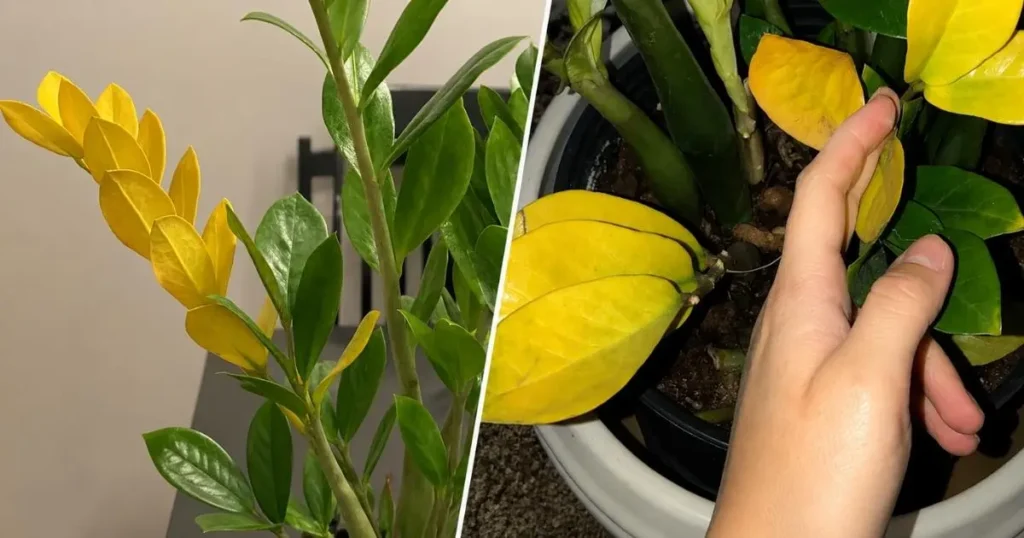
If stems feel soft or look discoloured near the soil, check for root stress first. If yellowing is also spreading, the pattern of your ZZ plant’s yellow leaves can help you pinpoint the cause.
Is Your ZZ Plant Dormant, Recovering, or Stressed?
| Check | Dormant | Recovering | Stressed |
|---|---|---|---|
| Season / Timing | Fall or winter | Recently repotted | Active season, no growth |
| Overall condition | Healthy and stable | Healthy after repotting | Declining |
| What to do | Wait | Wait | Investigate |
What to Do if Your ZZ Plant Hasn’t Grown in 6–12 Months
Step 1 — Fix the light first. Move to the brightest available indirect light and give it four to six weeks before adjusting anything else. Light solves more growth problems than any other single change.
Step 2 — Check the pot and soil. Is the pot much larger than the root system needs? Is the soil old, compacted, or staying wet? These two factors cause more growth problems than watering alone.
Step 3 — Rule out dormancy, recovery time, and variety. Is it winter? Recently repotted or moved? Raven ZZ or Zenzi? These change how long to wait, not what to fix.
Step 4 — Only then consider fertiliser or repotting. Once you’ve ruled out problems with light, pot size, and soil, consider a light spring feed or a careful repot into a pot 1–2 inches wider if the plant is genuinely root-bound. Make one change at a time. Multiple adjustments at once make it impossible to know what worked.
How to Make Your ZZ Plant Grow Faster
You can’t force a ZZ plant to grow faster than its natural pace, but these habits can support steady growth:
| Do This | Avoid This |
|---|---|
| Bright indirect light | Keeping it in low light |
| Let soil dry properly | Watering too often |
| Repot only when root-bound | Using an oversized pot |
| Make changes in spring | Fertilizing during dormancy |
| Keep conditions stable | Frequently moving the plant |
That ability to handle dry spells and occasional neglect is also what makes ZZ plants so popular indoors, especially for busy plant owners.
Raven ZZ and Zenzi: Slow-Growing Varieties
Raven ZZ (Zamioculcas zamiifolia ‘Raven’) grows more slowly than the classic green variety, particularly indoors. New stems emerge lime green before darkening to near-black over several weeks, and the plant grows more slowly overall.
If your black ZZ plant or Raven ZZ looks healthy and conditions are right, its slower growth is simply part of the variety, not a care problem.
Zenzi ZZ stays naturally compact, reaching just 12–18 inches at maturity. If yours doesn’t match standard ZZ plant photos online, it may simply be growing the way it’s meant to.
Frequently Asked Questions
Why is my ZZ plant healthy but not growing?
A healthy ZZ plant may simply be dormant, recovering after a move or repot, or growing in light that’s too low for active growth. ZZ plants naturally produce only a few new stems each year, so check the season and light conditions before assuming there’s a problem.
Why is my ZZ plant not growing new shoots?
New shoots develop underground from the rhizomes before emerging above the soil. Low light, dormancy, overwatering, recent repotting, or poor soil conditions can all delay new growth.
Why is my ZZ plant not growing after repotting?
This is usually normal. ZZ plants often pause above-ground growth for four to eight weeks after repotting while they rebuild their root system. Keep conditions stable and avoid repotting again.
Why is my Raven ZZ plant not growing?
Raven ZZ plants naturally grow more slowly than standard green ZZ plants. If your plant looks healthy and receives proper care, slower growth is usually normal.
Can a root-bound ZZ plant stop growing?
Yes. When the rhizomes run out of space, new growth can slow or stop. Repot during spring into a container only 1–2 inches wider than the current pot.
Final Thoughts
A ZZ plant not growing is rarely cause for concern. In most cases it’s dormant, settling after a recent change, or running at the pace it always has.
If your plant stays healthy but hasn’t produced new growth, resist the urge to change everything at once. Work through one possible cause at a time, then give the plant enough time to respond before making another adjustment.
ZZ plants reward patience more than attention. Correct what’s off, let the plant settle, and new spears will usually follow.

Ellie Marsh
Houseplant grower who spent years in a north-facing apartment. Writes practical care guides for low light homes, checked against extension and botanical garden sources.
Explore more: