Yes, peace lilies are toxic to cats. The ASPCA lists the peace lily (Spathiphyllum) as toxic to cats and dogs because it contains insoluble calcium oxalate crystals, which burn and irritate the mouth. The FDA adds that it doesn’t cause the kidney failure that true lilies do.
So are peace lilies toxic to cats in the way people fear when they hear “lily”? No, and that difference matters when you’re standing over a drooling cat deciding how fast to move. I share my home with a cat named Miso and check every plant on the ASPCA list, and the peace lily is one I’d keep well out of reach.
What a peace lily does to a cat
A peace lily irritates a cat’s mouth the moment it’s chewed. Biting the plant releases calcium oxalate crystals that irritate the mouth, tongue, throat and esophagus, the FDA explains, and the signs usually go away on their own.
Drooling and pawing at the mouth minutes after a bite are the classic picture.
Beyond those, the ASPCA lists oral irritation, intense burning of the mouth, tongue and lips, vomiting and difficulty swallowing, and the FDA adds foaming, vocalizing and diarrhea. Breathing trouble from a swollen mouth and airway can happen, but the FDA calls it uncommon, and the ASPCA’s veterinary site also describes swelling of the mouth, throat and tongue, so a cat that struggles to breathe needs a vet straight away.
Are peace lilies toxic to cats like true lilies?
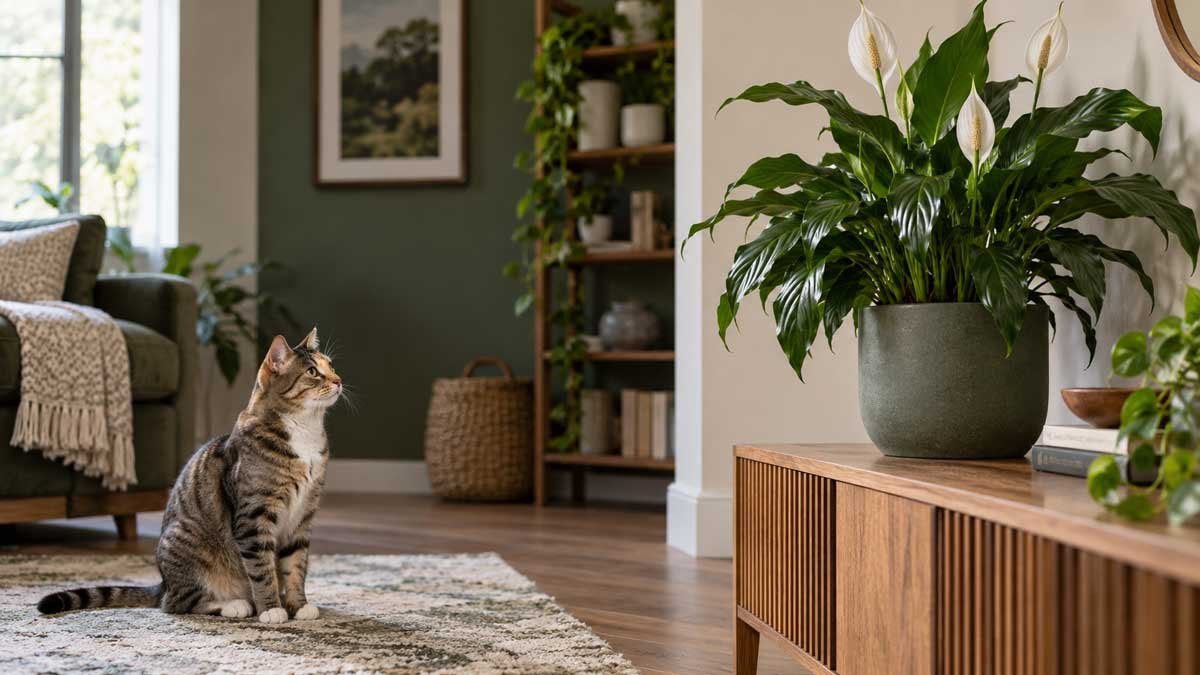
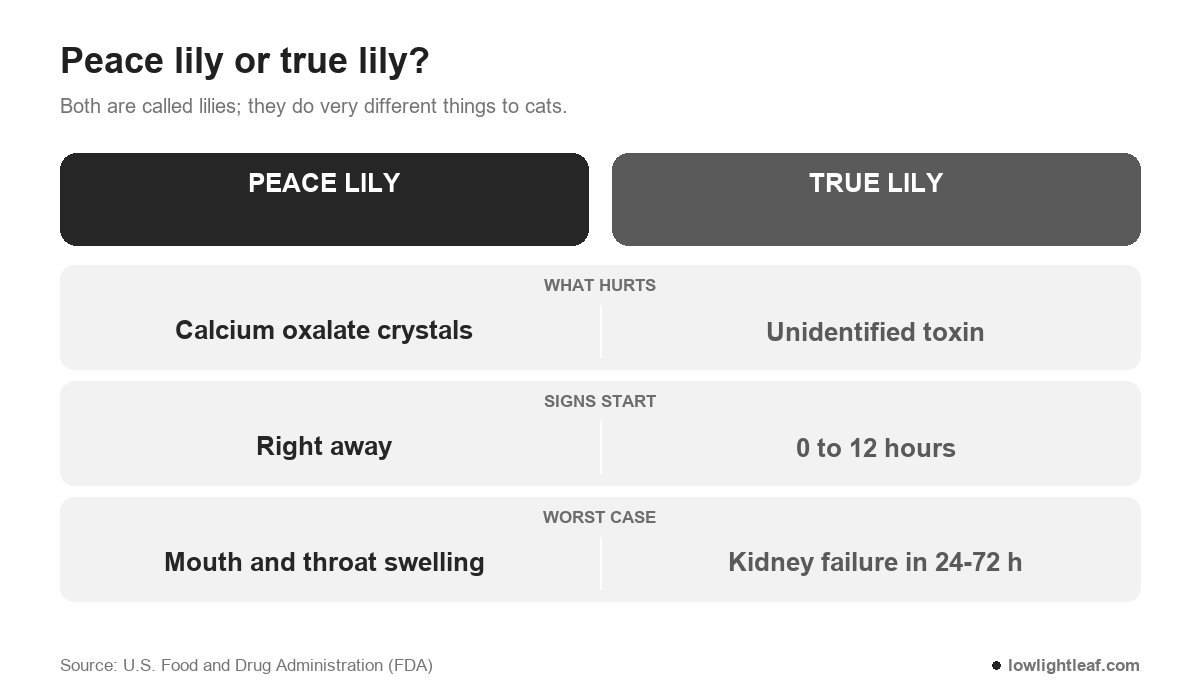
No. Peace lilies and calla lilies cause mouth irritation, while true lilies and daylilies can cause fatal kidney failure in cats, with several other plants called “lily” falling somewhere in between in the FDA’s warning.
| Plant called “lily” | What it does to cats (FDA) | How serious |
|---|---|---|
| Peace lily (Spathiphyllum) | Calcium oxalate crystals irritate the mouth and throat | Painful; signs usually pass on their own |
| Calla lily | Same crystals and signs as peace lily | Painful; signs usually pass on their own |
| True lilies, such as Easter lily (Lilium) | Kidney failure in less than 3 days from a small bite, pollen licked off fur or vase water | Can be fatal |
| Daylilies (Hemerocallis) | Same kidney danger as true lilies | Can be fatal |
| Lily-of-the-valley | Abnormal heart rhythm | Can be fatal |
| Gloriosa or flame lily | Roots or tubers can cause multi-system organ failure | Can be fatal |
| Peruvian lily | Mild stomach upset if a large amount is eaten | Signs usually pass on their own |
Timing is what makes the distinction urgent. For true lilies, the FDA says early signs such as low energy, drooling, vomiting and loss of appetite start within 0 to 12 hours, signs of kidney damage follow at 12 to 24 hours, and kidney failure develops within 24 to 72 hours, ending in death if the cat isn’t treated.
Pollen makes true lilies dangerous even without chewing. Licking a few pollen grains off its fur while grooming can poison a cat, the FDA says, and the ASPCA’s veterinary site describes documented kidney injury in cats from daylily pollen alone. A bouquet that dusts your cat’s face with lily pollen is a vet call, not a wait-and-see.
What to do if your cat chewed a peace lily
Call your veterinarian or a pet poison control center, and be ready to say exactly which plant it was. For any lily, the FDA says to call right away, because depending on the type it may be an emergency.
- Identify the plant. The FDA suggests bringing the plant to the clinic or taking a photo of it on your phone, so the vet can tell a peace lily from one of the highly toxic lilies.
- Call for advice. The ASPCA Animal Poison Control Center is at (888) 426-4435 and the Pet Poison Helpline at 855-764-7661, both listed by the FDA. The ASPCA notes that a consultation fee may apply.
- Watch your cat. Drooling, pawing at the mouth and vomiting fit a peace lily bite. Trouble breathing is the uncommon sign the FDA mentions, and it shouldn’t wait.
If there’s any chance the plant was a true lily or a daylily, or that pollen from a bouquet got on your cat, treat it as an emergency.
Can you keep a peace lily with a cat?
You can keep a peace lily with a cat if the plant sits where the cat can’t reach it, since the problem starts with chewing. True lilies and daylilies are another matter, and the FDA’s advice is not to bring them into a home with a cat at all.
Peace lilies are floor and tabletop plants, so out of reach usually means a room the cat doesn’t use or a high stand away from furniture it jumps from. If neither works, swap it for a plant on the ASPCA’s non-toxic list; a shortlist for dim rooms is in pet-friendly indoor plants. If you keep yours, the light and watering notes are in peace lily care.
Peace lilies and cats FAQ
What happens if a cat licks a peace lily?
A lick is less likely to cause trouble than a bite. Crystals are released when a cat chews or bites the plant, as the FDA describes it, so a cat that licks a leaf without breaking it may show nothing. Watch for drooling or pawing at the mouth, and call your vet if you see them.
Can a cat be in the same room as lilies?
With a peace lily out of reach, yes. With true lilies or daylilies, the FDA says no. Pollen that falls on fur and gets licked off during grooming, or water from the vase, can be enough to cause kidney failure.
Are peace lilies toxic to dogs?
Yes. The ASPCA lists peace lilies as toxic to dogs too, with the same mouth irritation and drooling. For dogs, true lilies are different; the FDA says dogs that eat them may have minor stomach upset but don’t develop kidney failure.

Ellie Marsh
Houseplant grower who spent years in a north-facing apartment. Writes practical care guides for low light homes, checked against extension and botanical garden sources.