Last updated on November 8, 2026
No, spider plants are not toxic to cats or dogs. The ASPCA lists the spider plant (Chlorophytum comosum) as non-toxic to both cats and dogs, though its plant database also warns that eating any plant material can cause vomiting and stomach upset.
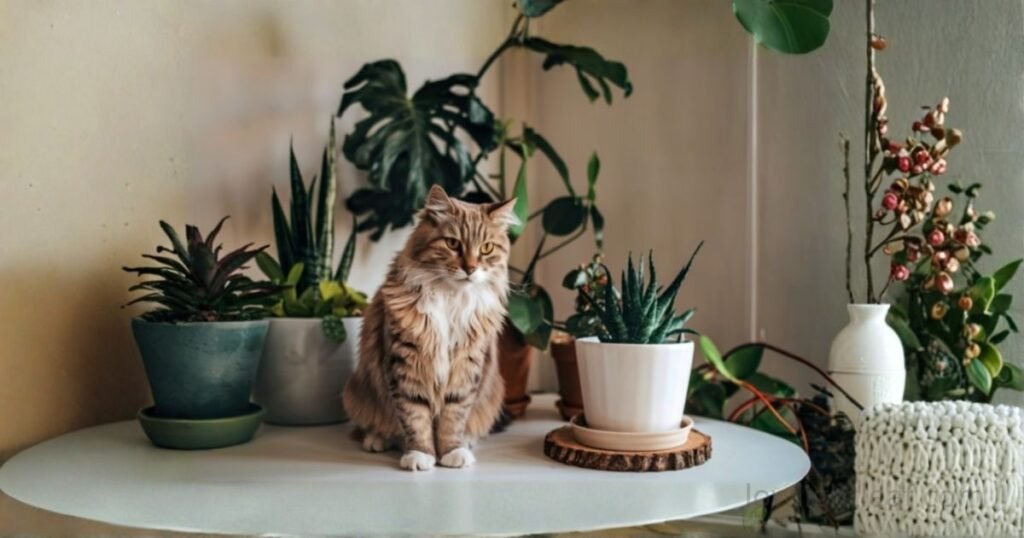
So are spider plants toxic to cats or dogs in any way that should worry you? Not in the poisoning sense. I share my home with a cat named Miso, and I look up every plant on the ASPCA list before it comes inside; the spider plant passes. What’s worth knowing is what “non-toxic” covers, and how to make sure the plant on your shelf is the one the ASPCA means.
Are spider plants toxic to cats, or just hard on the stomach?
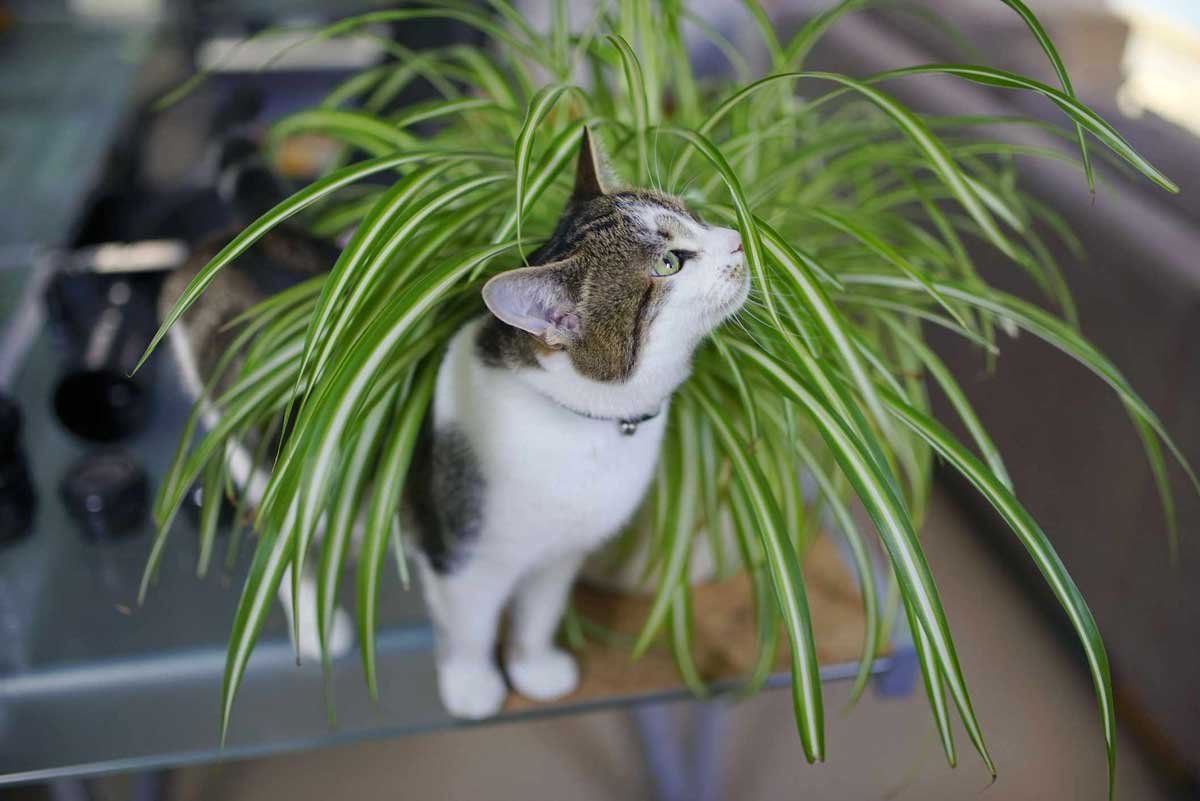
Spider plants are non-toxic, so one isn’t expected to poison your cat. Chewing it can still make a cat vomit. The ASPCA says plants listed as non-toxic are not expected to be life-threatening, while the consumption of any plant material may cause vomiting and gastrointestinal upset in cats and dogs.
University of New Hampshire Extension puts it the same way. Even a non-toxic plant could still cause vomiting or stomach upset, it says, but it should not be life-threatening. That’s the honest version of “safe”: a cat that chews a few leaf tips and throws up on the rug has had a bad afternoon, not a poisoning. Call your veterinarian or the ASPCA Animal Poison Control Center at (888) 426-4435 if your cat seems ill, or if you aren’t sure which plant it chewed. The ASPCA notes that a consultation fee may apply to the hotline.
Owners describe exactly this pattern. One of the most-upvoted spider plant posts on r/houseplants:
“Wife and I are struggling to keep our 9yr old cat from eating the spider plant. The second the office door is open she’s in there and goes at the plant then proceeds to puke it up 30 min later… fun times. Yes, keeping the door closed is obvious but nobody is perfect, and getting some air flow in there is needed. We can’t have a plant stand as she has also knocked that down with the assistance of the dogs. Wife really enjoys having them and is wanting to give up on all of them (about 10+ total)…” [excerpt — 560 characters in full]
– r/houseplants, March 2026 (1,396 upvotes)
Are spider plants toxic to dogs?
No, spider plants aren’t toxic to dogs either. The ASPCA files Chlorophytum comosum as non-toxic to dogs as well as cats, and University of New Hampshire Extension gives dog owners the same caveat it gives cat owners: a non-toxic plant can still cause vomiting or stomach upset, but it should not be life-threatening.
Pet Poison Helpline lists the amount eaten and the size of the animal among the factors that decide how a particular pet reacts, so a dog that shreds a whole plant deserves more watching than one that nibbled a leaf tip. If the vomiting keeps going, or you aren’t sure the plant was a spider plant, the ASPCA poison line above takes calls about dogs too.
Make sure it’s really a spider plant
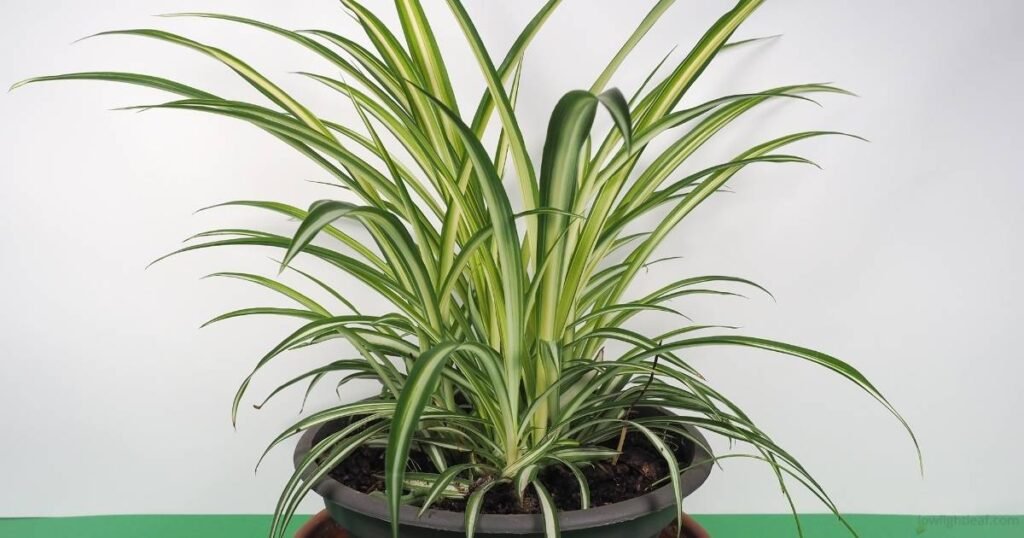
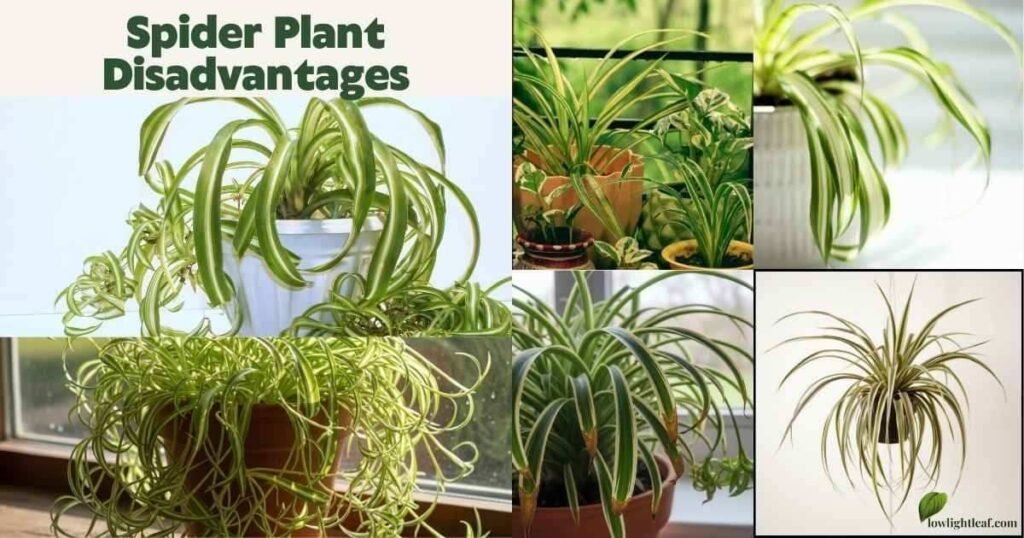
The safe verdict belongs to one plant, Chlorophytum comosum, so check the scientific name on the tag. Several plants share “spider” in their common name, and the ASPCA warns that its list isn’t all-inclusive and that plants can look different from its photos. Striped, curly and all-green spider plants are all C. comosum cultivars, and the relatives sold alongside them are sorted out in spider plant varieties.
| Name on the tag | Scientific name | ASPCA verdict for cats and dogs |
|---|---|---|
| Spider plant, spider ivy, ribbon plant | Chlorophytum comosum | Non-toxic to both |
| Spider flower | Cleome hasserlana (as the ASPCA spells it) | Non-toxic to both |
| Queen’s spiderwort | Dichorisandra reginae | Non-toxic to both |
| Spider lily | Varies by plant | No entry in the ASPCA cat list; ask your vet |
| Easter lily, as an example of a true lily | Lilium longiflorum | Toxic to cats; kidney failure and death are possible. The ASPCA says cats are the only species known to be affected |
That last row is why the name matters.
The ASPCA says Easter lily can cause vomiting, loss of appetite, lethargy and kidney failure, and that cats are the only species known to be affected. A plant sold as a “spider lily” is not a spider plant, and since the ASPCA list has no entry for it, the safe move is to treat it as unknown until your vet says otherwise.
Why cats chew spider plants
Nobody has shown why, so far as I can find. You’ll see claims online that spider plants act like catnip or have a mild hallucinogenic effect on cats, but I couldn’t find a veterinary source or study that supports either one, so I wouldn’t repeat it as fact.
What’s easy to see is the shape of the plant. Long, thin leaves arch over the pot, and the little offshoots dangle on stems, swinging just above a cat’s reach. Whatever the reason, a plant that’s fun to bat at gets chewed.
The “high” idea shows up in almost every thread. On a post about a chewed spider plant, a top reply asked:
“Your plant and cat will be ok! Is kitty high? I remember when my girl got after my spider plant hahaha”
– r/plantclinic, December 2025 (61 upvotes)
It’s a common joke, and as noted above, no veterinary source backs it up.
Keeping a spider plant away from cats and dogs
The simplest fix is to put the plant where your cat can’t reach it. University of New Hampshire Extension says it’s best practice to keep plants out of reach where possible, even the non-toxic ones, because they can still upset a stomach.
- Hang it. Spider plants trail well from a hanging basket, and a hook high enough that the offshoots don’t hang within jumping range keeps them out of play. Ideas for where to hang plants in a dim room are in low-maintenance hanging plants.
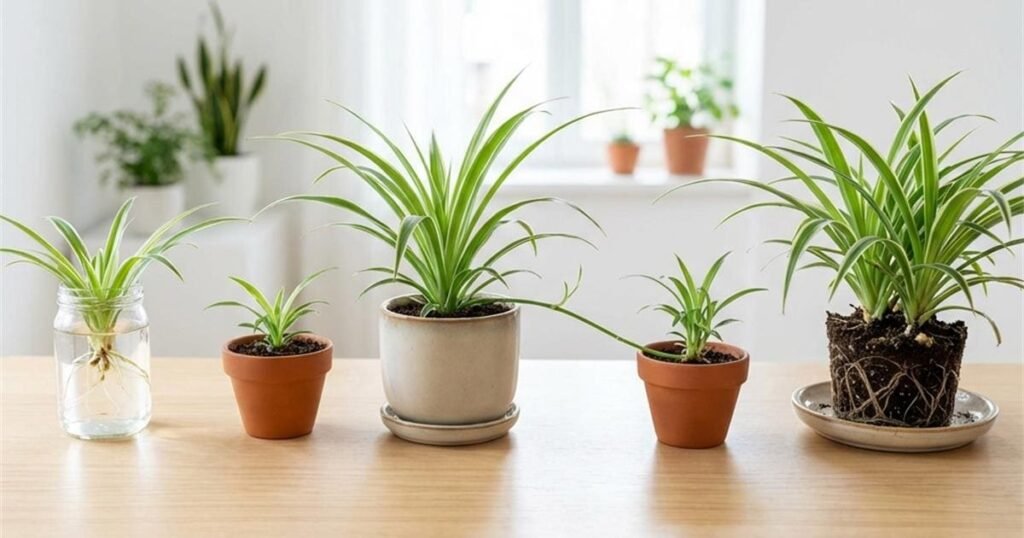
- Trim the dangling babies. The offshoots are the part that swings. Snip them off and root them, which also gives you new plants.
- Use a high shelf away from furniture your cat uses as a launch pad.
Moving the plant also changes its light. If it ends up farther from a window, the light and watering notes on spider plant care will help it settle in.
Spider plants, cats and other houseplants
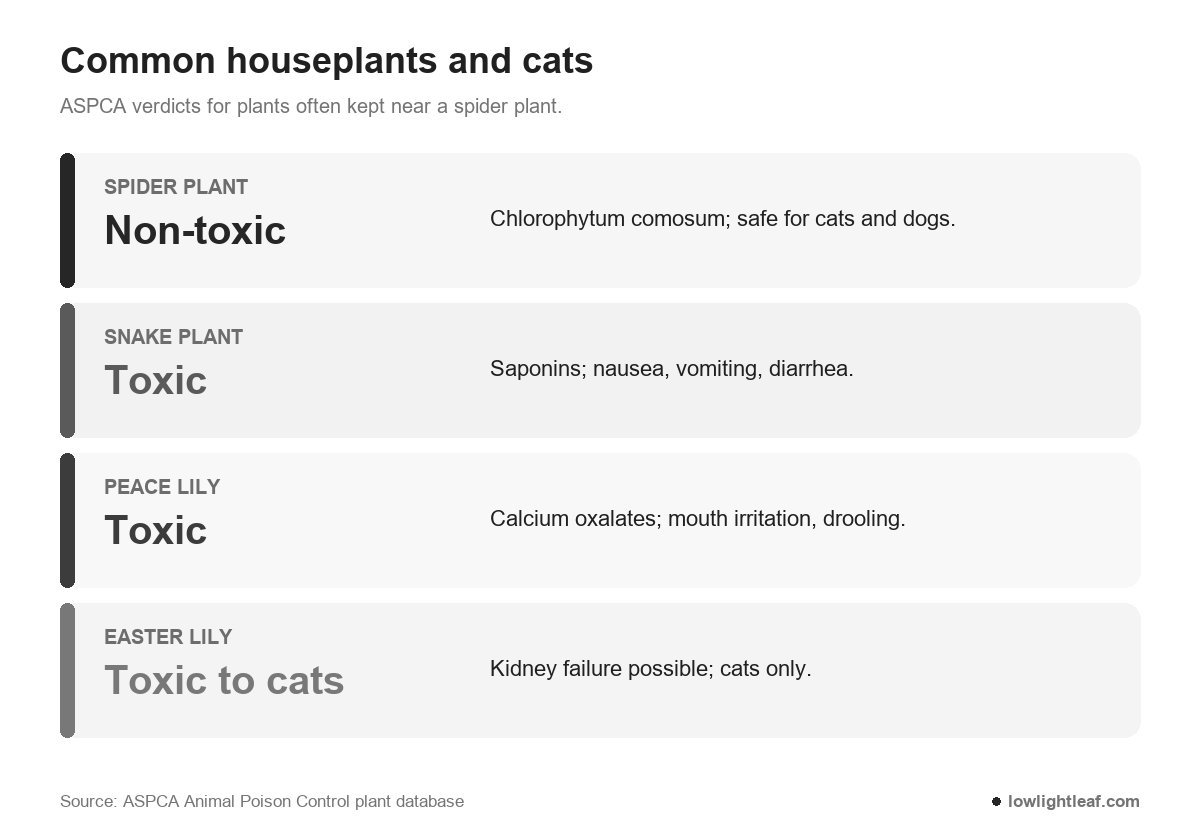
The spider plant is on the ASPCA’s non-toxic list, but two plants often kept beside it, the snake plant and the peace lily, are listed as toxic to cats; the peace lily is covered in are peace lilies toxic to cats.
Are snake plants toxic to cats?
Yes. The ASPCA lists snake plant, under the name mother-in-law’s tongue (Sansevieria trifasciata), as toxic to cats and dogs because of saponins, with nausea, vomiting and diarrhea as the signs, covered in is snake plant toxic to cats. If you keep both plants, the snake plant is the one to put out of reach first; growing tips are on snake plant care.
Which houseplants are safe for cats?
Start with the ASPCA’s non-toxic list and the scientific name on the tag. A shortlist that suits dim rooms is in pet-friendly indoor plants, and the same rule applies to each of them. Match the scientific name before you trust the common name. The plant toxicity table lists 115 common houseplants for cats, dogs and horses, with the toxin and signs from each plant’s ASPCA entry.
The spider plant page lists all of my guides on this plant, grouped by topic.

Ellie Marsh
Houseplant grower who spent years in a north-facing apartment. Writes practical care guides for low light homes, checked against extension and botanical garden sources.