Last updated on November 25, 2026
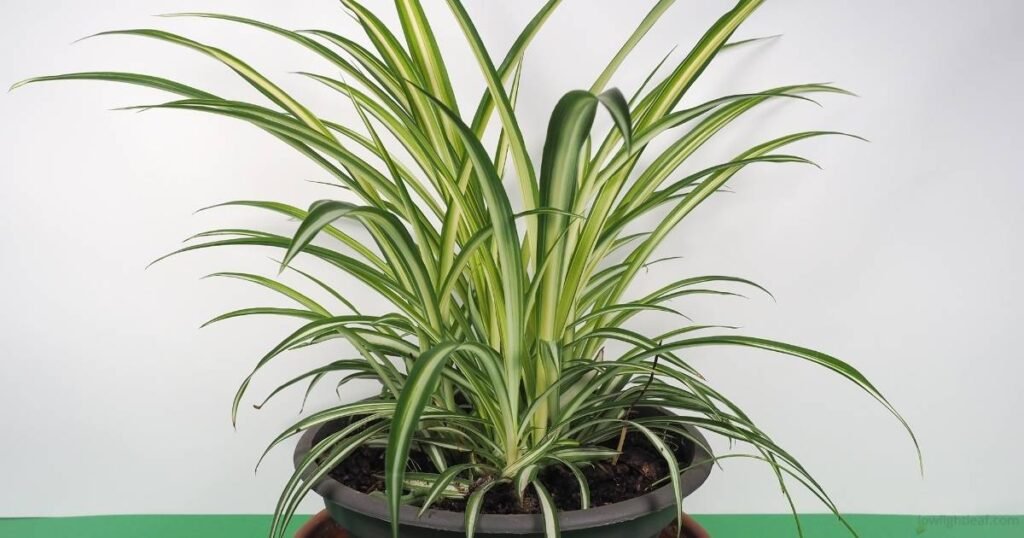
Brown leaf tips are the complaint I hear most in winter, and they’re almost never a disease. On a spider plant or a dracaena the cause is usually one of four things: air that’s too dry, watering that swings from bone dry to soaked, fertilizer salts left in the soil, or fluoride and chlorine in tap water.
Which one it is decides what you do next. A humidifier does nothing for a plant sitting in crusty soil, and flushing the pot does nothing for a plant in a dry room. The table below narrows it down before you change anything.
Brown leaf tips: the four causes at a glance
| What you’re seeing | Most likely cause | First thing to change |
|---|---|---|
| Tips crisp on several leaves, heating season, air feels dry | Low humidity | Raise humidity around the pot with a humidifier or a pebble tray, then check new leaves |
| Tips brown with a yellow band, soil bone dry one week and soaked the next | Uneven watering | Water when the top inch is dry, until it drains, and empty the saucer |
| Lower leaves browning first, white crust on soil or pot rim, fed recently | Fertilizer salts | Leach the pot, then hold off feeding |
| Spider plant or dracaena, tap water used, care otherwise good | Fluoride and chlorine in tap water | Switch to rainwater or filtered water and watch new growth |
Read the table from the top. Heating season plus crisp tips on several leaves points at humidity. A pot that’s light as paper one day and sitting in water the next points at watering. A white ring on the soil or the rim points at salts. And when the plant is a spider plant or a dracaena, tap water is worth suspecting even if everything else looks right.
Two causes can leave the same brown tip, so the pot and the calendar matter as much as the leaf. Missouri’s IPM service calls tipburn an abiotic disorder, meaning no fungus, bacterium or virus is involved, and names three causes: too much fertilizer, improper watering, and fluoride toxicity (Missouri IPM). Iowa State puts low humidity first, especially in winter (Iowa State). Both are right. They’re describing different rooms.
Low humidity is the first suspect in winter
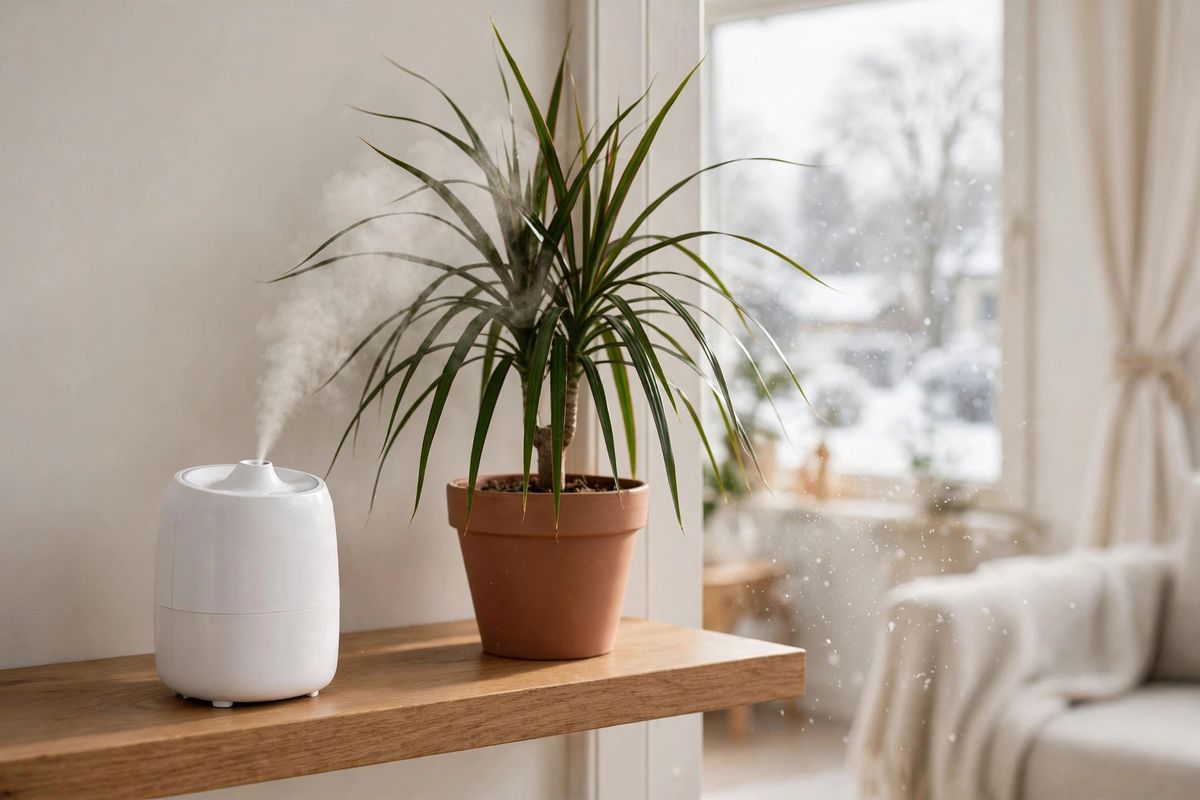
The most likely cause in a heated home is dry air. Iowa State’s houseplant FAQ says indoor humidity is often low, especially during winter, and lists a humidifier, a pebble tray or a glass cover as ways to raise it around the plant.
I spent years in a north-facing apartment where the radiator ran all winter. Every dracaena I owned got brown tips in January, and every one of them got them again the next January, because I kept buying dracaenas and kept forgetting to refill the humidifier.
A pebble tray works on the air immediately around the leaves, not the whole room. That’s enough for one plant on a shelf and not enough for a shelf of them. Grouping plants helps a little for the same reason. More options are in ideal humidity for houseplants.
“I use rainwater only and I have humidifiers in the room actually 3 of them and my edges still turn brown. It’s the pickiest plant I have and I have MANY”
– r/calatheas (28 upvotes)
That comment is the useful kind of contradiction. Three humidifiers and rainwater, and the edges still brown, which means humidity wasn’t the whole story for that plant. If your setup looks like that, the soil is the next thing to check.
Uneven watering: the dry-then-drenched cycle
Improper watering is second on Missouri’s list, and it covers both directions: letting the root ball go to dust and then flooding it, or keeping it wet all the time.
Crisp tips with a dry pot are the easy version. The pot feels light, the soil has pulled away from the sides, and the oldest leaves go first. Water thoroughly until it runs out the drainage hole, empty the saucer, and then check the soil with a finger before watering again instead of following a weekly schedule.
The wet version looks different. Tips go brown but the leaf around them yellows or softens, and the soil stays damp for days. That isn’t tip burn from dry air, and adding humidity won’t fix it. The roots are the place to look, which is where the next-to-last section comes in.
Fertilizer salts: when the crust is the clue
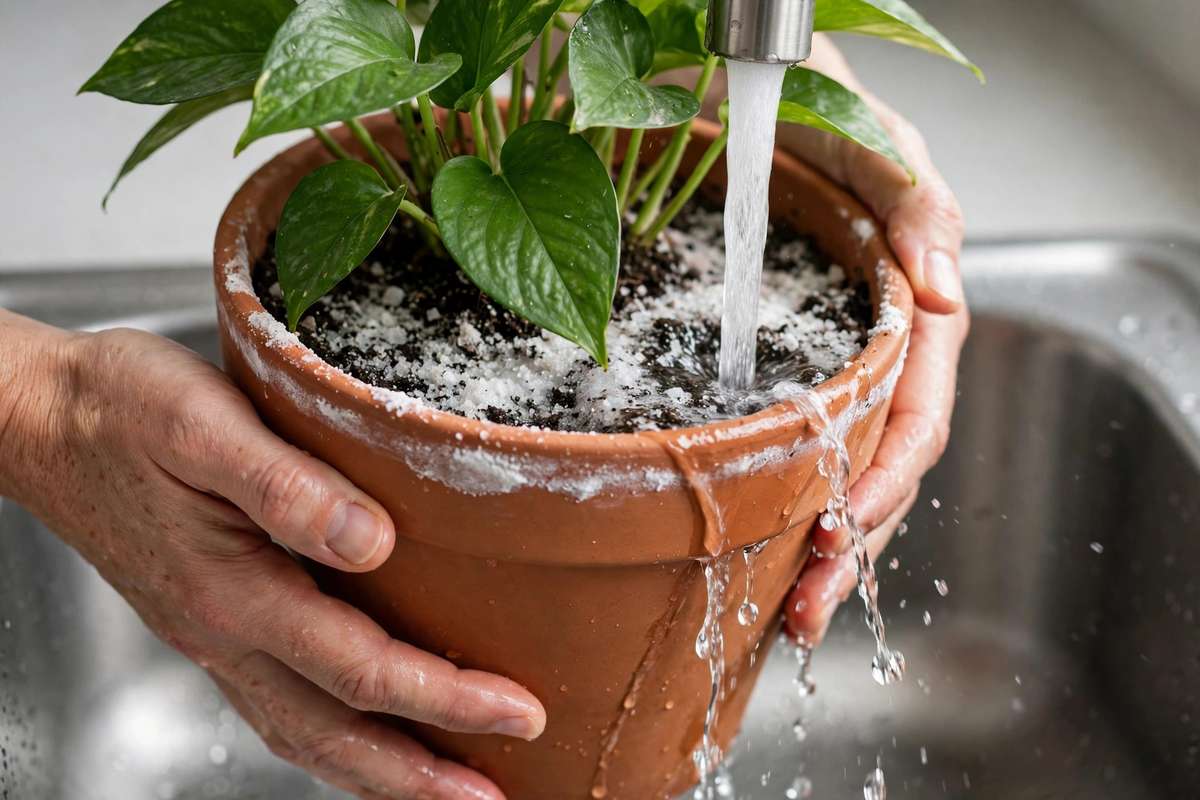
Fertilizer salts build up when a plant is fed more than it uses. Missouri lists excessive fertilizer application first among its three causes, and the evidence usually sits on the surface: a white or yellowish crust on the soil, a ring on the rim of the pot, or a saucer that dries with a mineral stain.
Flushing is the fix. Take the pot to a sink or outside, run water through the soil at room temperature for several minutes so it drains freely, and let it finish draining before it goes back. Then stop feeding for a while.
Flushing treats the symptom. Feeding less treats the cause.
Most houseplants grow slowly and need less fertilizer than outdoor plants. Missouri’s advice is to follow the label rate and skip fertilizer in winter for plants that get no supplemental light. My own rule is simpler: a plant already in trouble gets water and time, not food. The details are in houseplant fertilizer.
Fluoride and tap water: the species that burn first
Some plants burn at the tips from tap water even when the watering and feeding are right. Missouri calls out the Liliaceae family as especially sensitive to fluoride and says those plants often develop tipburn under good care. NC State’s spider plant page is more direct: avoid watering with tap water, because the chlorine and fluorides in it can cause leaf tip burn.
Dracaenas are the other name that comes up constantly. Iowa State’s FAQ lists spider plants and dracaenas among the species where brown tips are common, and both have their own pages here: spider plant brown tips and dracaena care.
If your plant is one of these, treat water as the suspect before humidity. Switch to rainwater, distilled water or a filter that removes fluoride for a few weeks, then watch the leaves that open next. The old brown tips won’t change, so they can’t tell you whether the switch worked.
Trimming brown tips: what it fixes and what it doesn’t
Once the tip of a leaf dies, it doesn’t come back. Missouri is blunt about it: there’s no way to return a dead tip to its normal appearance. Iowa State adds that trimming improves how the plant looks but new browning will appear if the cause is still there.
So trim for looks, after you’ve changed something. Use clean, sharp scissors and cut only the dead tissue, following the shape of the leaf. Leaving a thin brown edge is safer than cutting into green tissue, because green tissue cut open is just another wound.
Don’t pull the tip off with your fingers. It tears a strip out of the leaf, and that strip dies too.
Can brown edges turn green again? No. The tissue is dead, and no amount of humidity, water or fertilizer brings it back. New growth is the only honest measure of whether your fix worked.
Judge the fix by the next leaf, not this one.
When it’s not tip burn
Tip burn is brown at the tip and margins while the rest of the leaf stays healthy, which is how Missouri describes it. Brown that starts as a patch mid-leaf, a whole leaf that yellows before it browns, or spots with yellow halos point somewhere else: root trouble, a fungal leaf spot, or pest damage.
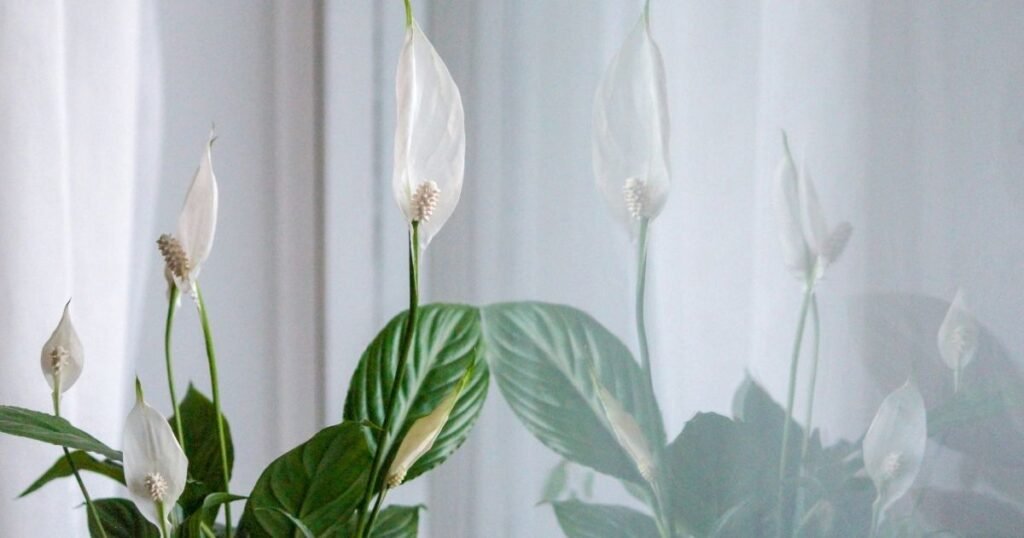
That distinction matters because the fixes pull in opposite directions. More humidity and a flush won’t help a plant with rotting roots, and cutting off the damaged leaves won’t either. Peace lily brown leaves covers the whole-leaf version, and the same logic applies to most aroids: check the roots before you change anything else. Brown, soft roots at the bottom of the pot and a sour smell mean the problem started below the soil, and the fix is drainage and watering, not scissors.
Do brown tips mean the plant is toxic to cats?
No. A brown tip is dead tissue, not a signal that the plant is toxic. Toxicity depends on the species, and you can’t read it from a leaf edge. The plant toxicity checker is the quick way to check the species you own.
I keep the ASPCA’s list bookmarked because Miso will chew anything within reach, and the answer for a pothos or a peace lily is the same whether the tips are brown or perfect. If a plant is on the toxic list, brown tips don’t make it safer, and if it isn’t, they don’t make it dangerous.
Pick the row that matches what you see, change that one thing, and give the plant three or four weeks. New leaves tell you whether you were right. The brown ones already on the plant will still be brown, and that’s fine.

Ellie Marsh
Houseplant grower who spent years in a north-facing apartment. Writes practical care guides for low light homes, checked against extension and botanical garden sources.