Last updated on October 11, 2026
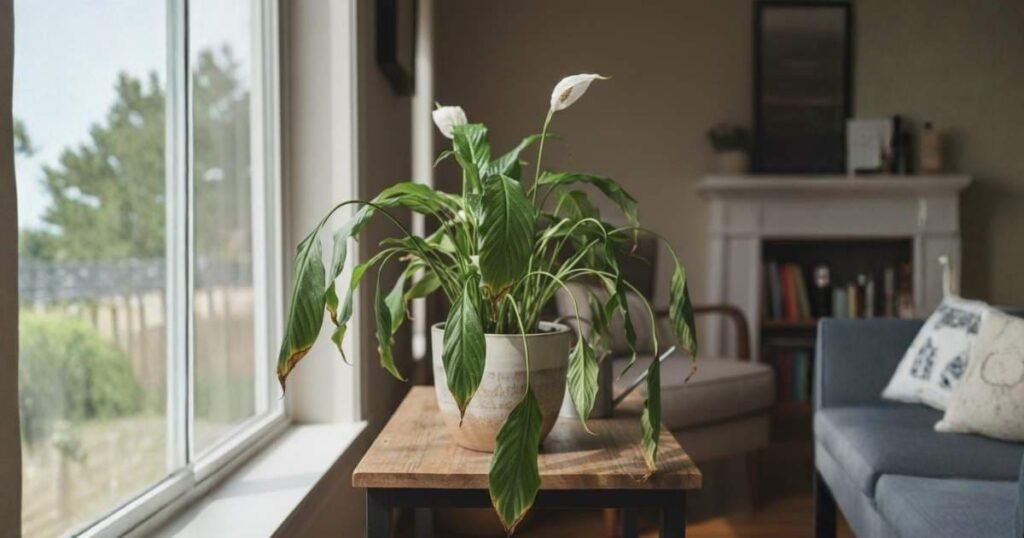
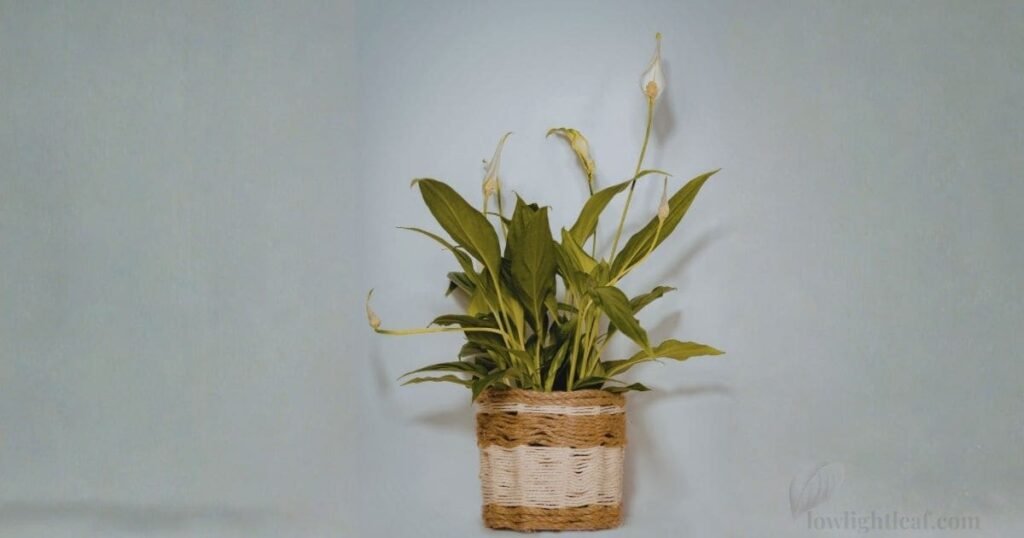
Brown tips on peace lily leaves are one of the most common problems plant owners face, often showing up as dry edges, crispy tips, or overall discoloration. If you’re dealing with peace lily brown leaves, it’s easy to assume your plant is dying. However, peace lily leaves turning brown is usually linked to simple care mistakes rather than permanent damage, especially if basic of peace lily care is not properly followed.
Issues like improper watering, mineral buildup from tap water, low humidity, fertilizer salt accumulation, or inconsistent light exposure are the most common triggers. In reality, these brown tips are a sign of environmental stress, not a lost plant.
The good news is that in most cases, you can fix brown leaves by identifying the root cause and making a few simple adjustments.This guide explains the most common causes of brown tips on peace lilies and provides effective solutions to restore the plant’s health. In addition, you’ll learn how to properly balance light and watering conditions for your peace lily, helping to prevent brown leaf tips and maintain long-term plant vitality.
Quick answer: why peace lily leaves turn brown
Peace lily brown tips come from too much light, too much fertilizer, too little water or low humidity, the four causes on South Dakota State University Extension’s list. Fix the one that matches your plant’s spot and routine, then trim the brown parts; new leaves should come in clean.
| Cause (South Dakota State University Extension) | What to change |
|---|---|
| Too much light | Move it to bright, indirect light; an east or north window is ideal |
| Too much fertilizer | Feed only in spring and summer, and lightly |
| Too little water | Keep the soil moist but not soggy, letting it dry only slightly between waterings |
| Low humidity | Keep it away from heating vents and dry drafts |
Why Peace Lily Leaves Turn Brown
If your Peace Lily leaves turning brown is worrying you, the cause usually depends on where and how the browning appears. Different discoloration patterns signal different stress factors affecting your plant.
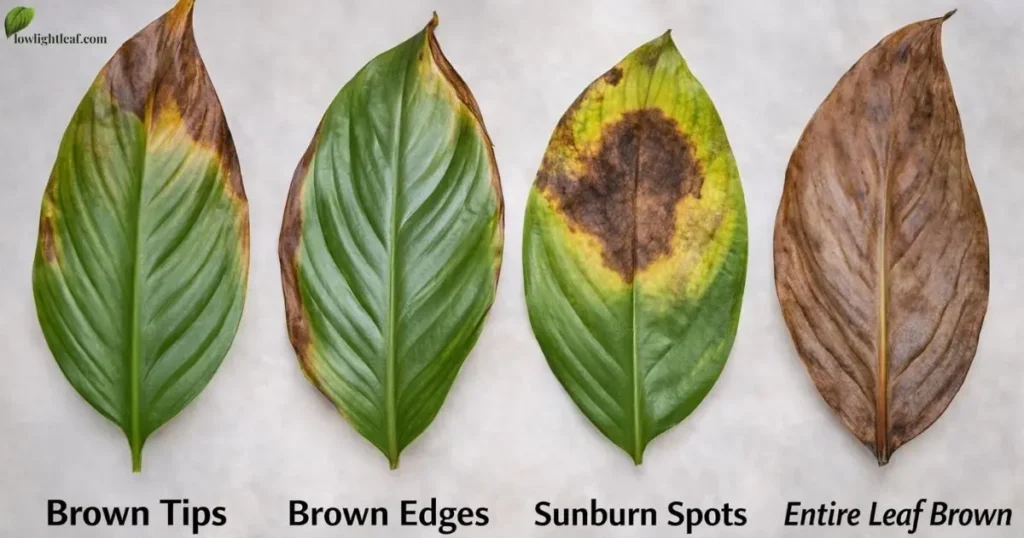
Here’s how to quickly diagnose the issue:
- Brown tips → Often caused by underwatering, low indoor humidity, or chemical sensitivity from tap water (fluoride and chlorine buildup).
- Brown edges on Peace Lily → Typically linked to dry air, fertilizer salt accumulation in the soil, or poor drainage restricting healthy root function.
- Brown patches on leaves → Usually a sign of direct sunlight exposure, heat stress, or leaf scorch from excessive light.
- Whole leaf turning brown → Indicates severe dehydration, root damage from overwatering, compacted soil, or sudden temperature fluctuations.
Identifying whether it’s brown tips, edges, or full leaf browning helps you fix the exact issue and prevent long-term stress.
Common Reasons Peace Lily Brown Leaves
Brown leaves on Peace Lily plants are a common concern for your indoor jungle. Whether you’re noticing brown edges on Peace Lily leaves, Peace Lily leaves turning grey, or general Peace Lily leaves browning, the issue usually points to a care imbalance. Below are 15 common causes, along with their symptoms and effective solutions, to help restore your plant’s health.
Overwatering Stress (Root Damage)
Overwatering is one of the most common causes of Peace Lily leaves turning brown, and it usually begins with hidden root stress. When a Peace Lily sits in constantly wet, poorly draining, or compacted potting soil, the roots cannot access oxygen. Research shows that healthy roots need air pockets in the soil to function properly. However, when soil remains waterlogged, those air spaces disappear. As a result, the roots become oxygen-deprived, weaken, and eventually begin to rot.
Solution:
➦Let the top 1–2 inches of soil dry before watering again.
➦Make sure the pot has drainage holes to prevent water buildup.
➦Use a well-draining indoor potting mix to maintain a healthy moisture balance.
➦Repot in a fast-draining soil mix.
➦Allow soil to partially dry.
Underwatering and Sudden Dry–Wet Cycles
If your Peace Lily started Browning after inconsistent watering, the issue may be a moisture imbalance. When soil stays dry for too long and is then heavily watered, the sudden moisture change shocks the plant. As a result, you may notice brown edges on Peace Lily leaves, slight wilting, curling, or even your peace lily starting to droop, along with dry, crispy tips.
Solution:
➦Maintain a consistent watering routine: keep the soil lightly moist instead of allowing it to become bone dry.
➦Avoid sudden environmental changes: Keep the plant in one place to prevent temperature shock.
Poor Drainage or Compacted Potting Soil
If your Peace Lily leaves are turning brown despite careful watering, poor drainage could be the hidden cause. When drainage holes are blocked or the potting mix becomes dense and compacted, excess moisture gets trapped in the container. As a result, the plant struggles to regulate water properly, and you may notice yellowing, brown tips, or a stale soil smell. Compacted soil reduces airflow and creates constant damp conditions, which stresses the plant over time.
Solution:
➦Repot in a light, well-draining mix that contains perlite, coco coir, or bark to improve airflow.
➦Avoid garden soil, as it compacts easily and restricts airflow to roots.
➦Check the planter regularly and ensure drainage holes aren’t blocked.
Pots Without Drainage Holes or Standing Water
A peace lily planter without drainage holes creates a water-trapped environment, which can lead to root suffocation and root rot.
Solution:
➦Switch to a pot with proper drainage holes to allow excess water to escape.
➦Remove standing water from saucers after watering.
➦Trim any damaged roots only if they appear soft or unhealthy during repotting.
Proper drainage prevents water buildup and reduces the risk of ongoing leaf browning.
Rootbound Peace Lily (Crowded Roots)
As your plant grows, its roots can outgrow the container and become tightly packed. When a Peace Lily becomes rootbound, it struggles to absorb water evenly, even if you’re watering correctly. As a result, you may notice dry tips or light browning along the leaf edges.
Solution:
➦Repot into a container 1–2 inches larger using fresh, well-draining potting mix to give the roots more space to spread.
Providing extra room helps restore proper moisture absorption and supports healthier leaf growth.
Low Humidity and Dry Indoor Air
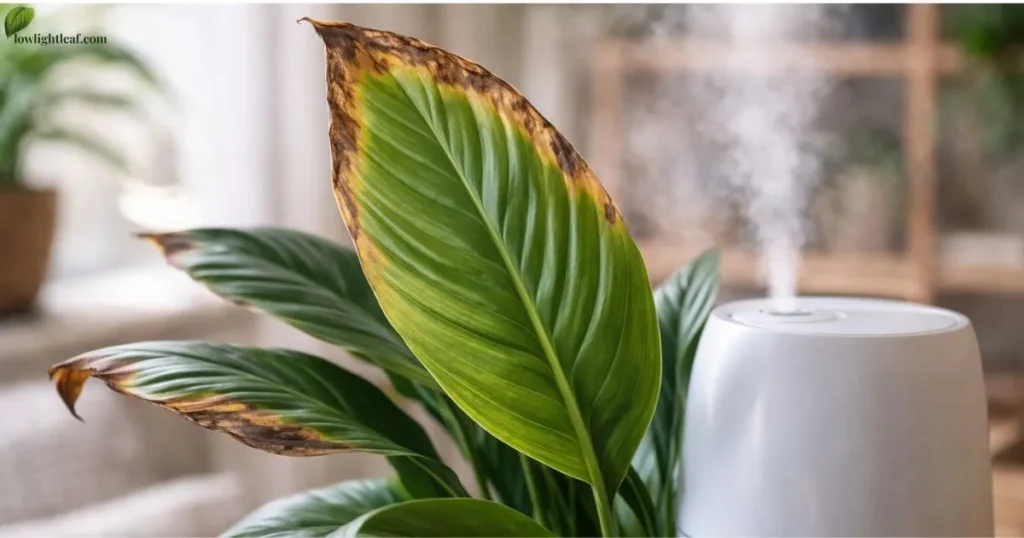
Peace lilies tend to grow in warm, humid conditions. If temperature and humidity drop, the leaves lose moisture first, sometimes leaves starting to turn yellow before becoming dry, crispy, and brown. The same condition goes with dry air.
Solution:
➦Increase humidity by using a pebble tray, placing a humidifier nearby, or occasionally light misting.
If you maintain moderate humidity, it will definitely help to prevent further leaf dryness and browning.
Hard, Chlorinated, or Fluoridated Tap Water
As we all know, regular tap water can contain minerals such as chlorine and fluoride, or other chemical residues can accumulate in soil and damage leaf tissue, leading to brown leaf tips.
Solution:
➦Use distilled, filtered, or rainwater to reduce mineral accumulation.
By cleaning the water, the utility helps prevent further leaf tip browning and keeps the plant healthier in the long term.
Softened Water High in Sodium
If you’re using water from a home softener system, it normally contains elevated sodium levels. Even high-sodium water can damage roots and block nutrient absorption, which results in weak growth, burnt, and brown leaf tips.
Solution:
➦Avoid using softened water for your plant whenever possible.
➦Flush the soil monthly with clean, distilled, or filtered water to help wash out excess salts.
Using low-sodium water can make a noticeable difference in leaf health and prevent recurring browning. For best results, always follow the right peace lily water requirements to keep your plant thriving long-term.
Fertilizer Burn and Salt Buildup
If you are feeding your plant regularly, excess fertilizer can cause salt accumulation. Over time, this buildup disrupts normal water absorption and stresses the plant, which can lead to leaf tip browning and overall discoloration.
Solution:
➦Feed lightly and only during the growing season.
➦Dilute the fertilizer to half strength to avoid overconcentration.
➦Leach the soil every few weeks by watering thoroughly to flush out excess salts.
If you think this is the reason, then adjusting feeding intensity may help prevent further stress and keep the leaves healthier.
Hydrophobic Soil That Repels Water
If you observe water running straight through the pot without soaking in, the soil may have turned hydrophobic. When soil becomes extremely dry, it may repel water, causing uneven hydration and persistent brown leaf tips.
Solution:
➦Bottom-water the plant to slowly rehydrate the entire soil mass and restore proper absorption.
➦Repot in a well-aerated, moisture-balanced mix if the soil no longer holds water properly.
If you restore even hydration, it helps prevent recurring leaf tip browning and improves overall moisture stability.
Direct Sunlight or Heat Exposure
If you have placed your peace lily in direct sunlight or in a hot spot, the leaves can quickly become stressed. Direct sun or high temperature causes brown or bleached patches, curled leaves, and dry edges.
Solution:
➦Place the plant in bright, indirect light rather than direct sun, as most plants that grow well in low light prefer filtered lighting conditions.
➦Move it away from hot windows, radiators, or heaters to prevent heat stress.
To overcome this, you have to provide filtered light and stable temperatures, which help to protect the leaves from further burning or discoloration.
Cold Drafts and Temperature Fluctuations
When your plant is exposed to sudden temperature changes, it can react quickly. Cold drafts from windows, air conditioners, or doorways disrupt its stability. As a result, the leaves may develop dry, brown edges, especially after repeated exposure.
Solution:
➦Maintain stable room temperatures and avoid sudden fluctuations, just like in proper ZZ plant care routines.
➦Keep the plant away from AC vents, open windows, and cold drafts.
A consistent environment helps reduce stress and prevents further leaf edge browning.
Leaf Shine, Spray, or Chemical Residue
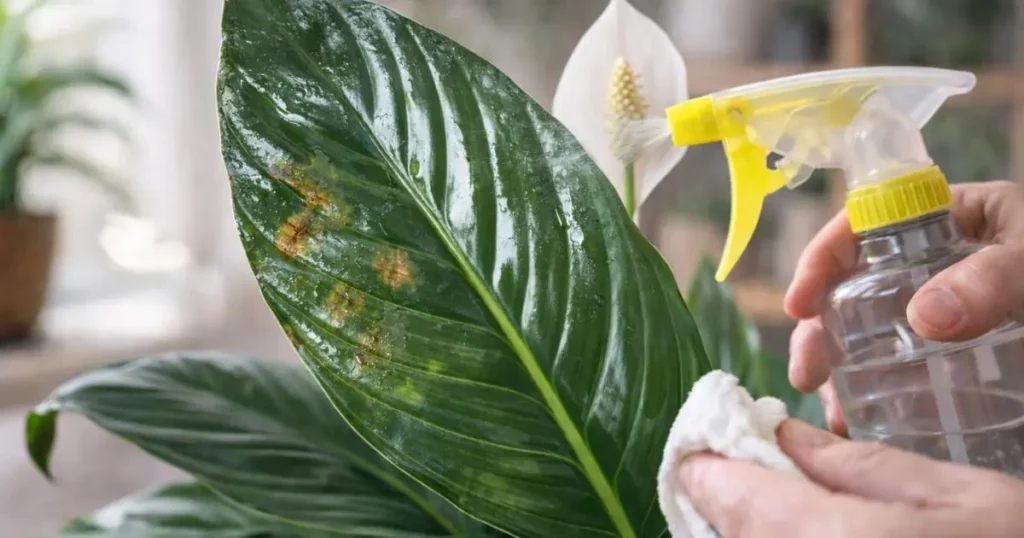
When you regularly use leaf shine sprays, the buildup can do more harm than good. Frequent use of leaf shine products clogs leaf pores, leading to dull leaves and tissue damage.
It looks like extra care can sometimes create unnecessary stress, even for easy houseplants to care for.
Solution:
➦Avoid using chemical leaf shine sprays.
➦Wipe leaves gently with a damp, soft cloth to remove dust naturally.
Keeping the foliage clean without chemical coatings helps maintain healthy leaf function and reduces the risk of surface damage.
Pests or Leaf Spot Disease
If leaf structure appears damaged or spotted, pests or disease may be responsible for Peace Lily leaves turning grey or brown. Unlike water-related discoloration, this type of discoloration often appears in irregular patches or spots.
Solution:
➦Separate the plant from the rest of your indoor collection until the issue is fully resolved.
➦Treat with neem oil or a mild fungicide, depending on whether pests or disease are present.
Early treatment helps protect healthy leaves and prevents further discoloration.
Natural Leaf Aging (Normal Browning)
Lastly, not all leaf discoloration is a sign of trouble. As part of its natural growth cycle, a Peace Lily will normally shed older leaves, similar to what you’ll notice across different plants in these low light indoor plant guides. Some Peace Lily leaf browning is completely natural. Older leaves fade from green to yellow and then brown as new growth emerges.
Solution:
➦Trim old, fully brown leaves at the base using clean scissors to keep the plant tidy and encourage fresh growth.
Recovery Plan | How to Fix Peace lily Brown Leaves (Step by Step)
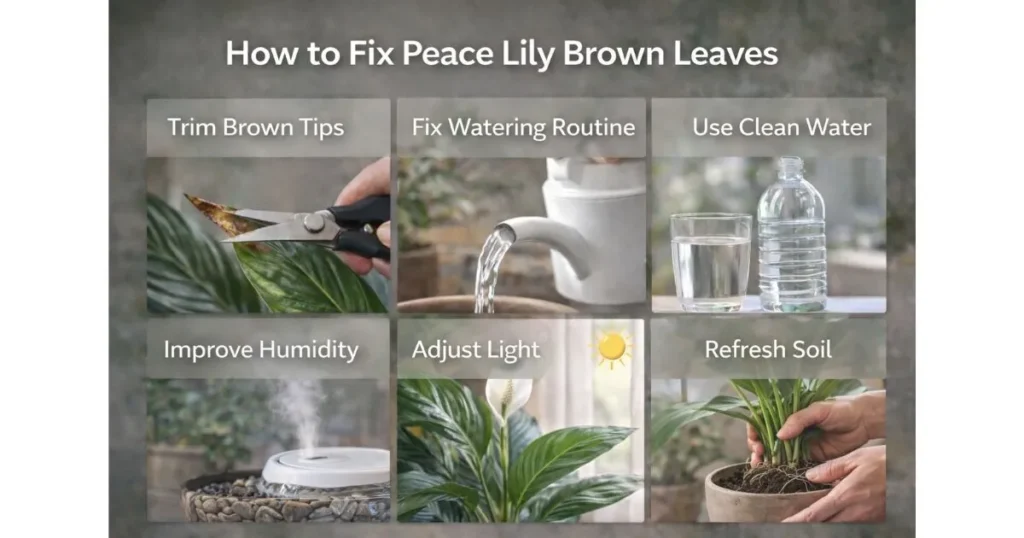
If your plant is already showing brown tips, don’t worry. In most cases, recovery is possible once the stress factor is corrected. Follow these steps carefully and consistently.
Switch to Clean, Low-Mineral Water
If you’ve been using tap or softened water, make the change immediately. Use distilled, filtered, or rainwater to prevent mineral buildup that contributes to Peace Lily brown leaves.
Flush Excess Salts From the Soil
If over-fertilizing is suspected, thoroughly water the pot until excess water drains out from the bottom. This helps wash away accumulated salts that trigger leaf tip browning.
Improve Humidity
Dry indoor air can worsen leaf edges. Enhance moisture around the plant using a pebble tray, humidifier, or occasional light misting, especially during dry seasons.
Correct Your Watering Routine
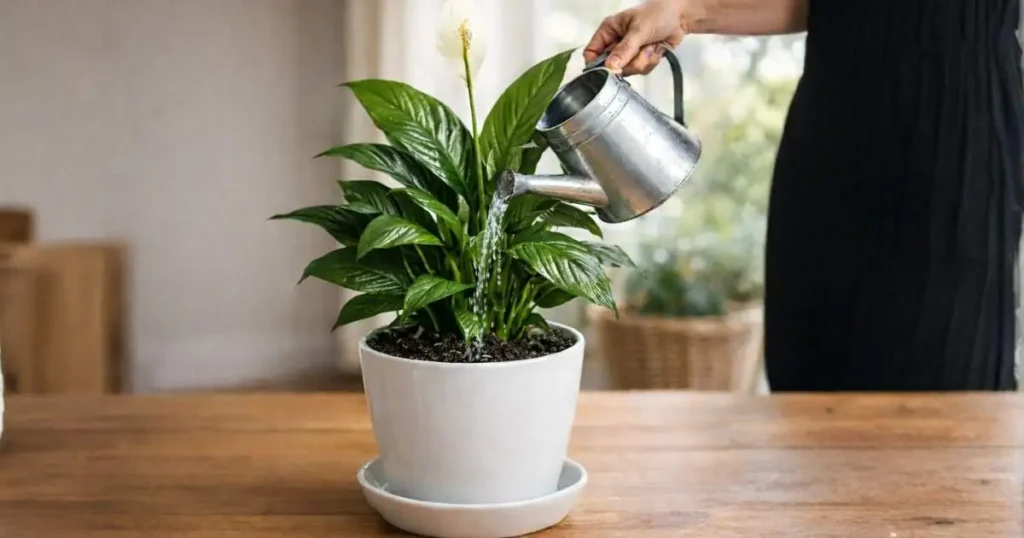
Water only when the top 1–2 inches of soil feel dry. Keep the soil evenly moist, not soggy. Irregular watering is one of the main reasons for Peace lily leaves turning brown.
Trim Brown Tips Properly
Use clean, sharp scissors to trim only the damaged brown portion, following the leaf’s natural shape. Avoid cutting into healthy green tissue.
Refresh Compacted Soil
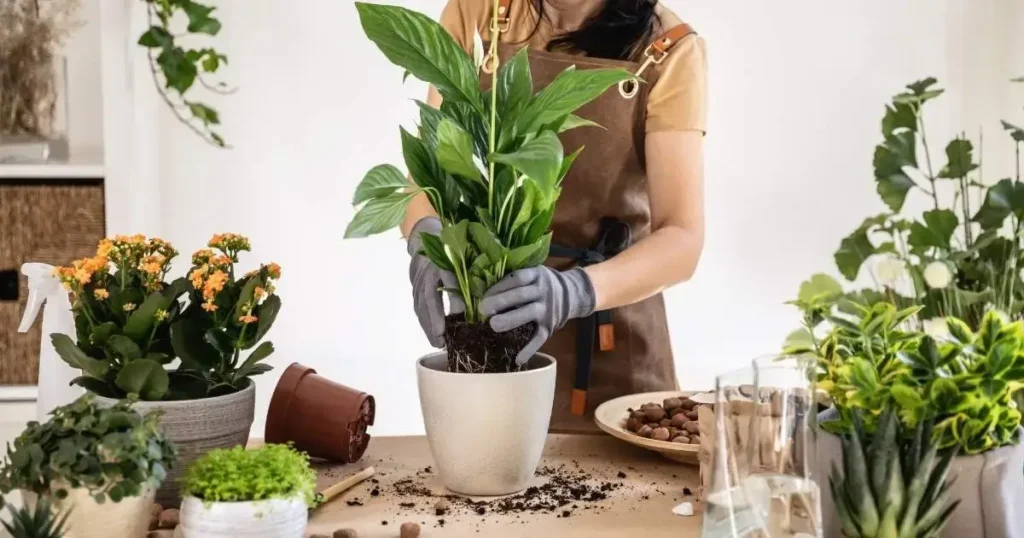
If the potting mix feels dense or water runs straight through it, repotting houseplants properly in a well-draining, aerated soil blend can help restore proper moisture balance.
Adjust Light Exposure
Place the plant in bright, indirect light. Move it away from harsh sun, heat sources, or dark corners, as these may stress the foliage.
Fertilize Lightly
Fertilize only during the active growing season (spring and summer), and always dilute fertilizer to avoid salt buildup.
Inspect for Pests or Disease
Check the undersides of leaves regularly. If pests are present, wipe the leaves clean and apply neem oil or an appropriate treatment.
Peace Lily Care Calendar
| Time / Season | Care Task |
|---|---|
| Regularly | Inspect the plant and clean leaves with a light damp cloth |
| Weekly | Check soil moisture |
| Every 9 Days | Water when the top layer of soil becomes dry |
| Monthly | Flush the pot to remove salt buildup |
| Spring – Summer | Fertilize lightly once a week |
| Autumn | Reduce watering |
| Winter | Avoid fertilizer and protect from cold drafts |
| Yearly | Repot in well-draining soil |
Should You Cut Peace Lily Brown Leaves?
Yes, but only when needed, as with many popular indoor plant varieties. Brown tips or edges won’t turn green again. Trimming them helps your Peace Lily look healthier and allows it to focus its energy on new growth. However, always fix the root cause (watering, humidity, salts, light) before or after pruning.
Safe Pruning Tips
➦Always make use of clean, sharp scissors or pruners to prevent the spread of disease.
➦Trim only the brown part, following the leaf’s natural shape; leave healthy green tissue intact.
➦Don’t over-prune; remove no more than 20–30% of foliage at once.
➦Prune during active growth (spring–summer) for faster recovery.
➦Avoid tearing leaves by hand; clean cuts heal better.
After pruning, check care basics: proper watering, good drainage, moderate fertilizer, and higher humidity.
FAQs: Peace Lily Brown Leaves
Why does my Peace Lily have brown tips?
Brown tips usually appear due to moisture imbalance, low humidity, mineral buildup from tap water, or over-fertilizing. In most cases, the plant is reacting to environmental stress rather than disease. Identifying the exact cause helps prevent recurring leaf tip browning.
Can tap water cause Peace Lily leaves to turn brown?
Yes. Tap water often contains chlorine, fluoride, and dissolved salts. Over time, these minerals accumulate in the soil and damage delicate leaf tissue, leading to dry, brown tips, especially if used consistently without flushing the soil.
How do I fix brown tips on Peace Lily leaves?
Start by correcting the underlying issue. Improve drainage, adjust your watering routine, switch to distilled or filtered water, and increase humidity if needed. Trim only the damaged portions using clean scissors to maintain the leaf’s natural shape.
Are brown tips normal for Peace Lily?
Occasional browning on older leaves can be part of natural aging. However, if multiple leaves develop brown tips at once, it usually signals stress from watering, light, humidity, or soil conditions.
Can trimming brown tips solve the problem?
Trimming improves appearance but does not fix the root cause. The plant will continue developing brown tips unless the underlying stress factor, such as poor drainage or mineral buildup, is corrected.
Final Thoughts
Brown tips do not always mean your Peace Lily is failing; they’re usually a sign of environmental stress. You have to just adjust watering habits, improve drainage, manage humidity, and monitor soil quality. You can restore your peace lily before the issue spreads. Consistent indoor plant care guides, rather than sudden changes, is what keeps foliage healthy and resilient.. With the right adjustments, new growth will emerge fresh, green, and vibrant.

Ellie Marsh
Houseplant grower who spent years in a north-facing apartment. Writes practical care guides for low light homes, checked against extension and botanical garden sources.
Explore more: