Last updated on May 18, 2026
If your peace lily has started looking crowded or isn’t growing like it used to, it might be time to think about repotting a peace lily. Many plant owners hesitate at this step because they’re unsure when or how to do it without causing stress. Although peace lilies tolerate rootbound conditions for a while, they eventually outgrow their pots. When that happens, growth slows, leaves may droop, and flowering suffers.
The good news is that repotting isn’t as tricky as it seems. Peace lilies can stay in the same pot for a while, but once they outgrow it, giving them fresh soil and a bit more space can make a noticeable difference.
This guide explains repotting a Peace lily and when it’s the right time to do it. You’ll also learn how to recognize the signs and repot it step by step without stress. It also helps you understand how to care for a peace lily properly.
Why Repotting a Peace Lily Is Important
As a peace lily grows, its roots slowly fill the pot. After some time, there isn’t enough space left for the roots to spread properly. When this happens, the plant can struggle to take in enough water and nutrients. Old soil can also cause problems. Over time, potting mix loses nutrients and stops supporting healthy growth. Repotting gives the peace lily fresh soil and more room for its roots, helping it grow better and produce healthier leaves and flowers.
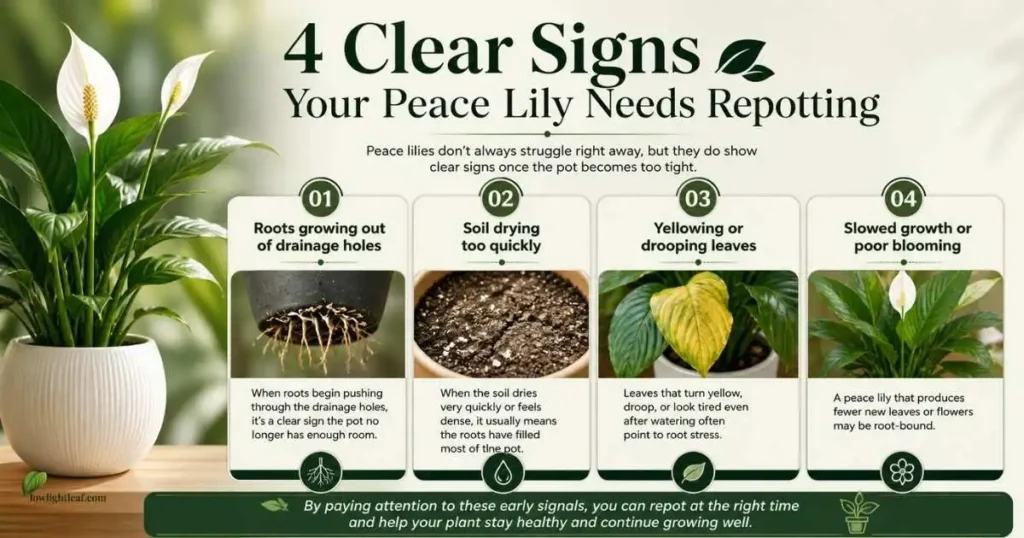
How Do You Know When a Peace Lily Needs Repotting?
Peace lilies don’t always struggle right away, but they do show clear signs once the pot becomes too tight, including issues like Peace lily leaves turning yellow over time. By paying attention to these early signals, you can repot at the right time and help your plant stay healthy and continue growing well.
When Is the Best Time to Repot a Peace Lily?
In most cases, the best time for repotting a peace lily is during spring or early summer. It is the time when the plant enters its active growth phase and can recover more easily from repotting. During this time, roots adjust faster, and new leaves and flowers develop more smoothly.
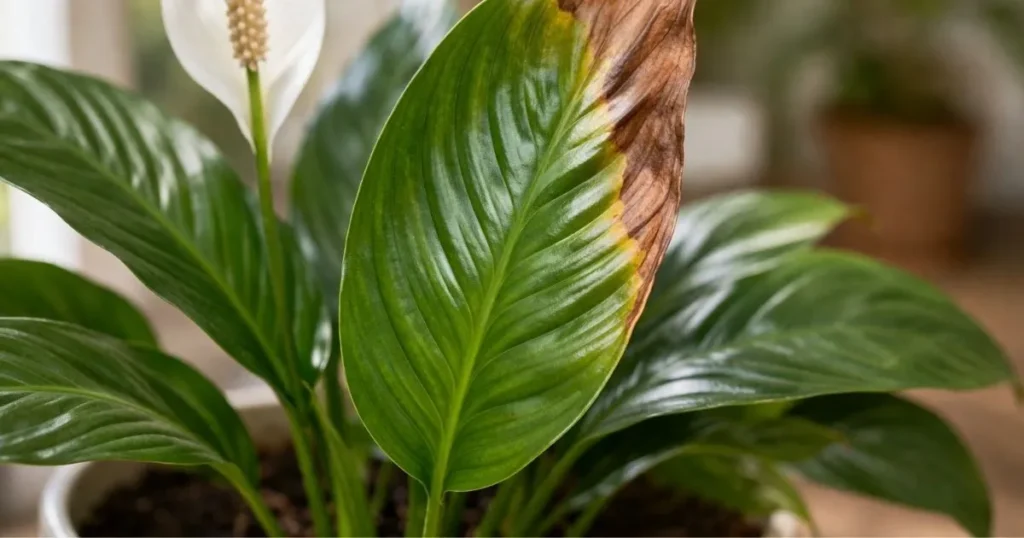
Late winter can also work, especially when new growth is just starting. However, repotting during winter is usually not recommended because growth slows down, making it harder for the plant to adjust. Repotting while the plant is blooming can also add unnecessary stress and may even cause issues like brown tips on peace lily leaves.
Can You Repot a Peace Lily Anytime?
Ideally, repotting should wait until spring, but there are situations where timing matters less than the plant’s condition.
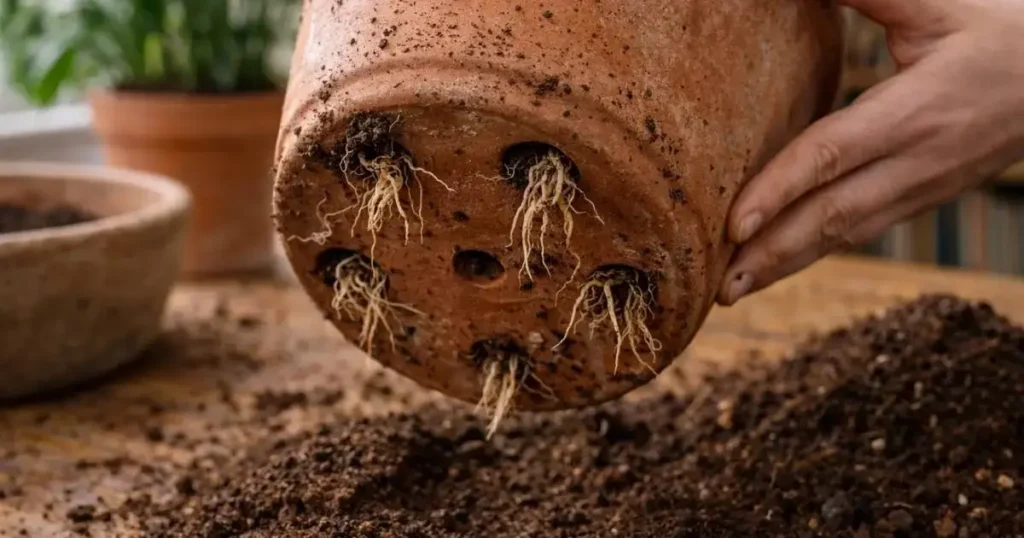
If a peace lily is tightly root-bound, not responding well to watering, or water passes through the pot too quickly, it’s usually a sign that it needs more space. In such cases, repotting sooner can help the plant recover and grow more comfortably, even if it’s not the ideal time of year.
How Often Should You Repot a Peace Lily?
Most peace lilies need repotting every one to two years. This isn’t a fixed rule, as growth speed depends on light, watering, and overall care. Some plants grow faster, while some stay comfortable in the same pot for longer. Peace lilies also tolerate being slightly root-bound, so frequent repotting isn’t necessary. However, once growth slows, flowering weakens, or roots begin to crowd the pot, it’s usually time to plan the next repot.
Tools You Need to Repot a Peace Lily
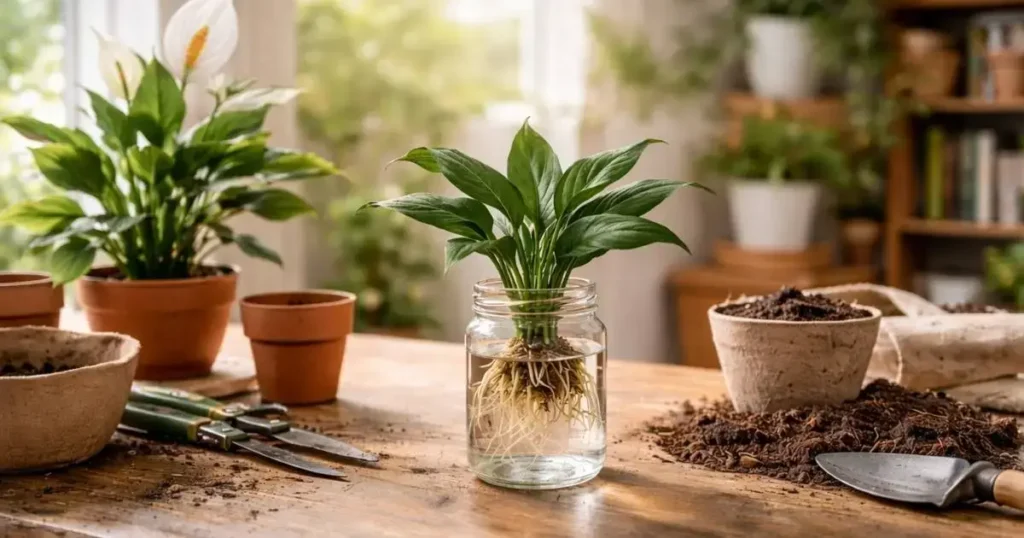
Before you start repotting, gather everything in one place. Having the right tools ready makes the process easier and helps avoid unnecessary stress for the plant.
- New pot (slightly bigger, with drainage holes)
- Fresh potting soil (well-draining)
- Perlite or vermiculite (for better drainage)
- Gardening gloves
- Scissors or pruning shears (clean and sharp)
- Small trowel or scoop
- Watering can
- Rubbing alcohol (to clean tools)
- Newspaper or cloth (to avoid mess)
- Pebble tray (optional, for humidity)
How to Repot a Peace Lily (Step-by-Step)
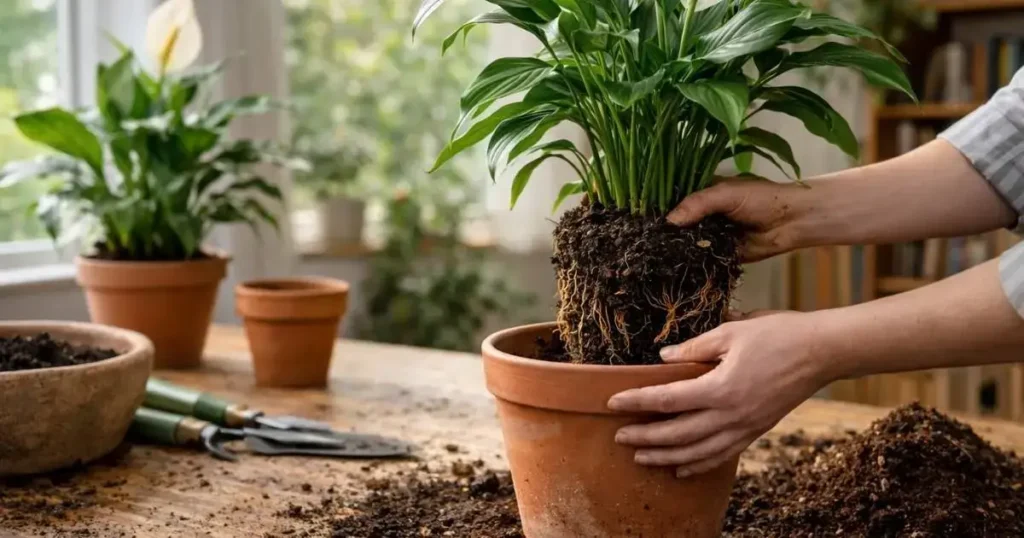
Step 1: Get the New Pot and Soil Ready
Before touching the plant, set up the new pot first. Choose one that’s just a little wider than the old pot and has drainage holes, the same basic approach used when repotting snake plants at home. Add a thin layer of fresh potting soil at the bottom. This helps later when you’re trying to get the plant to sit at the right height.
Step 2: Take the Plant Out of Its Old Pot
If the soil is very dry, watering it lightly beforehand can help. Tilt the pot to the side and ease the plant out slowly. If it doesn’t come out easily, tapping the pot usually works better than pulling on the plant.
Step 3: Check the Roots and Loosen Them Gently
Once the plant is out, take a moment to look at the roots. If they’re tightly wrapped around each other, gently loosen them with your fingers. Trim off any roots that look soft or brown. You don’t need to cut much—just remove what clearly isn’t healthy.
Step 4: Place the Plant at the Same Depth as Before
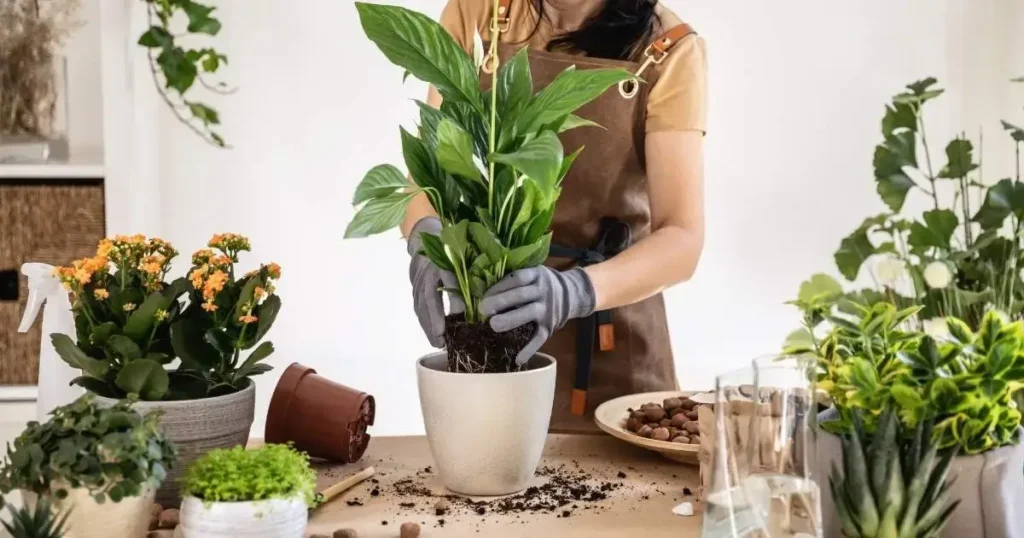
Set the peace lily into the new pot and check how it sits. The base of the plant should stay at the same level it was in the old pot. If it looks too low, add a bit more soil underneath until it feels right.
Step 5: Add Soil Around the Roots
Start filling soil around the plant, working your way around the pot. Let the soil fall naturally instead of packing it down hard. Gently pressing it with your fingers is enough to keep the plant stable.
Step 6: Water Until the Soil Settles
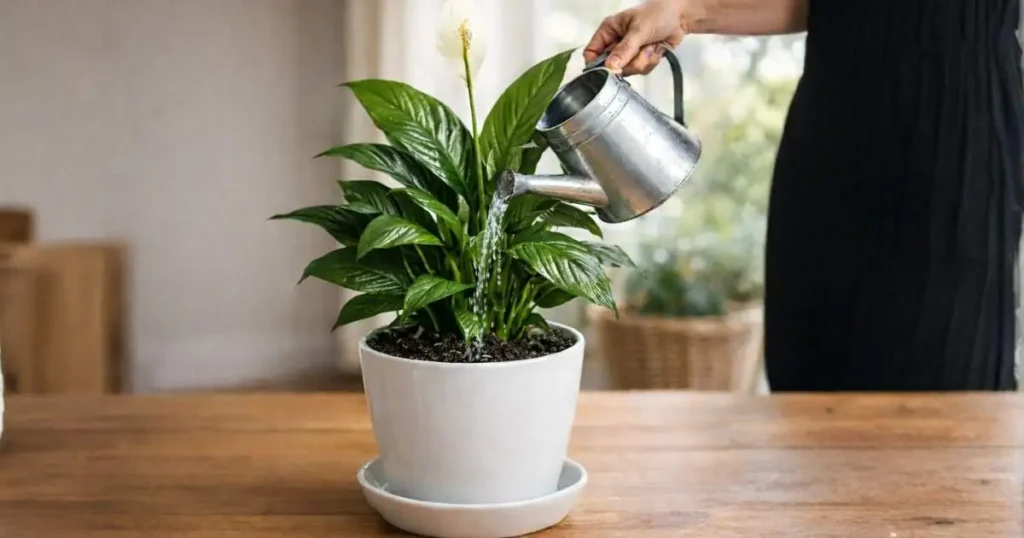
Water the plant slowly until water runs from the drainage holes. It supports the soil settling around the roots and shows that drainage is working properly.
Step 7: Place the Plant in a Calm Spot
After repotting, move the peace lily to a spot with bright but indirect light, which suits many plants that grow well in low light indoors. Avoid direct sun for a few days. It’s normal if the plant looks slightly droopy at first, this usually improves as it adjusts.
Step 8: Keep an Eye on It Over the Next Weeks
For the next couple of weeks, check the soil before watering and don’t overdo it. As long as the plant slowly perks up and new growth starts appearing, it’s settling in just fine.
Peace Lily Care After Repotting
After repotting a peace lily, proper aftercare determines whether the plant recovers smoothly or struggles. Even when you follow all the steps of how to repot a peace lily, the plant still needs time and the right conditions to settle into its new pot.
Watering After Repotting
Right after repotting, water the peace lily thoroughly so the soil settles around the roots. After that, avoid watering too often. Check the top inch of the soil and water only when it feels dry. Overwatering is one of the main reasons peace lilies droop after repotting, especially if the soil stays wet for too long. That’s why it’s important to understand how to water a peace lily properly. Always make sure excess water can drain out of the pot.
Light and Placement
Place the repotted peace lily in a calm spot with bright, indirect light. Avoid direct sunlight for the first few days, as the plant is already adjusting, and strong light can add stress. Once the plant starts looking stable again, you can move it back to its usual location.
Temperature and Humidity
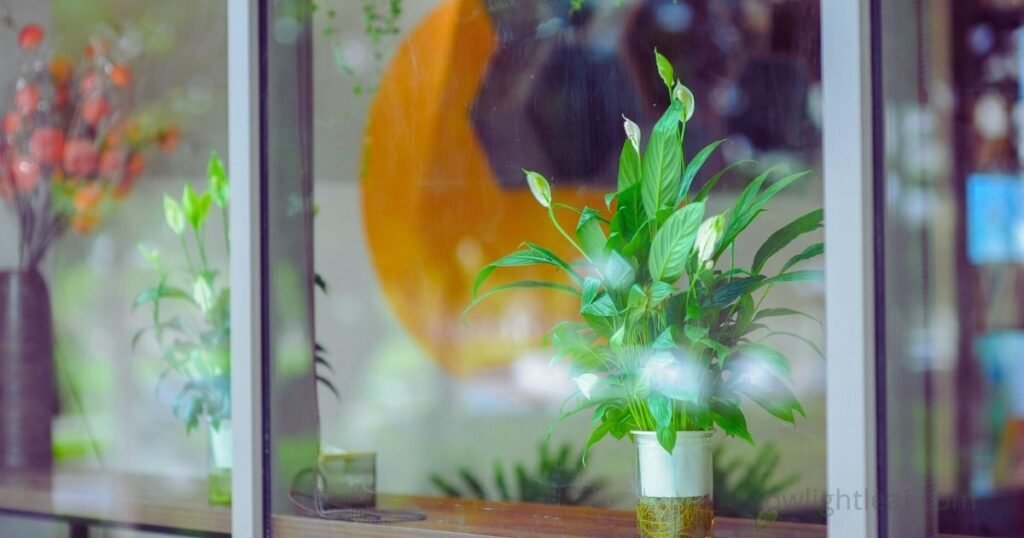
Peace lilies prefer warm and stable conditions after repotting, which aligns with general indoor plant care advice shared by the Royal Horticultural Society. Keep the plant away from cold drafts, heaters, or sudden temperature changes. Normal indoor humidity is usually enough, but if the air feels very dry, a pebble tray or light misting can help the plant stay comfortable.
When to Fertilize Again
Do not fertilize the peace lily plant immediately after repotting. Fresh peace lily repotting soil already contains nutrients, and feeding too soon can stress the roots. Wait for at least 4 to 6 weeks before using a diluted, balanced fertilizer. This allows the roots to settle in and start growing again.
Why Is My Peace Lily Drooping After Repotting?
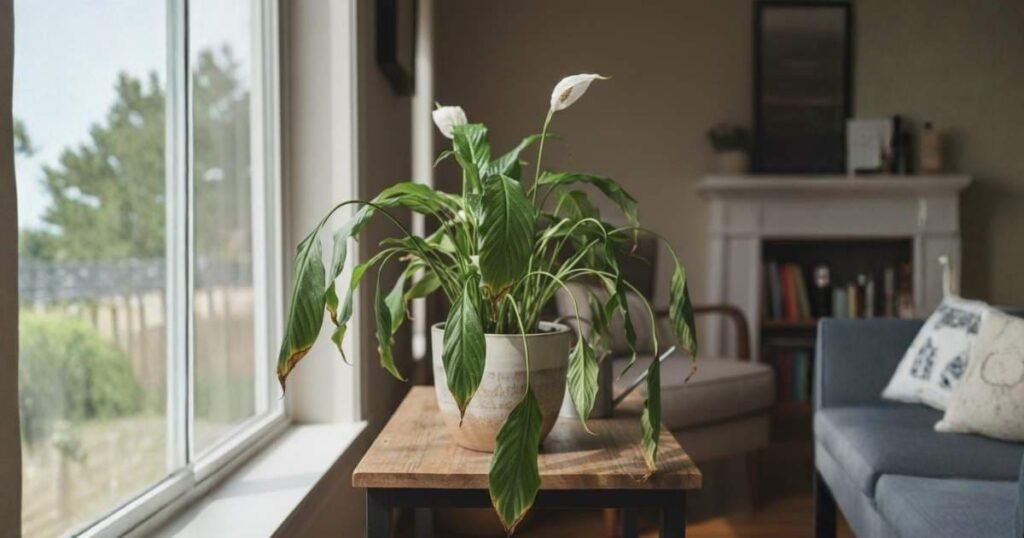
It’s very common for a peace lily to droop after repotting. In most cases, this happens because the roots were disturbed and need time to settle into the new soil. Even when repotting is done carefully, the plant can look tired for a short while, which is similar to what happens when a peace lily starts drooping.
Drooping is more likely if watering isn’t balanced, the pot is much larger than before, or the plant is placed in strong light right after repotting. This kind of stress is usually temporary and resolves as the roots begin to adjust.
How Long Does It Take a Peace Lily to Recover After Repotting?
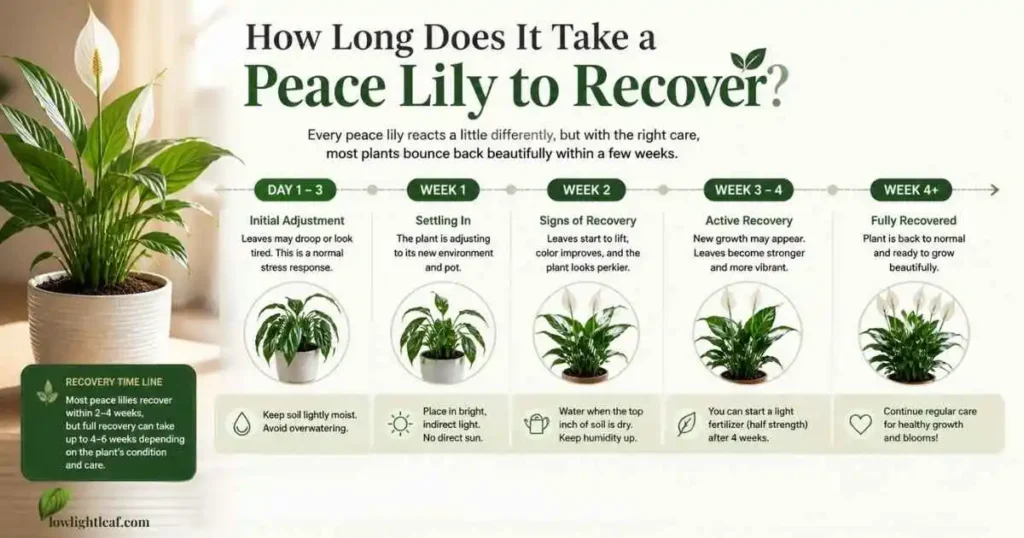
Most peace lilies recover within one to two weeks after repotting. During this time, leaves may stay limp, and growth may slow, which is normal. As long as the plant gradually firms up and new growth appears, recovery is on track.
How to Reduce the Risk of Transplant Shock
Transplant shock happens when a peace lily struggles to adjust after repotting. These simple steps help reduce stress and support faster recovery:
- Repot at the right time
Try to repot during spring or early summer, when the Peace lily plant is actively growing and can recover more easily. - Water the plant before repotting.
Slightly moist soil helps protect the roots and makes removal from the old pot gentler. - Handle the roots carefully.
Avoid pulling or shaking the roots. Only trim parts that are clearly damaged or rotting. - Keep the same soil level.
Make sure the plant sits at the same depth as before. Planting too deep or too high can add stress. - Use well-draining soil and a proper pot.
Proper drainage helps excess water escape instead of sitting around the roots, which can prevent drooping. - Water well after repotting
Watering after repotting helps the soil settle around the roots and removes air pockets. - Place in indirect light
Keep the peace lily away from direct sunlight for the first few days after repotting. - Be patient during recovery.
Mild drooping is normal. With steady care, most peace lilies adjust within one to two weeks.
Should You Repot or Divide an Overgrown Peace Lily?
When a peace lily becomes overgrown, it can be hard to decide what to do next. At this stage, you’re usually choosing between repotting it into a larger container or splitting it into smaller plants. The right option depends on your space, your goal, and how well the plant is growing, especially if you’re still understanding how peace lilies grow and spread over time.
When Repotting Is the Better Choice
If your peace lily looks healthy and you’d like it to keep growing as a single large plant, repotting is usually the better option. Repotting keeps the plant intact while giving the roots more space and access to fresh soil. As a result, the plant can grow fuller and produce more leaves and flowers over time.
Repotting also makes sense when you have enough space for a larger plant and simply want to refresh the soil without changing the plant’s size or shape.
When Dividing the Plant Makes Sense
On the other hand, dividing a peace lily works well when the plant has become very crowded or when you want more than one plant. Dividing allows you to split the root ball into smaller sections, each with its own roots and leaves. This is helpful if you want to share plants, manage limited space, or remove weak sections and encourage fresh growth.
Dividing is best done during active growth and not while the plant is blooming. Each division should have healthy roots and at least a few leaves to adjust well after planting.
How to Decide Between the Two
Ultimately, the choice comes down to your goal. If you want a bigger plant, repotting is the simpler path. If you want multiple smaller plants or need to control size, dividing is the better solution. As long as the plant is healthy and handled gently, both methods can lead to good results.
Repotting Large or Root-Bound Peace Lilies
Repotting a large or heavily root-bound peace lily can feel overwhelming at first. These plants are heavier, harder to handle, and their roots are often tightly packed. However, with a little preparation and patience, the process becomes much easier.
When the Plant Is Very Large
Large peace lilies require extra care due to their size, much like larger types you’ll see among different snake plant varieties grown indoors. Before you start, prepare your workspace so you don’t have to rush or lift the plant repeatedly.
- Lay down a cloth or plastic sheet to keep things clean.
- Ask for help if the plant feels too heavy to manage on your own.
- Loosen the pot gently instead of pulling the plant out by force.
Once the plant is out, placing the root ball on the ground makes it easier to inspect and handle without stressing the stems.
When the Peace Lily Is Root-Bound
A root-bound peace lily often has roots tightly wrapped around the pot, sometimes forming a dense mass.
- Gently remove loose soil to clearly see the roots.
- Trim only roots that look soft, brown, or damaged.
- Avoid cutting healthy roots unless absolutely necessary.
After this, the repotting peace lily plant stays the same: use fresh soil, place the plant at the correct height, and water thoroughly.
What to Expect After Repotting
Because larger and root-bound plants need more time to adjust, some mild drooping or stress is normal at first. With careful handling and proper aftercare, even very large peace lilies usually settle into their new pots and resume healthy growth.
FAQs: Repotting Peace Lily
How do you loosen a peace lily root ball?
To loosen a peace lily root ball, gently massage the roots with your fingers after removing the plant from the pot. If the roots are tightly wrapped, slowly tease them apart instead of pulling. This helps the roots spread into fresh soil and reduces stress during peace lily repotting.
Can you repot a peace lily with root rot?
Yes, you can repot a peace lily with root rot, and it’s often necessary. Trim away soft, brown, or mushy roots using clean scissors, then repot the plant in fresh, well-draining peace lily repotting soil. Avoid overwatering afterward so healthy roots can recover.
Should you repot a small peace lily?
A small peace lily only needs repotting if it shows signs of being root-bound or stressed. If the plant is growing well and the soil still drains properly, repotting can wait. Repotting too early may slow growth rather than help it.
What kind of soil do peace lilies need?
Peace lilies grow best in loose, well-draining soil that still holds some moisture. A quality indoor potting mix with added perlite, coco coir, or peat moss works well. Heavy soil that stays wet for too long can cause peace lilies to droop after repotting.
What are common mistakes when repotting a peace lily?
Common mistakes include choosing a pot that’s too large, using dense soil, handling the roots roughly, or watering too often after repotting. Repotting at the wrong time can also stress the plant. Taking a gentle, balanced approach usually leads to better results.
Explore more:

Muddsir Munir
Houseplant enthusiast researching and writing about indoor plants, helping beginners grow spider plants, snake plants, and more with confidence.