Last updated on November 8, 2026
A balanced, water-soluble house plant fertilizer, diluted to label strength or weaker and used only while plants are putting out new growth, covers most indoor collections. UConn’s Home and Garden Education Center says an all-purpose balanced product such as a 20-20-20 or a 10-8-7 can serve a mixed collection, and that houseplants respond to feeding during active growth, usually March to October.
Light sets the pace. A plant in a dim room grows slowly and needs little feeding, while the same plant under a grow light may want it all year. Nebraska Extension lists available light among the things that decide how much fertilizer a plant needs.
What is the best fertilizer for indoor plants?
The best fertilizer for most indoor plants is a balanced houseplant formula, one where the three numbers on the label are equal or close. UConn says foliage plants appreciate a little more nitrogen and flowering plants a little more phosphorus, but one all-purpose bottle can feed a mixed shelf.
Those three numbers are the guaranteed analysis. On a bag marked 8-7-6, UConn explains, the figures are the percentages of nitrogen, available phosphorus and water-soluble potassium. Nitrogen drives green, leafy growth; phosphorus helps flowers and roots; potassium supports stem strength and stress tolerance. A good houseplant product also lists trace elements such as iron, zinc and manganese.
Specialty bottles are worth reading closely. UConn’s houseplant fertilization fact sheet says the difference between them is often “more in the packaging than in the amounts or proportions of nutrients supplied.” Compare the numbers, not the plant pictured on the front.
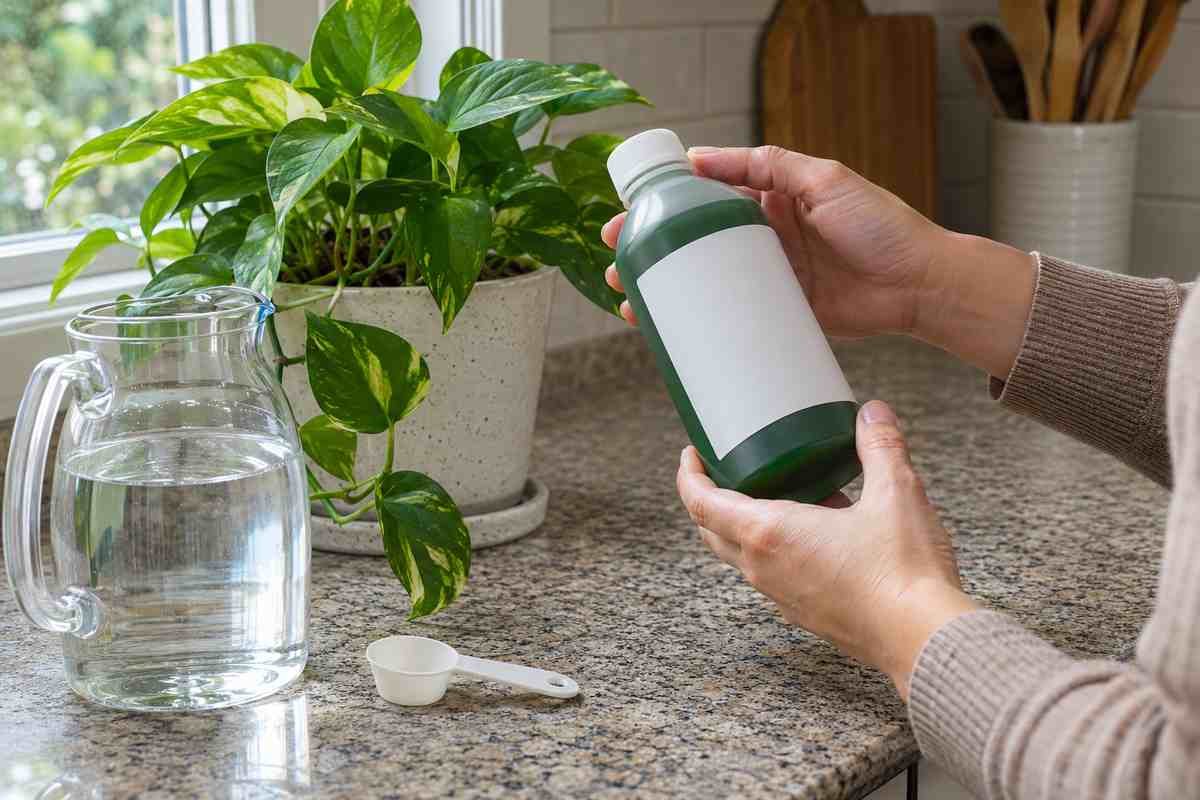
Which form? Pick by how often you will actually feed:
- Liquid concentrate or soluble powder. Mixed into water. UConn recommends these for weekly, biweekly or monthly feeding.
- Slow-release pellets or spikes. For long gaps between feedings. UConn gives a range of 2 to 9 months depending on the product; the University of Maryland Extension describes pellets that release over 3 to 4 months.
- Pre-fertilized potting mix. Already feeding the plant. Nebraska Extension mentions one common mix that claims to feed for up to six months, so a freshly potted plant does not need more until that runs out.
When should you fertilize houseplants?
Fertilize houseplants only while they are actively growing, which UConn puts at roughly March to October and the University of Maryland Extension at March through September. Both say to stop in winter, when lower light and cooler rooms slow growth to a crawl.
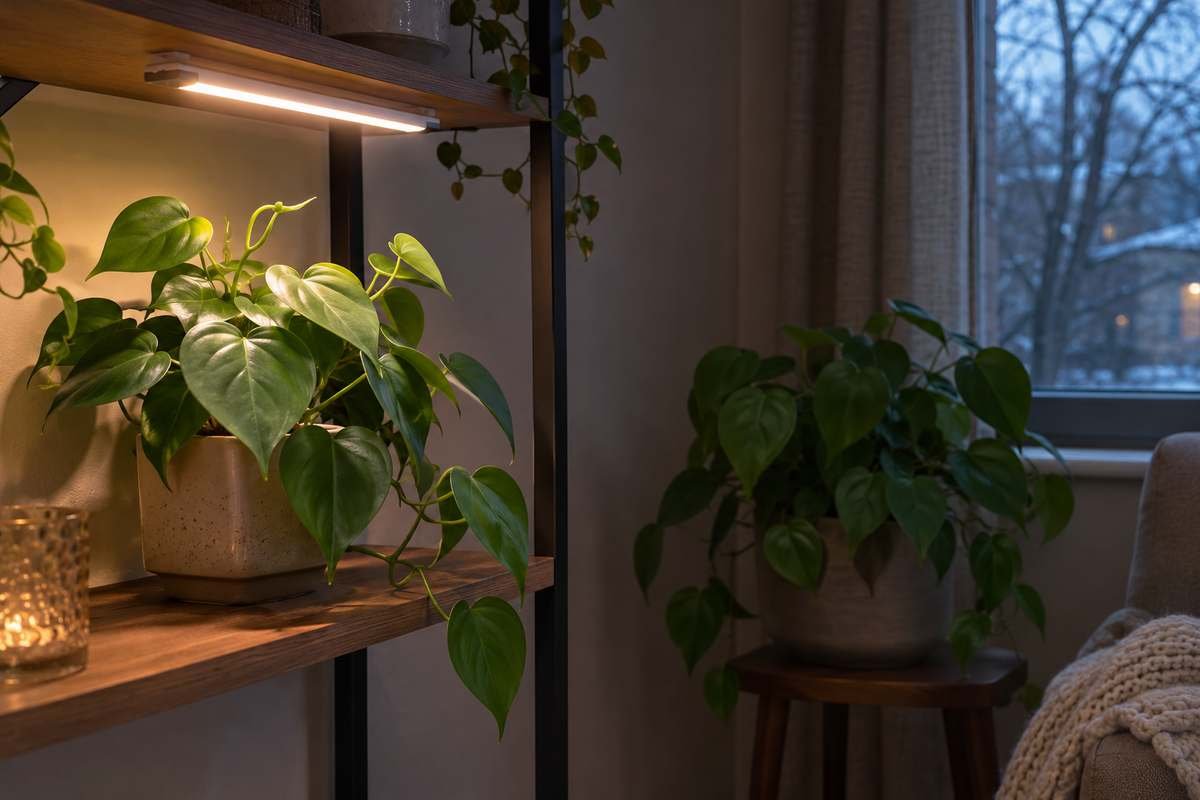
The calendar is a stand-in for light, and Nebraska Extension’s fertilization guide spells out the exception. In winter, it says, short days and low light make some plants rest and need little if any fertilizer. A plant in a very bright south or west window, or one under supplemental light, may keep growing, and should be fed like an actively growing plant. Its test is simple: new leaves, flower buds or flowers mean the plant is active.
That rule works in both directions in a dim home. For years I lived in a north-facing apartment, and plants there grew slowly even in summer, so a full summer schedule would have been more than they could use. Plants in my darkest corners now sit under grow lights, and those keep growing through winter. The DLI calculator estimates how much light a spot really gets.
A top reply on an r/houseplants thread about whether feeding made a visible difference made the same point from the grower’s side:
“Absolutely. Fertilizing is super important but you have to have good growing conditions to get anything out of it so lighting is usually what the growth bottleneck is.”
– r/houseplants, March 2026 (260 upvotes)
Do not feed these. Nebraska Extension says newly repotted, unrooted, dormant and wilted plants should not be fertilized. Water a wilted plant first and feed it once it has recovered. Cacti and succulents need less than leafy tropicals; the low-light succulents guide covers how little.
How much house plant fertilizer to use
Use house plant fertilizer at the label rate or below it. UConn says to follow the directions and warns that more is not better, because excess nutrients can harm roots and leaves.
The University of Maryland Extension puts the goal plainly: add just enough nutrients for new growth to make up for leaf loss, not to push a plant into fast growth.
Frequent, weaker doses are an option. UConn’s example: if the label says one teaspoon per quart of water once a month, you could use half a teaspoon per quart twice a month, or a quarter teaspoon per quart every week. That gives a steadier supply and is often recommended for flowering plants such as African violets. The total over a month stays the same.
Schedules differ between sources. Nebraska Extension suggests feeding actively growing plants with a quick-release soluble product every two months, while Maryland says monthly diluted liquid feeding in summer keeps most plants healthy. If a plant is growing slowly in modest light, the longer interval is the safer one.
Always apply it to moist mix. UConn says fertilizer should go onto already moist potting soil to avoid root damage, so water first if the pot is dry.
Signs of too much fertilizer, and how to flush it
Too much fertilizer shows up as brown leaf tips, browning roots, wilting, misshapen new leaves and a white crust on the pot rim or soil surface, according to UConn. Nebraska Extension adds reduced growth and dead root tips, and notes that these signs can have other causes too, such as the ones covered in the guide to yellowing leaves.
The crust is fertilizer salt. When water evaporates from the mix, Nebraska explains, the dissolved minerals stay behind, and as they build up the roots find it harder to take up water even from damp soil. High salt levels damage roots directly, and Nebraska links them to root rot. Maryland adds that excess fertilizer can also cause weak, leggy growth.
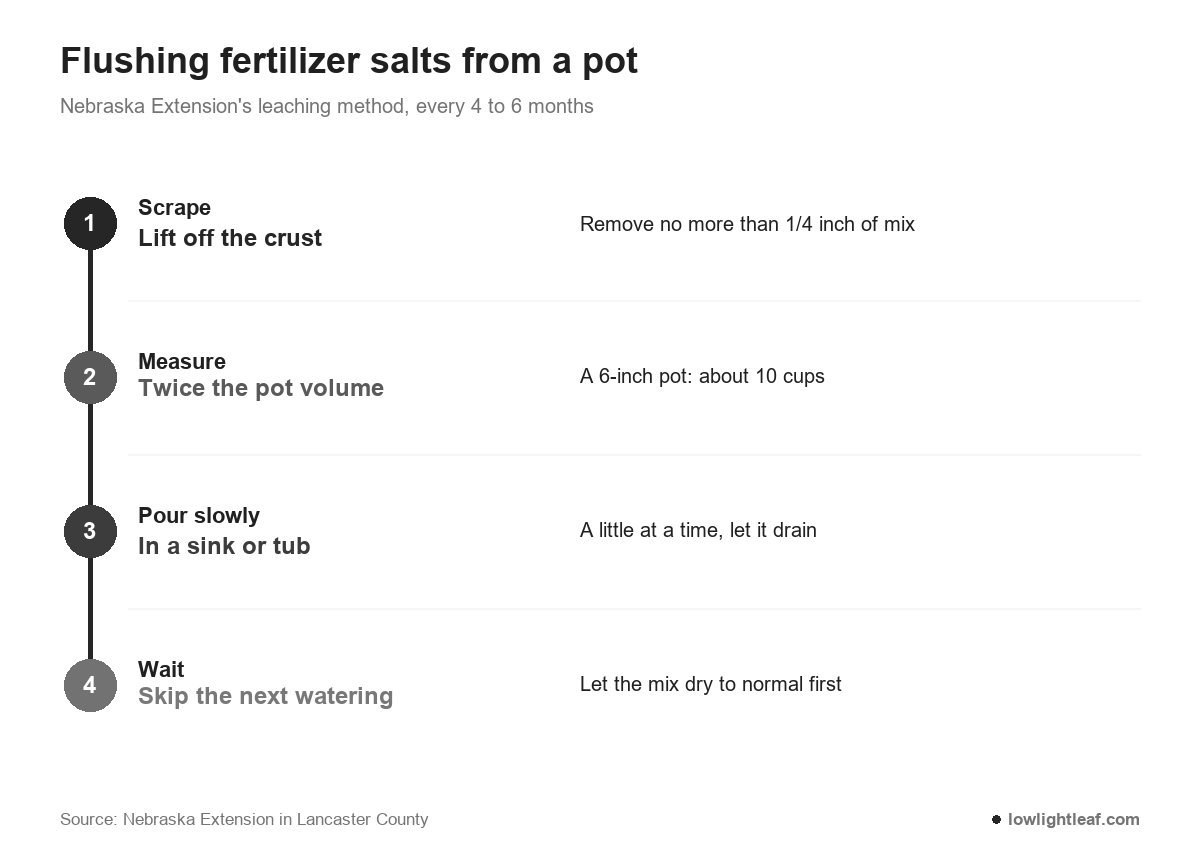
Nebraska recommends leaching houseplants every 4 to 6 months as routine, and sooner if you see the crust:
- Scrape off any salt crust on the surface, taking no more than about a quarter inch of mix.
- Set the pot in a sink or tub where it can drain freely.
- Pour water through slowly, a little at a time, using twice the pot’s volume. Nebraska’s example is a 6-inch pot, which holds about 5 cups, so about 10 cups of water.
- Let it drain fully, then wait for the mix to dry to its normal level before the next watering.

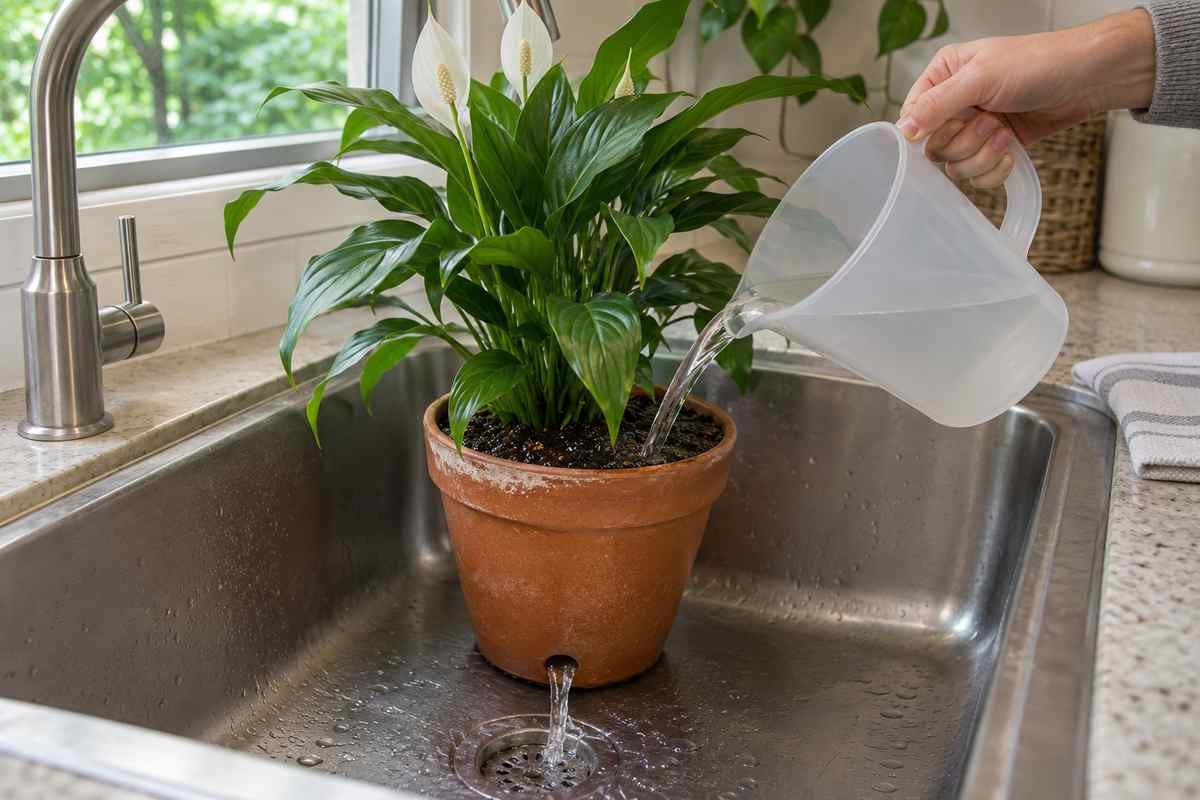
Illustration: flushing a pot with about twice its volume of water, as Nebraska Extension describes.
Repotting into fresh mix also clears the salts, and both UConn and Nebraska list it as the alternative when a pot is badly crusted.
Homemade and organic options
The University of Maryland Extension calls earthworm castings an excellent houseplant fertilizer. It also says many indoor plants run short of micronutrients, and suggests a labeled fertilizer that contains them or a small amount of well-composted, screened leaf mold or compost once a year. For magnesium, which it says leaches out with each watering, Maryland gives one teaspoon of Epsom salts per gallon of water, used twice a year.
Those are supplements to a plan, not a substitute for light. A well-fed plant in a dark corner still grows like a plant in a dark corner, and the extra nutrients mostly end up as salt in the pot.
If a plant is not putting out new leaves, hold the fertilizer and look at its light first.

Ellie Marsh
Houseplant grower who spent years in a north-facing apartment. Writes practical care guides for low light homes, checked against extension and botanical garden sources.