Last updated on November 9, 2026
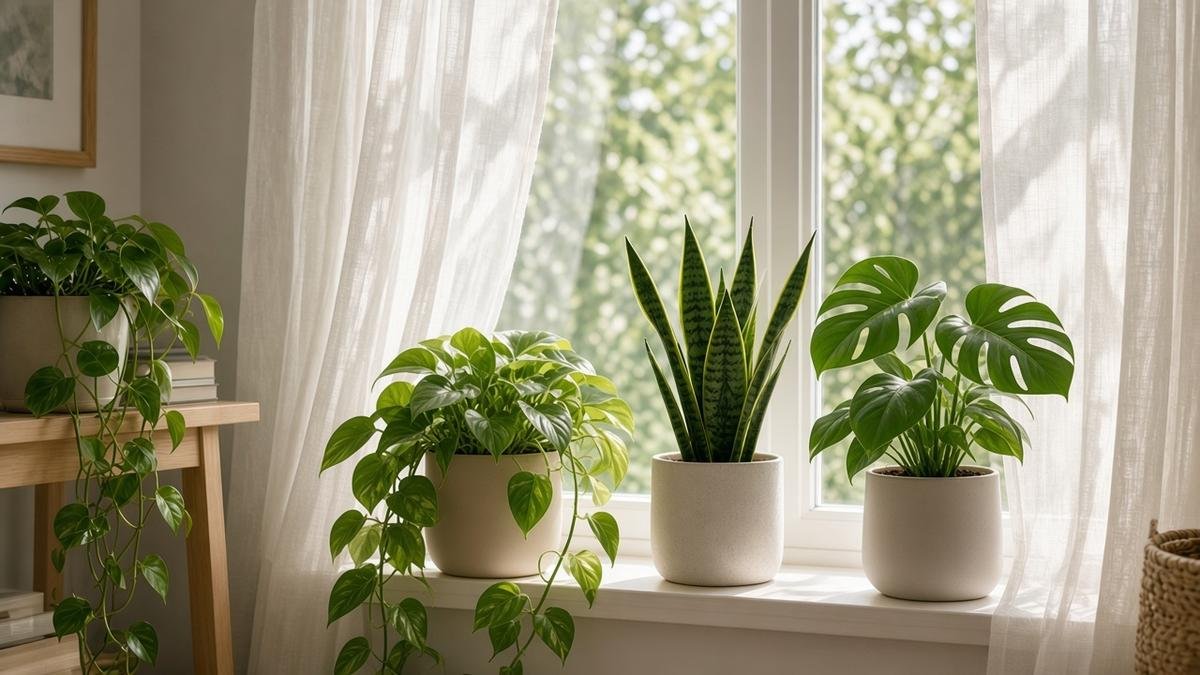
Sheer curtains for plants do one job well: they take the edge off hot summer sun without making the window useless. Light-filtering blinds work the same way. Room-darkening and blackout coverings are a different tool, and while they are closed, a bright window gives a plant about as much as a dim corner does.
Most plant advice assumes the window is bare. In a real home it rarely is, so the covering you pick, and how long it stays down, decides how much of that window’s light the plant actually gets.
What a window covering does to plant light
Extension services treat window coverings as a real light factor, not a decorating detail. University of Maryland Extension lists curtains, insect screening, weather, shade from trees and buildings, and the cleanliness and type of window among the things that change indoor light intensity.
Iowa State University Extension puts it more bluntly: curtains and sheers can greatly reduce the amount of light, and films, tinting and other coatings reduce it too. Its fix for a plant that needs more light is to reduce or remove the coverings.
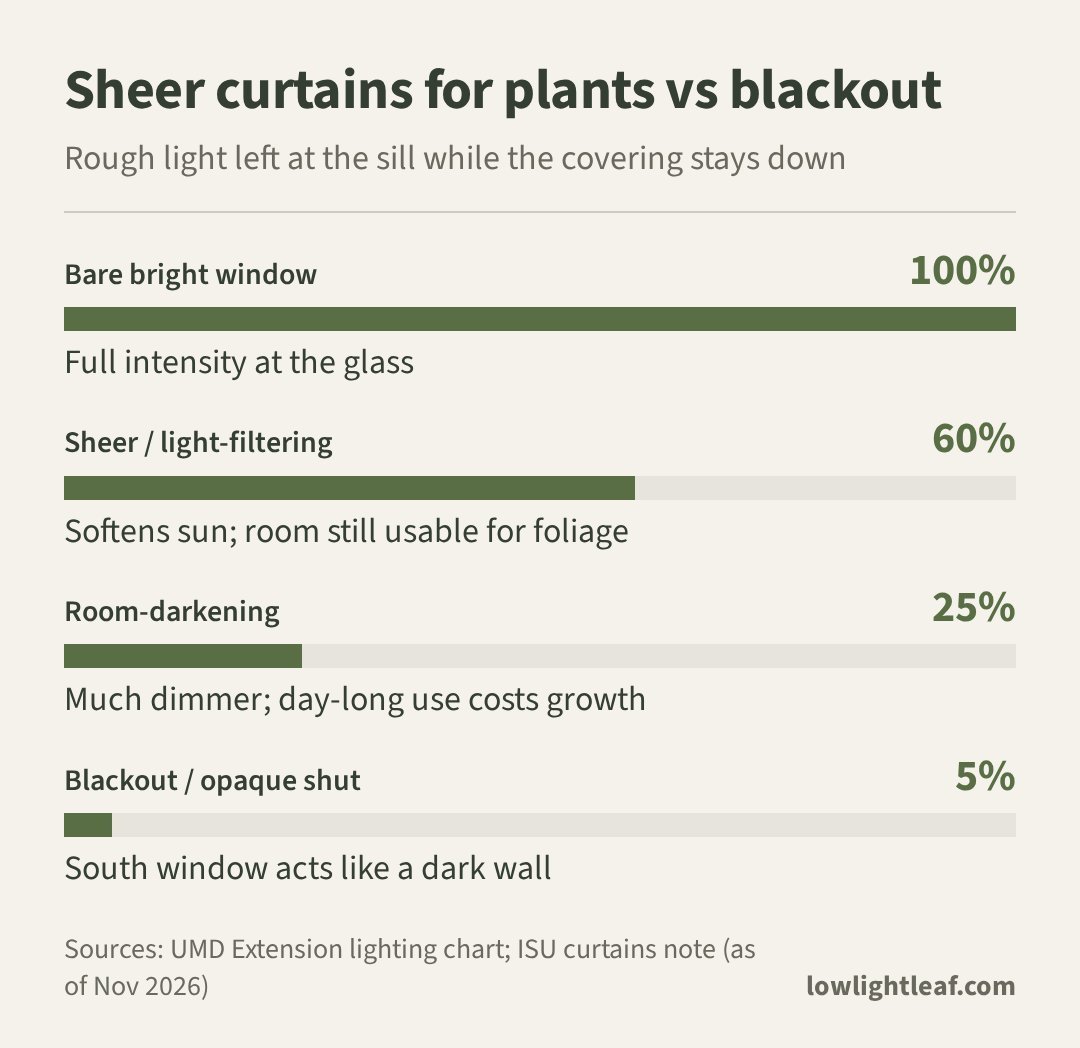
For plants, the useful split isn’t blinds versus curtains. It’s how much light still reaches the leaves while the covering is down:
- Sheer curtains and light-filtering shades soften and spread direct sun. The room still looks bright, and the plant still gets light it can use.
- Room-darkening shades cut much more. They’re fine for privacy, but a foliage plant behind one through the brightest hours of the day is losing most of what that window could give it.
- Blackout shades and closed opaque blinds are built to block light. While they’re shut, a south window is closer to a dark interior wall than to the “bright, indirect light” on the plant tag.
Sheer curtains for plants: when they help
A sheer earns its place on a window that gets strong direct sun. Maryland Extension says too much direct light turns leaves pale, then brown, and recommends protecting houseplants in summer by moving them farther from the window or using a light shade, such as a sheer curtain.
The same extension page shows why this matters. Its light chart puts low-light plants such as ZZ plant, snake plant and peace lily at 25 to 100 foot-candles, the level of a north-facing window. East and west windows give medium-bright light at 100 to 500, south windows 500 to 1,000, and an unshaded south bay with 4 to 6 hours of direct sun over 1,000. A sheer on a south window takes some of that surplus off. A sheer on a north window takes light the plant doesn’t have to spare.
The table below follows that logic by window direction.
| Window | The plant problem | What to do with the covering |
|---|---|---|
| South | Strongest light; summer scorch risk | Sheer or light-filtering during the hottest hours, or pull plants back; avoid all-day blackout |
| West | Hot afternoon sun | Filter or tilt the slats in the afternoon; open again once the sun moves off the glass |
| East | Gentler morning sun | Usually fine open; filter only if leaves start to pale |
| North | Already low light | Keep it open during the day; filtering here usually costs more than it saves |
Our guide to ZZ plant light requirements gives the same advice for a bright sill: a sheer, or a few feet of distance, on south and west exposures. North rooms are the opposite case. The north-facing window plants list assumes that window stays clear during the day.
Distance from the glass matters as much as the fabric
Light falls off fast as you move into the room. Iowa State says areas more than a few feet from even a bright window are often too dim to grow houseplants well, and spots just to the side of a window are darker than they look. University of Illinois Extension’s distances, which we use in our plant shelf ideas, put low light within a few feet of a north window but 15 to 20 feet from a south one.
Put the two together and the trap is easy to see. A covering that cuts the light at the sill also cuts it on the shelf three feet back, and the room can still look pleasant to you while the plant goes hungry. Your eyes are a poor meter here. One grower on r/plants found that out with a cheap light meter:
“I thought my place was bright with all the shutters open, and recently bought a $10 light meter from a garden shop. Turns out my place is considered ‘dark’. … So even though it feels bright, it may not be enough for a lot of plants.”
– r/plants, August 2022 (22 upvotes)
Take a reading where the leaves are, with the covering the way you usually leave it, and run it through the DLI calculator to see what the spot adds up to over a day.
Fit, gaps and choosing blinds for a plant window
How a covering fits changes the light as much as the fabric does. Curtains that hang short or gape at the sides let stripes of full sun through next to bands of shade, so one plant on the sill bakes while the one beside it stretches. Blinds and shades that fit the frame give you even light across the whole window, and adjustable slats let you change it through the day instead of choosing between open and shut.
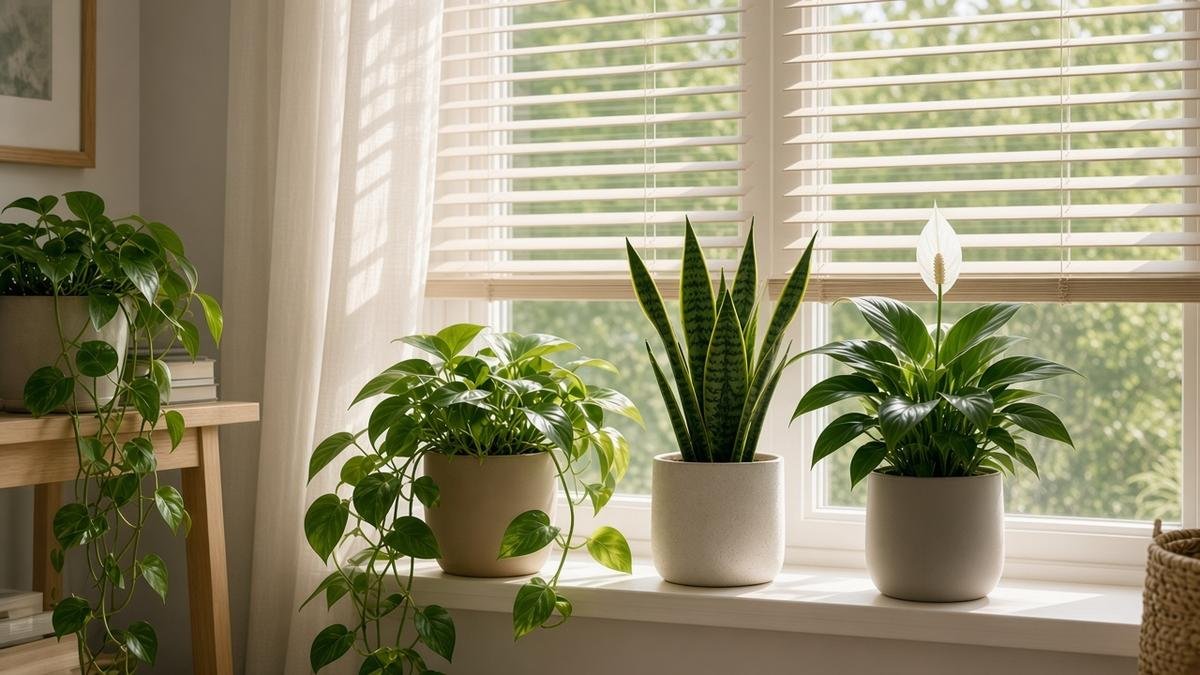
If you’re replacing coverings on a window that holds plants, made-to-measure custom blinds for your windows are one way to get a light-filtering shade that matches the glass. Pick light-filtering fabric for the plant room and keep room-darkening or blackout for bedrooms and media rooms that aren’t carrying your plants. If small children live in the home, the U.S. Consumer Product Safety Commission recommends cordless window coverings; that choice doesn’t change the light.
A few habits help whatever you hang:
- Set plants that scorch easily where the filtered light lands evenly, not in a bright gap between panels.
- Raise or open the covering for the hours the plant needs, especially in winter when days are short.
- Clean the glass. Maryland lists the cleanliness of the window among the factors that cut light.
- Don’t trap a plant between a closed curtain and the pane. Iowa State warns that the gap can get very warm in the sun and quite cold at night. The same cold glass is where condensation on windows collects in winter.
Signs the covering is costing too much light
Low-light tolerant doesn’t mean a plant thrives behind a closed shade. ZZ plants, pothos and snake plants survive dim corners, but they still grow better with more light, and filtering an already dim window can tip them from holding steady to stalling.
Maryland Extension lists the signs of too little light: plants turn spindly or leggy as they stretch, lean toward the window when light comes from one side, and show faded leaf color, fewer flowers and poor growth. If you see those after adding a covering, open it during the day first, then move the pot closer to clear glass. In the darkest corners of my old north-facing apartment, a grow light did what no window could.
Window covering questions
Can plants get enough light through closed blinds?
Through light-filtering blinds, many foliage plants can. Through closed room-darkening or blackout blinds, not for long. Iowa State notes that curtains and sheers can greatly reduce light, and opaque coverings are designed to block it, so open them for the plant’s daytime hours or add a grow light.
Are sheer curtains better than blinds for plants?
For softening strong summer sun, a sheer is the option Maryland Extension names. Blinds and shades are the better pick when you want to adjust the light through the day or need a closer fit on the window. Either way, choose light-filtering material for a plant window.
Should I filter a north-facing window?
Usually not. Maryland puts north windows in its low-light band already, so filtering them further mostly slows plants down. If you need privacy there, plan on a grow light for the plants that sit behind the covering.

Ellie Marsh
Houseplant grower who spent years in a north-facing apartment. Writes practical care guides for low light homes, checked against extension and botanical garden sources.