Last updated on November 26, 2026
Chinese evergreen, cast iron plant, snake plant, ZZ plant and pothos are the plants for office with no windows that can hold on, but only if a lamp or the room lights stay on long enough each day. A windowless office is not just a dim corner. It has no daylight left when the overhead lights go off at night and over the weekend.
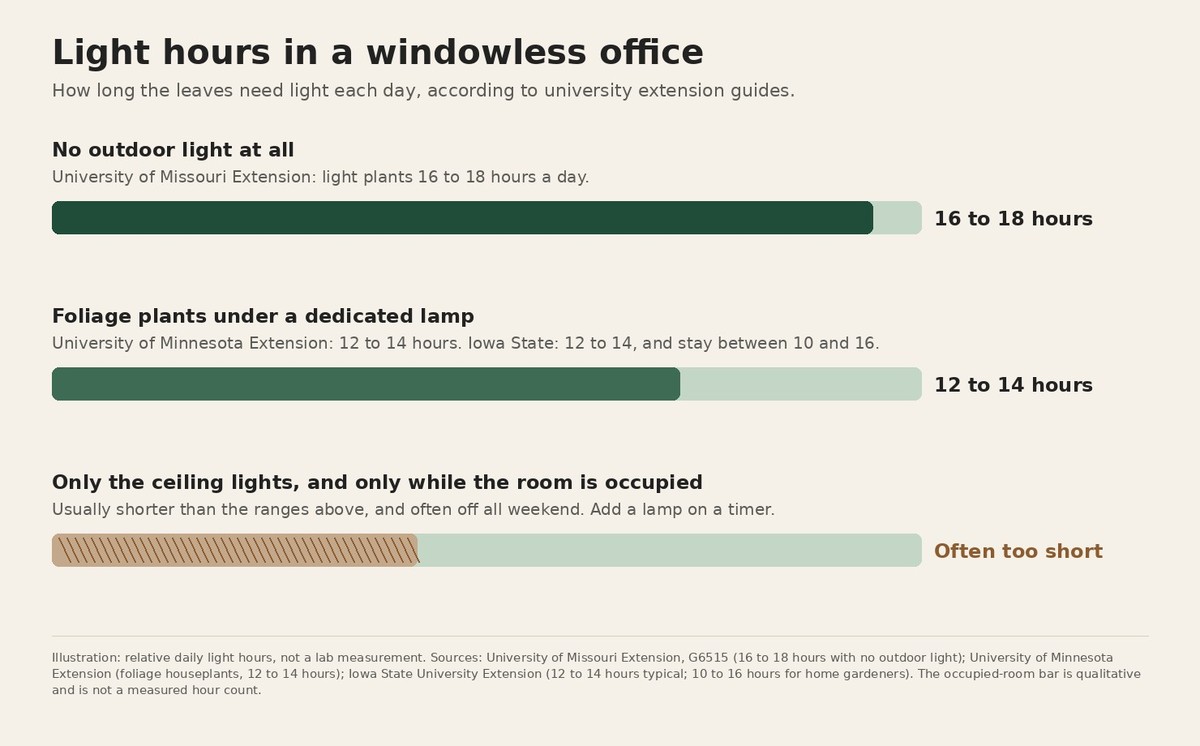
University of Missouri Extension calls lack of adequate light the most common factor limiting houseplant growth at home, and says plants that receive no outdoor light should be lit 16 to 18 hours a day. University of Maryland Extension puts “rooms that are artificially lit” in the same low-light band as north-facing windows, 25 to 100 foot-candles. The ceiling lights in many offices are not on that schedule.
What a windowless office actually gives a plant
A room with no windows can still grow plants, but only when the artificial light is both bright enough at leaf height and on long enough. Those are two different problems.
Maryland’s 25 to 100 foot-candle band includes rooms lit mostly by lamps. University of Minnesota Extension notes that medium- and low-light plants, including Chinese evergreen, can grow in fluorescent-lit places such as an office lobby, and that medium-light plants are often found in office buildings where fluorescent lights are on all day. That “all day” part is doing a lot of work.
If the only light is the overhead fixture, and it shuts off when the room is empty, the daily total often falls short of Missouri’s 16 to 18 hours for plants with no outdoor light.
It may also fall short of the 12 to 14 hours Minnesota recommends for foliage houseplants under a lamp, and of Iowa State University Extension’s typical 12 to 14 hours (Iowa State tells home gardeners to stay between 10 and 16 hours). Weekends make the gap worse, because many offices go dark for two full days.
That is the real test for plants for office with no windows: not whether the room looks dim, but whether the leaves get enough hours.
| Situation | What the plant is actually getting | What to do |
|---|---|---|
| Overhead lights stay on through the workday, and maybe longer | Artificial low light in Maryland’s 25 to 100 foot-candle band, if the leaves are close enough to the source | Start with the tough plants below, and still plan for nights and weekends |
| Lights only while someone is in the room | Hours that are often too short for a plant with no daylight | Add a lamp on a timer, close to the leaves |
| A home office you can alter | A real opening can change the light math | See the last section |
The aim is not another long shopping list for a dim desk, or a guide to bathrooms or dark living rooms. Those already have their own pages. The question is whether a windowless workplace can keep a plant alive on a work-week light schedule.
Which plants for office with no windows are worth trying
Start with plants that extension services rate for low light, and treat the lowest numbers as a survival floor, not a promise of lush growth. Missouri notes that its categories generally indicate the minimum light required, and that growth is often best at the higher end of each range.
| Plant | Why it can cope | Catch | Pets (ASPCA) |
|---|---|---|---|
| Chinese evergreen (Aglaonema modestum) | Missouri says aglaonemas can tolerate light as low as 10 foot-candles | Maryland lists Chinese evergreen in its medium-bright band of 100 to 500 foot-candles, so 10 foot-candles is a floor, not a target | Toxic to cats, dogs and horses (insoluble calcium oxalates) |
| Cast iron plant (Aspidistra elatior) | Missouri calls it one of the best plants where only low light conditions exist, and says it tolerates cool locations | Slow-growing; it will not fill a desk quickly | Non-toxic to cats, dogs and horses |
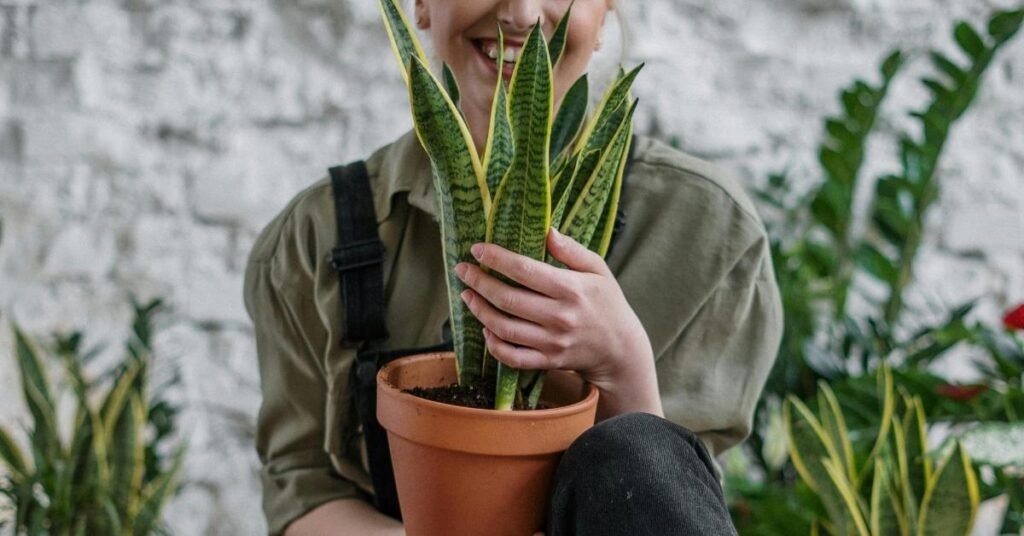
| Snake plant (Sansevieria trifasciata) | Missouri says it tolerates poor light; Maryland lists it in the 25 to 100 foot-candle group; Illinois Extension rates it for low light | Missouri: avoid overwatering | Toxic to cats and dogs (saponins) |
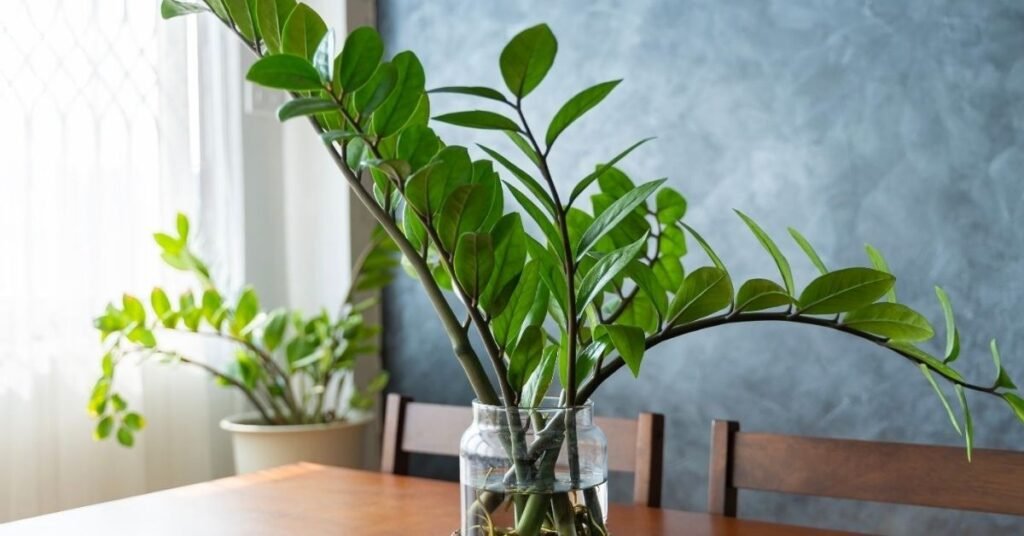
| ZZ plant (Zamioculcas zamiifolia) | Maryland lists it in the same 25 to 100 foot-candle group; Minnesota lists “Zee zee plant” among low-light houseplants | Missouri’s older lighting guide does not list it; let the soil dry | The ASPCA plant list has no ZZ entry; ask a vet |
| Pothos (Epipremnum aureum) | Missouri rates it satisfactory for low and medium light; Minnesota lists pothos among low-light plants | Illinois Extension rates pothos as a medium-light plant, so a very dim cubicle may stall it | Toxic to cats, dogs and horses (insoluble calcium oxalates) |
| Parlor palm (Chamaedorea elegans) | Illinois and Minnesota both list it for low light | It wants more consistent moisture than a snake plant | Non-toxic to cats and dogs |
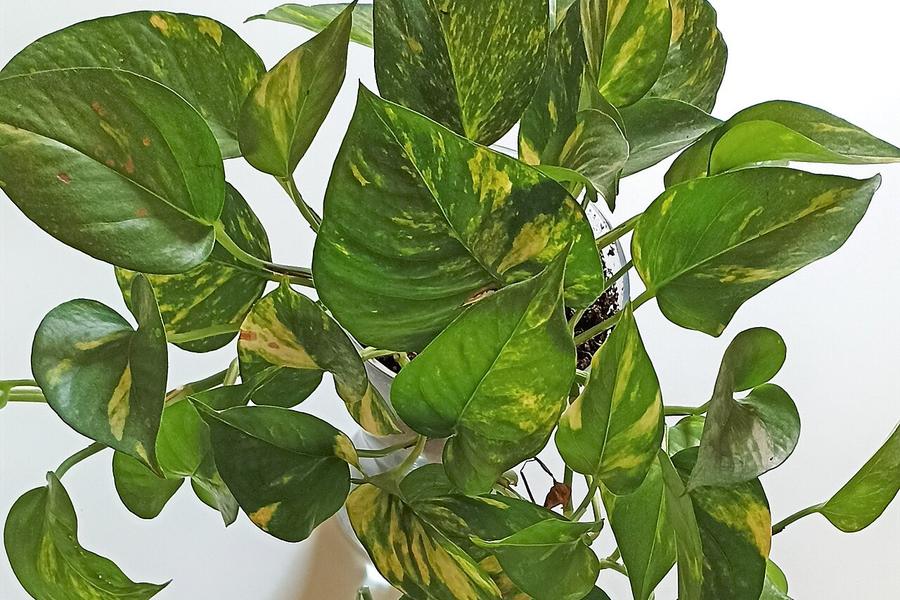
If a cat or dog shares a home office, start with cast iron plant or parlor palm, and keep the toxic plants out of reach.
Real offices vary more than the ranges suggest. One commenter on r/IndoorPlants reported pothos growing in a windowless office on the fluorescent lights alone. Treat that as one workplace’s result, not a schedule you can count on:
“I was in an office with no windows last year and there were Pothos growing in there with no grow lights. Just the fluorescent office lights. Didn’t think that was possible.”
Source: r/IndoorPlants, 14 upvotes
Give the plant a lamp on a timer, not a few hours of ceiling light
A ceiling light you switch off when you leave is not a grow schedule. Missouri says a timer is a valuable asset because lights should be turned on and off regularly and consistently, and Iowa State says to plug supplemental lights into a timer for the same reason: plants still need a dark period.
Use the hour ranges above rather than guessing, and respect the cap. Maryland says most plants need a period of darkness and should be lit no more than 16 hours a day in total, especially if artificial light is combined with any leftover natural light. Illinois Extension says 14 to 16 hours is sufficient in low light, and not to go over 16.
Put those numbers side by side and the sources meet at two points. At 14 hours, Minnesota’s range ends, Illinois’s begins and Iowa State’s falls in the middle. At 16 hours, Missouri’s range begins and both Illinois and Maryland stop. A timer from 7 a.m. to 9 p.m. runs 14 hours; 6 a.m. to 10 p.m. runs 16. No single setting satisfies every source, so pick the one that matches your plant and light, and watch it for a few weeks. This is arithmetic on published ranges, not a schedule anyone tested in a workplace.
Distance matters as much as the clock. Missouri puts the tips of most plants 6 to 12 inches from the light source, and notes that intensity drops quickly as you move away. Iowa State puts fluorescent fixtures 6 to 12 inches from the foliage and says LEDs can be 12 to 24 inches away in most cases, which matches Minnesota’s 12 to 24 inches for foliage houseplants. A ceiling fixture across the room can look bright to you and still be weak at the pot.
I spent years in a north-facing apartment, and I use a grow light for the darkest corners now. A windowless office is the same problem, with a less helpful light schedule. For fixture types, hanging height and a buying checklist, see the site’s guide to grow lights for indoor plants.
Drafts, vents and weekends matter as much as the plant you pick
Light is the main constraint, but a windowless office has other habits that stress plants. Iowa State University Extension says most houseplants grow well with daytime temperatures of 65 to 75°F and night temperatures of 60 to 65°F, and that temperatures below 50°F or rapid temperature fluctuations may harm some plants. It tells you to keep houseplants away from cold drafts, radiators and hot air vents, and to keep foliage from touching cold windows.
Wisconsin Extension makes the doorway point explicit: air currents around windows and doors can produce cold drafts that some plants cannot tolerate. A desk beside an exterior door, or under a supply vent, is a harder spot than the same light a few feet farther in.
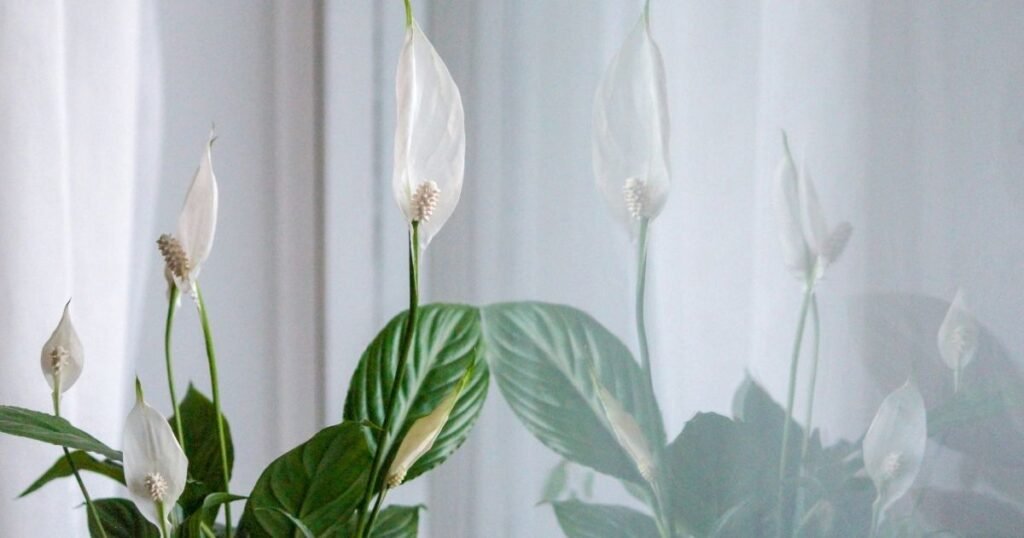
Weekends are a watering problem as much as a light problem. Snake plant and ZZ plant can wait if the soil is allowed to dry. Pothos is more forgiving than a fern, but it still should not sit wet in a dark room. Missouri says peace lilies should not be allowed to dry out, which is one reason they are a poorer fit for a desk you leave from Friday to Monday.
The weekend is the first worry people raise. A poster on r/gardening described it this way:
“My new job gave me a windowless office where the lights will be off for the weekend. I’ve seen ZZ plants and mother-in-laws tongue recommended and I have spider plants. I am wondering how they would do in 48 hrs of darkness. Thoughts?”
Source: r/gardening, 18 upvotes
When a home office can get a real window
If you work in a rented cubicle, you cannot add a window, and a lamp is the practical fix. If you work from a converted interior room, a basement office, or a space with only a small or poorly placed opening, daylight can change the problem.
Missouri says large windows provide the best growing conditions and allow plants to be placed fairly far back into a room, but that even low-light plants usually do not receive enough light at distances greater than 10 feet from an average window. Window direction, overhangs, and shade from trees or buildings all change what that opening actually delivers. Maryland adds that the cleanliness and type of window affect indoor light intensity, and that light-colored, reflective surfaces can raise the ambient light in the room.
A larger, better-fitted opening helps only if it actually fits the wall you have. Older homes and converted rooms often do not match standard catalogue sizes.
If the opening is an odd size, custom-sized windows and steel entry doors can be built to the existing measurements.
A tighter-fitting entry can also reduce the cold drafts Iowa State and Wisconsin Extension tell you to keep plants away from. That is useful near a door that opens all day. It is not a substitute for light in a room that still has no opening.
FAQ
Can plants for office with no windows live under fluorescent lights?
Sometimes. Plants for office with no windows can live under fluorescent lights if the lights stay on long enough and the plant is a low-light type. Minnesota Extension notes that low- and medium-light plants can grow in fluorescent-lit office spaces when those lights are on all day. If the fixtures go off at night and all weekend, add a lamp on a timer.
How close should a lamp be in a windowless office?
Follow the fixture type, not a single number. Missouri’s 6 to 12 inches is written mainly for lights close to the plant, such as fluorescent tubes. Iowa State uses 6 to 12 inches for fluorescent fixtures and 12 to 24 inches for most LEDs, which matches Minnesota’s 12 to 24 inches for foliage houseplants.
Which plant is safer if a cat shares a home office?
Cast iron plant is listed by the ASPCA as non-toxic to cats, dogs and horses, and parlor palm is listed as non-toxic to cats and dogs. Snake plant, pothos and Chinese evergreen are listed as toxic. The ASPCA list has no ZZ plant entry, so ask a veterinarian before leaving one where a pet can chew it.
If you want the plant to last past the first month, fix the hours first, then pick from the short list.
Cover photo: Tom Knight, CC BY-SA 2.0, via Wikimedia Commons (cropped).

Ellie Marsh
Houseplant grower who spent years in a north-facing apartment. Writes practical care guides for low light homes, checked against extension and botanical garden sources.