The right ground cover for shade depends on whether the soil stays moist or dries out. Iowa State University Extension lists wild ginger, foam flower, lungwort and hostas for moist shade, and barrenwort and yellow archangel for dry, shady spots such as the ground under trees.
My own backyard is mostly shade, so I pay close attention to what will cover bare dirt where grass gives up. Iowa State says a ground cover for shade takes longer to establish than grass, then needs less maintenance and crowds out most weeds. I’d pick by soil first and then look up whether the plant misbehaves where you live.
Ground cover for shade, sorted by soil
Find your soil in the first column. Heights and light ranges are from Iowa State unless another source is named.
| Best in | Plant | Height and light | Worth knowing |
|---|---|---|---|
| Moist shade | Canadian wild ginger (Asarum canadense) | 4 to 8 in; partial to heavy shade | Native to eastern North America; wants organic-rich soil |
| Moist shade | Foam flower (Tiarella cordifolia) | 6 to 18 in | North American native; spreads by stolons |
| Moist shade | Spotted deadnettle (Lamium maculatum) | 8 to 12 in; partial shade | Silver leaves; blooms late spring to midsummer |
| Moist shade | Lungwort (Pulmonaria) | 9 to 18 in; partial to full shade | Spotted leaves; spring flowers |
| Moist shade | Wild geranium (Geranium maculatum) | About 2 ft; partial shade | Native woodland wildflower |
| Moist shade | Hosta | Varies; partial to heavy shade | Large leaves shade out the ground beneath them |
| Dry shade | Barrenwort (Epimedium) | 8 to 12 in; partial to heavy shade | Tolerates dry shade but spreads slowly |
| Dry shade | Yellow archangel (Lamium galeobdolon) | A little taller than spotted deadnettle | Grows well in dry, shady areas |
| Either | Bugleweed (Ajuga) | 2 to 8 in; partial shade | Needs well-drained soil; thins out in dense shade |
| Either | Allegany spurge (Pachysandra procumbens) | 12 to 15 in | Native swap for Japanese spurge; less aggressive |
| Either | Pennsylvania sedge (Carex pensylvanica) | 6 to 12 in | Native to North America; grass-like |
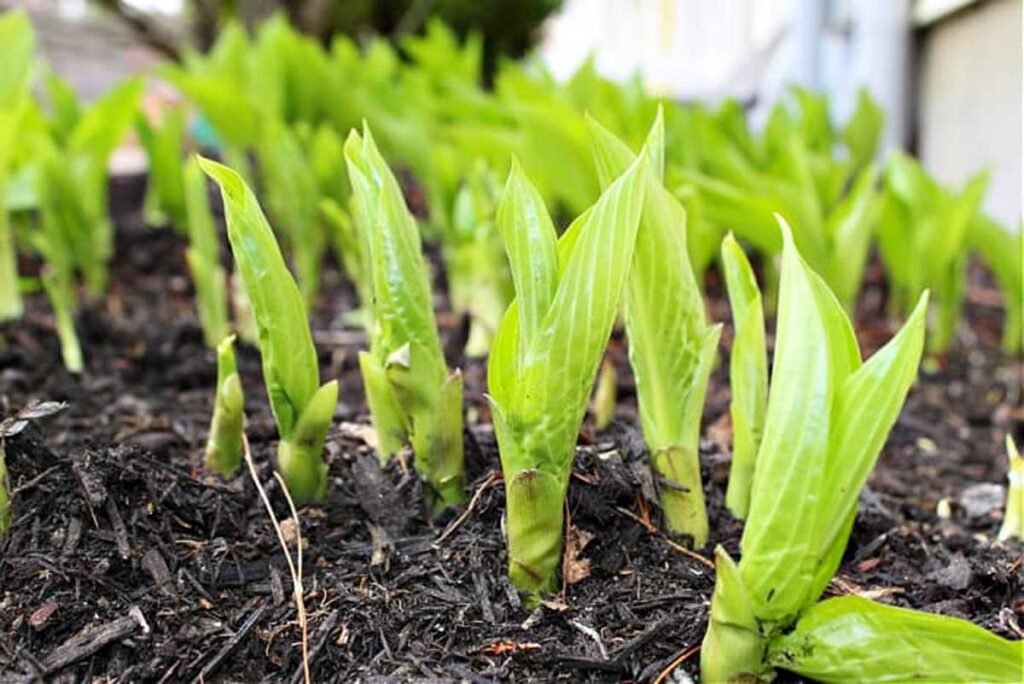
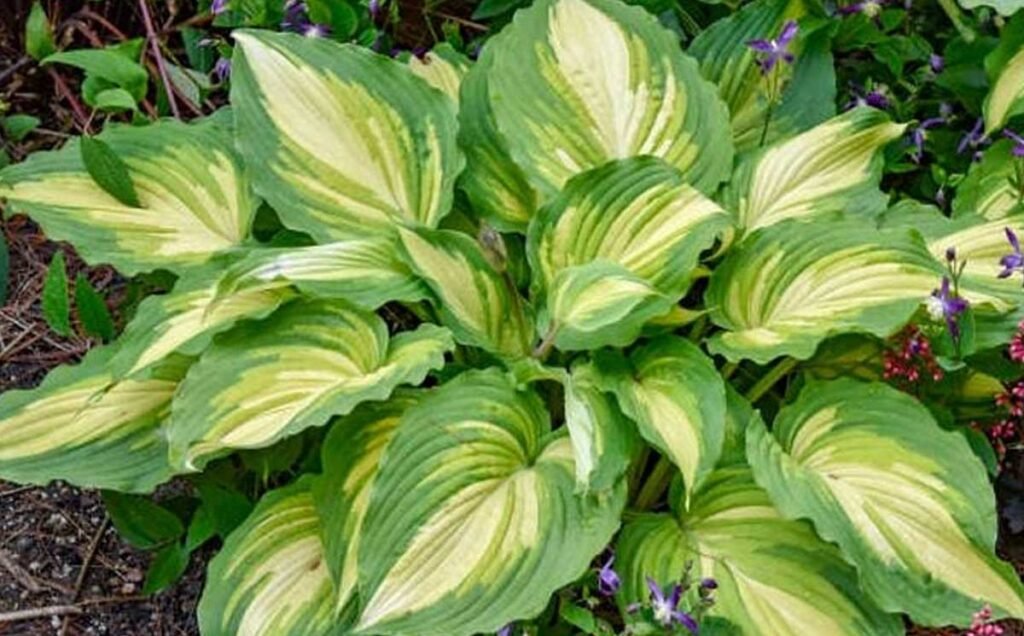
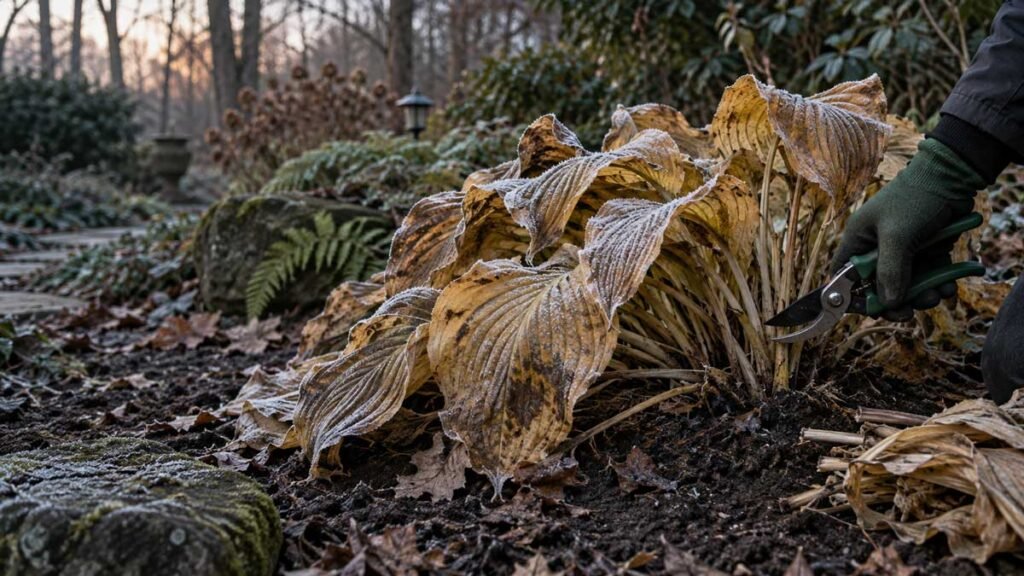
Hostas count, too. Iowa State says even clump-forming hostas work as a ground cover because their big leaves spread and shade the soil. Dividing the clumps you already own is the cheapest way to fill a bed, and the timing is in when to divide hostas. For varieties that handle the deepest shade, see best hostas for shade.
Dry shade under trees
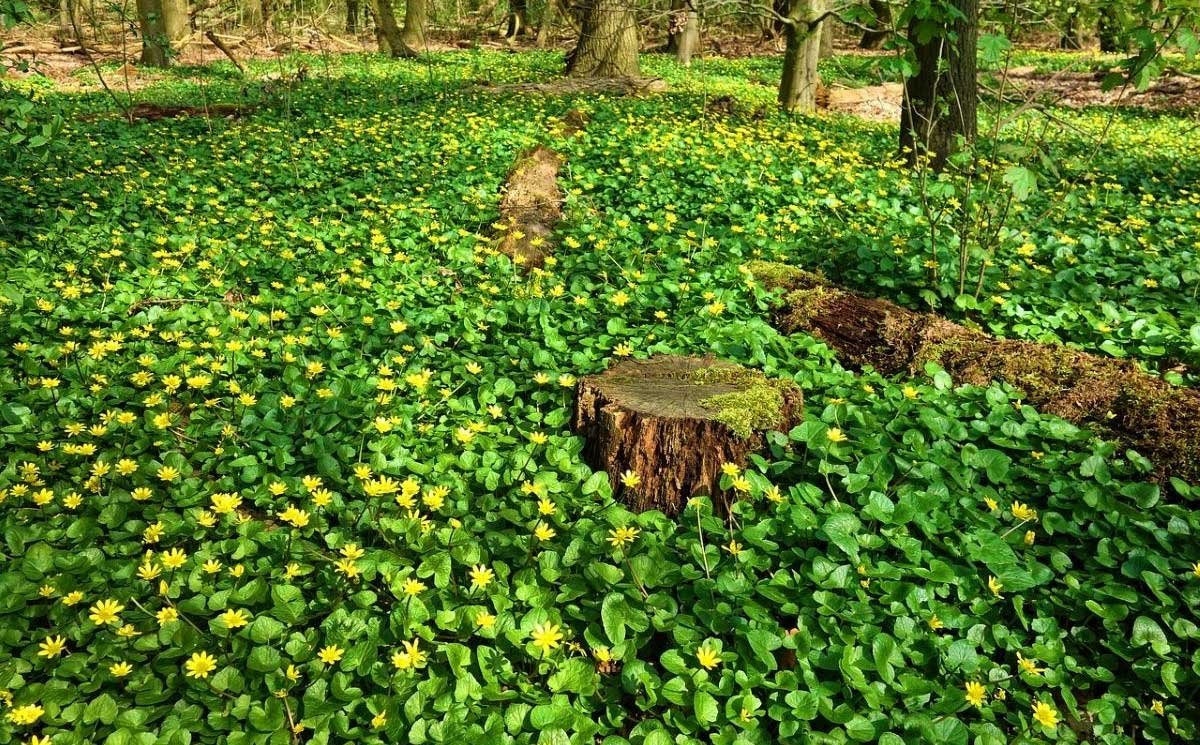
Under trees, water runs short before light does. Iowa State notes that gardens under trees dry out sooner because tree roots compete for moisture, which is why barrenwort and yellow archangel, the two plants it describes as handling dry shade, are the place to start there.
Barrenwort is slow, so expect gaps for a while. Iowa State says its best sites are still moist, well-drained soils in partial shade, which means a dry spot will work but won’t fill in as fast. I’d water new plantings through their whole first season. The extension service’s general warning applies here more than anywhere: ground covers take more time to establish than grass, and dry shade stretches that out.
Ground covers to plant with care
Periwinkle, English ivy and Japanese spurge are the classic shade ground covers, and they’re also the ones to question first if you live in the eastern U.S. Iowa State still recommends all three, but the Maryland Invasive Species Council lists them among the non-native evergreen ground covers spreading through Maryland’s parks and natural areas.
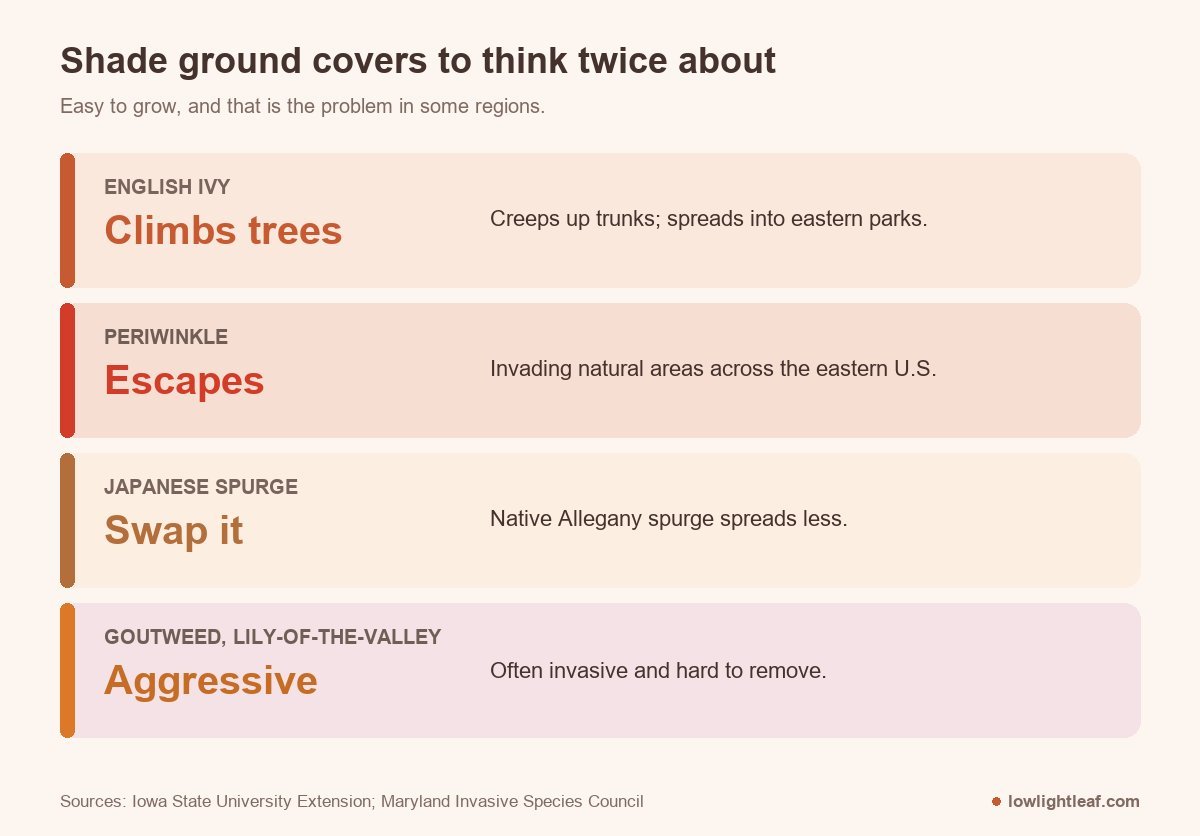
The council says periwinkle has escaped cultivation and is invading natural areas throughout the eastern U.S. Iowa State adds its own warning about English ivy, which can creep up tree trunks and shade out the lower branches over time. For Japanese spurge, Iowa State suggests a direct swap: Allegany spurge, a native of the southeastern U.S., spreads less aggressively and has fewer insect and disease problems.
Two more are on Iowa State’s caution list for every region. Bishop’s goutweed and lily-of-the-valley grow in very difficult sites, which sounds ideal, but Iowa State says both spread aggressively, often become invasive and are hard to get rid of once established. Plant them only where something confines them. Before you buy any ground cover, look it up on your state’s invasive species list, because the same plant can be fine in Iowa and a problem in Maryland.
Evergreen and flowering choices
For year-round cover, Iowa State lists Japanese spurge as evergreen and Allegany spurge as semi-evergreen, and Colorado State University Extension adds two woody natives for its region, bearberry and creeping Oregon grape, both evergreen. Creeping lily-turf keeps its leaves through winter too, but Iowa State says it looks scruffy by late winter and should be cut back in early spring.
For flowers, sweet woodruff blooms white from April into June, Colorado State says, and spotted deadnettle flowers from late spring to midsummer. Periwinkle flowers in spring and on and off through summer, Iowa State says, which is the longest season here, if your region doesn’t list it as invasive.
Ground cover for shade FAQ
What ground cover chokes out weeds in shade?
Any well-established, dense ground cover will. Iowa State says ground covers out-compete most weeds once they’re established, and hostas do it with large leaves that shade the soil. Weed by hand until the plants close the gaps.
Can ground cover replace grass in shade?
Yes, and in deep shade it usually should. Iowa State calls a shade-tolerant ground cover an excellent alternative to turf where grass struggles. It takes longer to establish than grass, but once it does, it needs less maintenance than a lawn.

Ellie Marsh
Houseplant grower who spent years in a north-facing apartment. Writes practical care guides for low light homes, checked against extension and botanical garden sources.