Last updated on October 11, 2026
The best hostas for shade are the blue and green ones. Iowa State University Extension says blue hostas need heavy shade to keep their color, and green varieties thrive in part to full shade, while gold and yellow hostas color best with about 4 to 6 hours of sun.
So when you shop for the best hostas for shade, sort them by how much light your spot actually gets. I garden in a small, mostly shaded backyard, so light is the first thing I sort by. Below are 11 varieties sorted by light, each with its size and color from the Missouri Botanical Garden’s Plant Finder.
Which hostas handle the deepest shade
Blue-leaved and plain green hostas handle the deepest shade, with white-edged types close behind. Iowa State says heavily variegated hostas should go in shade to keep their leaves from burning, which makes white-margined varieties another safe choice for a dark spot.
Read the tag with one thing in mind. The Missouri Botanical Garden rates nearly every hosta “part shade to full shade,” and its own culture notes add that they’re best in part shade, with some morning sun or dappled light. Full shade is what a hosta tolerates. Dappled light is where it does best.
Best hostas for shade, matched to your light
Find your spot in the first column, then pick from the hostas beside it. Sizes are mature height by width from each variety’s Missouri Botanical Garden page, and all of them are listed for USDA zones 3 to 8.
| Your spot | Hosta | Leaves and size (MBG) | Why it fits |
|---|---|---|---|
| Deep shade, no direct sun | ‘Halcyon’ | Blue-green; 1.5 to 2 ft by 2.5 to 3 ft | MBG calls it one of the best blue hostas, holding its blue longer than most |
| Deep shade, no direct sun | ‘Krossa Regal’ | Frosty blue-green to gray-blue, vase-shaped; about 3 ft tall, 3 to 6 ft wide | Blue foliage that needs heavy shade to stay blue (Iowa State) |
| Deep shade, no direct sun | ‘Patriot’ | Green with wide white margins; 12 to 20 in by 24 to 30 in | Heavy variegation belongs in shade (Iowa State) |
| Deep shade, room to spread | ‘Empress Wu’ | Green, leaves to 28 in long; 4 to 5 ft by 6 to 8 ft | A huge mature size leaves room for the slower growth deep shade brings |
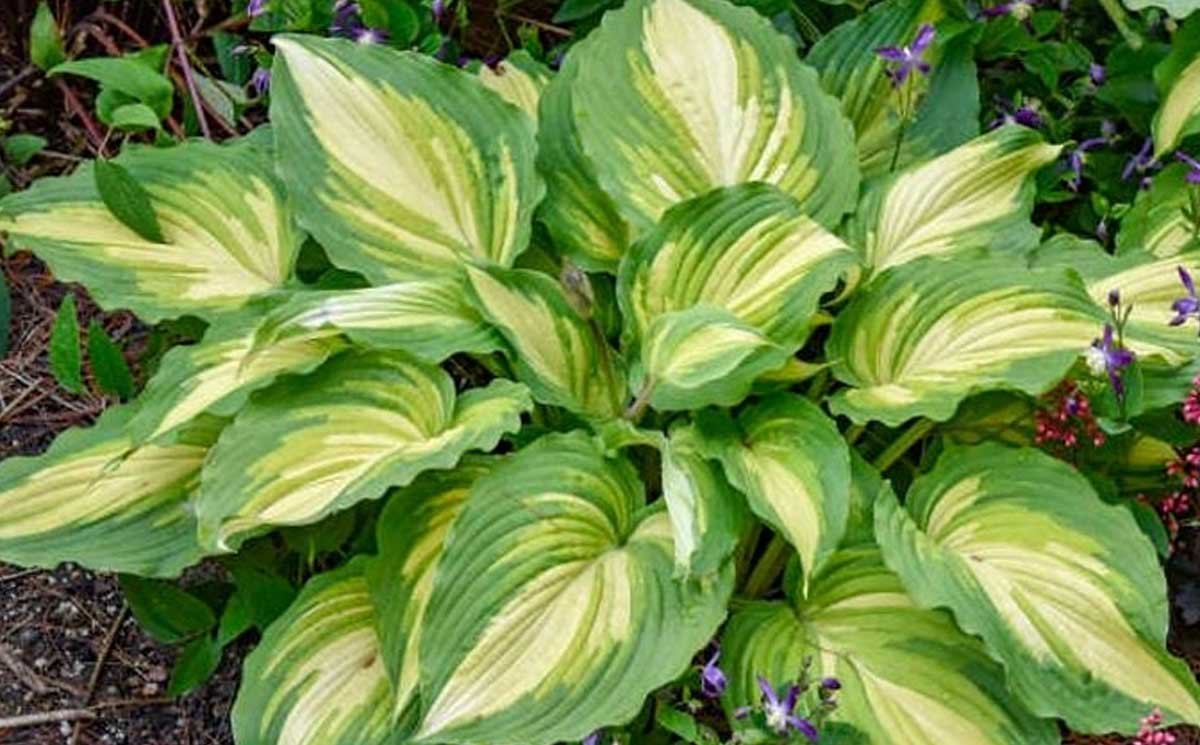
| Part shade, some morning sun | ‘Frances Williams’ | Blue-green with greenish-yellow edges; about 2 ft by 4 to 5 ft | MBG says best in light shade with some morning sun |
| Part shade, some morning sun | ‘Sagae’ | Frosty blue-green with creamy white edges, vase-shaped; 22 to 28 in by 36 in or more | Blue-green leaves with a pale edge for a lighter shade bed |
| A few hours of sun | ‘Sum and Substance’ | Yellow turning gold; about 30 in by 60 in | MBG rates it full sun to part shade and says it needs substantial sun for gold color |
| A few hours of sun | ‘Gold Standard’ | Yellow centers, dark green edges; about 22 in by 36 in | Gold color develops with 4 to 6 hours of sun (Iowa State) |
| Morning sun, fragrance wanted | ‘Guacamole’ | Chartreuse-gold with darker edges; 18 in tall, up to 50 in wide | Highly fragrant flowers in midsummer (MBG) |
| Morning sun, fragrance wanted | ‘Royal Standard’ | Bright green; about 26 in by 63 in | Fragrant white flowers in late summer to fall (MBG) |
| Morning sun, fragrance wanted | Hosta plantaginea (August lily) | Green; 1 to 1.5 ft by 1.5 to 2 ft; zones 3 to 9 | MBG ranks its fragrant flowers among the best in the genus |
If I were planting the darkest corner of my backyard, I’d start with ‘Halcyon’ or ‘Krossa Regal’ and keep the gold ones for the bed that catches the morning sun. Sizes on the tag assume good conditions, too. In a 2007 thread on the Hallson Gardens hosta forum about deep shade, growers advised buying larger varieties and larger plants, because deep shade keeps hostas smaller and can slow a small one down by a year or two.
Read the leaf color before the label
Leaf color tells you more about a hosta’s light needs than the sun rating on its tag. Iowa State’s rule is that blue needs heavy shade, green handles part to full shade, gold and yellow need about 4 to 6 hours of sun, and heavily variegated leaves need shade so they don’t burn.
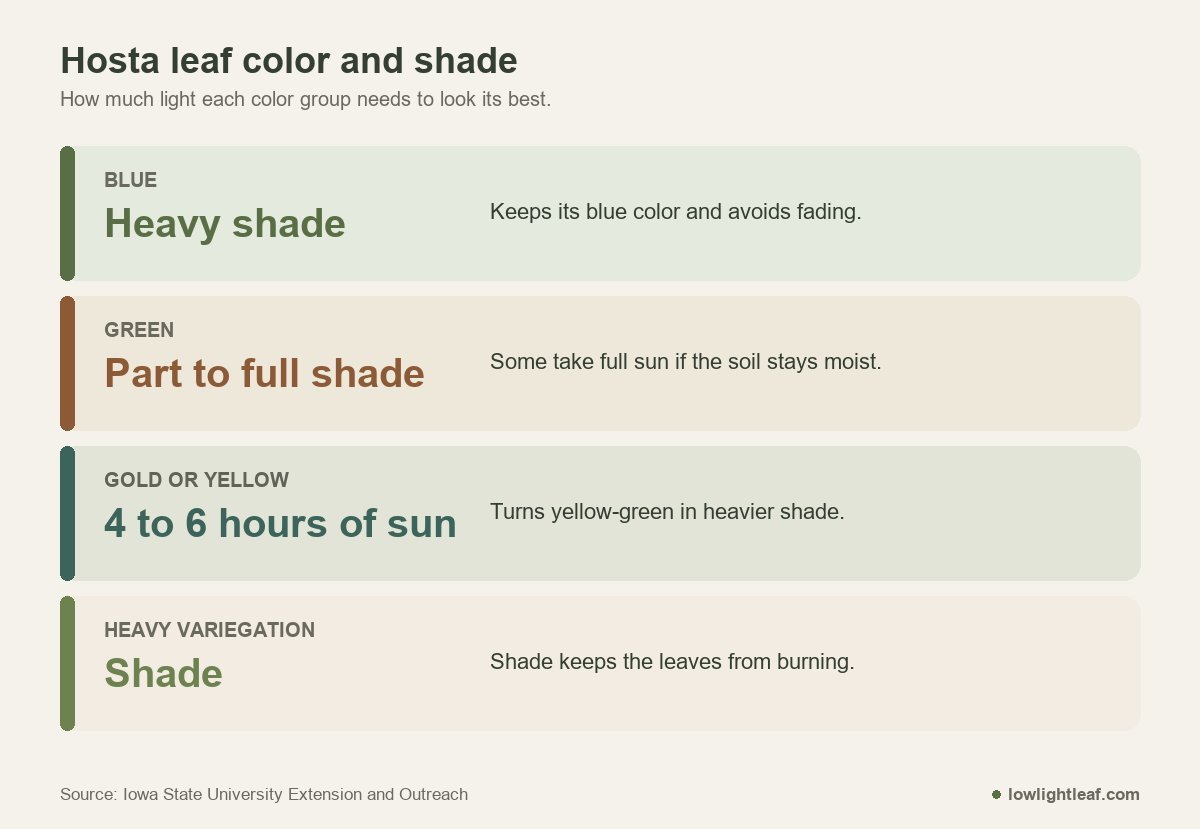
That rule means one bed rarely suits every color. A gold hosta in heavy shade turns yellow-green, Iowa State says, which is the disappointment of buying it for its color and watching it sit lime-green all summer. A blue hosta in sun fades. Watering helps the blues as well. University of Nebraska-Lincoln Extension says dry foliage enhances the color of blue cultivars, so water the soil, not the leaves.
Gold and fragrant hostas want morning sun
Gold and fragrant hostas do best with a few hours of morning sun and shade for the rest of the day. Nebraska Extension says sun-tolerant cultivars flower best with morning sun only and that fragrant hostas grow best under the same conditions.
Nebraska names ‘Honeybells’, ‘Lancifolia’ and ‘Green Wedge’ as cultivars that tolerate partial sun, especially farther north. ‘Sum and Substance’ stands out in the gold group because it’s the only hosta in this list that the Missouri Botanical Garden rates for full sun, and MBG still says it needs substantial sun for its best gold. There’s a limit on the other side as well. MBG notes that ‘Royal Standard’ leaves pick up yellowish-green tones in full sun, so even the sun-tolerant greens look best with afternoon shade.
Dry shade under trees
Shade under trees is usually dry shade, and that’s harder on hostas than the lack of light. Iowa State warns that gardens under trees dry out sooner because tree roots compete for water, so plan to water there even when the rest of the bed is fine. Thick leaves help. The Missouri Botanical Garden says established hostas have some tolerance for dry shade, especially thick-leaved ones, but the soil should never be allowed to dry out, and full size comes from steady moisture. A layer of shredded bark or leaf mold holds moisture in, which Iowa State recommends, as long as you keep it thin for the reason in the next section.
Slugs and deer in a shade garden
Slugs and deer cause most of the damage to hostas in shade. The Missouri Botanical Garden says slugs and snails chew jagged holes in the leaves and can do serious damage quickly, and that deer commonly eat hosta leaves, often voraciously.
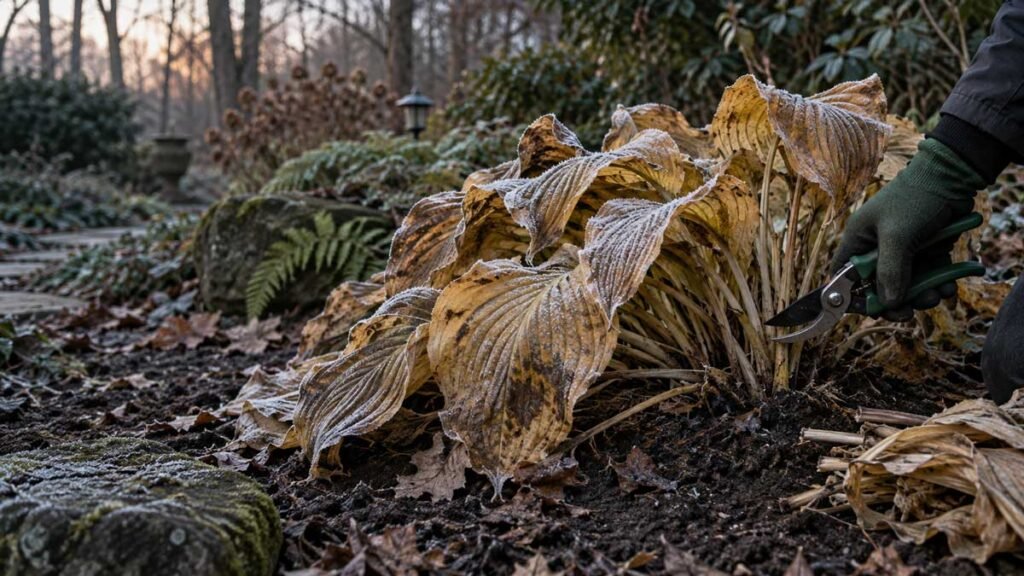
For slugs, Nebraska Extension keeps mulch to about an inch, because a thicker layer is likely to promote them, and waters in the morning so the surface dries before evening. Clearing the dead leaves after the first frost helps too, since Penn State Extension says they harbor slug eggs; the timing is in when to cut back hostas.
Jagged holes after a wet night are the usual sign.
For deer, Nebraska lists repellents and physical barriers such as fencing or wire cages; no hosta in this list is described as deer resistant.
Best hostas for shade FAQ
Do hostas do well in full shade?
Yes, most hostas grow in full shade, and most do best with some morning or dappled light. Iowa State says hostas grow best in full to part shade, and the Missouri Botanical Garden’s culture notes call part shade with some morning sun the best spot.
Which hostas tolerate the most sun?
Gold, yellow and some green hostas tolerate the most sun. Nebraska Extension names ‘Honeybells’, ‘Lancifolia’ and ‘Green Wedge’, and the Missouri Botanical Garden rates ‘Sum and Substance’ full sun to part shade. Morning sun is safer than afternoon sun for all of them.
What’s the cheapest way to fill a shady bed with hostas?
Divide the clumps you already have, or ask a neighbor for a piece. A mature clump splits into several plants, each with two or three shoots, and spring or late summer are the times to do it. The timing and method are in when to divide hostas.

Ellie Marsh
Houseplant grower who spent years in a north-facing apartment. Writes practical care guides for low light homes, checked against extension and botanical garden sources.