Last updated on November 3, 2026
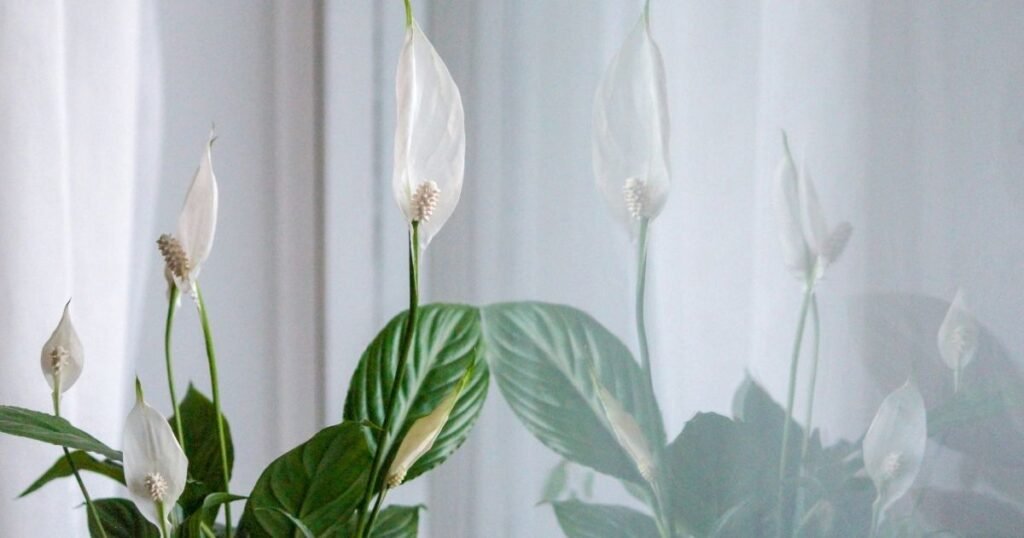
Can a peace lily live outside? Yes, all year in the warmest parts of the US, and for the summer almost anywhere else. UF/IFAS Extension says peace lilies can be planted outdoors year-round in USDA zones 10B to 12, as long as they get no direct sun. Everywhere colder, a peace lily can spend the warm months outside in the shade and come back in before nights turn cool.
It’s a tropical plant, and cold is what decides where it can live. Shade and steady moisture come next. Get those three right and a peace lily can grow far bigger outdoors than it ever will on a windowsill.
Where can a peace lily live outside all year?
A peace lily can live outside all year only where it never freezes. UF/IFAS’s Spathiphyllum care sheet puts outdoor year-round planting at USDA zones 10B to 12 and rates the plant as not freeze tolerant below 32°F. You can look up your own zone by ZIP code on the USDA Plant Hardiness Zone Map.
The sources don’t quite agree on where that line sits. NC State Extension lists peace lilies for zones 11 and 12 only, which leaves out zone 10B. If you garden near the border, treat a ground-planted peace lily as a gamble in a cold winter, or keep it in a pot you can move.
How cold is too cold for a peace lily?
A peace lily starts struggling well before frost. NC State says cold, drafty conditions of 40 to 60°F slow its growth considerably, and that long spells below 40°F can damage the leaves, stems and roots. UF/IFAS says active growth slows at or below 50°F, and that some cultivars can be injured at 35°F.
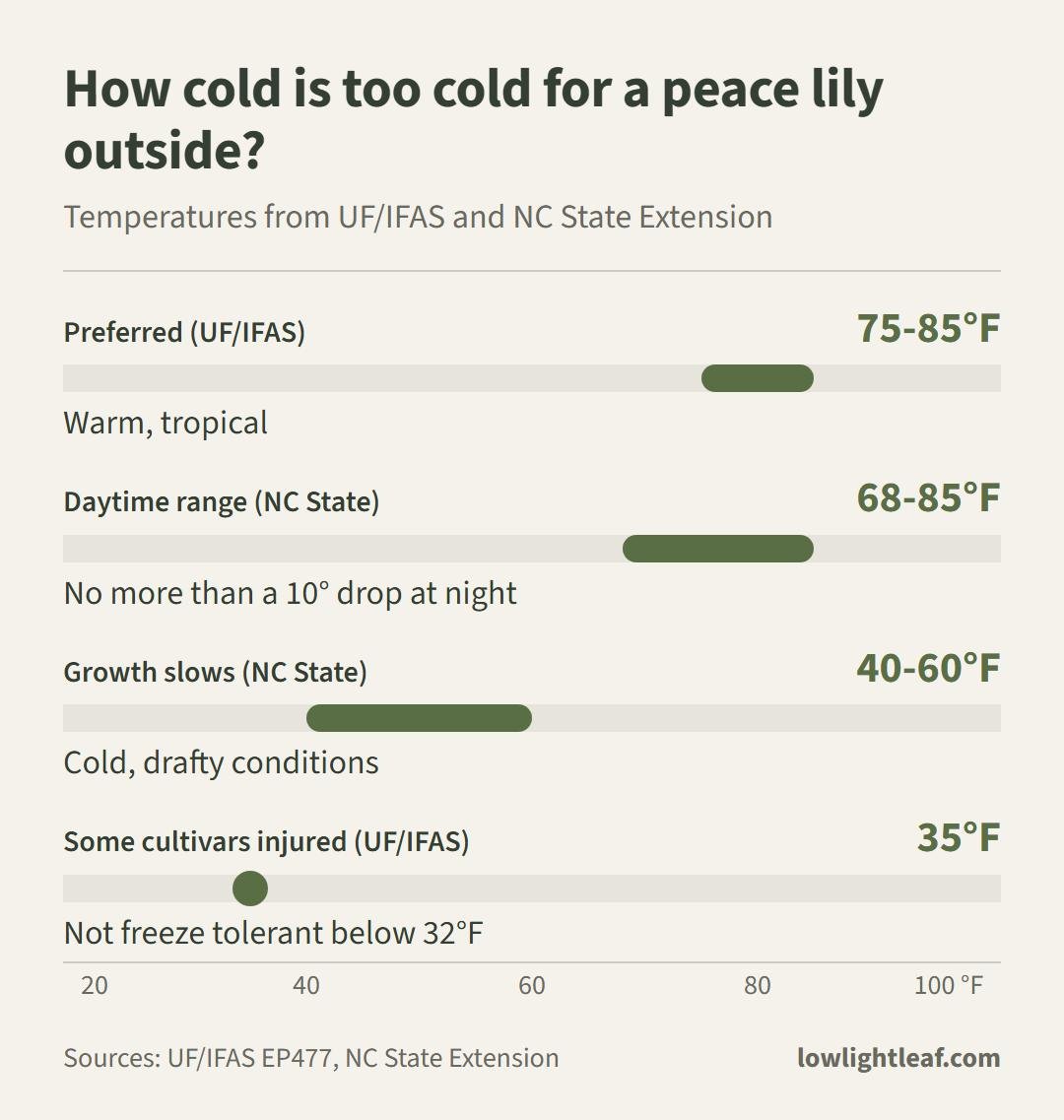
What it likes is warmth. UF/IFAS gives 75 to 85°F as its preferred range, and NC State gives 68 to 85°F by day with no more than a 10-degree drop at night.
Can peace lilies stay outside in the summer?
Peace lilies can stay outside in the summer in most of the country. UF/IFAS notes that the plant adapts well to home and patio environments. A covered porch or a patio on the north or east side of the house works well, since it keeps the plant out of direct sun.
Moving it out and back in is simple:
- Wait for warm nights. Put it out once nights stay comfortably above 60°F, where NC State says the slowdown ends.
- Start in full shade. Leaves grown indoors burn easily, and both UF/IFAS and NC State say no direct sun.
- Check the pot more often. Warm air and wind dry a pot faster than a living room does.
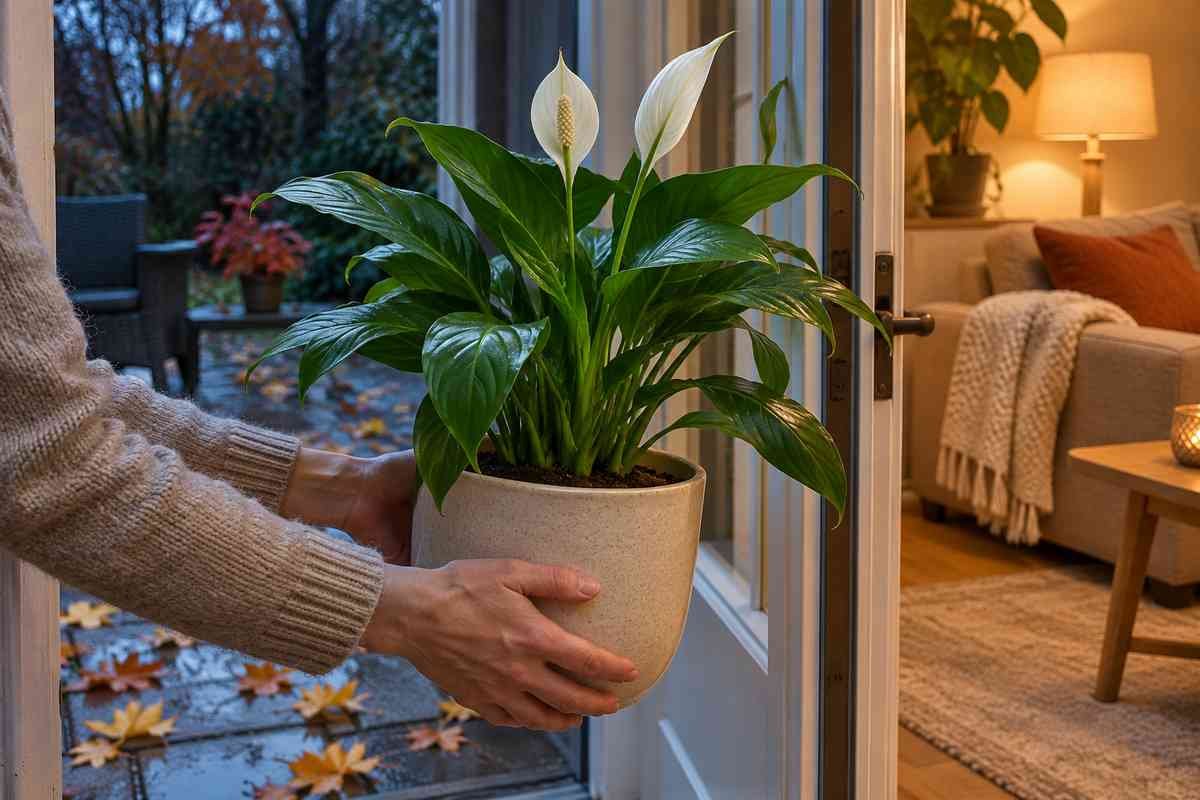
- Bring it in before it gets cold. Once nights start dipping toward 50°F, the point where UF/IFAS says growth slows, it’s time to move it back inside.
Our peace lily watering guide covers how to tell when a pot needs water, which matters more once it’s outside.
How much shade does a peace lily need outdoors?
A peace lily needs real shade outdoors. NC State says it prefers partial to deep shade and shouldn’t be placed in direct sun, and UF/IFAS lists its outdoor light need simply as no direct sun. Sun outdoors is far stronger than the light through a window, so a spot that seems bright but sheltered can still scorch it.
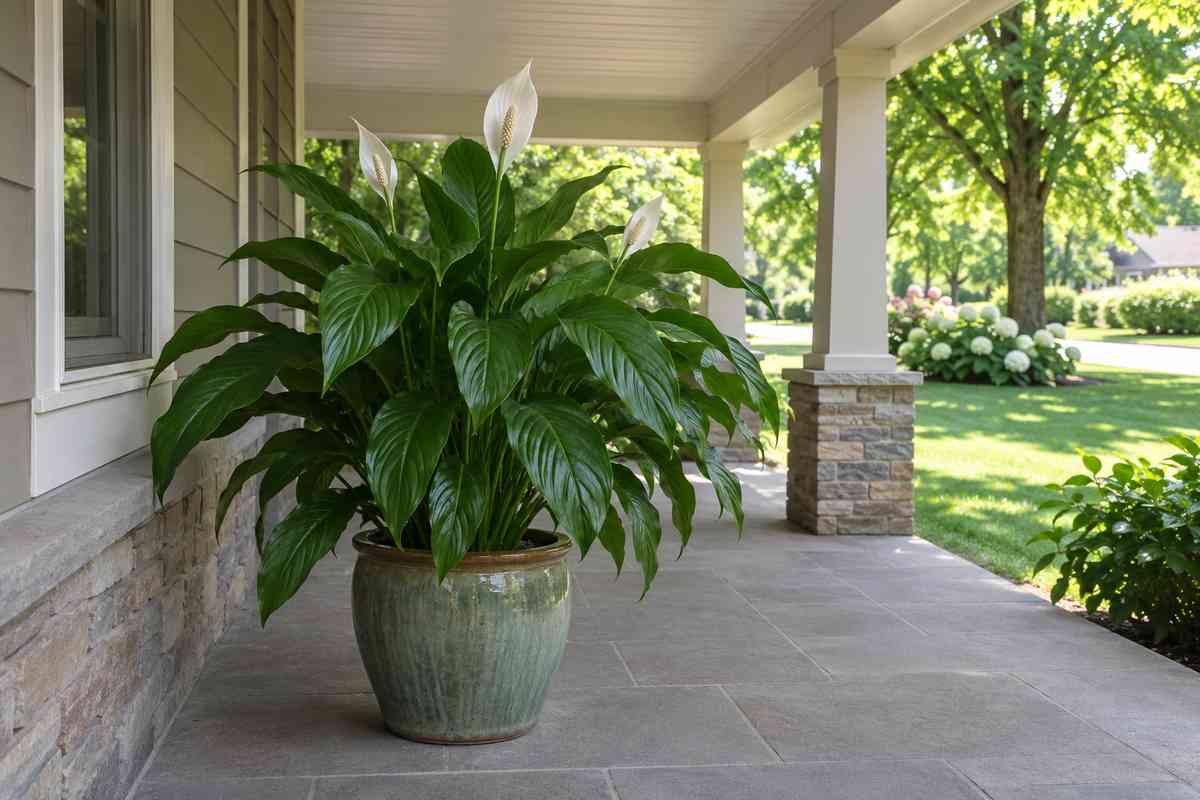
Look for a spot under trees, on the shady side of a building, or beneath a porch roof where you never see a sunbeam land on the leaves. My backyard is shaded.
Planting a peace lily outdoors in Florida
In South Florida, you can plant a peace lily straight into a bed. UF/IFAS recommends well-drained soil amended with organic matter, and NC State adds that it does best in soil high in organic matter with good drainage. UF/IFAS also rates it as not salt tolerant, which is worth knowing in a coastal yard.
Water is the part to plan for. UF/IFAS says to irrigate outdoor peace lilies regularly and keep them moist while still giving them drainage, and rates them only slightly drought tolerant. One Florida gardener on r/plantcare described the balance well:
“Mine only acts this way if it gets intense sunlight, Mine prefers to be outside in Florida heat but in the shade. And mine also wilts like this when I let the soil get too dry but perks back up one I water it.”
– r/plantcare, June 2026 (3 upvotes)
Many Florida yards water shade beds with the same in-ground sprinkler system as the lawn. UF/IFAS’s irrigation maintenance guide notes that different plants have different water needs. It also says heads get knocked out of line by feet and lawnmowers, that a tilted head throws more water to one side, and that clogged nozzles leave dry spots. Any of those can leave a peace lily bed dry while the grass beside it gets plenty.
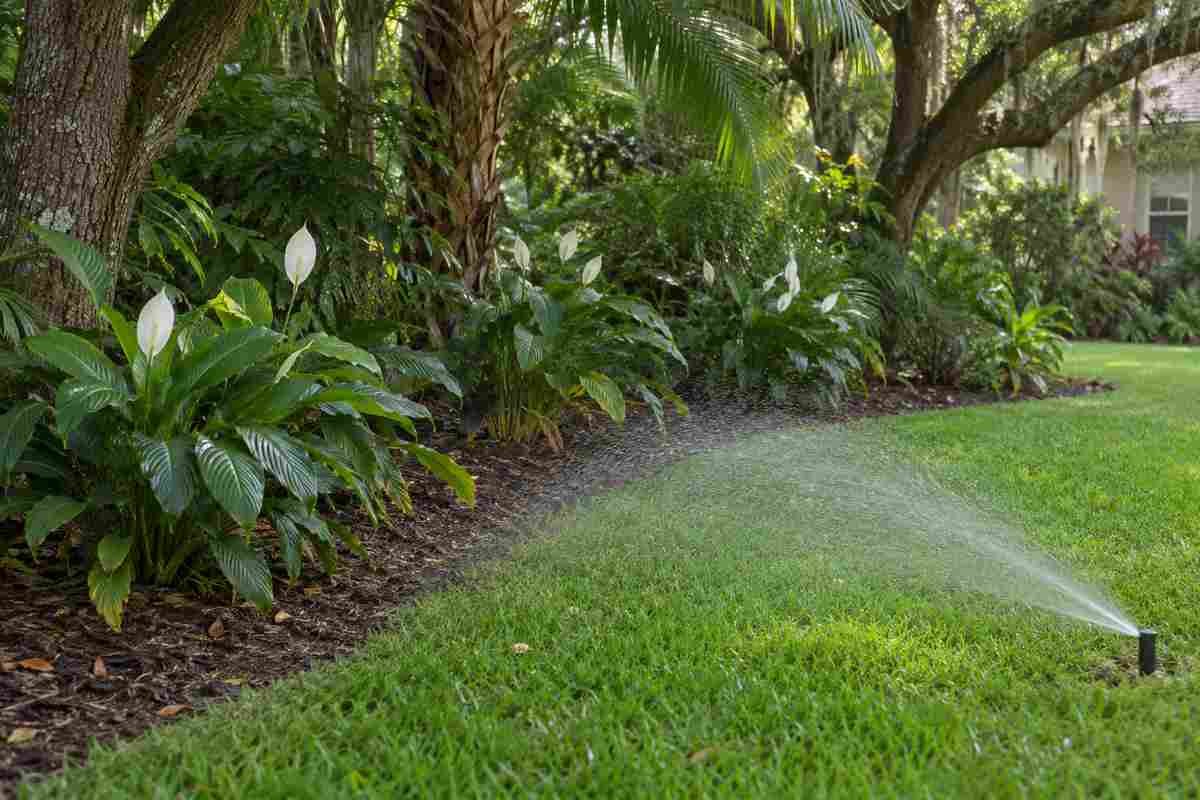
If one shady bed keeps wilting while the rest of the yard looks fine, watch that zone while it runs. Homeowners in southwest Florida who find a broken or misaligned head can book sprinkler repair in Englewood rather than hand-watering one bed all summer. UF/IFAS suggests testing the system when the clocks change in spring and fall, and adjusting the controller with the seasons.
For feeding, UF/IFAS recommends a balanced slow-release fertilizer during the warm growing season. Outdoors, it lists mites and scale as the pests to watch for.
How long can a peace lily live outside?
Where it never freezes, a peace lily planted outside can live for many years. Neither extension source gives a lifespan. On r/gardening, though, a South Florida poster shared a huge in-ground clump and estimated it was more than 20 years old from the age of their community.
“Given the age of my community I’d say this girl is 20+ years old.”
– r/gardening, April 2020 (from a post with 14 upvotes)
Farther north, the plant’s lifespan outside is one season. Bring it in each fall and the same plant can go back out the next summer.
Peace lilies, pets and the garden
Peace lilies are toxic to cats and dogs, inside or out. The ASPCA lists them as toxic because of insoluble calcium oxalate crystals, which irritate the mouth, so if your dog digs in the beds or your cat roams the patio, plant them where they won’t get chewed. My cat, Miso, is why I check the ASPCA list before any plant comes home.
If your winter nights dip toward 50°F, the pot comes back in. The plant won’t tell you in time; the thermometer will.

Ellie Marsh
Houseplant grower who spent years in a north-facing apartment. Writes practical care guides for low light homes, checked against extension and botanical garden sources.