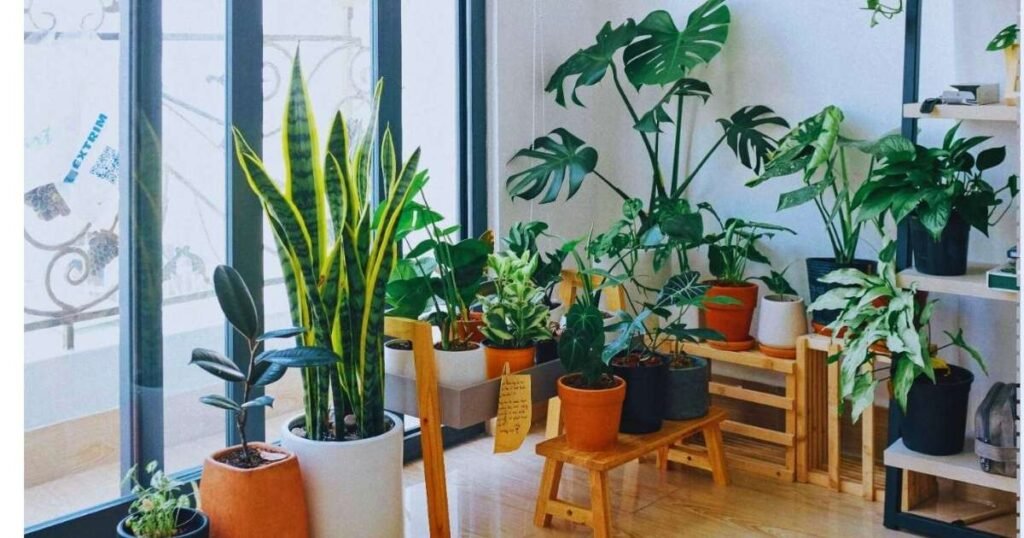
Syngonium, sold as the arrowhead plant, needs light that’s bright but never direct, soil that stays moist without turning soggy, and a warm, humid room, and that covers most of arrowhead plant care. NC State Extension calls Syngonium podophyllum low-maintenance, and warns that direct sun tends to burn or bleach its leaves. It can get by in lower light, though it grows thinner there.
The part that surprises most owners is how much the plant changes as it ages. Young arrowhead plants are bushy, older ones vine, and the leaves change shape along the way. You can let that happen or trim to keep the compact, arrow-leaved look you bought.
How much light does an arrowhead plant need?
An arrowhead plant does best in bright, indirect light. The Missouri Botanical Garden says it prefers bright indirect light and should be protected from direct sun, and NC State’s entry lists dappled sunlight to partial shade.
It tolerates less. University of Missouri Extension says arrowhead vine may be kept at a low light level but is denser at a medium level, and Illinois Extension rates it for medium light. So a dim corner keeps it alive but costs you fullness. In my north-facing apartment, a medium-light plant like this would have sat right in front of the glass. Our north-facing window plants guide maps how much light you get at different distances from that kind of window.
Watch the other direction too. Pale, washed-out or scorched patches on leaves in a sunny window match NC State’s warning that direct sun bleaches and burns the foliage.
Watering, the trickiest part of arrowhead plant care
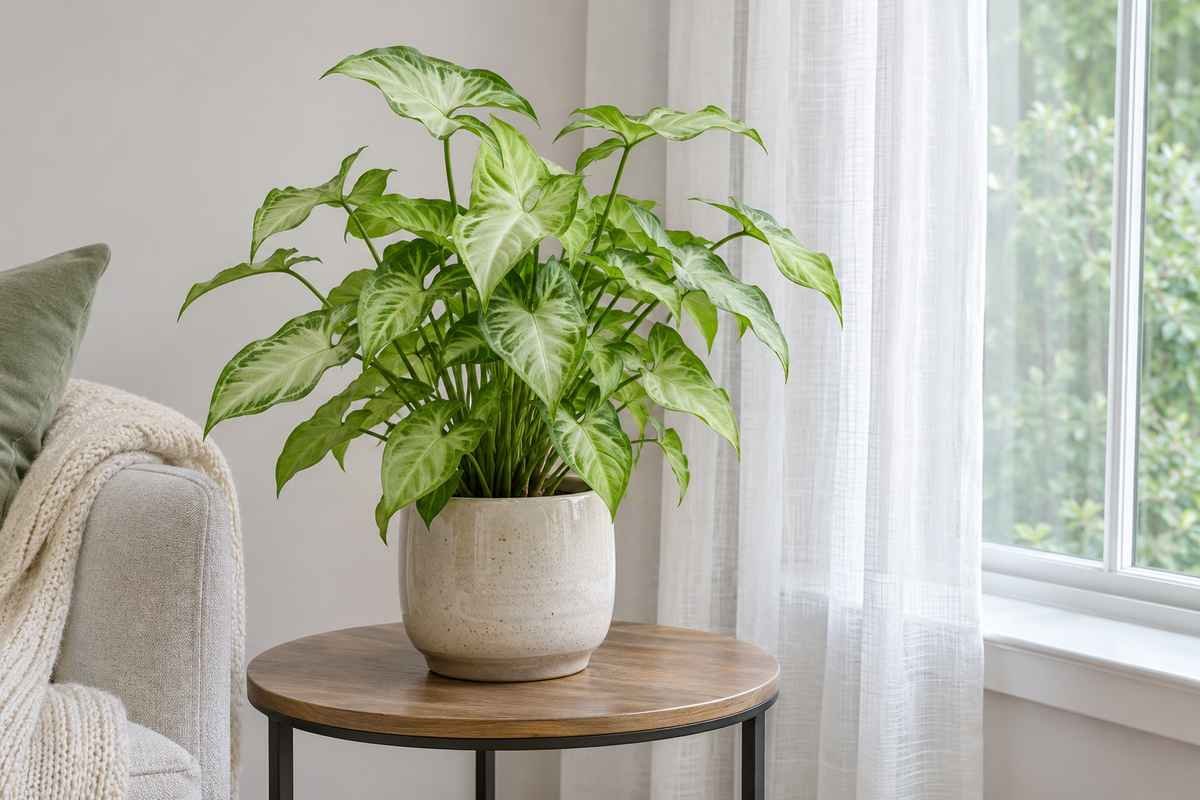
Water an arrowhead plant regularly while it’s growing, then cut back. The Missouri Botanical Garden advises watering regularly during the growing season and reducing watering from fall to late winter. NC State lists its soil preference as moist, not wet.
The winter cutback is where many arrowhead plants go wrong. One owner on r/houseplants was watering a few times a week and asked why the plant looked sad, and this reply went straight to the soil:
“She’s way too wet I think. Water only when the first couple inches of soil are bone dry. And yes more light.”
– r/houseplants, August 2026 (4 upvotes)
Letting the top of the mix dry before the next watering is that user’s rule, not a university figure, but it lines up with the “moist, not soggy” advice. Both NC State and the Missouri Botanical Garden list soft rot as a problem, and soggy soil is how it starts. If leaves are yellowing, our yellow leaves guide walks through the soil and root check.
Humidity, warmth and soil for arrowhead plants
Arrowhead plants like it warm and humid. NC State describes the ideal spot as a warm setting with high humidity, and the Missouri Botanical Garden suggests a humidified room or a tray of wet pebbles under the pot. Our guide to increasing humidity in your house compares the options, including what a pebble tray can and can’t do.
For soil, the Missouri Botanical Garden recommends a soil-based potting mix. NC State adds that repotting every few years and trimming the roots keeps the plant a manageable size.
Why is my arrowhead plant leggy?
An arrowhead plant gets leggy partly because it’s growing up. NC State says young plants have a shrubby habit, but as the plant ages it takes on a vine-like habit. Low light makes the stretch worse, but even a well-lit arrowhead will start to trail and climb in time.
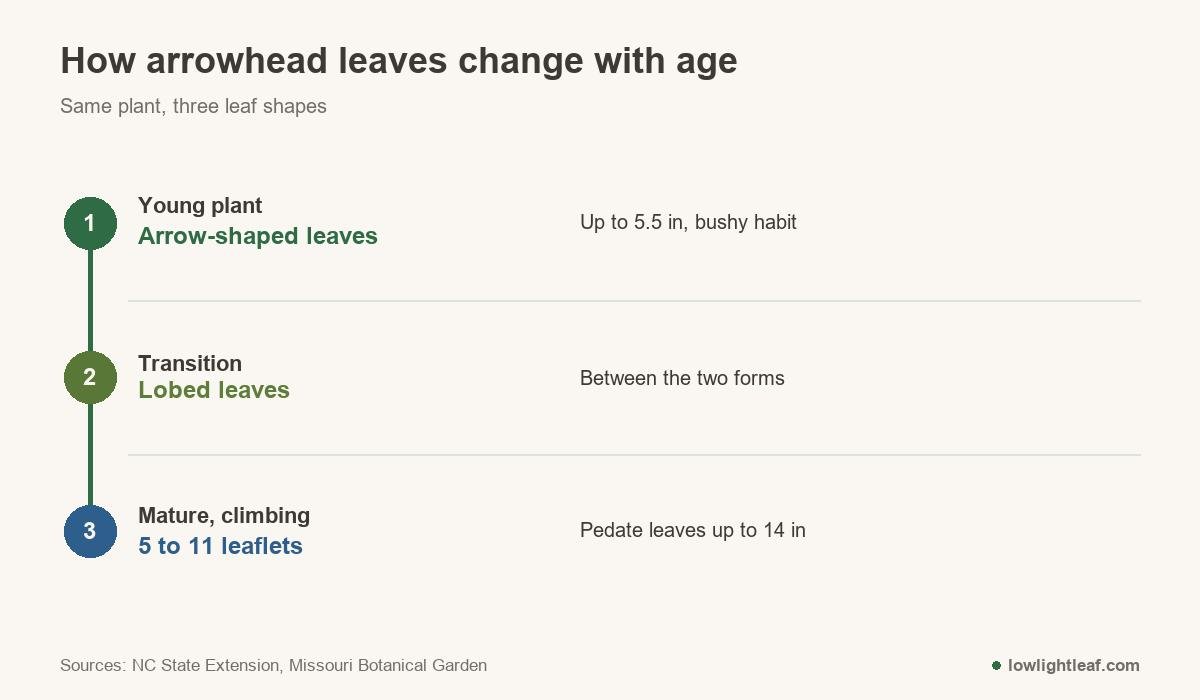
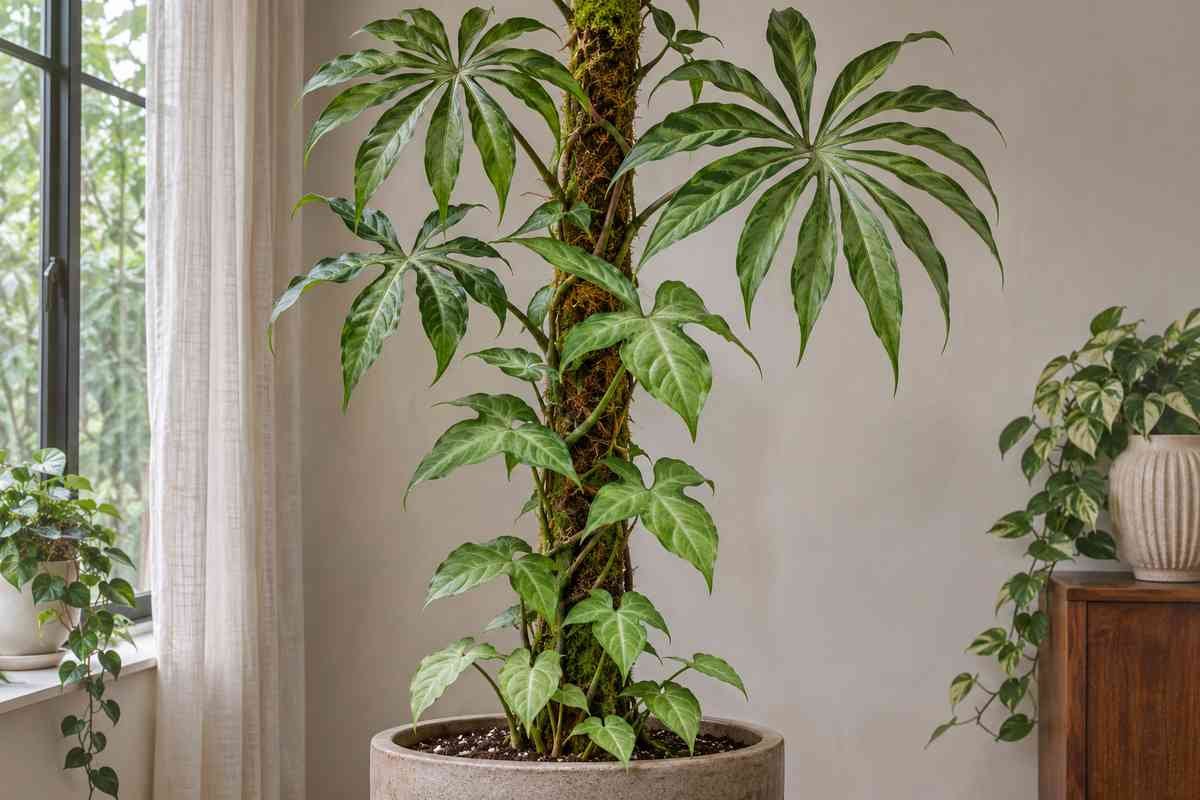
The leaves change too. NC State says arrowhead plants are usually sold in their juvenile form, with heart- or arrow-shaped leaves up to 5.5 inches long. Lobed leaves mark the transition. Allowed to climb, the plant eventually makes adult leaves split into 5 to 11 leaflets, which the Missouri Botanical Garden says can reach 14 inches. If your plant’s new leaves have started to look like a different species, that’s the reason.
Some owners just let it trail. As one r/IndoorPlants reply put it:
“Arrowhead plants are creepers in nature, they tend to be leggy by design. I really like keeping mine on the top of a high shelf and letting it vine down, in this way you will never have to worry about ties or propping the thing up. It probly has some mild shock from the replanting and should recover soon with some TLC.”
– r/IndoorPlants, January 2026 (2 upvotes)
You have three choices, and the sources back each one:
- Keep it bushy. NC State says to cut off the stems as they begin to develop if you want to keep the arrowhead leaves and a shrub-like habit.
- Let it climb. The Missouri Botanical Garden suggests a moss pole or trellis, which is how the larger adult leaves develop.
- Let it hang. Both sources list hanging baskets as a use.
If you like the vine look, the heartleaf philodendron is another trailing aroid that copes with similar light.
Propagating arrowhead plant cuttings
Arrowhead plants can be propagated by stem cuttings, division or layering, according to NC State. The stems you trim to keep the plant bushy are the obvious source of cuttings.
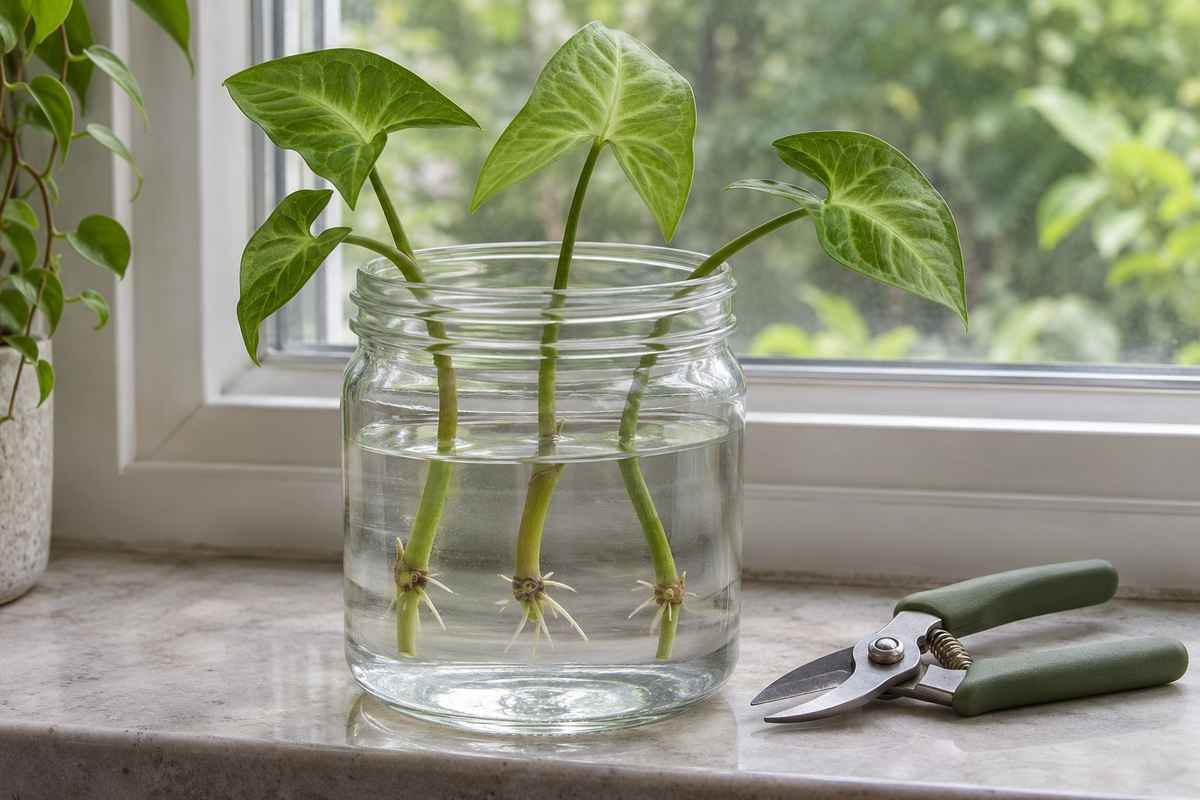
If you live in Florida, think about where the trimmings go. UF/IFAS’s assessment of non-native plants lists Syngonium podophyllum as invasive in the north, central and south zones of the state, so keep cuttings and old plants out of the yard and the compost pile.
Arrowhead plant pests and problems
The pests to watch for are mealybugs, aphids, scale and spider mites, per the Missouri Botanical Garden. Bacterial leaf spot and soft rot are the diseases both it and NC State mention.
Scale catches people out because it doesn’t look like an insect. When one r/houseplants user asked about white spots on the leaves and stems of a declining arrowhead plant, a reply with 6 upvotes identified it as scale. Check stems and the undersides of leaves on any new plant before it joins the others.
To bring a struggling arrowhead plant back, start with the two things above: soil that stays wet, and light that’s too dim or too direct. Then look for pests. Trim off rotted stems and repot into fresh soil-based mix if the roots are soft.
Is an arrowhead plant toxic to cats and dogs?
Yes. The ASPCA lists arrowhead vine, also sold as nephthytis, African evergreen and trileaf wonder, as toxic to cats and dogs because of insoluble calcium oxalates. NC State rates it medium severity, with mouth pain and swelling, drooling, vomiting and trouble swallowing, and notes that the sap can irritate skin.
My cat, Miso, is why I check the ASPCA list before a plant comes home, and this one would live on a high shelf, which suits a trailing plant anyway. The plant toxicity checker covers the rest of your collection, and the low light indoor plants list marks which dim-room plants are safe.
Bushy or vining is your choice to make. Left alone, an arrowhead plant will choose vining.

Ellie Marsh
Houseplant grower who spent years in a north-facing apartment. Writes practical care guides for low light homes, checked against extension and botanical garden sources.