Last updated on November 5, 2026
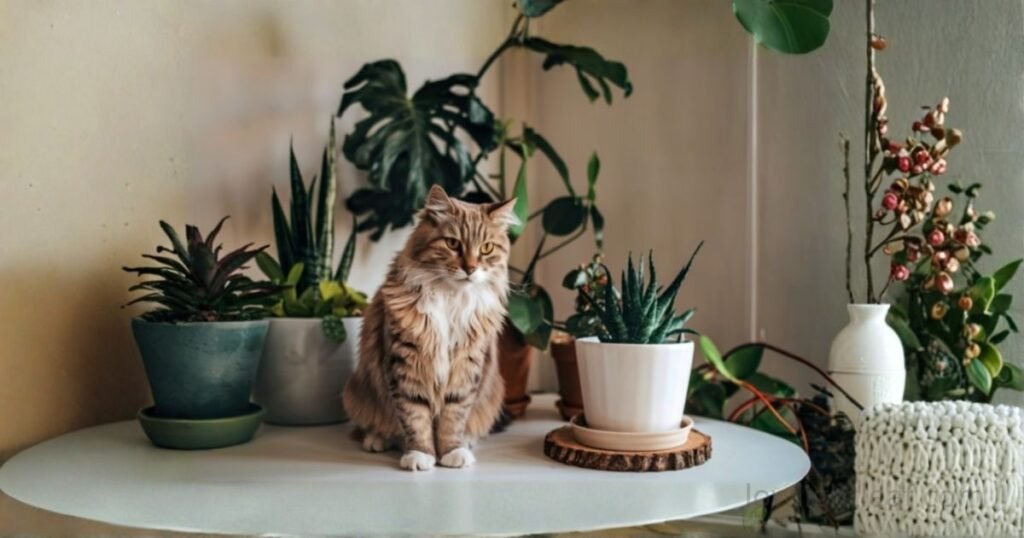
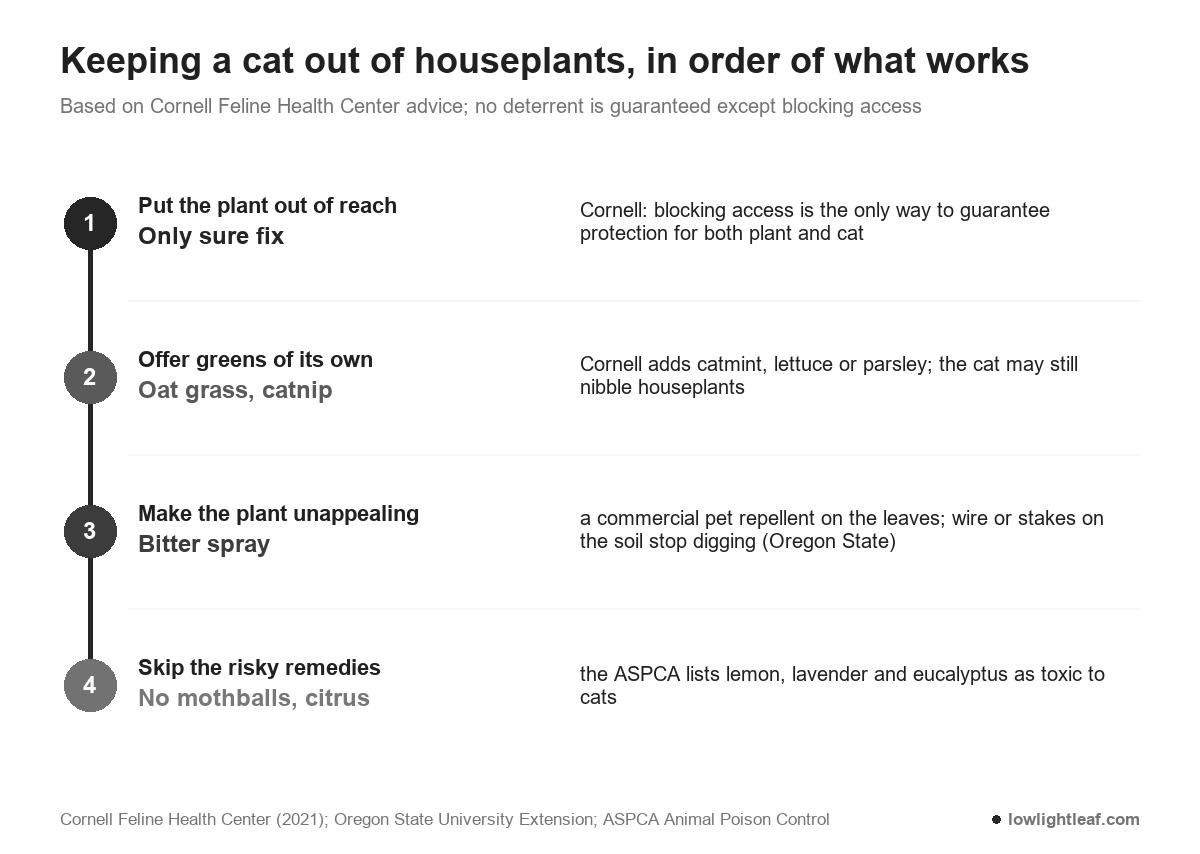
The only sure way to keep cats away from plants is to put the plants where the cat can’t get to them. The Cornell Feline Health Center says blocking access is the only way to guarantee protection for both the plant and the cat. Everything else, from cat grass to bitter sprays, lowers the odds without promising anything.
That matters most for plants that are toxic to cats. Some popular tips on how to keep cats away from plants, like citrus peels or “cat-repelling” lavender, use things the ASPCA lists as toxic to cats themselves.
Why does my cat eat my plants?
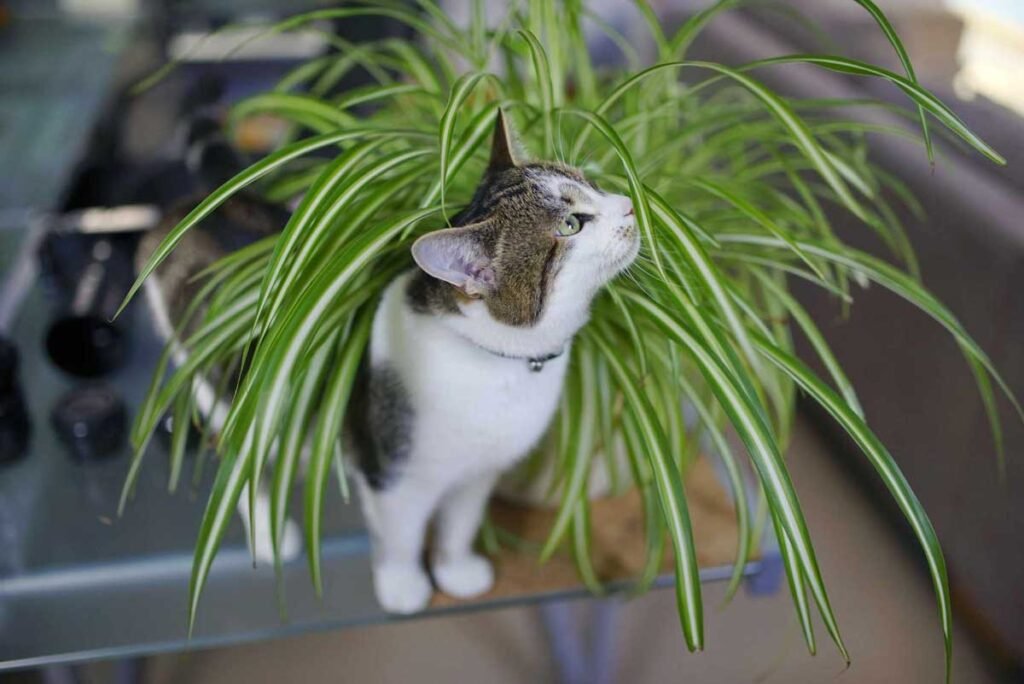
Cats eat plants because it’s normal cat behavior. They’re rarely sick first. A 2019 UC Davis survey of 1,021 cat owners found 71% of cats had been seen eating plants at least six times, and 91% of the regular plant eaters seemed normal beforehand.
The survey, by Benjamin Hart, Lynette Hart and Abigail Thigpen at the UC Davis School of Veterinary Medicine, also found young cats do it more. Among cats 3 or younger, 39% ate plants daily, against 27% of cats 4 and older. About 27% of the frequent plant eaters often vomited afterward, which the authors took as a sign that vomiting isn’t the point of it. Their explanation is an inherited habit from wild ancestors.
Cornell adds the indoor angle: cats that chew houseplants are usually indoor cats with little access to grass or other greens, and some do it as part of investigation and play. Digging is a related problem. A new cat owner on r/CatsAndPlants described both at once: a cat that was digging in the pots and munching the leaves.
How to keep cats away from plants: move them first
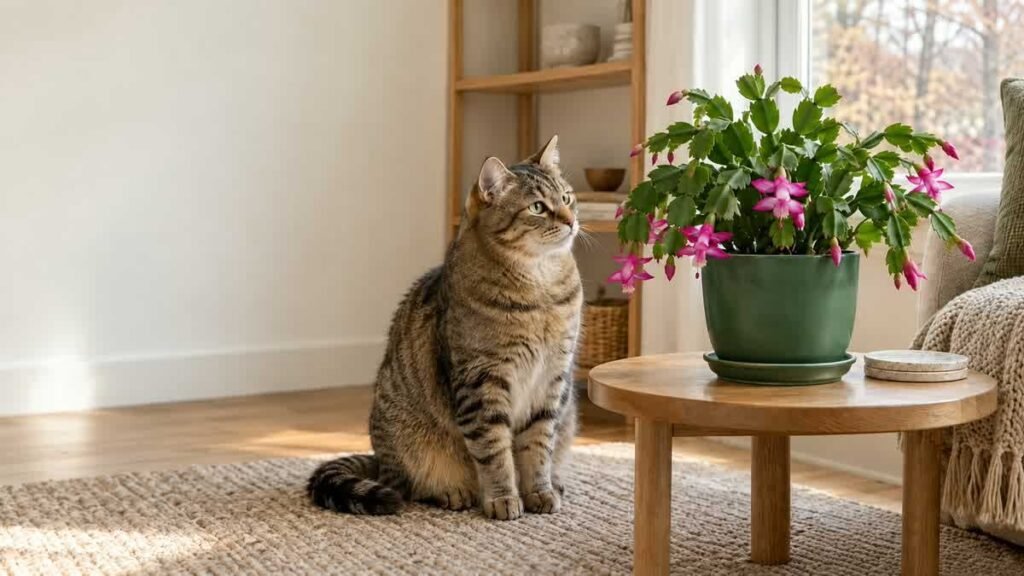
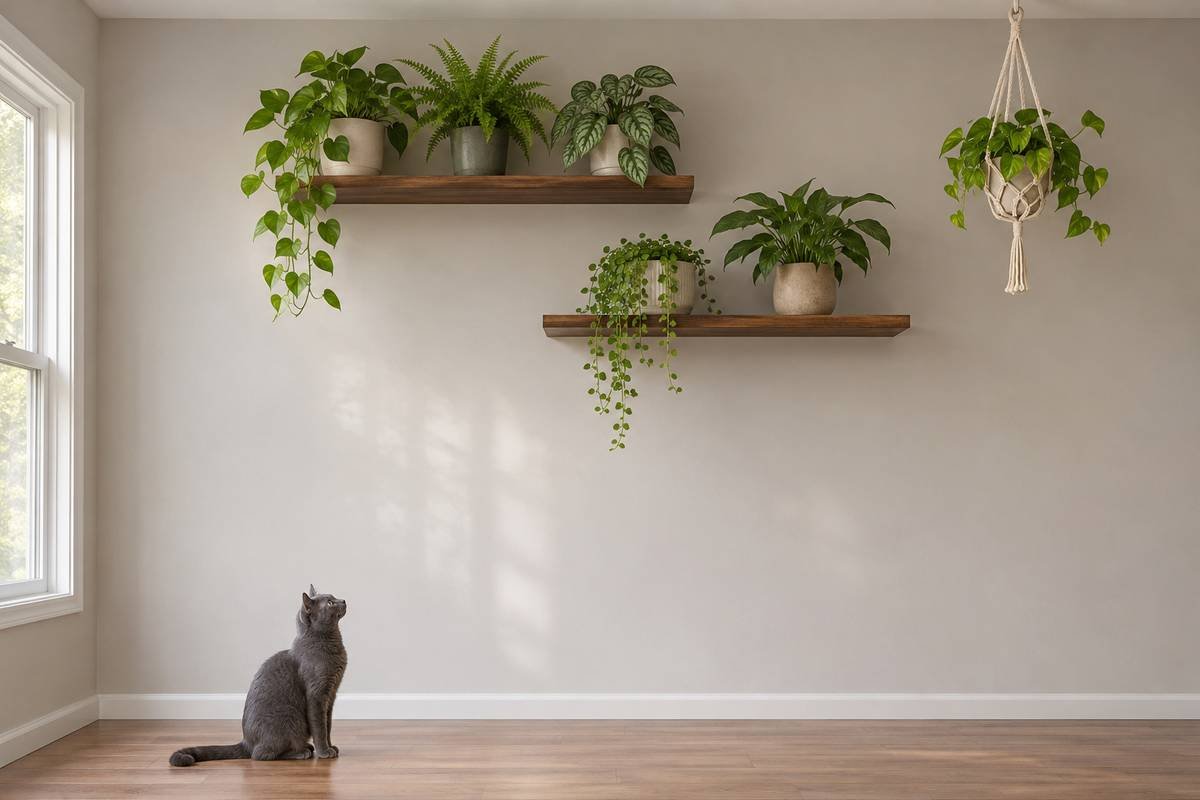
Moving the plant out of reach comes first because it’s the only sure fix, the one Cornell calls guaranteed. A high shelf with nothing nearby to jump from works, and so does a hanging planter or a room with a door that stays shut. The sofa arm counts as a launch pad.
Plenty of cat owners have given up on the rest. On r/houseplants, under a post from someone whose cat kept chewing their palms, this reply got 48 upvotes:
“Good question! I keep mine from eating houseplants by not having any. I actually believe it’s impossible otherwise.”
– r/houseplants (48 upvotes)
I don’t think it has to. Miso is an indoor cat, so I sort plants into two groups: anything on the ASPCA toxic list stays where she can’t reach it or doesn’t come home, and the rest can sit at floor level. A shelf that’s only “probably” out of reach is fine for a spider plant and not fine for a lily.
Give your cat greens of its own
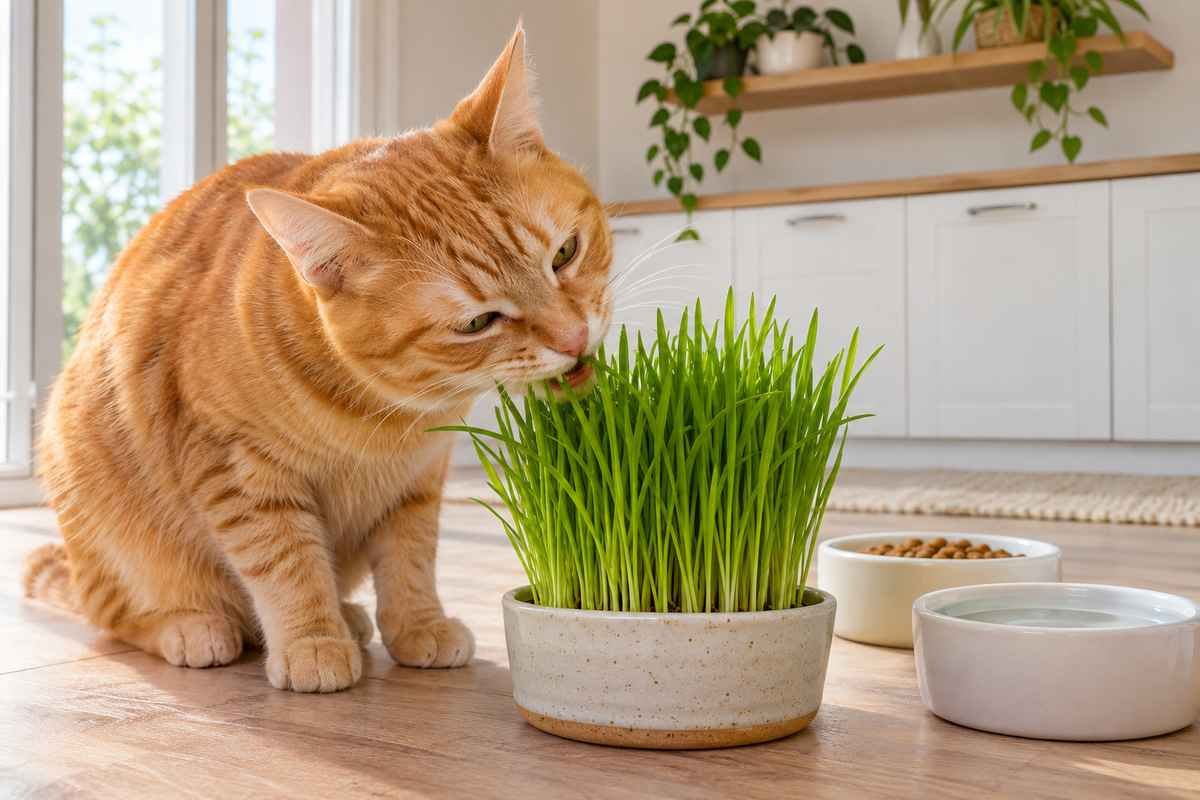
Cornell suggests oat grass, catnip and catmint for cats that crave greens, plus lettuce or parsley in the food bowl or a higher-fiber cat food. The same handout is honest that the cat “may still continue to snack on houseplants,” so treat cat grass as a distraction, not a barrier.
Put the cat’s pot somewhere easy to reach. Keep it away from your own plants, so the allowed option and the off-limits one never sit side by side on the same windowsill.
Which deterrents are safe to use?
A bitter-tasting commercial pet repellent sprayed on the leaves is the safest deterrent Cornell lists. It also suggests a “tower of cups” around the pot that startles the cat when it starts chewing, and water sprayed on the leaves with cayenne pepper sprinkled on top.
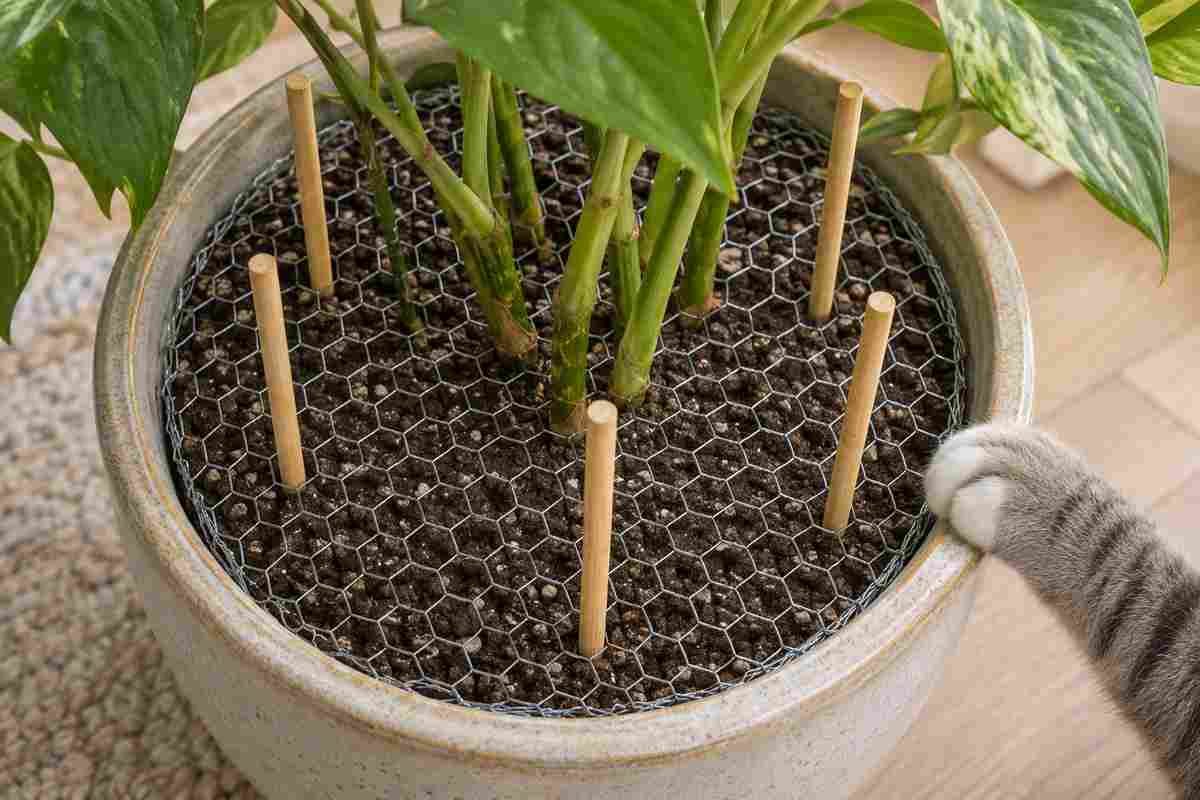
For a cat that digs rather than chews, garden advice scales down to a pot. Oregon State University Extension suggests chicken wire or netting laid on the soil, or thin bamboo stakes pushed in among the plants, so scratching gets an unpleasant surprise. The same article notes there’s no scientific evidence behind scent repellents, and they have to be reapplied often.
Several common tips are worth skipping:
- Mothballs. Cornell’s older handout mentions mothball odor in the soil, but the ASPCA Animal Poison Control Center has reported vomiting, lethargy and seizures from naphthalene mothballs. No mothballs, citrus or oils belong in a pot a cat can reach.
- Citrus peels. The ASPCA’s lemon entry lists it as toxic to cats and says the skins and plant material can cause problems. Pet Poison Helpline also names citrus oil among the essential oils known to poison cats.
- “Cat-repelling” plants. Oregon State calls the idea that cats dislike lavender, rue and lemon thyme anecdotal. The ASPCA lists lavender and eucalyptus as toxic to cats, so planting them next to a chewer swaps one problem for another. There’s more on whether lavender is safe for cats.
Coffee grounds come up as a home remedy too. I couldn’t find a veterinary or extension source that tested them on cats, so I’d leave them out of the plan.
Plants that shouldn’t stay in a cat home
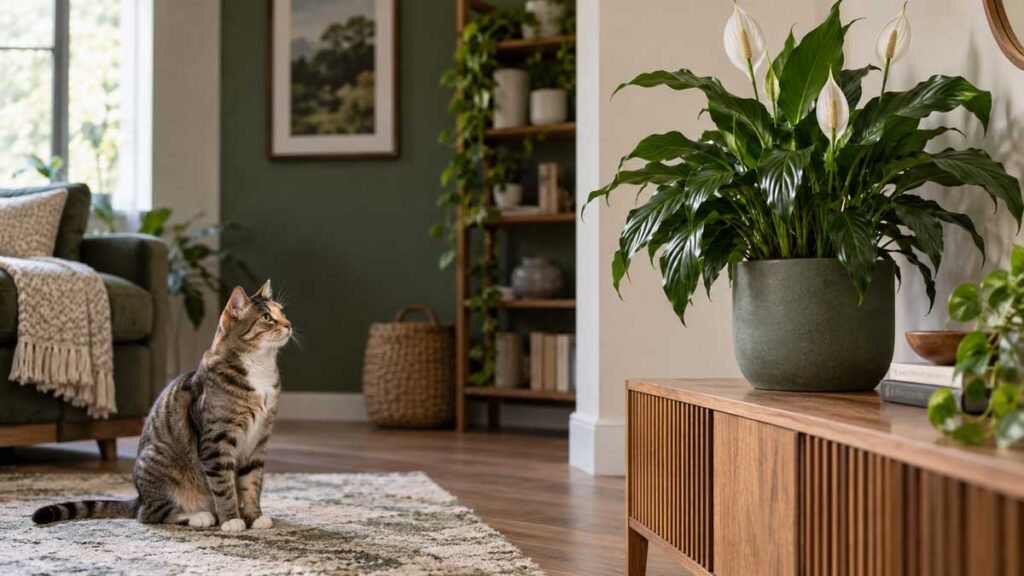
Some plants are too risky for any deterrent. Cornell’s handout singles out caladium, dumb cane (Dieffenbachia), English ivy, lilies, mistletoe, oleander, philodendron and poinsettia, and warns that the list is incomplete.
An r/CatAdvice reply puts the same idea more bluntly:
“The ASPCA has a very comprehensive list of what plants are toxic and how toxic they are. Anything that could potentially kill your cat should be given to someone else or thrown out, period, end of story. There’s no guaranteed way to keep cats away from plants 100% of the time, even if they’re in a cat free room, cats are sneaky and fast and it’s not worth the risk.”
– r/CatAdvice, March 2026 (10 upvotes)
The plant toxicity checker looks up what you already own, and the list of pet friendly indoor plants has replacements the ASPCA rates as non-toxic. Spider plants are one, and the page on spider plants and cats has the ASPCA’s verdict and the details.
If a lily or anything else on Cornell’s list is within reach, rehoming that one plant does more than any spray. When those same pots move to a shaded patio for summer, a calm yard edge helps as much as indoor deterrents — start with a slow shade-first outdoor acclimation so soft new leaves are not crushed or bleached.

Ellie Marsh
Houseplant grower who spent years in a north-facing apartment. Writes practical care guides for low light homes, checked against extension and botanical garden sources.