Lavender is not safe for cats. The ASPCA lists common lavender (Lavandula angustifolia) as toxic to cats, dogs and horses because of two compounds, linalool and linalyl acetate. How much harm it does depends on the form: a chewed plant usually means an upset stomach, while concentrated essential oil is the form Pet Poison Helpline links to tremors, breathing trouble and liver failure.
Is lavender safe for cats in small amounts, then? The ASPCA entry makes no exception for dose, and that is the line I go by with Miso, my indoor cat. What does change with the form is how bad an exposure is likely to be. A pot on the sill, a sachet in a drawer, a diffuser and a lotion on your hands are four different situations.
Is lavender toxic to cats?
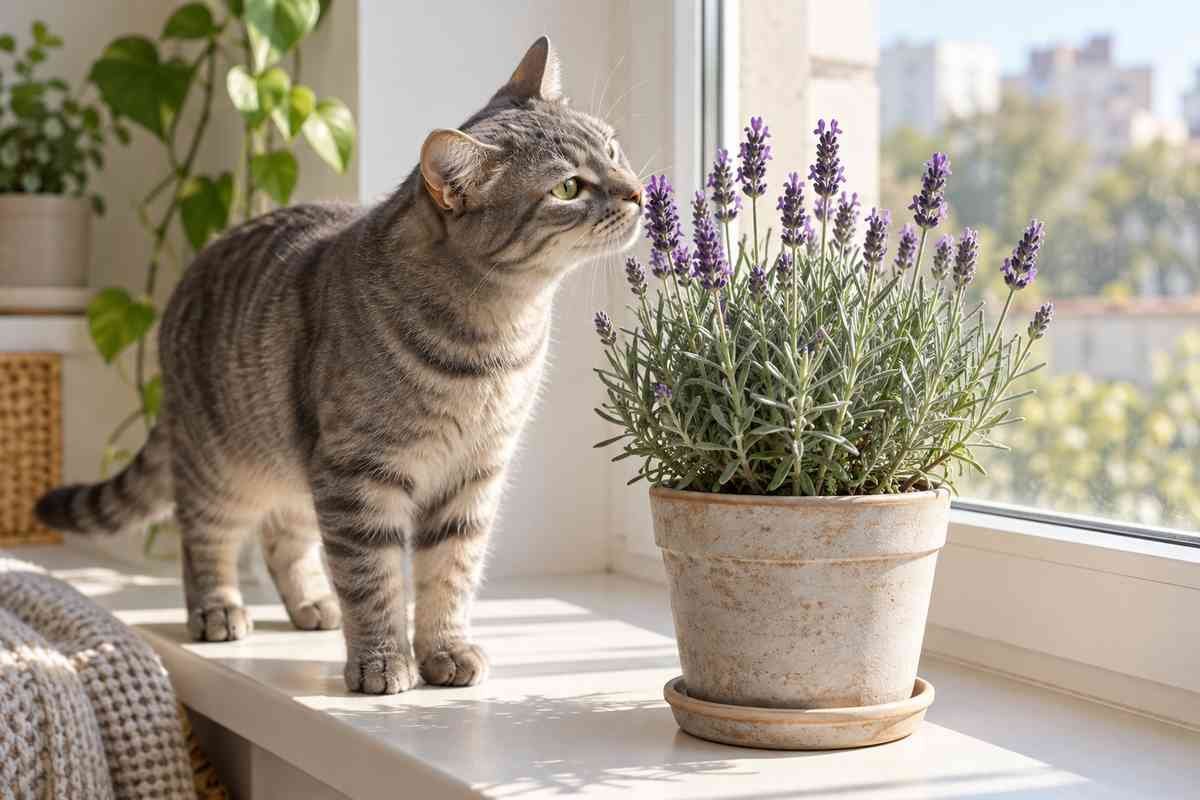
Lavender is toxic to cats. The ASPCA’s lavender entry names linalool and linalyl acetate as its toxic principles, and the signs it lists are nausea, vomiting and a cat that won’t eat.
Those are stomach-level signs, and they describe the plant. NC State Extension’s plant toolbox rates lavender’s poison severity as low and flags it as a problem for cats, dogs and horses.
Tremors, wobbling, breathing trouble and liver failure belong to a different form. Pet Poison Helpline’s page on essential oils and cats, written by veterinarian Kia Benson, lists those signs for concentrated oils, which cats absorb quickly through the mouth and skin and then struggle to clear because their liver lacks an enzyme that helps eliminate them. The helpline adds that the higher the concentration, the greater the risk, and a 100% oil is the top of that scale.
Lavender risk by form, from the plant to the oil
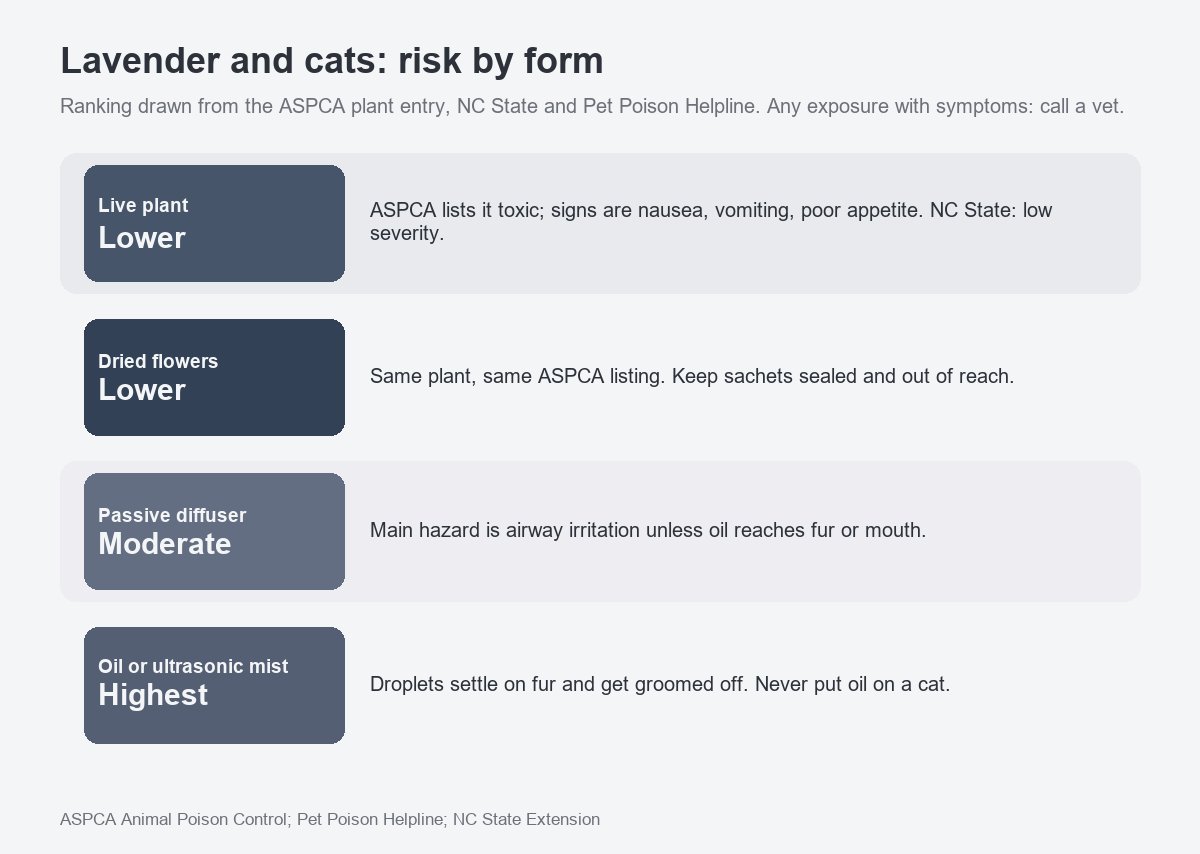
Sorted by how concentrated the lavender is, here is how I would rank the forms most homes have. The order is my reading of the ASPCA, NC State and Pet Poison Helpline pages taken together, not a scale any of them publishes.
- Live plant: lower risk. It sits on the ASPCA toxic list with nausea, vomiting and poor appetite as the signs, and NC State calls the severity low. If your cat chews it, call your vet or the ASPCA line, which is the ASPCA’s own advice for any suspected ingestion.
- Dried flowers and sachets: lower risk, not exempt. The ASPCA entry covers the plant without carving out dried flowers, so a sachet a cat can tear open is the same plant in a smaller package. Keep sachets sealed and inside drawers.
- Candles, room sprays and passive diffusers: moderate. Pet Poison Helpline says the main hazard from passive diffusers, meaning reed sticks, plug-in or candle warmers and fan models, is irritation of the airways, unless the oil spills onto the cat or gets swallowed.
- Essential oil and ultrasonic or nebulizing diffusers: highest. These active diffusers send microdroplets of oil into the air, which can settle on fur and be licked off during grooming. The helpline’s firmest line is that concentrated essential oils should never be applied to a cat.
One detail cuts the other way. Pet Poison Helpline’s list of oils known to poison cats names wintergreen, sweet birch, citrus, pine, ylang ylang, peppermint, cinnamon, pennyroyal, clove, eucalyptus and tea tree, and lavender is not on it. I wouldn’t read that as a clearance. The same page says cats have trouble clearing essential oils in general, and the plant those oils are distilled from is on the ASPCA toxic list.
Is lavender safe for cats to smell?
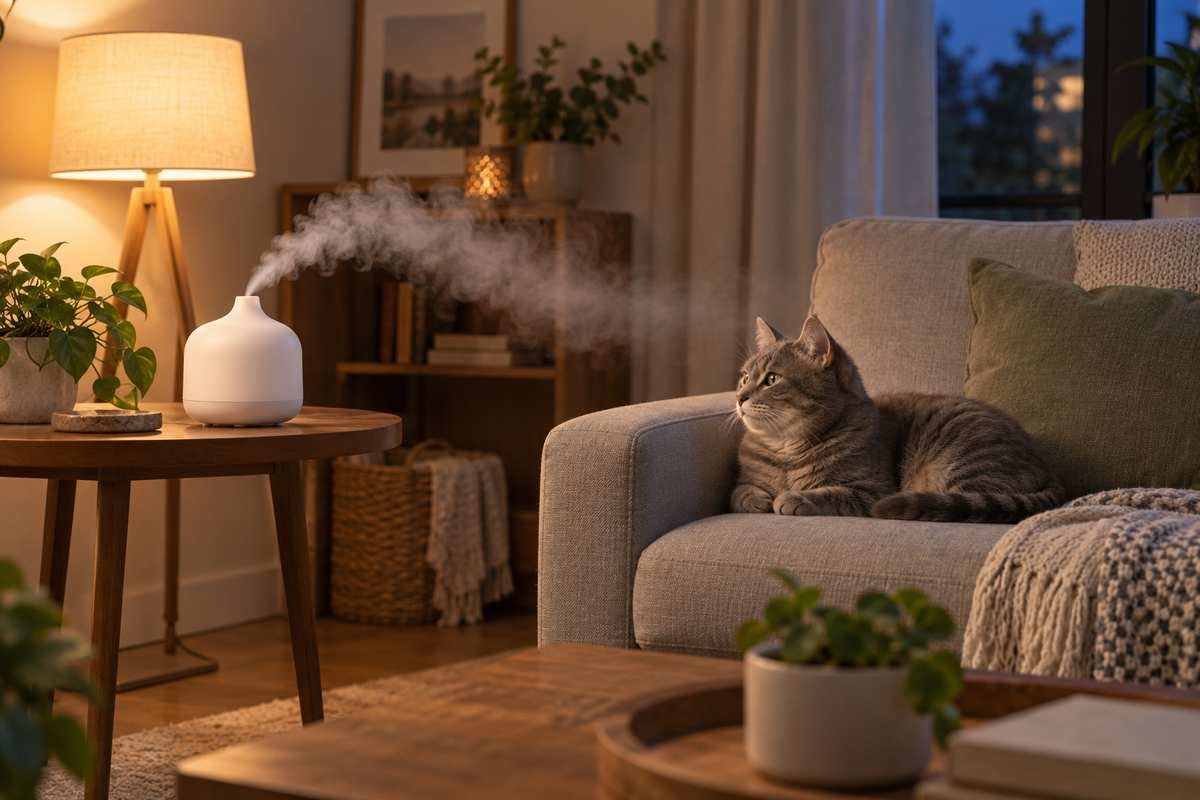
Smelling lavender is mostly an airway problem for cats, unless the oil itself lands on them. Pet Poison Helpline says strong scents can give a cat a watery nose or eyes, a burning nose and throat, nausea, drooling and difficulty breathing.
Difficulty breathing in a cat looks like labored or fast breathing, panting, coughing or wheezing, and the helpline stresses that none of these are normal. The cough is the easy one to miss. A cat that crouches low to the ground with little movement of the belly, and brings nothing up, is more likely coughing than working on a hairball.
If you see that, the helpline’s advice is to move the cat into fresh air right away and get emergency veterinary care if the signs don’t settle quickly. Cats with asthma or airborne allergies, or cats that breathe secondhand smoke, are at greater risk of a severe reaction. In a home like that, I would leave lavender diffusers out entirely.
The kind of diffuser matters too. Reed diffusers, plug-in warmers and fan diffusers release scent by evaporation. Ultrasonic and nebulizing diffusers emit tiny droplets of oil, and Pet Poison Helpline says those can collect on the fur of a cat in the same room, depending on how close it sits.
Lavender litter, lotion and other scented products
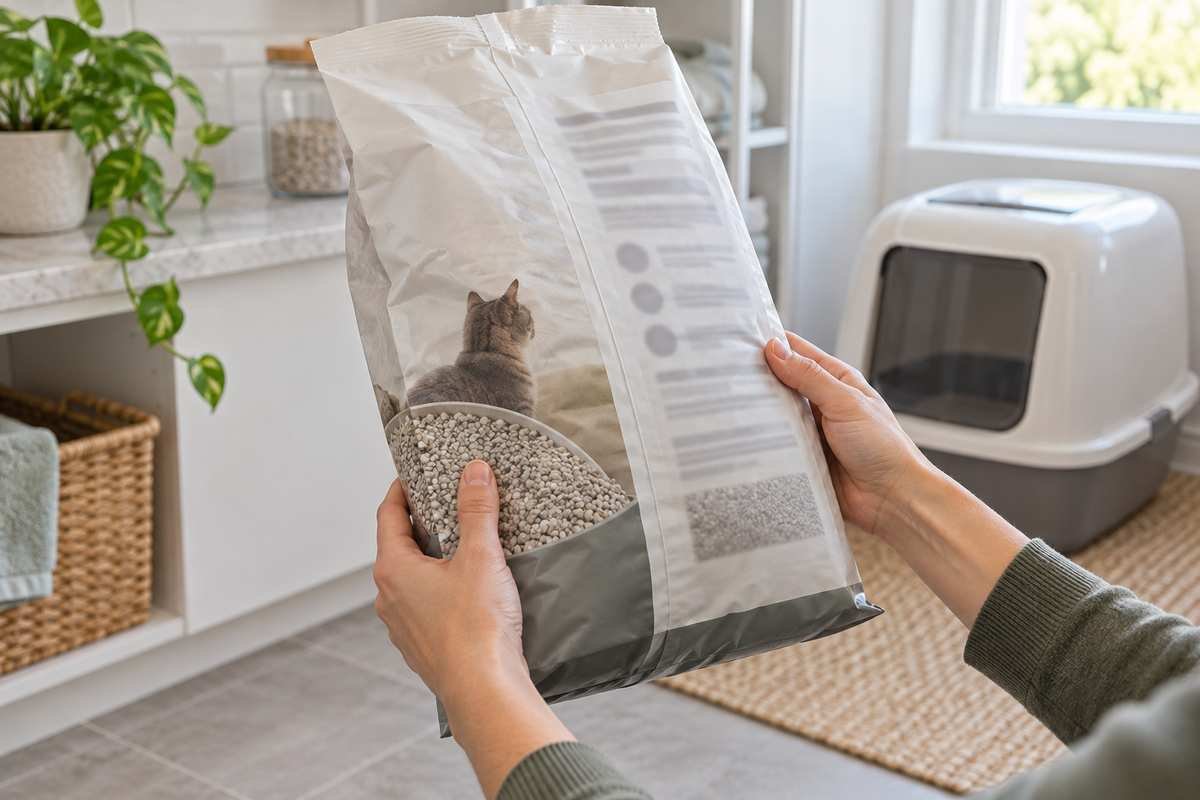
Scented household products are where most cats meet lavender, and the label is the only guide to what’s inside. A post on r/cats showing lavender-scented litter, captioned “Wtf!! I thought lavender was toxic to cats?”, drew this top reply:
“I doubt there’s real lavender in any of these. But I buy unscented litter anyway.”
– r/cats, May 2026 (339 upvotes)
The doubt is reasonable, because a lavender scent on the bag doesn’t tell you how much lavender, if any, is inside. When the ingredients name lavender oil or essential oil, keep the product away from the litter box, the bedding and anywhere your cat lies down and then grooms. When they only say “fragrance,” unscented is the simpler choice, and it is the one that commenter made.
Lotions are a similar case. One owner on r/CatAdvice asked about a night moisturizer containing 5% lavender, and a reply passed on that commenter’s own vet’s advice: let it absorb for five to ten minutes and don’t let the cat lick it off. That is one vet’s view, relayed secondhand. It fits the helpline’s point that oils get in through the mouth and skin, which makes your cat licking your hands the part to avoid.
What to do if your cat ate lavender or licked the oil
If your cat ate lavender or licked lavender oil, call your vet or the ASPCA poison line whatever the form, and call sooner for oil, which cats absorb fastest. Here is the order to work in:
- Move your cat away from the source, and into fresh air if it is coughing or breathing hard.
- Work out what it got into (the plant, dried flowers, a scented product or essential oil) and roughly how much. Keep the bottle or packaging for the vet.
- Call your vet or the ASPCA Animal Poison Control Center at (888) 426-4435. The ASPCA notes that a consultation fee may apply.
- Watch for the signs that match the form: vomiting or refusing food after the plant; drooling, wobbling, tremors or breathing trouble after oil, which are the signs Pet Poison Helpline lists for essential oils.
An oil exposure is worth that call even when your cat seems fine, because the helpline says essential oils are absorbed quickly by mouth and through the skin.
Is lavender safe for dogs?
Lavender isn’t safe for dogs either. The ASPCA lists it as toxic to dogs as well as cats and horses, with the same signs of nausea, vomiting and loss of appetite, though horses don’t vomit.
Lavender and cats FAQ
Is lavender safe for cats if it’s dried?
Dried lavender is not on any safe list for cats, because the ASPCA lists the lavender plant as toxic without exempting dried flowers. The risk is lower than with essential oil, so keep sachets sealed and out of reach, and call a vet if your cat eats the contents.
Can I grow lavender if I have a cat?
You can grow lavender where your cat can’t get to it, such as a garden bed for an indoor cat. NC State says it needs full sun and perfectly drained soil on the dry side, so it makes a poor houseplant anyway; in the north-facing apartment I lived in for years, it would never have had the light.
What plants are safe for cats instead?
Spider plants, parlor palms, prayer plants and Boston ferns are all on the ASPCA’s non-toxic list for cats. Even a non-toxic plant can make a cat vomit if it eats enough, as are spider plants toxic to cats explains, and pet-friendly indoor plants has a longer list. For anything else, the plant toxicity checker looks up the ASPCA listing for cats and dogs.

Ellie Marsh
Houseplant grower who spent years in a north-facing apartment. Writes practical care guides for low light homes, checked against extension and botanical garden sources.