Last updated on November 5, 2026
Yes. The ASPCA lists every eucalyptus species as toxic to cats, dogs and horses because of eucalyptol, the essential oil in the leaves, and names salivation, vomiting, diarrhea, depression and weakness as the signs. How much trouble a cat gets into depends on the form: a chewed leaf usually means an upset stomach, while concentrated oil is the real emergency.
So is eucalyptus toxic to cats in a bouquet, a shower bundle, a candle or a diffuser? Each one is a different exposure, and the veterinary sources rate them differently.
Why is eucalyptus toxic to cats?
Eucalyptus is toxic to cats because of eucalyptol, the fragrant oil that gives the leaves their smell. The ASPCA plant entry names it as the toxic principle, and cats handle essential oils worse than dogs or people do.
The reason is in the liver. The Merck Veterinary Manual explains that cats are deficient in glucuronyl transferase, an enzyme other animals use to break these compounds down, so the oil lingers. Cats also groom. Any oil that lands on the coat ends up swallowed.
Is eucalyptus toxic to cats in every form?
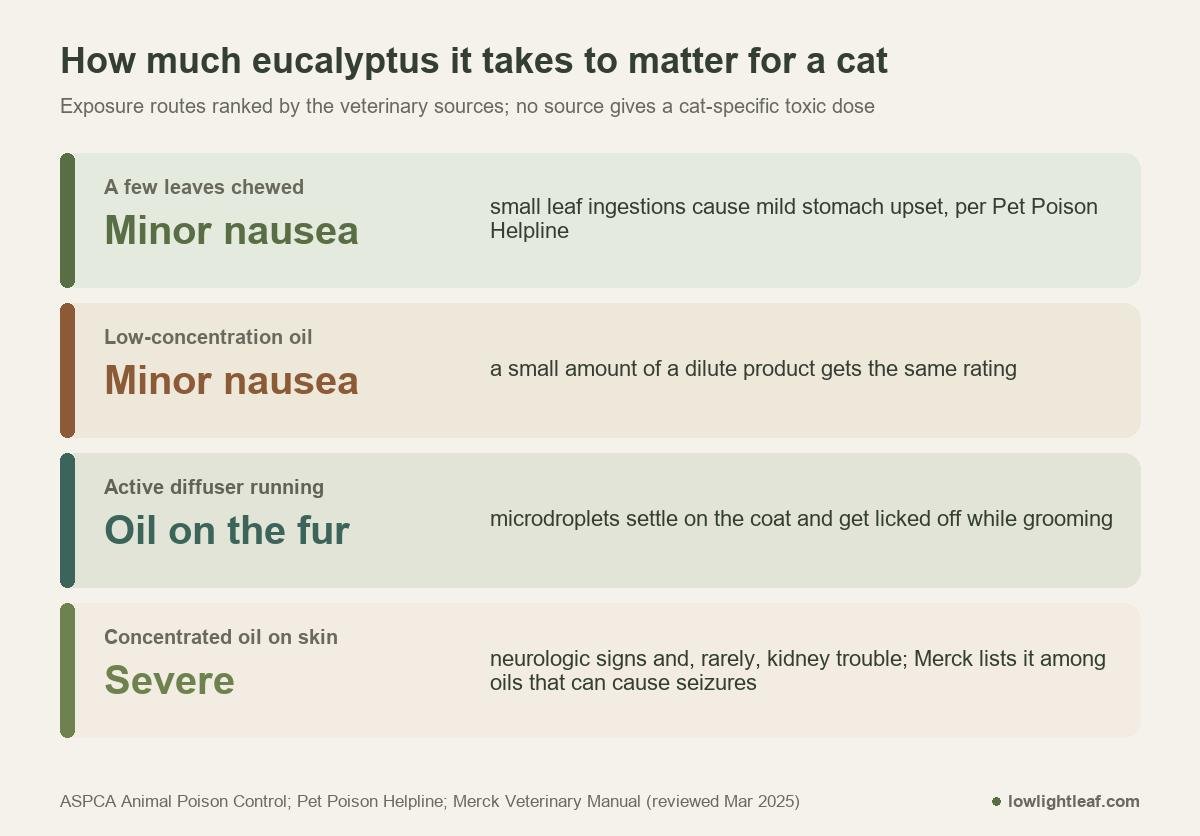
Eucalyptus is toxic to cats in every form, but the dose changes everything. Pet Poison Helpline says a few chewed leaves or a small amount of low-concentration oil cause minor nausea, while highly concentrated oil swallowed or on the skin can cause severe signs, including neurologic problems and, rarely, kidney impairment.
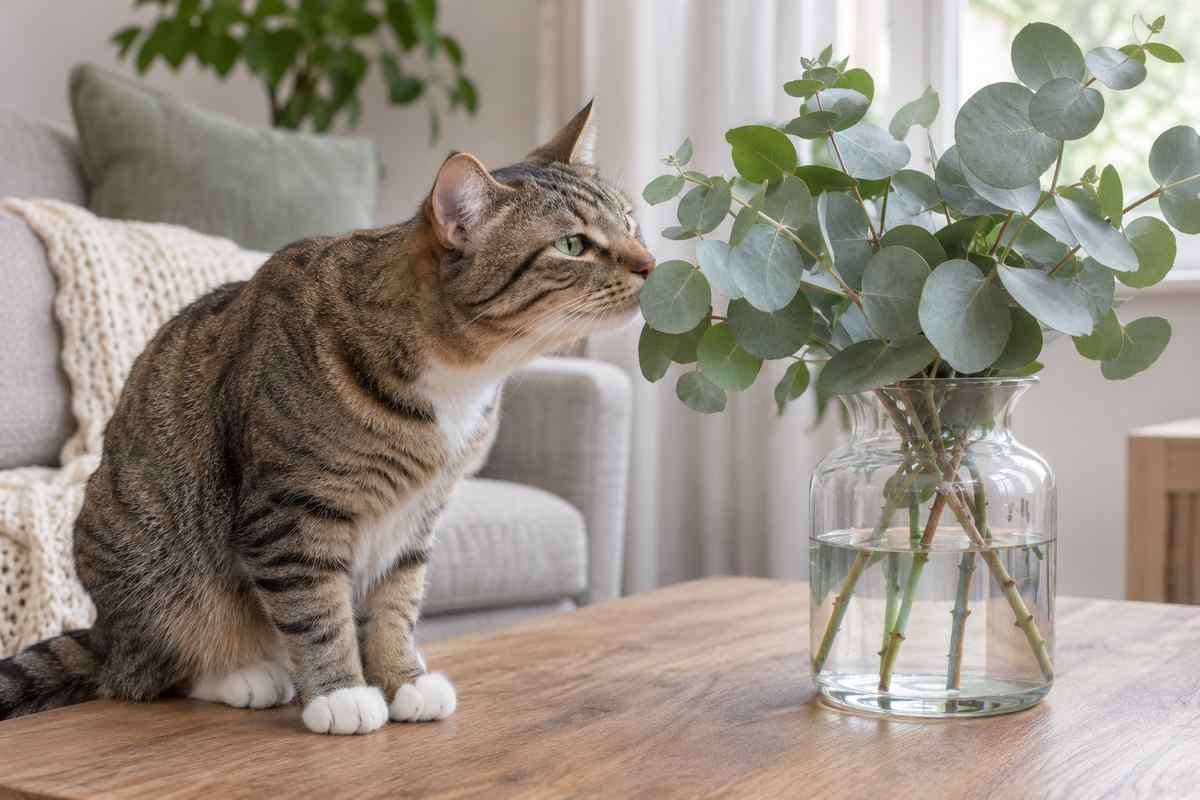
Fresh or dried stems in a vase sit at the mild end. A cat that tears at a leaf or two is most likely to drool or vomit and recover, which is still worth a call if you don’t know how much was eaten.
Diffusers are where the oil gets onto the cat without anyone noticing. Merck separates the two kinds: passive diffusers, such as reed diffusers and candles, mainly irritate the airways unless they tip over, while active nebulizing or ultrasonic diffusers release microdroplets that settle on fur and get licked off. That puts oil on the fur even if the cat never touched the bottle.
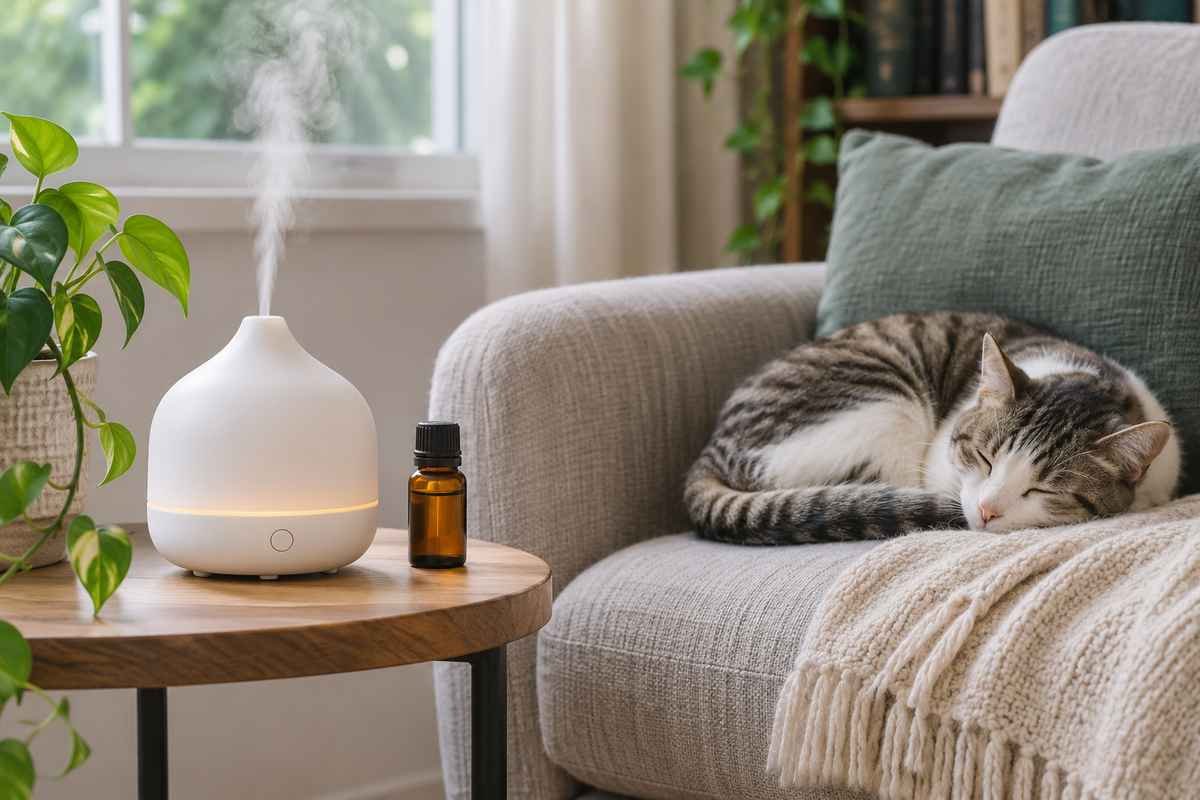
Scented candles are passive, but plenty of owners have learned to be wary of them. One r/bathandbodyworks poster, who works at a vet clinic, wrote this after a eucalyptus candle:
“Just want to post a warning! If you have cats, do NOT use products with eucalyptus around your cats. It is toxic to them and can cause health issues. I had a cranberry & eucalyptus candle and my cat ended up having a reaction that needed medical attention. Edit: Jake is going to be fine. Luckily, I work at a vet so he’s getting great care and goes tomorrow for a recheck. We’ve burned BBW candles for years and hadn’t had a problem until the cranberry & eucalyptus.”
– r/bathandbodyworks, November 2025 (163 upvotes)
Concentrated oil applied to the cat is the clear line. Pet Poison Helpline says concentrated essential oils should never be put directly on a cat, and Merck lists eucalyptus among the oils that can cause seizures.
Eucalyptus isn’t the only scent on that list. Pet Poison Helpline names wintergreen, sweet birch, citrus, pine, ylang-ylang, peppermint, cinnamon, pennyroyal, clove and tea tree oils as known to poison cats too. Lavender has its own story, covered in the page on whether lavender is safe for cats.
Signs of eucalyptus poisoning in cats
The ASPCA lists salivation, vomiting, diarrhea, depression and weakness. After a larger or oil-based exposure, Merck adds lethargy, a wobbly walk (ataxia), loss of appetite, tremors and seizures, and in severe cases liver or kidney failure.
Breathing in diffused oil looks different. Pet Poison Helpline describes watery eyes or nose, drooling, and labored or fast breathing, panting, coughing or wheezing, and warns that cats with asthma are at higher risk.
What to do if your cat got into eucalyptus
Move your cat into fresh air, take the eucalyptus away, and call your vet, the ASPCA Animal Poison Control Center at (888) 426-4435 or Pet Poison Helpline at (855) 764-7661. Have the product or plant on hand so you can say what it was and roughly how much.
Don’t try to make your cat vomit. Merck warns against it because of the risk of breathing the oil into the lungs. If oil got on the coat, ask the vet how to wash it off; Merck lists bathing and fresh air as decontamination, which is safer done with instructions.
Pet Poison Helpline says cats need emergency care if breathing or other signs don’t settle quickly after they’re moved away from the oil.
Can you keep eucalyptus in a house with a cat?
You can keep eucalyptus in a house with a cat only where the cat truly can’t get to it. A vase on an open shelf or a bundle hanging low in a shower the cat walks through doesn’t count, and diffused oil reaches the cat without any chewing at all.
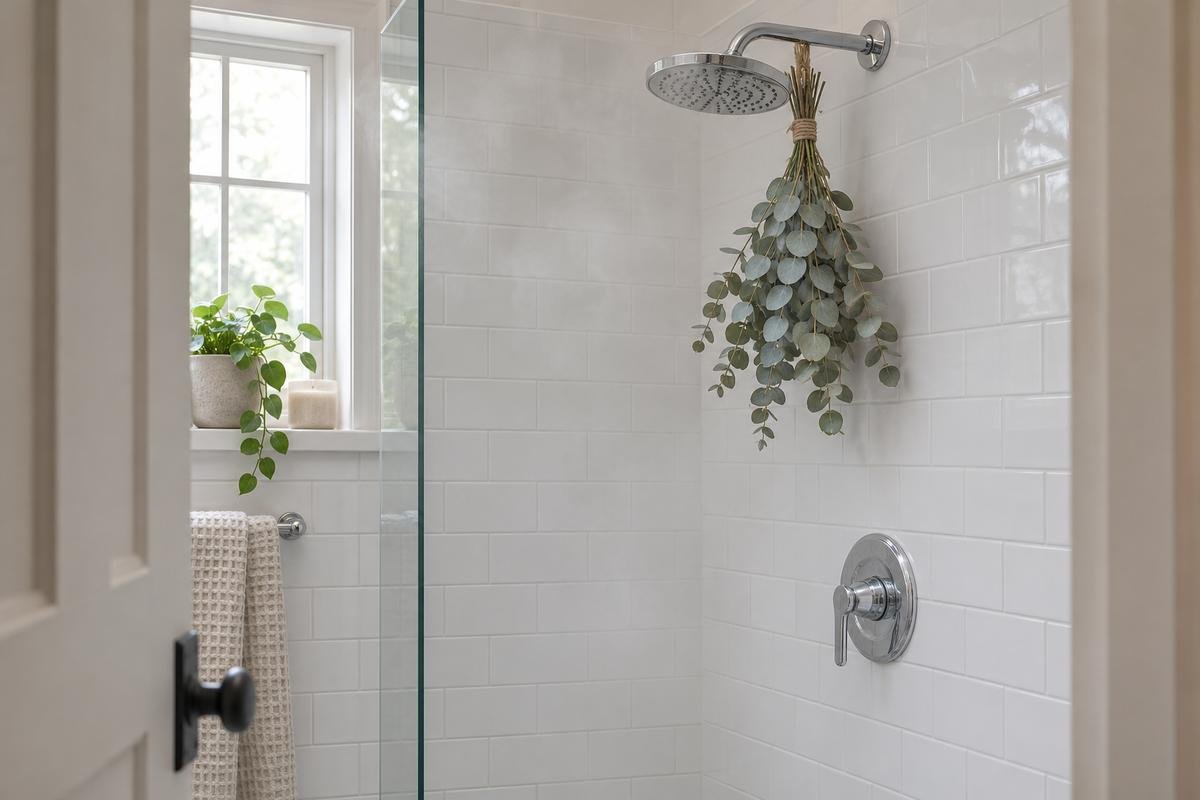
Hanging it in the shower comes up a lot. One reply in an r/CatAdvice thread on the subject put it plainly:
“No, it’s definitely not safe to keep eucalyptus where he can reach it. Hang it in your shower instead it will be of much better use there anyways”
– r/CatAdvice (7 upvotes)
That works if the bathroom door stays shut and the bundle hangs out of jumping range. I couldn’t find a veterinary source that measures how much oil a steamy shower bundle releases, so I’d treat it like a passive diffuser: probably mild, and not something to shut a cat in with.
If you use a diffuser anyway, Merck’s advice is to keep pets out of the room while it runs, ventilate afterward, and run it for short periods, under 30 minutes.
My cat, Miso, is why I look up every plant on the ASPCA list before it comes home. The plant toxicity checker does the same lookup for everything else on your shelves, and the list of pet friendly indoor plants has options the ASPCA rates as non-toxic.
If eucalyptus oil touched your cat’s fur or skin, call the vet now rather than waiting to see what happens.

Ellie Marsh
Houseplant grower who spent years in a north-facing apartment. Writes practical care guides for low light homes, checked against extension and botanical garden sources.