Last updated on November 13, 2026
Snake plant root rot begins under the soil, where the rhizome that the leaves grow out of sits in mix that stays wet too long and starts to decay. Leaves are the last part to show it, which is why a plant that looked fine on Monday can be leaning by the weekend.
What decides the outcome is not how long the decay has been running. It is whether the rhizome is still firm where the leaf meets it, and that takes about a minute to check at the sink. I killed a sansevieria this way in a north-facing room where the soil never dried, so what follows is the sequence I use now.
What Root Rot Looks Like on a Snake Plant
Above the soil, rot looks like leaf bases gone soft and dark where they meet the mix, leaves that slide out when touched, and yellowing that starts low on the leaf. Under it, roots pull away in dark strands and the rhizome gives when pressed.
The smell arrives before the diagnosis does. A rotting rhizome has a sour, wet-basement smell that you catch while the pot is still in your hands. That smell beats every visual signal, because it means tissue is breaking down right now.
Not every collapse is rot. A leaf gone pale and wrinkled but still firm at the base usually means the plant has been kept too dry, and it recovers on ordinary care without any surgery.
Can a Snake Plant Survive Root Rot?
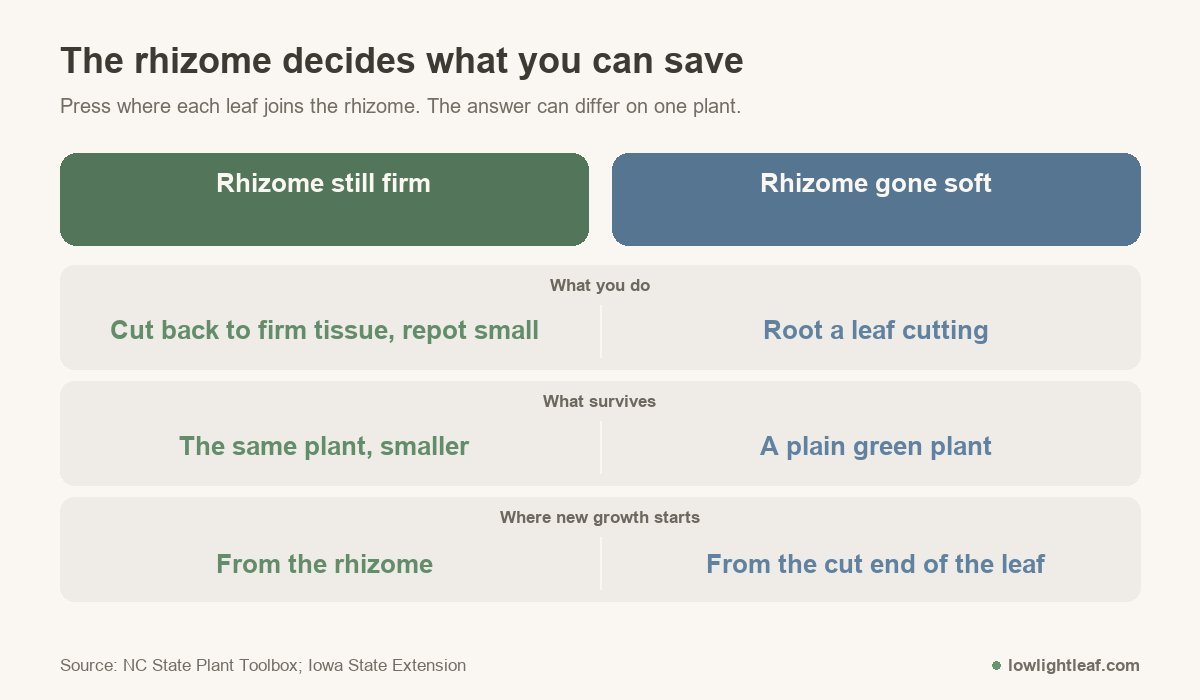
A snake plant survives root rot when part of its rhizome is still firm, because new leaves and offsets grow from that tissue and not from the leaves. If every piece of rhizome has gone soft, the plant cannot be saved in place, though a leaf cutting can still produce a new one.
Here is the check. Slide the plant out of its pot, set it on newspaper, and press the rhizome between thumb and finger at each point where a leaf joins it. Firm and pale is alive. Soft, hollow, or sliding away from the leaf is not, and both states can sit on the same plant, so the answer is rarely a clean yes or no.
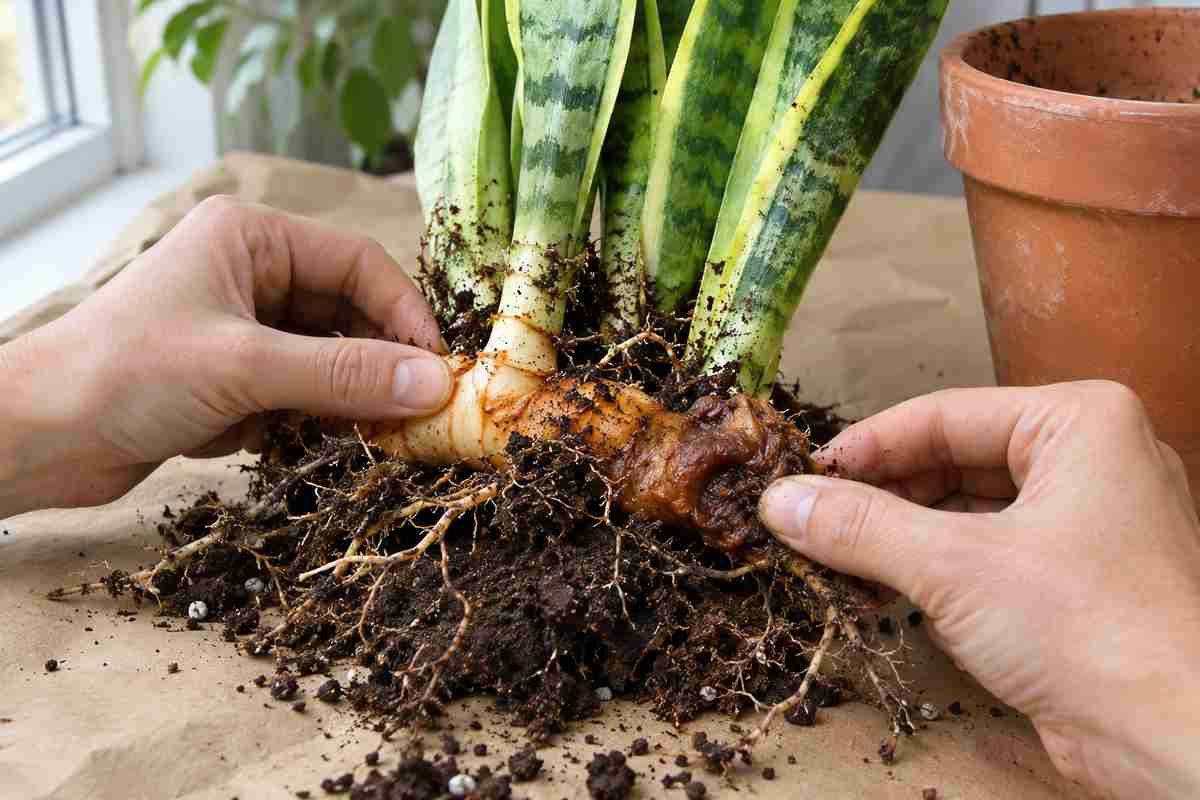
Where the rhizome holds, the leaf above it is worth keeping. Where it has gone, that leaf will stand for a while and then drop, having lost the tissue that fed it. That is the difference between a plant you rescue and a plant you take cuttings from.
Snake Plant Root Rot Treatment, Step by Step
Work at the sink, in this order, and expect the whole thing to take an evening plus two days of waiting.
- Unpot and rinse. Tip the plant out, break the old mix away with your fingers, and rinse the roots under lukewarm water so you can see what is firm. Cold water makes the tissue harder to judge by feel.
- Cut back to clean tissue. With a sharp blade, remove every soft root and every soft section of rhizome, slicing into firm tissue until the cut face is pale and solid. Wipe the blade with rubbing alcohol between cuts; University of Minnesota Extension recommends disinfecting tools between plants for exactly this reason.
- Let the cuts dry. Leave the plant somewhere airy and out of direct sun for one to two days. Cut surfaces seal over, and that sealed edge keeps the next mix from starting the process again.
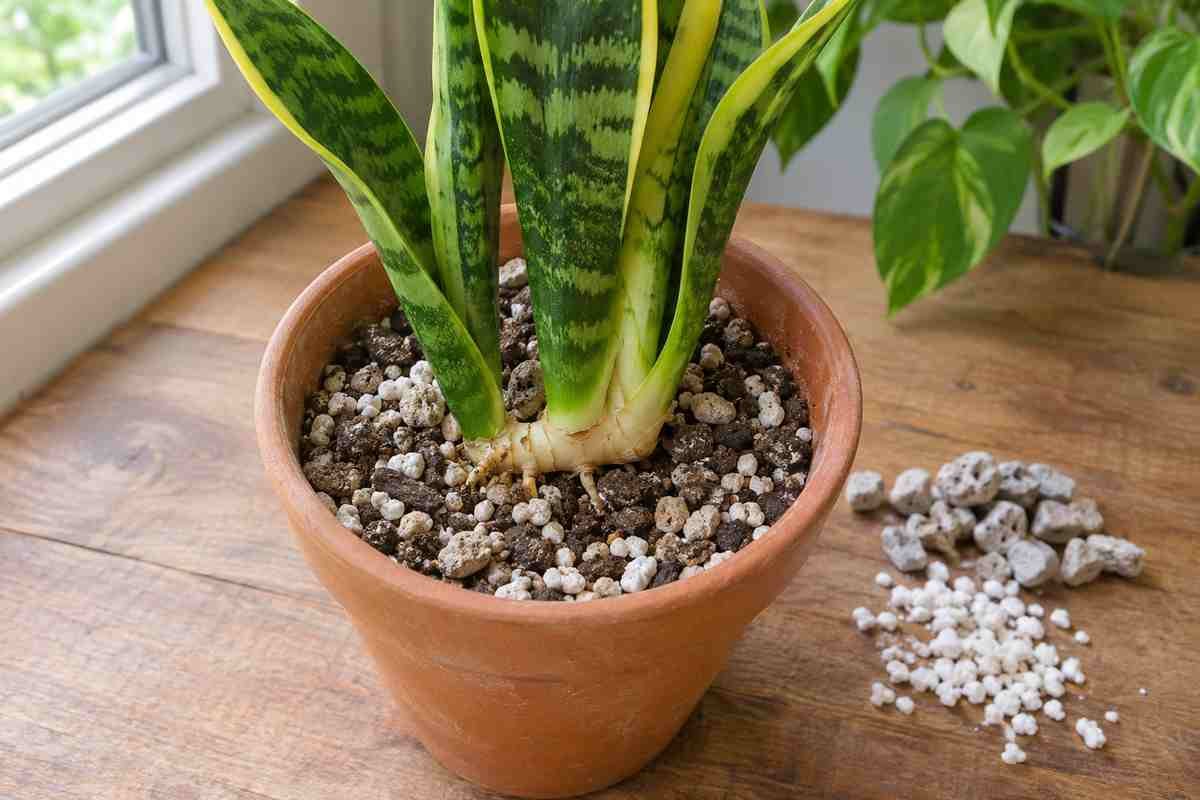
- Repot small. Choose a pot that fits the remaining roots with an inch or two to spare, not the pot it came out of, and a gritty mix; the snake plant soil mix piece covers what to ask for. Bury the rhizome so its top sits at the surface, never below it.

Illustration: a pot that fits the surviving roots, with the rhizome at the surface rather than buried. - Wait a week before watering. Then soak it once and let the pot drain completely. That first watering after a repot is where most second rounds of rot begin.
Two weeks in, test it: press the base of each remaining leaf. Firm bases that no longer rock when you nudge the leaf mean the plant has taken hold. A leaf that still slides was borderline and needs cutting back to the next firm joint.
Mistakes That Cause a Second Rot
Commonest of all is repotting into the old pot with fresh compost and watering it in. Fresh compost holds more water than the mix the plant came out of, the pot leaves no room for air, and the same conditions return inside a month.
Second is a saucer that stays full. Snake plants handle dry air easily and standing water not at all. I keep saucers off entirely through winter, which removes the temptation.
“Your soil looks quite organic. I would add 50% volcanic stones. Are the roots still good on your plants? Your organic soil might hold water for too long leading to root rot.”
– r/plantclinic, 2026 (5 upvotes)
Why the Same Watering Kills One Plant and Not the Next
Two snake plants watered on the same day can end up in completely different states, since how long a mix stays wet depends on pot depth, on what the mix is made of, and on how much light the room gets.
In a bright room a six-inch pot may dry to the bottom in two weeks. In a north-facing room the same pot can stay damp for six, and that gap is where rot lives. Push a bamboo skewer to the bottom of the pot and water when it comes out dry, in place of following a calendar. In practice that means every two to three weeks in good light, every four to six in a dim room, and less again in winter when growth stops.
What a Saved Snake Plant Looks Like a Season Later
A rescued snake plant almost always comes back smaller than it was, and often as two or three separate crowns instead of one clump. Removing tissue has that effect, and what is left grows from whichever pieces were firm.
Leaves you cut off do not return, and rooting them will not give back the plant you had. Leaf cuttings of a variegated snake plant grow into plain green plants, because the yellow margins sit in the leaf tissue and not in the growing point; Iowa State Extension’s guide to leaf-section cuttings covers the method and that limit. Divide the rhizome when you want to keep the pattern.
Naming is worth a line. The plant is Dracaena trifasciata under current classification, once Sansevieria trifasciata, and the named varieties differ in leaf pattern and size, not in how readily they rot.
“Sun + grit + rain + careful neglect = pup”
– r/SnakePlants, August 2026 (98 upvotes)
Four months of recovery, in that thread, from a plant that looked finished. If bases are firm and new growth is slow, the plant is behaving; watering more to hurry it is the mistake. Earlier, while leaves are dropping and you have not looked at the roots, the drooping diagnosis narrows the cause, and repotting without a rot check is what turns a mild case into a bad one.

Ellie Marsh
Houseplant grower who spent years in a north-facing apartment. Writes practical care guides for low light homes, checked against extension and botanical garden sources.