Last updated on November 9, 2026
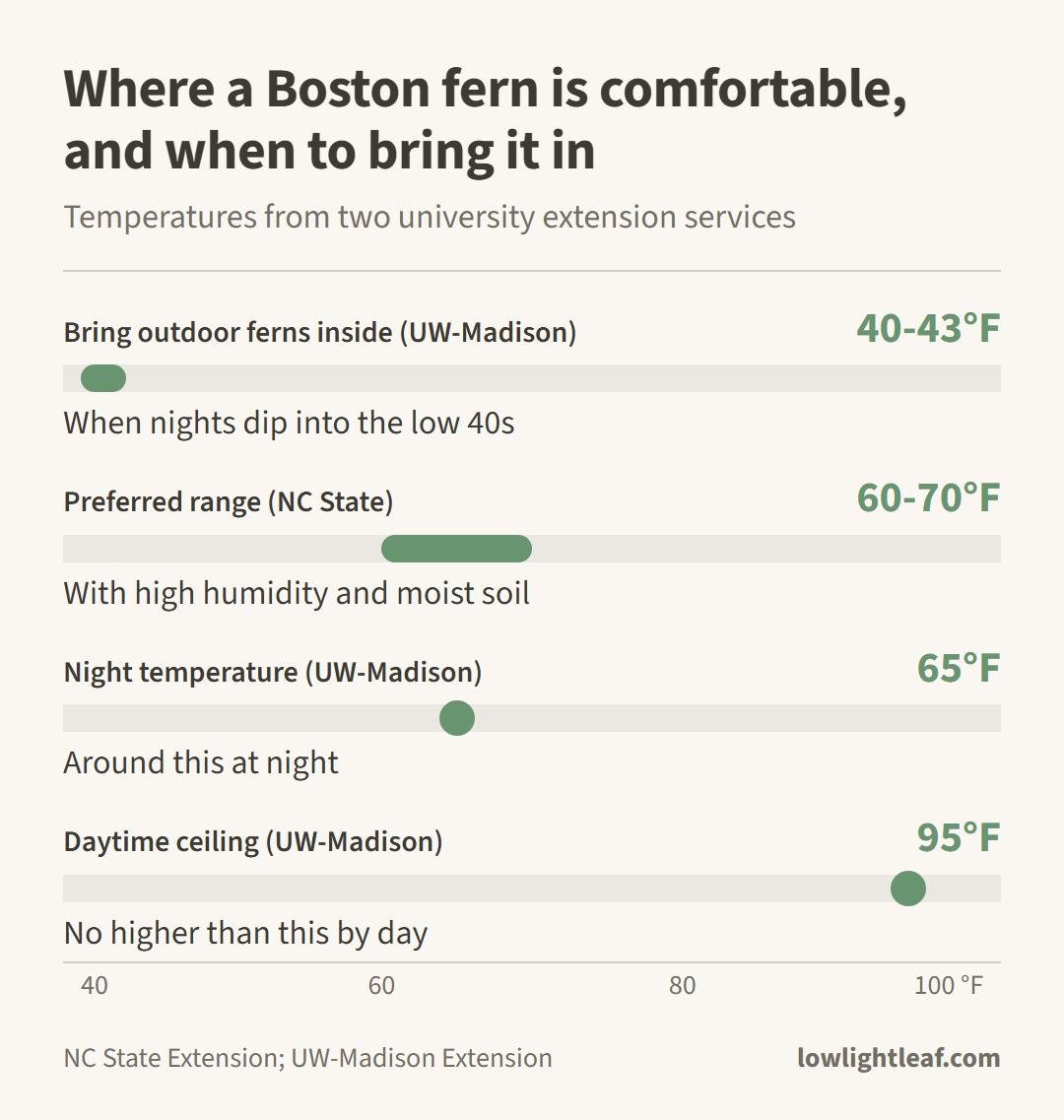
NC State Extension describes the Boston fern, Nephrolepis exaltata, as a plant for bright, indirect light, high humidity and soil that is never allowed to dry out, in rooms around 60 to 70°F. Get those three right and Boston fern care is mostly routine. It’s also non-toxic to cats and dogs, according to the ASPCA.
Summer is easy. Most Boston ferns struggle in November, when they come in from the porch or the furnace starts drying out the air, so that stretch gets the most attention below.
How much light does a Boston fern need?
A Boston fern needs bright, indirect light. UW-Madison Extension suggests an east window, or a spot set back from a south or west window or behind a sheer curtain. NC State’s entry also asks for indirect light, so keep it out of strong direct sun.

Winter changes the rules. The University of Minnesota Extension says that from November through February, many ferns can sit right in a west or south window. If your fern looked fine all summer and starts thinning in December, light is one of the first things to adjust.
For a dim room, the cultivar matters. NC State and Minnesota both name ‘Dallas’ as a Boston fern type that tolerates lower light, and NC State says it also copes with less humidity. In my north-facing apartment, a standard Boston fern would have to sit right at the glass or under my grow lights. If you have a similar window, the north-facing window plants page explains how quickly light drops off as you move away from it.
Watering and feeding a Boston fern
Water a Boston fern so the soil stays evenly moist, never soggy and never bone dry. Minnesota’s extension points out that evenly moist is not the same as always wet: water until it drains from the bottom, then wait until the surface feels dry before watering again. There’s no fixed number of days, because a fern in a warm, bright window dries out much faster than one in a cool bedroom.
Three details matter:
- Use room-temperature water. Minnesota advises it, and says to avoid softened water.
- Water less in winter, but don’t stop. NC State says growth slows in winter and overwatering then can lead to root rot. It also says the soil should never dry out, so the goal is longer gaps, not a dry pot.
- Try double potting. UW-Madison suggests setting the pot inside a larger one lined with moist sphagnum moss, which holds moisture around the roots.
UW-Madison calls the Boston fern the most drought tolerant of the common ferns, which is some comfort if you miss a watering. It still prefers moist soil.
Go easy on fertilizer. UW-Madison recommends fertilizer at half strength every 4 to 6 weeks while the fern is actively growing, and cutting back in winter. Too much fertilizer browns the frond tips, so more is not better here.
Humidity and brown frond tips
Brown, crispy tips on a Boston fern most often point to dry air. UW-Madison says the tips and edges of the leaflets turn brown in the dry air of heated homes in winter. Minnesota names a placement problem too: a fern hung close to the ceiling sits in the hottest, driest air in the room, and its tips brown faster.
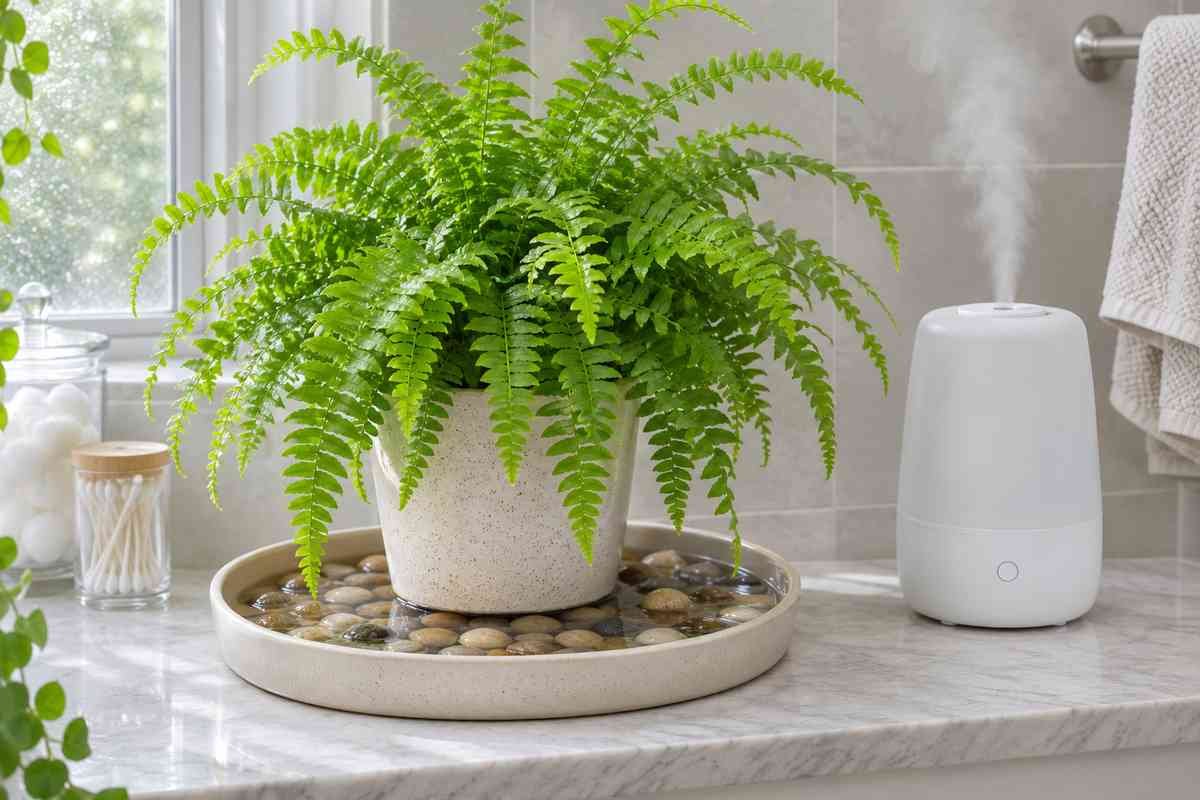
Misting is the obvious fix. It’s also the weakest one. Minnesota’s tropical fern page says misting isn’t very effective and can raise the risk of leaf spot, and that a humidifier works better. NC State suggests two other routes: growing the fern in a kitchen or bathroom, where the air is naturally more humid, or setting it on a pebble tray.
If you hang yours, drop the hook a little so the fern isn’t pressed against the ceiling, and keep it away from heating vents. For more on both, see raising humidity indoors and the best plants for a bathroom.
Boston fern care in winter: bringing it inside
A Boston fern can live outdoors year-round only in warm climates. UW-Madison lists it as hardy in zones 9 to 11, and NC State gives zones 10a to 13b. NC State also notes it can turn invasive in warm climates. Everywhere colder, it’s a summer porch plant that has to come in before frost.
UW-Madison’s timing: bring it inside when night temperatures dip into the low 40s °F. Indoors, it does best around 65°F at night, with days no warmer than 95°F.
The move itself is where many ferns go downhill. One Ontario owner on r/plants asked exactly that question a few weeks after bringing theirs in:
“We live in Ontario, Canada where it gets pretty cold and dry. Is it honestly possible/worth trying to keep this thing alive all winter?”
– r/plants, November 2025 (180 upvotes)
It is possible, though the first month decides most of it, and you can tilt the odds by doing things in this order:
- Look it over for pests before it comes in. UW-Madison names scales and mealybugs as Boston fern pests, and a porch fern can carry them indoors to your other plants.
- Trim the worst fronds. UW-Madison advises cutting old fronds back at the soil line.
- Give it your brightest window. Through February, Minnesota says a west or south window is fine.
- Deal with the dry air first. A humidifier or pebble tray, away from vents and not hung high near the ceiling.
- Water less often, but don’t let it dry out. The winter balance from NC State applies.
Expect losses. One r/plants owner who brings a fern in every fall described what happens next, and what they do about it:
“After a few weeks inside, she starts getting yellow leaves and dying stems. It’s time for her autumn cut. I trim away all bent stems and those missing some leaves.”
– r/plants, November 2025 (38 upvotes)
The same poster says the fern goes back outside to the shade when the days warm up, a little longer each day, so the cycle repeats every year.

Yellow fronds, brown dots and pests
Yellow fronds on a Boston fern have a few common causes. Old fronds eventually die back, and a burst of yellowing in the weeks after a move indoors is the adjustment the Reddit poster above describes. If the soil stays wet in winter, NC State’s warning about root rot fits better, and the fix is longer gaps between waterings. To tell which pattern you’re looking at, the yellow leaves page walks through where the yellow starts and what each spot means.
Rows of small brown dots on the underside of the fronds worry a lot of owners, and they shouldn’t: NC State explains that these are spore cases, a normal part of how ferns reproduce, and not pests.
Pests are different. NC State lists scale and spider mites, which do best in dry air, and UW-Madison also names mealybugs. Since NC State ties these pests to dry air, the humidity fixes above help here as well.
Old or damaged fronds can be cut off at the soil. Once the pot is crowded, UW-Madison suggests dividing the fern every few years in spring.
Are Boston ferns safe for cats?
Yes. The ASPCA lists the Boston fern, which it also calls sword fern, as non-toxic to cats, dogs and horses. Chewed fronds will look ragged, but the plant isn’t a poisoning risk. Not every plant called a fern is as safe, and are ferns toxic to dogs goes through the ones that aren’t.
My cat, Miso, is why I look up every plant on the ASPCA list before it comes home, and this one passes. If you’re shopping for more, the list of pet-friendly indoor plants has other options you can leave within reach, and the plant toxicity table lists the ASPCA verdict for 115 plants for cats, dogs and horses.
A fern that drops a pile of fronds after coming inside is adjusting to a new room, not dying. What finishes it off is dry soil and dry air, and both are in your hands.

Ellie Marsh
Houseplant grower who spent years in a north-facing apartment. Writes practical care guides for low light homes, checked against extension and botanical garden sources.