Last updated on November 5, 2026
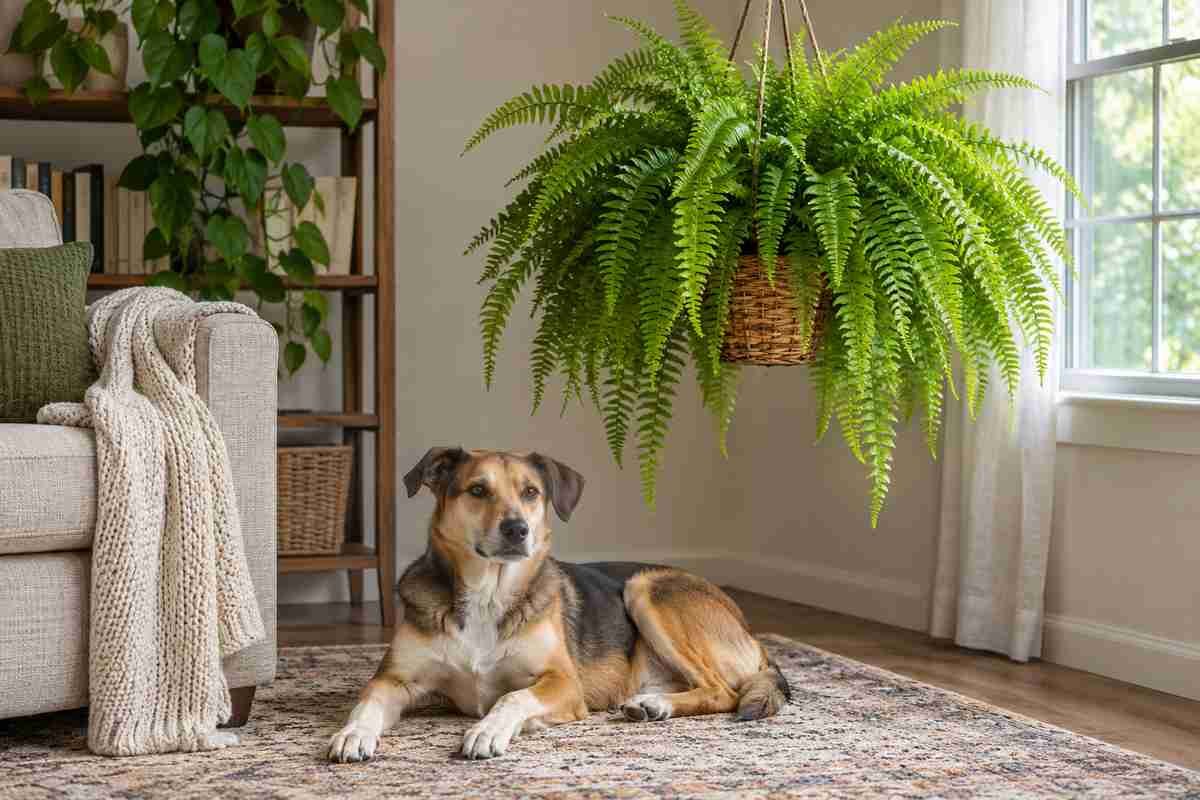
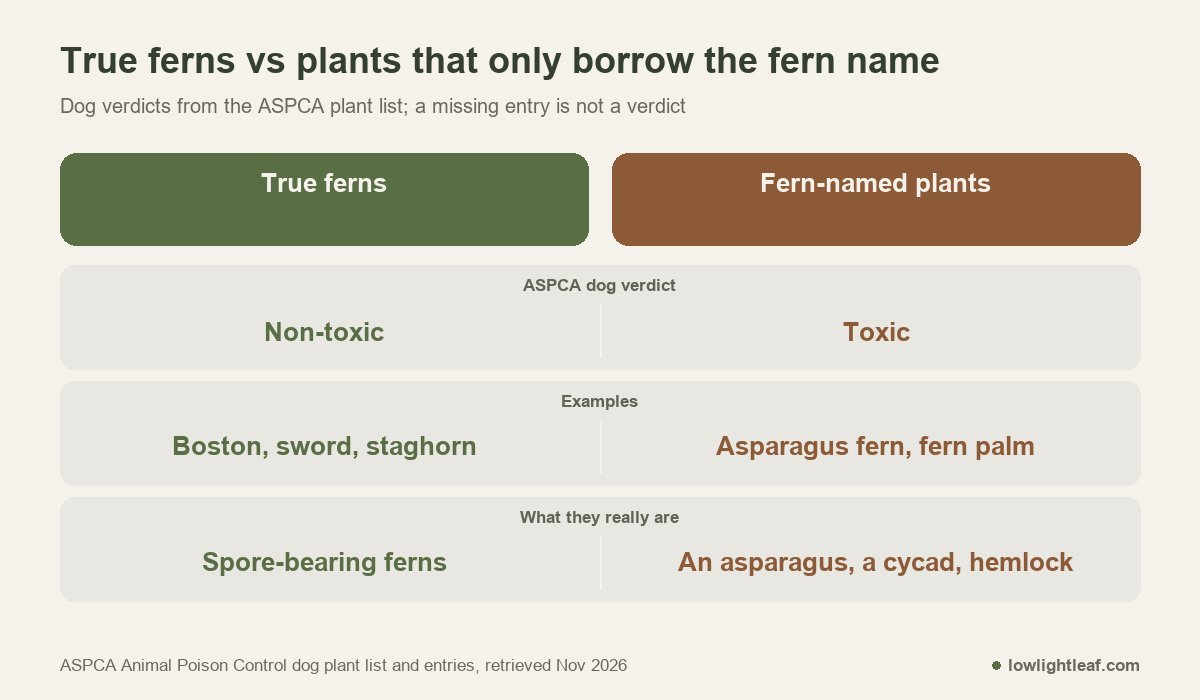
True ferns are not toxic to dogs. Every real fern on the ASPCA’s dog plant list, from the Boston fern to staghorn and rabbit’s foot ferns, is marked non-toxic. The plants that are dangerous only borrow the name: asparagus fern, the sago “fern palm” and poison hemlock, which also goes by winter fern.
So are ferns toxic to dogs? A real one isn’t. When I went through the ASPCA list name by name, every toxic entry with “fern” in it turned out to be something else botanically, which makes the label on the pot more useful than the word fern on it.
Are ferns toxic to dogs? The ones ASPCA marks safe
Real ferns, the spore-bearing plants with fronds, come up non-toxic to dogs across ASPCA’s dog plant list. The common houseplant ones are all there.
- Boston fern (Nephrolepis exalta bostoniensis), plus the fluffy ruffles and dwarf feather types of the same species
- Sword fern, also sold as Verona, Whitman, Dallas or Roosevelt fern (Nephrolepis biserrata)
- Lemon button fern, filed under Duffii fern (Nephrolepis cordifolia ‘Duffii’)
- Staghorn fern (Platycerium)
- Rabbit’s foot fern (Davallia)
- Button fern (Pellaea rotundifolia), which ASPCA files as cliff brake
- Holly fern or fishtail fern (Cyrtomium falcatum)
- Mother fern (Asplenium bulbiferum), plus the silver table fern (Pteris) and Western sword fern
A dog that chews a Boston fern frond is chewing a plant with no listed toxic principle and no listed signs. Fronds still aren’t dog food, and a big mouthful of any leaf can come back up, so treat a vomiting dog as a dog that needs watching, whatever it ate. If you grow one, my Boston fern care page covers keeping it alive through a heated winter.
Fern-named plants that are toxic to dogs
Three plants with “fern” in their names are toxic to dogs on the ASPCA list, and none of them is a fern. One is an asparagus, one is a cycad and one is poison hemlock, and they differ a lot in how dangerous they are.
Asparagus fern (emerald fern, plumosa, sprengeri, lace fern)
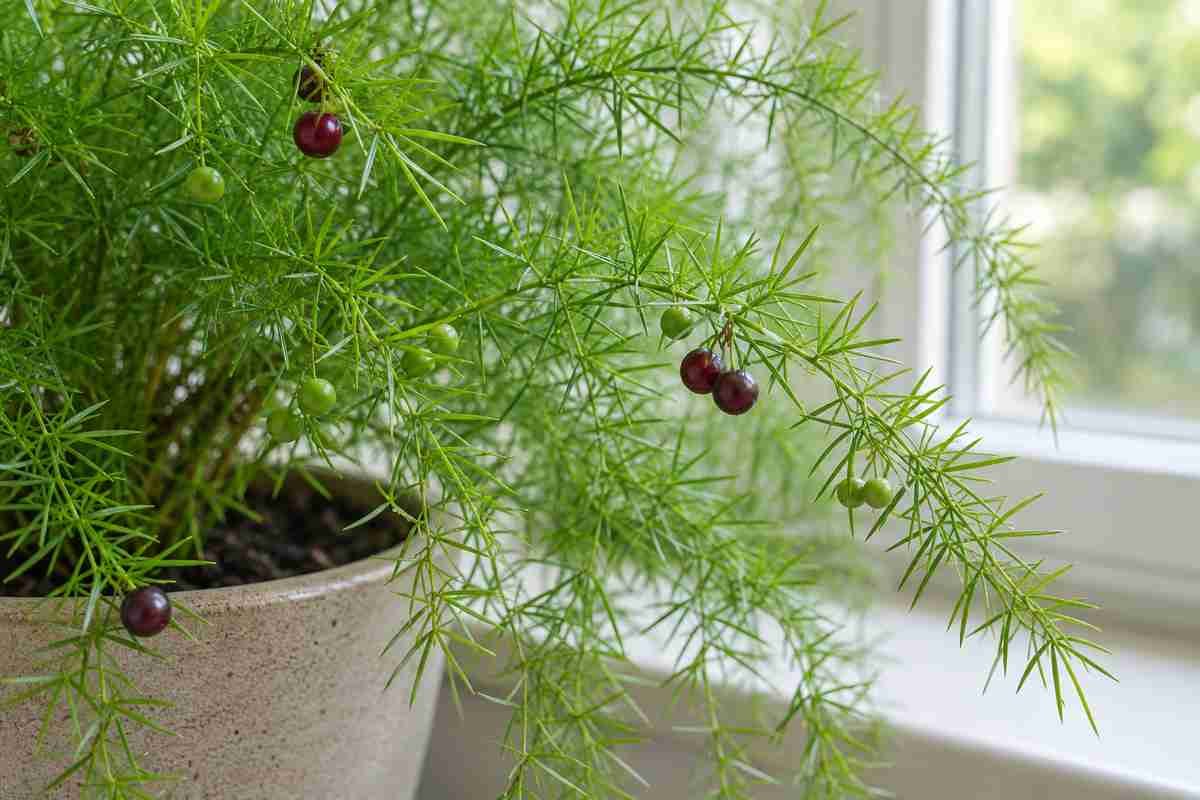
Asparagus fern is the one most likely to be in your house. ASPCA files it as Asparagus densiflorus under a long list of aliases: emerald feather, emerald fern, sprengeri fern, plumosa fern, lace fern and racemose asparagus. It is toxic to dogs and cats.
The risk sits in two places. ASPCA says eating the berries can cause vomiting, abdominal pain or diarrhea, and that repeated contact with the plant can cause allergic dermatitis. Pet Poison Helpline names the irritant: the plumosa fern’s berries contain sapogenins, and it describes the stomach upset from eating them as mild. NC State Extension rates the plumosa type as having medium severity poison characteristics, says the berries ripen from green to deep purple or black, and warns that the sap can irritate skin.
The feathery “leaves” are a giveaway once you know it. NC State explains they are cladodes, tiny leaf-like branches, and the true leaves are dry scales. A real fern has fronds and spores, never berries, so a feathery plant with little berries on it is an asparagus fern.
Fern palm (sago palm)
Fern palm is far more serious than asparagus fern. ASPCA lists it as another name for the cycads, Cycas and Zamia, the same plants sold as sago palms. The toxins are cycasin and B-methylamino-l-alanine, and the signs include vomiting that may be bloody, dark stools, jaundice, bruising and liver failure. ASPCA’s entry says one or two seeds can be fatal.
A dog that chews any part of a sago palm needs a vet or a poison line straight away, without waiting for signs.
Winter fern (poison hemlock)
Winter fern, California fern and Nebraska fern are all ASPCA aliases for poison hemlock, Conium maculatum, a weed rather than a houseplant. Its alkaloids cause agitation, tremors, drooling, diarrhea and paralysis, and the entry lists death among the signs. It is an outdoor risk, not one you bring home in a pot.
Ferns ASPCA has no entry for
Maidenhair fern (Adiantum), bird’s nest fern (Asplenium nidus), lady fern and bracken fern have no entry on ASPCA’s dog list, so there is no ASPCA verdict for them either way.
Bird’s nest has an extra trap. The one “bird’s nest” on the ASPCA list is Golden Bird’s Nest, and it’s a snake plant, Sansevieria trifasciata, which is toxic to dogs. Its saponins cause nausea, vomiting and diarrhea. If a tag says only “bird’s nest,” the botanical name decides which plant you bought. I go into the snake plant side of that on snake plants and pets.
For a fern with no entry, the honest answer is “no official data.” A close relative being on the safe list, as mother fern is for bird’s nest, is a hint and nothing more.
What to do if your dog ate a fern
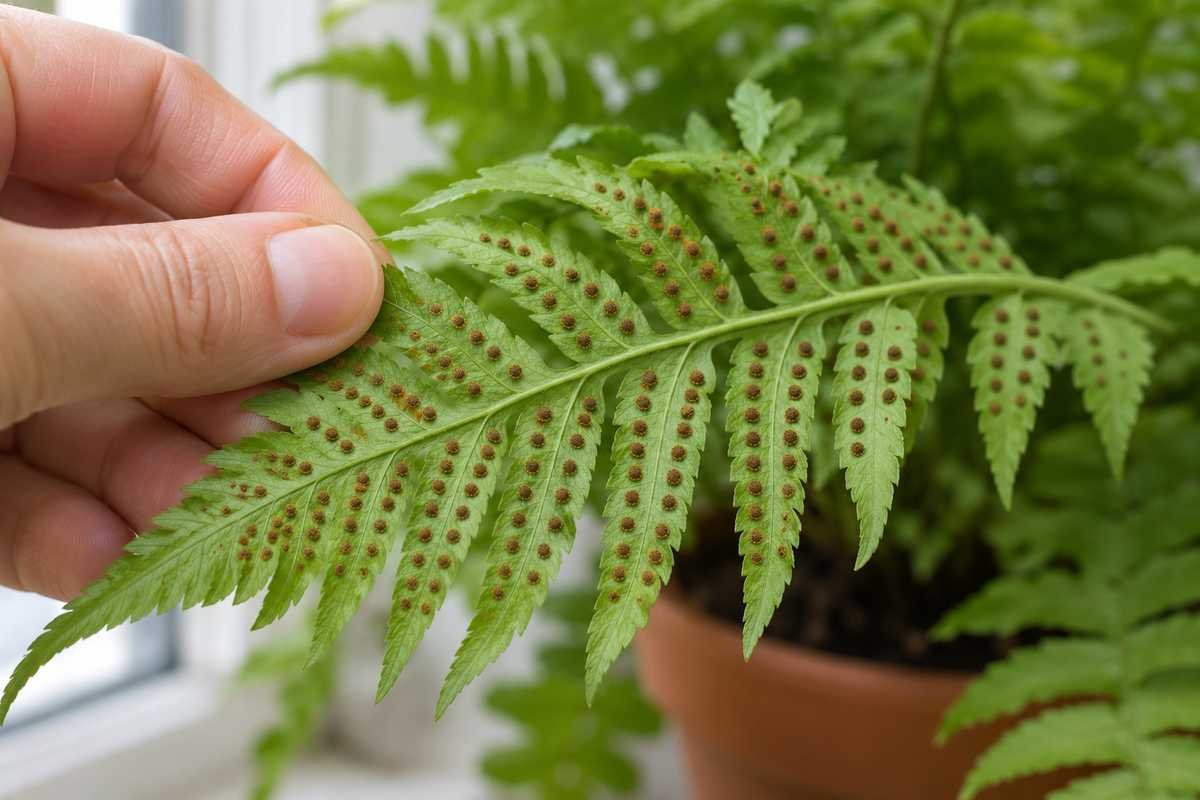
Identify the plant first, because a Boston fern, an asparagus fern and a sago palm need three very different responses. Look for berries and feathery cladodes (asparagus fern), stiff palm-like leaves on a thick trunk (sago), or plain fronds with spore dots underneath (a true fern).
If you can’t tell, a photo and a phone call settle it. One r/DogAdvice reply described doing exactly that after a dog ate an unknown plant:
“Please call ASPCA poison control, OP. This is what I did when my dog ate a random plant on a walk. They had me take a photo. They were able to ID it, as well as talk to me and my vet about how to treat. It’s around 75$ I think. It’s incredibly helpful.”
– r/DogAdvice, January 2025 (46 upvotes)
ASPCA Animal Poison Control answers at (888) 426-4435. The fee in that reply is the poster’s own guess, so expect to be told the current charge when you call.
- True fern: take away what’s left, offer water and watch for vomiting or diarrhea that doesn’t settle.
- Asparagus fern: call if berries were eaten or the dog is vomiting; if the skin looks red where the dog brushed the plant, wash the area and call.
- Sago or fern palm: go to a vet or call the poison line right away, even if the dog seems fine.
Before the next plant comes home, the plant toxicity checker searches by common or botanical name, which is the quickest way to catch a fern that isn’t a fern.

Ellie Marsh
Houseplant grower who spent years in a north-facing apartment. Writes practical care guides for low light homes, checked against extension and botanical garden sources.