Last updated on October 20, 2026
How to get rid of musty smell in house air: find the moisture behind it, dry it, and clean or throw out whatever has gone moldy. The US EPA counts the job finished only when the water problem is fixed and moldy odors are gone, and it suggests keeping indoor humidity below 60%, ideally between 30 and 50%.
That makes the smell useful. It tells you where the damp is, and later it tells you whether the fix worked, which is why a candle or a plug-in only gets in the way.
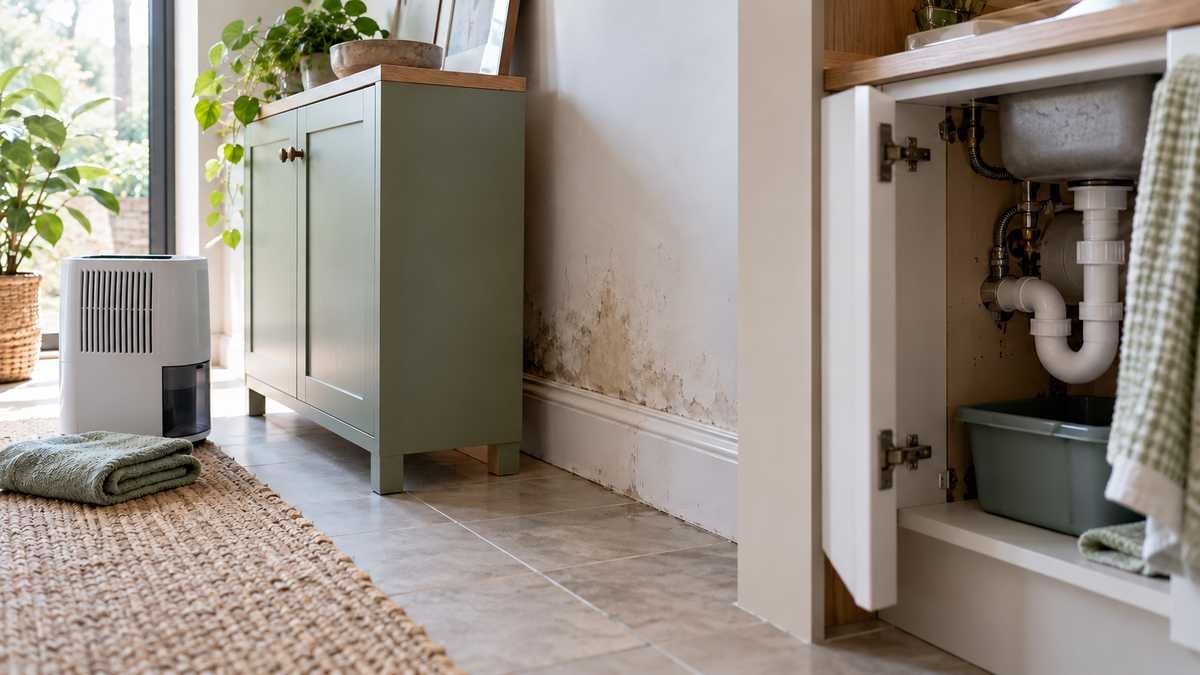
Does a musty smell mean mold?
Usually, yes. UConn Extension advises that anyone with water damage or a musty smell should assume mold is present, because the spores can be invisible, and the University of Georgia Extension lists a musty or earthy odor among the common signs of mold alongside stains and fuzzy growth.
The EPA says the same about hidden growth: suspect it when a building smells moldy but you can’t see the source. Seeing nothing doesn’t settle anything.
There’s one household exception worth knowing if you keep houseplants. Overwatered potting soil can turn sour and stinky because waterlogged, oxygen-poor soil lets anaerobic bacteria grow, the University of Florida’s plant diagnostic specialists explain, and those bacteria aren’t necessarily harmful to the plant. The roots underneath may be rotting too; University of Wisconsin-Madison Extension says rotted roots can carry a bad odor of their own.
So a smell that’s strongest at plant level, near one pot, points to the soil before the walls. White fuzz on the soil surface is a separate issue, covered in mold in plant soil.
Where to look first: how to get rid of musty smell in house air
Follow the smell to where it’s strongest, then work through the places the EPA and UGA name as common hiding spots. Mold needs moisture, so each stop on the list is really a question about water: a leak, condensation, or air that stays damp.
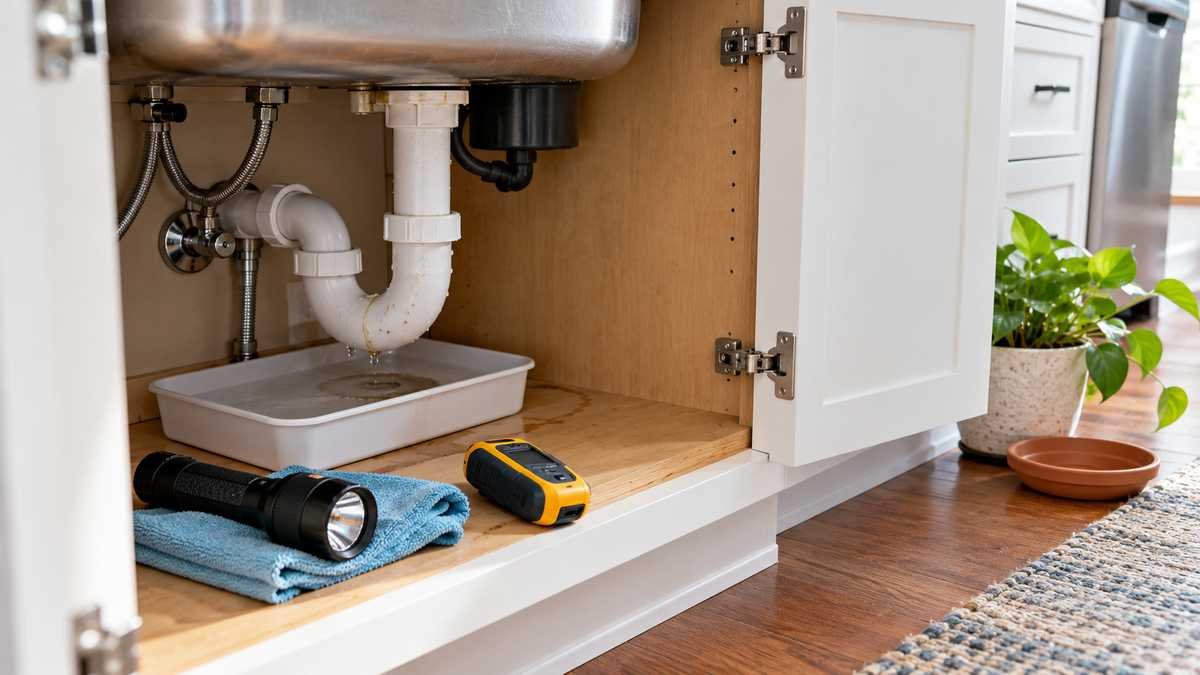
- Behind cabinets and around pipes. UGA puts behind cabinets first on its list for a musty smell with no visible mold. Plumbing leaks inside walls belong here too; the EPA lists walls around leaking or condensing pipes as a hidden-mold site.
- Behind furniture on outside walls. The EPA names wall surfaces behind furniture, where condensation forms, as a hidden spot. Pull the dresser or sofa out and look at the wall and the back of the piece.
- Under carpet and behind wallpaper. Both are on the EPA and UGA lists, along with the back of drywall or paneling and the top side of ceiling tiles.
- Closets. UGA’s fix for a poorly ventilated closet is to clear at least a third of the clutter and leave the door open, or fit a louvered door.
- Air conditioning. The EPA says to keep A/C drip pans clean and drain lines flowing. UGA says dirty, wet coils can lead to mold in the ductwork and that oversized units don’t dehumidify well.
- The dryer vent. An unvented clothes dryer is one of UGA’s common moisture causes; make sure the vent is connected and runs outdoors.
- Plant pots and saucers. A decorative outer pot can hold water where you can’t see it, UF says, leaving the roots standing in it.
As a houseplant person, that last one is where I’d start. Tip the inner pot out of its cover and see what’s pooled in the bottom. UGA also lists a large quantity of indoor plants, a large aquarium, water in the crawl space and poor drainage around the house among the everyday sources of indoor humidity.
Smells can be maddening to place, and they don’t always reach everyone in the house equally:
“We’ve lived in this 1970 home for 2 years now, and I have always smelled this weird musty odor but haven’t been able to identify what it is. It’s driving me absolutely insane. Nobody else says they can smell it, but I have a strong nose and can smell it all the time.”
– r/homeowners, September 2026 (36 upvotes)
Sometimes the search means taking something apart. One apartment dweller finally found theirs inside the cupboards:
“Oof I feel ya. Moved into a new apartment and it just felt humid and it smelled musty to me. My partner didn’t notice it though and I would just light a candle when guests came over. I did end up getting bothered enough by it that I took apart two cupboards and found some hectic black mold under them.”
– r/CleaningTips, November 2025 (17 upvotes)
If you rent, the EPA’s advice is to report plumbing leaks and moisture problems to the owner or manager right away, and UConn says to ask the landlord who is responsible for mold cleanup before you start.
Dry it out: humidity numbers and the clock
Get the humidity under 60%, and ideally into the 30 to 50% range, which is the EPA’s target; UConn Extension sets the bar a little lower, at below 50%. A humidity meter costs about $10 to $50 at a hardware store, according to the EPA, and it turns “feels damp” into a number you can watch.
Wet materials run on a clock, and the sources set it slightly differently:
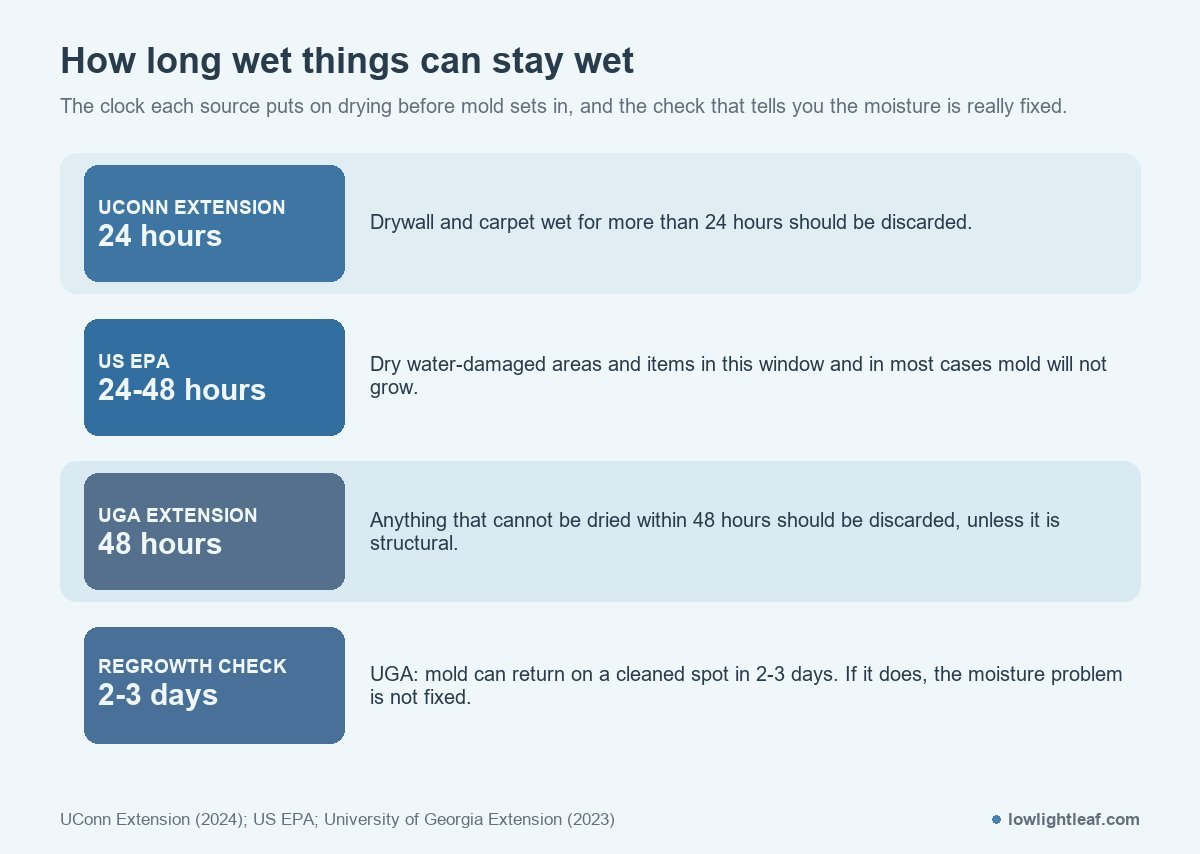
In text: UConn says to discard drywall and carpet that stay wet more than 24 hours, the EPA says items dried within 24 to 48 hours usually won’t grow mold, and UGA says to discard anything non-structural that can’t be dried within 48 hours.
The tools for getting there are ordinary. The EPA lists air conditioners and dehumidifiers, a bathroom fan or open window during showers, exhaust fans while cooking or running the dishwasher, and venting dryers, stoves and kerosene heaters outdoors. UConn calls exhaust fans that vent outside essential and suggests a dehumidifier in the basement. How big a dehumidifier a room needs, and what it does to your plants, is worked through in how to lower humidity in house air.
Watch the windows on cold mornings, too. The EPA treats condensation on windows, walls or pipes as a sign of high humidity, and the winter version of that problem has its own page on condensation on windows.
Sometimes a number is all it takes to see the problem:
“For the longest time, I just assumed the damp, musty smell in my basement was something you had to live with in an older house, especially in the DC metro area. I never really thought much of it until I checked the humidity one day and realized it was hovering around 70-75%. I ended up getting a dehumidifier, mostly because I was running out of ideas. I wasn’t expecting a huge difference, but after a few days the musty smell was pretty much gone.”
– r/basement, July 2026 (112 upvotes)
Cleaning what’s moldy, and what to throw out
Clean it yourself only if the moldy patch is under about 10 square feet, roughly 3 feet by 3 feet, which is the EPA’s line for a do-it-yourself job. Larger growth, a lot of water damage, sewage or contaminated water, or a suspected moldy HVAC system calls for an experienced professional, and the EPA says not to run an HVAC system you suspect is contaminated.
For a small job, the EPA’s method is plain:
- Fix the water first. Clean mold without fixing the leak or the damp and it will most likely come back, the EPA says.
- Scrub hard surfaces with detergent and water, then dry them completely.
- Throw out porous things that have gone moldy. Ceiling tiles and carpet may have to go, because mold fills the gaps in porous materials and can be impossible to remove completely.
- Don’t paint or caulk over mold. The EPA says paint over a moldy surface is likely to peel.
- Protect yourself. An N-95 respirator (about $12 to $25, per the EPA), long gloves and goggles without vent holes.
UConn Extension says people with asthma, allergies or chronic breathing problems shouldn’t do the cleanup themselves, and children shouldn’t be around while it happens.
Bleach isn’t the default. The EPA doesn’t recommend chlorine bleach or other biocides as a routine part of mold cleanup, and it points out that dead mold can still cause allergic reactions, so killing it isn’t enough; it has to come off. UGA keeps a bleach solution of half a cup to a cup per gallon of water for mold caused by contaminated water, tested first on a hidden spot. If you do use bleach, never mix it with ammonia cleaners (EPA) or with acids such as vinegar or lemon juice (UGA).
Is the musty smell really gone?
The smell is the test. By the EPA’s standard, cleanup is finished when the water or moisture problem is fixed, visible mold and moldy odors are gone, a visit soon afterward shows no new water damage or growth, and people can use the space without health complaints.
Will a musty smell go away on its own? Not while the damp is still there; the EPA says mold you clean without fixing the water problem will most likely return. UGA gives the timeline: a cleaned spot can grow mold again in 2 to 3 days, and if it does, the moisture problem hasn’t been solved. Clean again, dry the area fast with fans and a dehumidifier, and look harder for the water.
Bowls of absorbers, sprays and candles change what you smell in the meantime. They do nothing about the moisture, and they blunt the one signal that tells you whether the drying worked.

Ellie Marsh
Houseplant grower who spent years in a north-facing apartment. Writes practical care guides for low light homes, checked against extension and botanical garden sources.