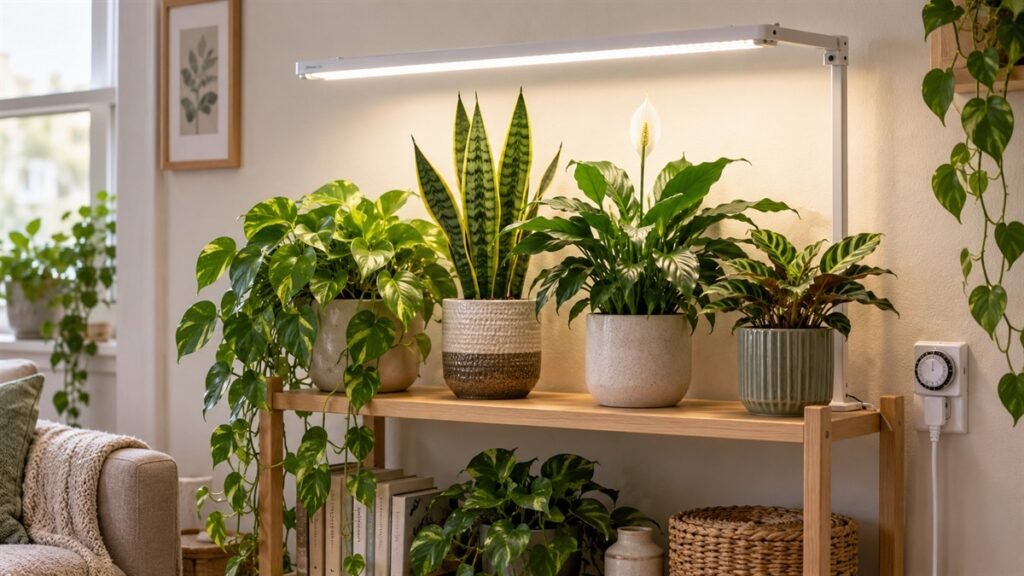
Condensation on windows forms when warm, moist indoor air meets glass colder than its dew point. On the room side in winter, NDSU Extension reads it as too much indoor moisture or a cold window, and its fix is humidity under 40 percent plus a warmer pane, such as one covered in plastic.
If your plants live on the sill, they’re the first suspect. They add far less than you’d expect. Laundry, cooking and the people in the house supply most of the water, and the fixes go after those.
Inside, between the panes or outside: what each one means
Where the water sits decides what it means, so look before you fix anything.
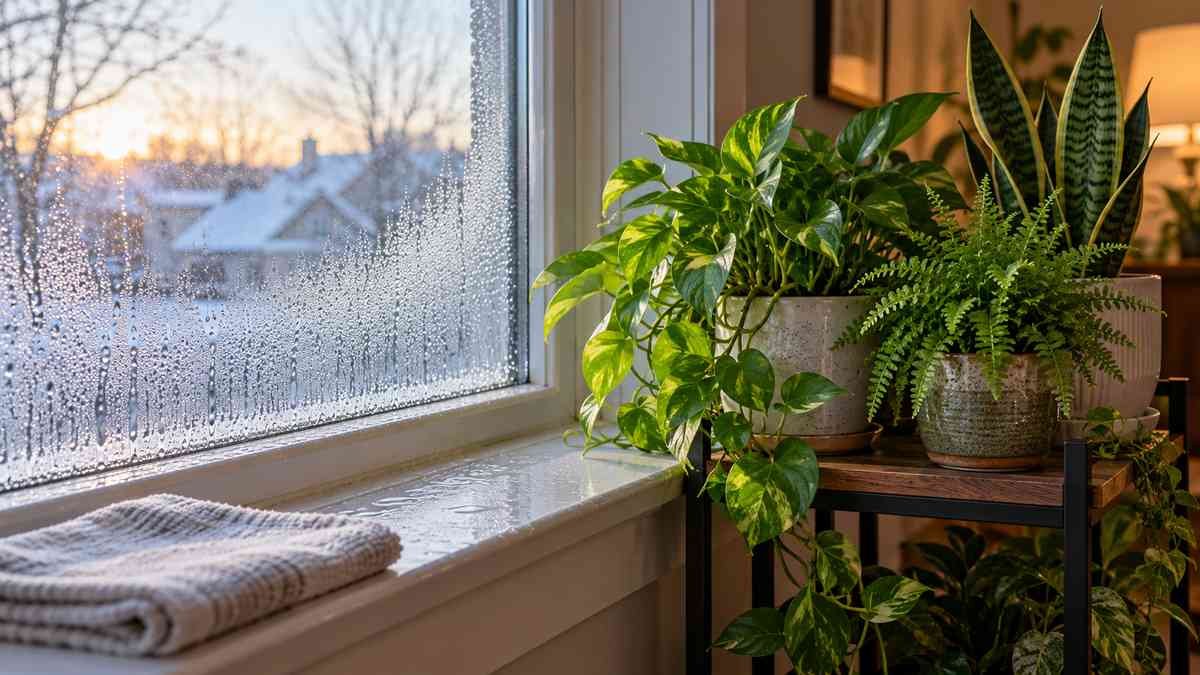
On the room side. This is the winter kind. BBC Weather explains that it forms when the glass lets heat escape and turns cold on the inside, so the thin layer of room air against it cools until its water vapor condenses. NDSU’s release on the problem adds that the colder it gets outside, the more likely it is. Does condensation on windows mean the house is too cold? Usually not: the room can be warm, and it’s the glass that’s cold.
Between the panes. Fog trapped inside a double-pane unit is a different fault. The Building America Solution Center, run by Pacific Northwest National Laboratory for the US Department of Energy, says failure of the glass unit’s seal is identified by condensation or fogging between the two layers of glass, and it’s commonly caused by the seals sitting in water for long periods. Because that moisture is inside the sealed unit, lowering the room’s humidity won’t clear it.
“The seal has gone on this window. You can call a glass place and have them fix it. It’s a lot more affordable than replacing the whole window. Last time I had it done it was around $300 a window, but who knows with the cost of things lately”
– r/homeowners, July 2026 (239 upvotes)
On the outside. Dew on the outer pane after a cool, humid, still night is a good sign. BBC Weather says it probably means double glazing or efficient windows: indoor heat isn’t reaching the outer pane, so it stays cold, and the water burns off as the morning warms.
Where the moisture in a house comes from
An average family of four can add over six gallons of water vapor to the air each day, Montana State University Extension calculates, and its breakdown puts house plants near the bottom at 1.0 pound a day out of 55.9.
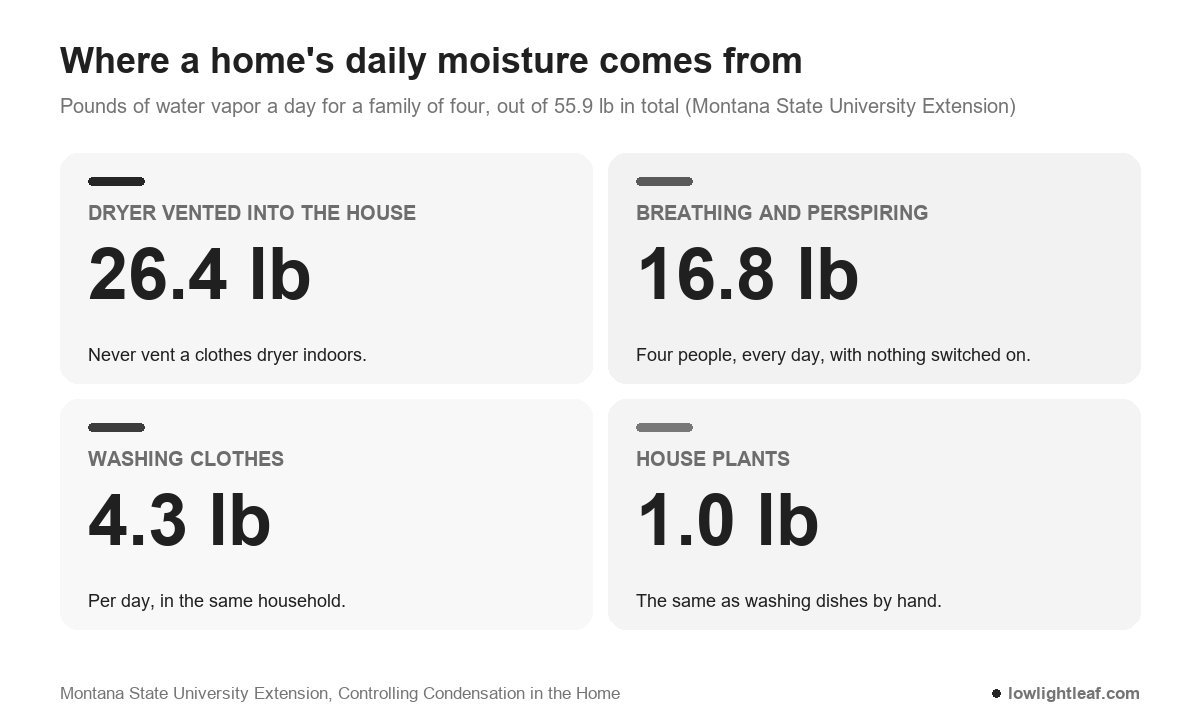
Montana State reports a dryer vented into the house at the top of the list, 26.4 pounds. Breathing and perspiring come next at 16.8, then washing clothes at 4.3, mopping at 2.4, and cooking without the exhaust fan and a shower or bath at 2.0 each. Plants tie with washing dishes by hand. The University of Minnesota Extension does list plants among a home’s moisture sources, alongside humidifiers, stored firewood and plumbing leaks, so they count. They just count for little.
The plant habits people worry about add even less. Penn State Extension says the water from a wet pebble tray spreads through the whole room and has almost no overall effect on relative humidity, and misting lasts only minutes. A humidifier running for the plants is another matter: it’s on Minnesota’s source list, and NDSU’s advice for winter condensation includes shutting humidifiers off. If you run one for tropical plants, the limits are in how to increase humidity in house air.
In a north-facing apartment like the one I lived in for years, the sill is the brightest spot in the room, so the plants end up right against the wet glass and get the blame.
Winter fixes for condensation on windows, and the one that doesn’t
The winter fixes that work either get moisture out of the house or warm the glass. Between them, the extension services give this list. A humidity meter tells you whether it’s working; the EPA says one costs $10 to $50 at many hardware stores.
- Turn off humidifiers. NDSU names it first among ways to lower winter humidity.
- Run exhaust fans when you cook, shower or bathe. NDSU says they must vent outside, not into the attic, where the moisture can cause mold you won’t see.
- Keep laundry moisture out of the room. Montana State says never run a dryer vented indoors and avoid hanging wet clothes inside in cold weather.
- Put lids on boiling pots, another Montana State tip.
- Open a window a little, briefly. Minnesota’s winter advice is to crack the windows so warm, moist air leaves and cold, dry air comes in.
- Warm the glass. NDSU Extension suggests covering the window with plastic; Montana State says a plastic or glass storm window raises the surface temperature of the inner pane. Plastic film is the version a renter can put up and take down.
- Keep air moving across the glass. Montana State says don’t cover the heating registers, and a ceiling fan helps.
The one that doesn’t work in winter is a dehumidifier. NDSU says dehumidifiers generally bring humidity down only to about 50 percent, which isn’t low enough to limit winter condensation, and its release adds that they’re generally ineffective below 50 percent, common in winter. Pella’s condensation guide, one of the top results for this search, still lists one first.
“Lately it’s been pools of water.. i got a dehumidifier and still not doing the trick. Keep my bathroom door closed after showers with exhaust on, keep exhaust on while cooking. Landlord has been useless.. i start my mornings with cleaning these windows -_- one of the times it actually grew mold.. had to wipe it down with disinfectant.”
– r/fixit, January 2026 (25 upvotes)
Minnesota recommends a dehumidifier or air conditioner for summer humidity instead; sizing one is covered in how to lower humidity in house air.
Curtains split the sources. NDSU says that if condensation forms behind draperies, leave them open at night and accept some heat loss. BBC Weather also warns against curtains or blinds that hold moisture against the glass.
Montana State says the opposite: close the drapes at night so warm, moist air doesn’t reach the cold pane, and open them by day.
Water collecting behind your curtains settles it for your window. They’re trapping moisture, and NDSU’s open-at-night advice fits.
Wipe it, and watch for ice
Wipe it off. NDSU’s Carl Pedersen calls a thin film a nuisance, but as the air keeps cooling more water forms, ice can build up and damage the window and the wall around it, and the moisture can breed mold. The EPA says wet materials dried within 24 to 48 hours usually don’t grow mold, so a towel across the glass and the sill each morning keeps the frame inside that limit.
Ice on the inside of the glass is the same moisture in colder weather. NDSU names water and ice buildup together as a sign of too much indoor moisture or a cold window.
Plants on a cold windowsill
The plants don’t cause much of the water, but the window can still hurt them. University of Wisconsin Extension’s winter advice is to keep houseplants from sitting too near windows or doors where they meet cold drafts, and opening the window to vent moisture makes that draft on purpose.
“Even if it was that five minutes or so that’s recommend here in the North I’d move the plants from the window and from its vicinity. It’s not the short drop in temperature as much as cold draft that’s the issue. Maybe you could get some grow lights and simply move your plants somewhere away from the draft?”
– r/houseplants, January 2026 (3 upvotes)
That’s the move I’d make too. Grow lights, which I use for the darkest corners, let a plant spend the coldest weeks back from the glass, and a clear sill is one you can actually wipe dry; the setup is in grow lights for indoor plants.

Ellie Marsh
Houseplant grower who spent years in a north-facing apartment. Writes practical care guides for low light homes, checked against extension and botanical garden sources.