Last updated on November 6, 2026
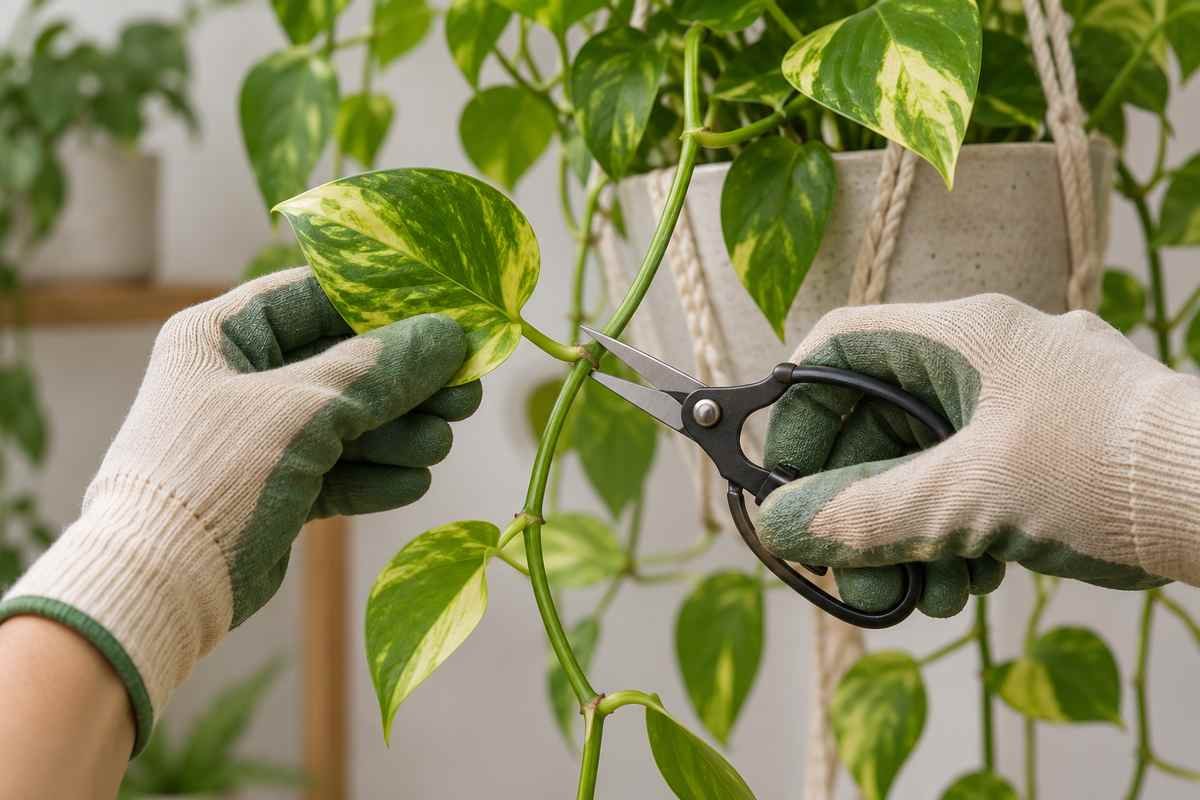
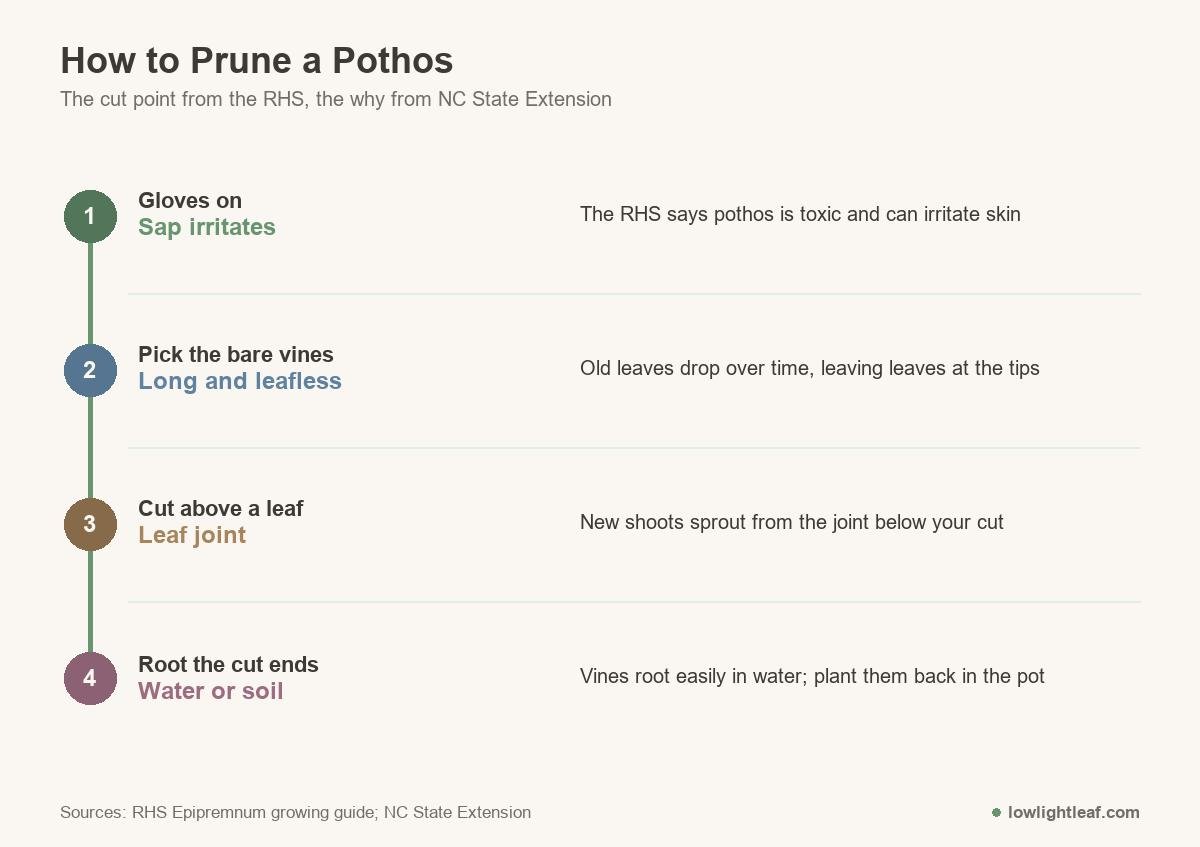
To prune pothos, cut each long or bare vine back to just above a leaf. The RHS explains that new shoots sprout from the leaf joints, so every cut gives the vine a chance to branch, and the pieces you cut off root easily as new plants. Wear gloves, because pothos sap can irritate skin.
That one rule covers most of it. The rest is deciding which vines to cut and what to do with the cuttings.
Why prune a pothos?
Pruning fixes the bare, stringy look that almost every pothos gets eventually. NC State Extension explains why it happens: over time, the older leaves yellow and fall off, so most of the leaves end up at the ends of the stems. Its advice is to prune stems back to keep the plant bushy.
The vines also just get long. NC State says pothos vines can reach 40 feet, and the RHS suggests cutting back stems that get too long. Sometimes the reason is purely practical, as one reply in an r/houseplants thread pointed out:
“The fact that you have to shimmy the vines like Rapunzel’s hair to the side just to access your drawer tells me that you should prune or find a better placement.”
– r/houseplants (16 upvotes)
Where to cut pothos
Cut pothos just above a leaf, where the leaf joins the vine. The RHS growing guide for pothos says this encourages bushier, denser growth because new shoots sprout from the leaf joints.
For the piece you remove, the RHS gives the opposite instruction: trim a cutting just below a leaf joint, because that’s where the roots will come from. So one snip just above a leaf on the plant, and one just below a leaf on the cutting.
Pruning a pothos, one vine at a time
Pruning a pothos takes a pair of gloves, sharp scissors and a few minutes per vine: cut each long vine just above a leaf, then trim and root the piece you removed. Here is the order I’d follow:
- Put on gloves. The RHS says pothos is toxic and can irritate skin, and recommends gloves whenever you handle or prune it.
- Pick the vines to cut. Start with the longest ones and any with long, leafless stretches near the pot.
- Cut just above a leaf. Choose how short you want the vine, then make the cut just above the nearest leaf below that point.
- Prep the cuttings. Trim each removed piece just below a leaf joint, per the RHS.
- Root them. NC State says pothos vines root easily in water; the RHS stands cuttings in a glass of water in a bright spot until roots appear, then pots them up.
The guide on how to propagate pothos covers rooting the cuttings in more detail.
Filling out a leggy pothos
The fastest way to fill out a leggy pothos is to cut it back and plant the rooted cuttings in the same pot. In an r/pothos thread about a vine with a bare gap, one reply laid it out:
“Personally I would prune it to the edge of the pot to keep it uniform! Then propagate that vine and put it back in the pot to keep it full”
– r/pothos (4 upvotes)
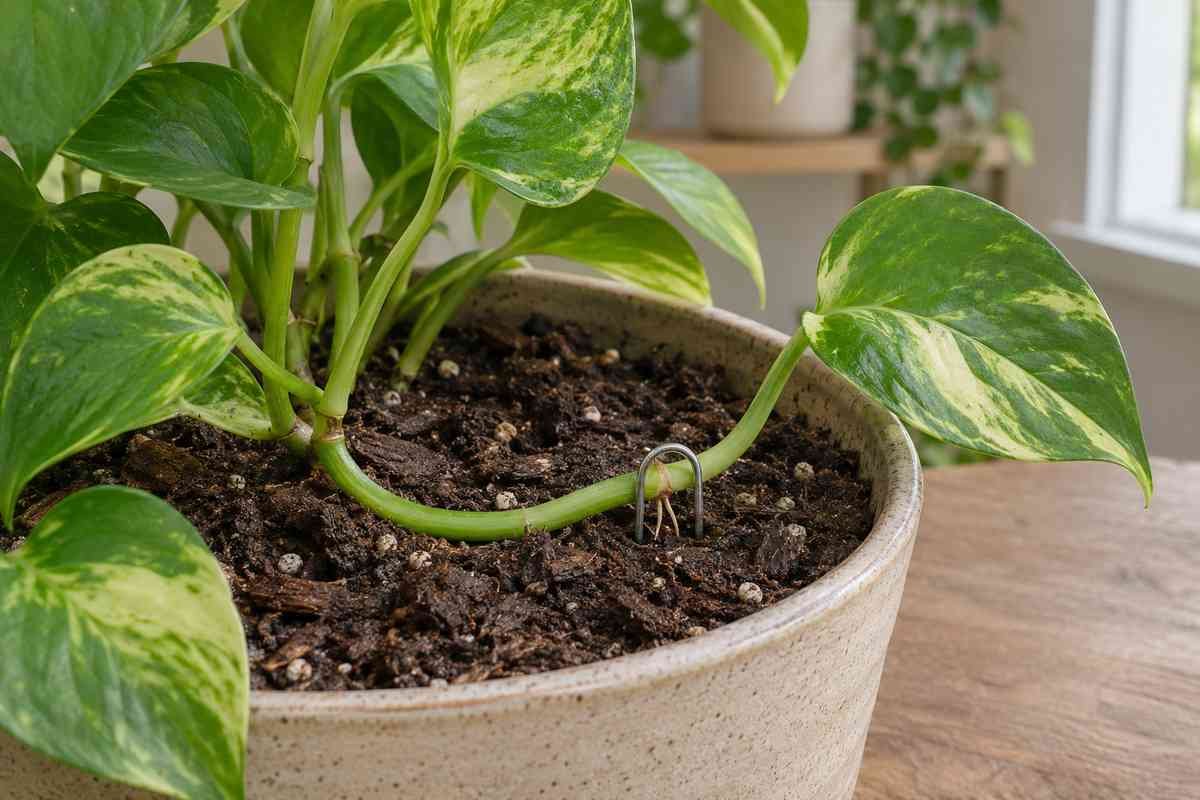
If you’d rather not cut at all, the RHS describes layering: pin a trailing stem down onto the soil in the pot, and roots sprout from the leaf joint where it touches. You get a new rooted section at the surface without losing any length.
Light matters too. NC State says pothos prefers bright, indirect light and survives long periods in low light, but low light can cause it to lose its variegation. In a north-facing apartment like the one I lived in for years, that means the spot closest to the window, plus a grow light for the dark months. The guide to pothos light requirements goes further into placement.
Removing dead and yellow pothos leaves
Snip or gently pull off yellow and dead leaves where the leaf stalk meets the vine. A few lower leaves yellowing and dropping is normal: NC State says older leaves yellow and fall off over time.
Lots of yellowing at once is a different story. NC State links overwatering to root rot and blackened leaf edges, and the RHS says to wait until the top layer of soil is dry before watering. The guide to pothos yellow leaves sorts out the causes.
Aerial roots: should a pothos hang or climb?
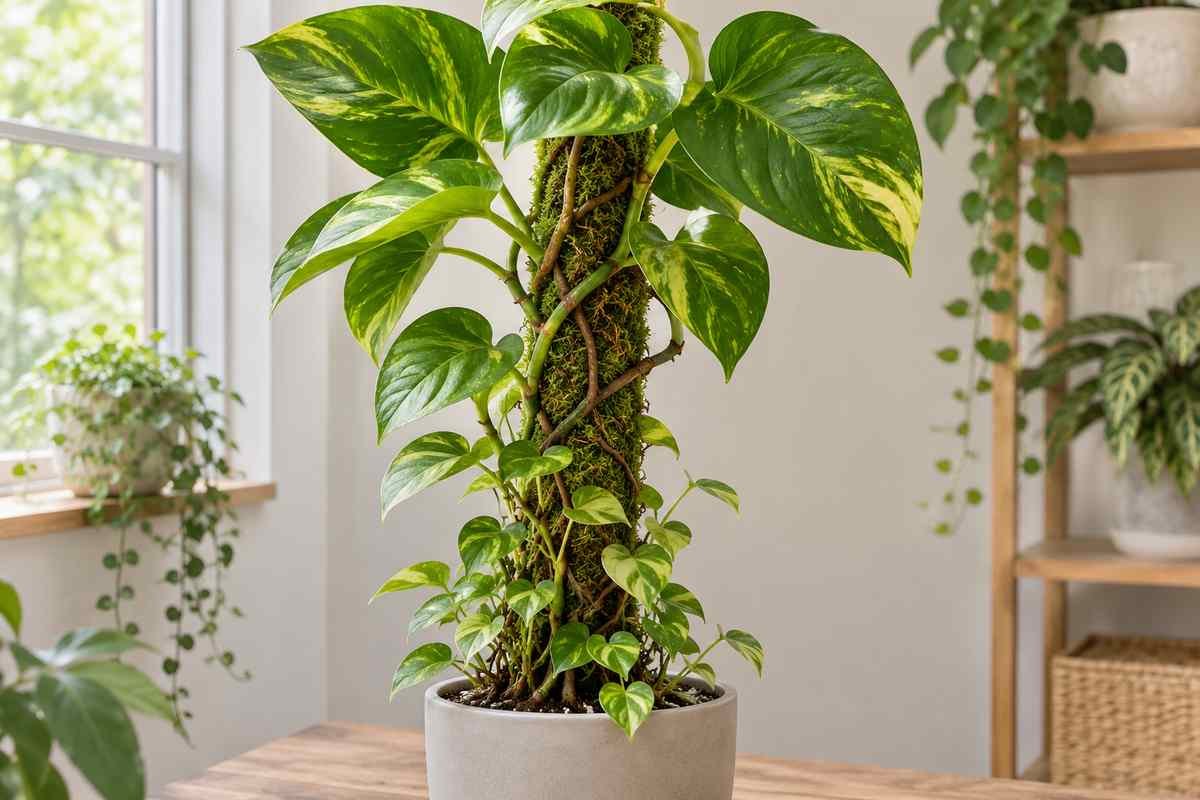
Either works. The RHS describes pothos grown both ways: trailing from a hanging basket or high shelf, or trained up a moss- or coir-covered pole. The brown aerial roots along the vine are how it climbs, according to NC State.
Climbing changes the leaves. NC State says that given a support to climb and enough light, a pothos starts producing large, mature leaves, while container plants usually keep their smaller juvenile leaves. If you train one up a pole, the RHS says to keep the moss damp so the aerial roots attach. The guide to aerial roots explains whether to trim them.
Pruning pothos in winter, and keeping pets safe
Neither the RHS nor NC State sets a best season for pruning. NC State does say to stop feeding in winter while the plant is dormant, so a winter cut will be slower to fill back in than one made in spring or summer.
Keep the trimmings away from pets. NC State lists pothos as a problem for cats, dogs and horses, and the RHS says to keep plants away from children and pets. My cat, Miso, is why I check every plant against the ASPCA list, and pothos sits on the toxic side of it. For what to do if a cat chews one, see is pothos toxic to cats.
Cut above a leaf, plant the cuttings back in the pot, and give the plant better light. That’s the whole fix for a bare pothos.

Ellie Marsh
Houseplant grower who spent years in a north-facing apartment. Writes practical care guides for low light homes, checked against extension and botanical garden sources.