Last updated on November 6, 2026
When snake plant leaves curl, check the water first, then the roots, the leaf bases, the temperature and the light. Neither the RHS nor NC State Extension names curling as a symptom, but both say overwatering and root rot are the main threat, and the RHS says healthy leaves are smooth, not wrinkled or puckered.
Most curled plants can be sorted out in a few minutes with your hands and a look at the base. Here is how I’d work through it.
Why are my snake plant leaves curling?
Snake plant leaves usually curl when they’re losing the water they store, either because the soil has been dry too long or because damaged roots can’t take water up.
That’s my reading of the sources rather than a quote. The RHS explains that the fleshy leaves store water so the plant can survive dry habitats, and warns that wrinkled or puckered leaves are a sign to avoid when buying.
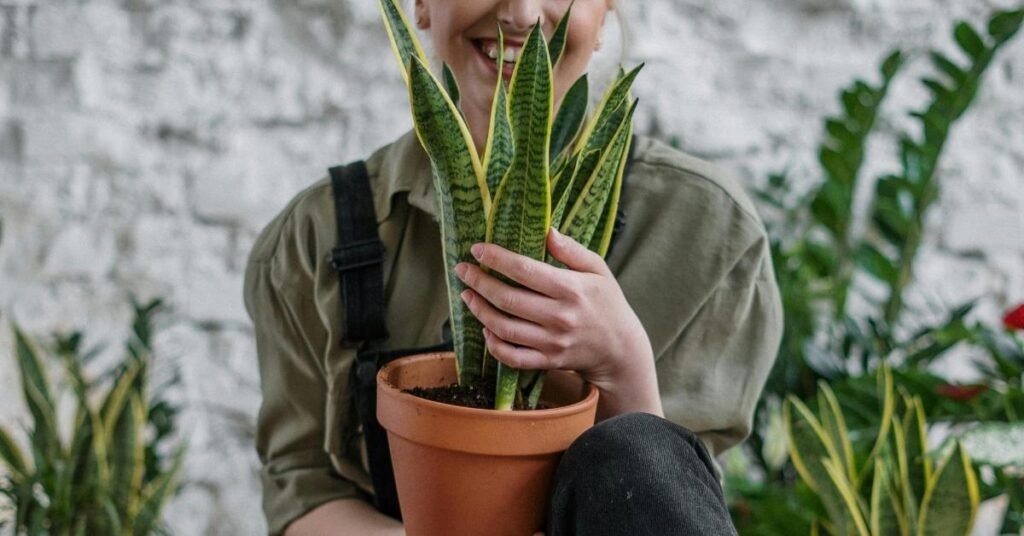
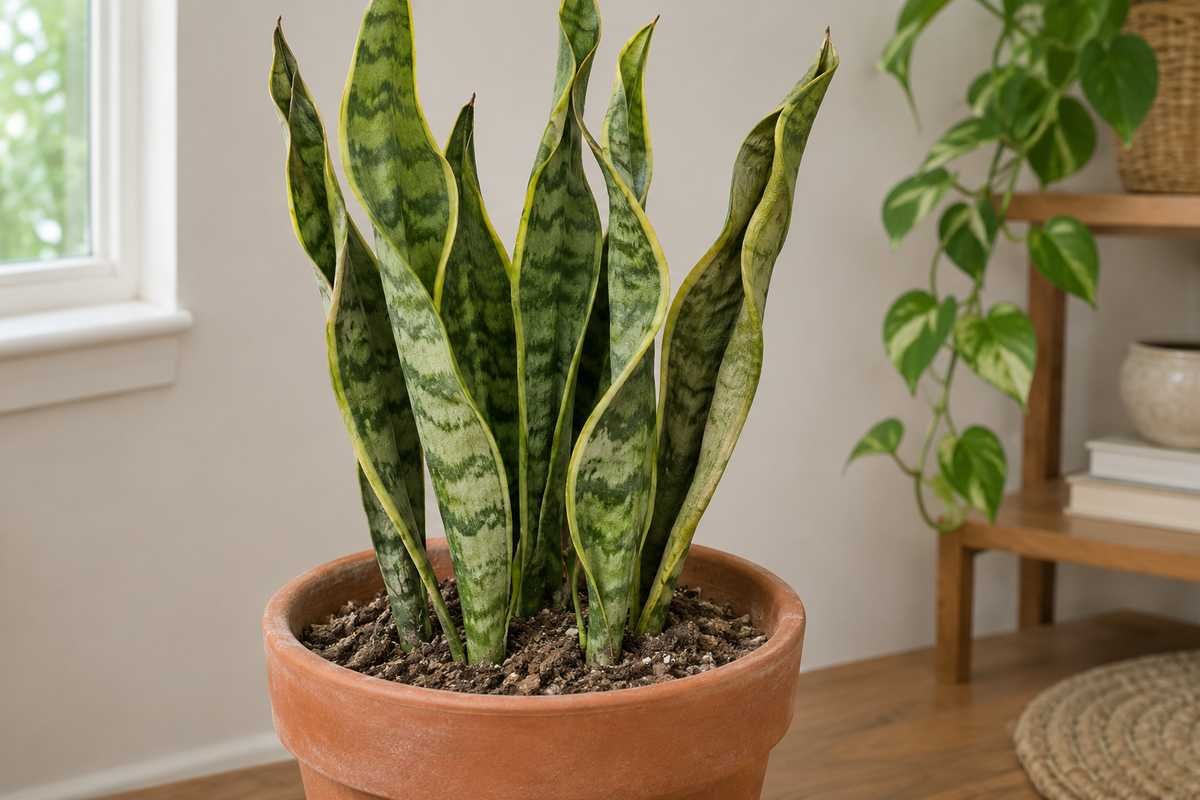
Before you treat anything, check the variety. The RHS describes the common Sansevieria trifasciata as having twisting leaves, and NC State lists a cultivar called ‘Twisted Sister’ grown for its twisting habit. A leaf that spirals but stays firm and smooth may simply be growing the way it should.
Snake plant curling leaves: what to check first
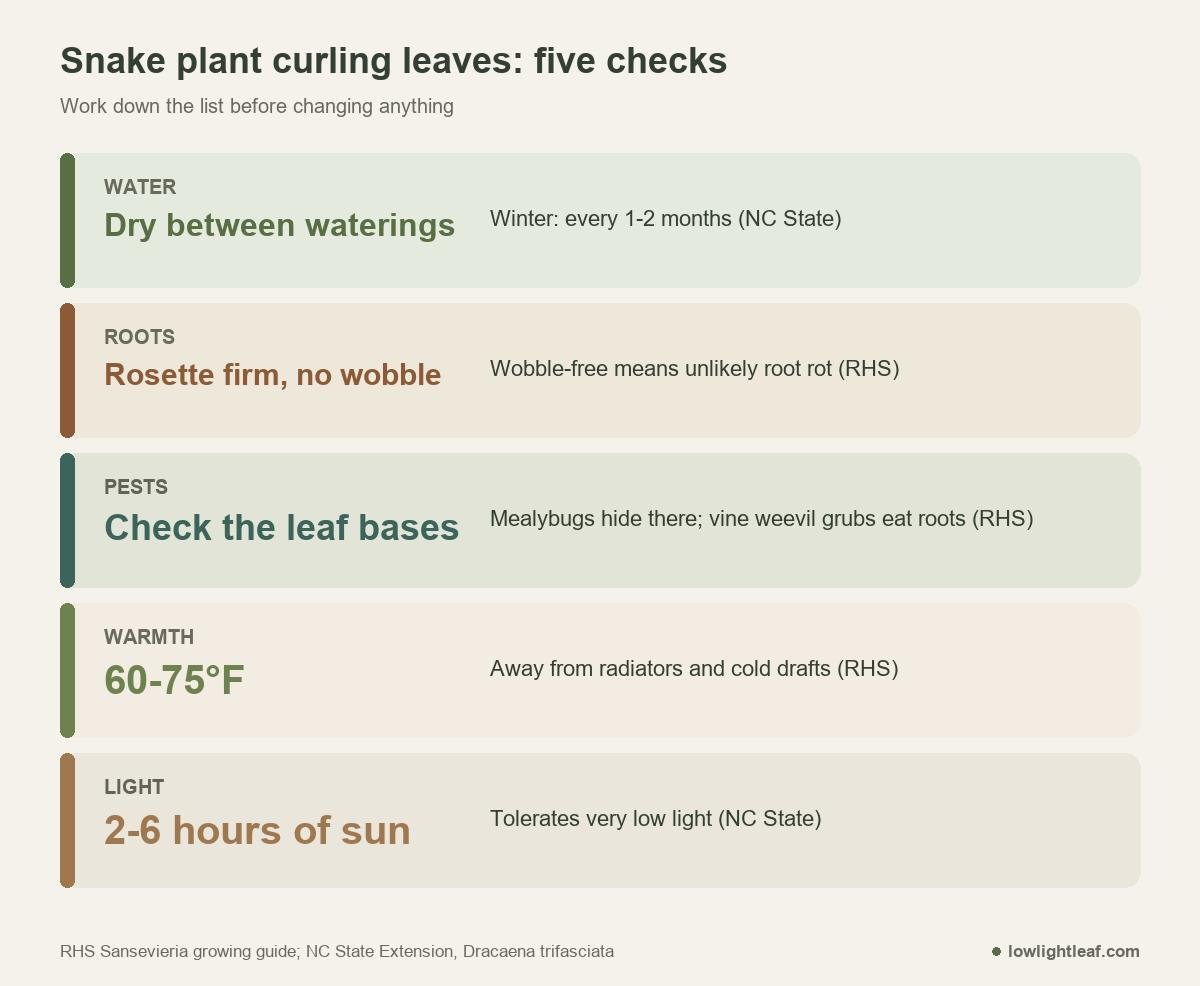
To fix snake plant curling leaves, find the cause before changing anything: feel the soil, test whether the rosette wobbles, look between the leaves at the base, then check the spot it sits in. Work through it in this order:
- Feel the soil. Still wet days after watering points to overwatering. Dry all the way down for weeks points to thirst.
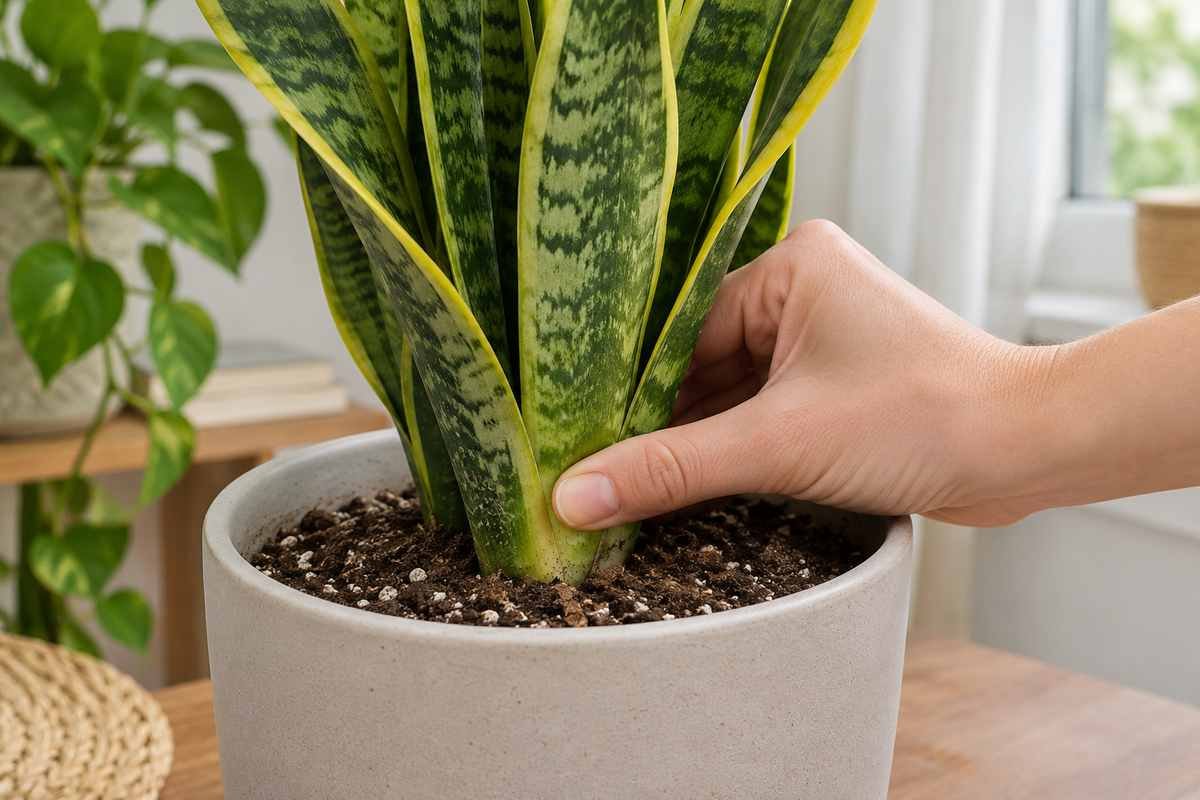
- Test the rosette. Hold the base and rock it gently. The RHS says a rosette firmly anchored in its pot, without much wobbling, is well rooted and unlikely to have root rot. A loose one is worth taking out of the pot to look at the roots.
- Look at the leaf bases. The RHS says mealybugs hide between the leaves at the base.
- Check the spot. Near a radiator, in a cold draft, or far from the window are all on the RHS and NC State lists.
If the roots turn out to be the problem, the guide to repotting a snake plant walks through the pot and the mix.
Curling after watering, or from thirst?
Both happen, and the soil tells you which. The RHS sansevieria guide calls overwatering a common cause of poor health, because the roots are likely to rot. It says to err on the side of minimal watering, only once the compost has dried out, and to pour away any water left in the saucer.
NC State gives the schedule: let the soil dry between waterings from spring to autumn, and in winter water only every one to two months. The way you water matters too. On a post about a curling plant watered with ice cubes, the top reply was direct:
“Don’t water with ice cubes, there’s no point. Water it thoroughly until water comes out the bottom. Let it dry completely between waterings.”
– r/SnakePlants (36 upvotes)
That reply put the gap at 4 to 6 weeks. Another owner in the same thread pushed back that in a dry climate theirs couldn’t go past a week, so go by the soil, not the calendar. The snake plant watering guide covers how to tell when it’s dry enough.
Light and temperature
NC State recommends a spot with 2 to 6 hours of direct sun a day, although the plant tolerates very low light. The RHS says it thrives in sun or light shade, but taller kinds kept in particularly low light may flop. Owners on Reddit are blunter about dim rooms:
“what you are describing is not low light, it’s no light. sansevieria are NOT low light plants. … anything more than a couple of feet away from a window is ambient light”
– r/plantclinic (18 upvotes)
In a north-facing apartment like the one I lived in for years, that means right at the glass, plus a grow light for the dark months. The guide to snake plant light requirements covers placement in more detail.
For temperature, the RHS gives 60 to 75°F, out of cold drafts and away from radiators. NC State’s plant toolbox says it tolerates cool temperatures around 50°F. Skip the spray bottle: the RHS says snake plants like low humidity and should never be misted.
Pests at the base
The RHS names three pests to look for. Mealybugs are sap-sucking insects that hide between the leaves at the base. Red spider mites are usually only a problem in hot, dry conditions. Vine weevil grubs feed on the fleshy roots, which makes the leaves collapse. NC State adds thrips and scale to its list and says to monitor for mealybugs and spider mites. If you find white, cottony clusters at the base, the guide to getting rid of mealybugs walks through treatment.
Should you cut curled snake plant leaves?
Cut a curled leaf only if it’s damaged. The RHS says snake plants don’t need pruning, but you can remove damaged leaves by cutting them off at the base. Neither source says whether a curled leaf flattens again, so judge by whether it’s still firm. Leaves that flop rather than curl are covered in why a snake plant droops.
Wear gloves when you cut, because the RHS and NC State both say the sap can irritate skin.
My cat, Miso, is why I check every plant against the ASPCA list, and the ASPCA lists snake plant as toxic to cats and dogs. The page on whether snake plants are toxic to cats covers the signs.
A firm rosette, soil that dries out between waterings and a spot near the window fix most curled snake plants. Check those three before you buy anything.

Ellie Marsh
Houseplant grower who spent years in a north-facing apartment. Writes practical care guides for low light homes, checked against extension and botanical garden sources.