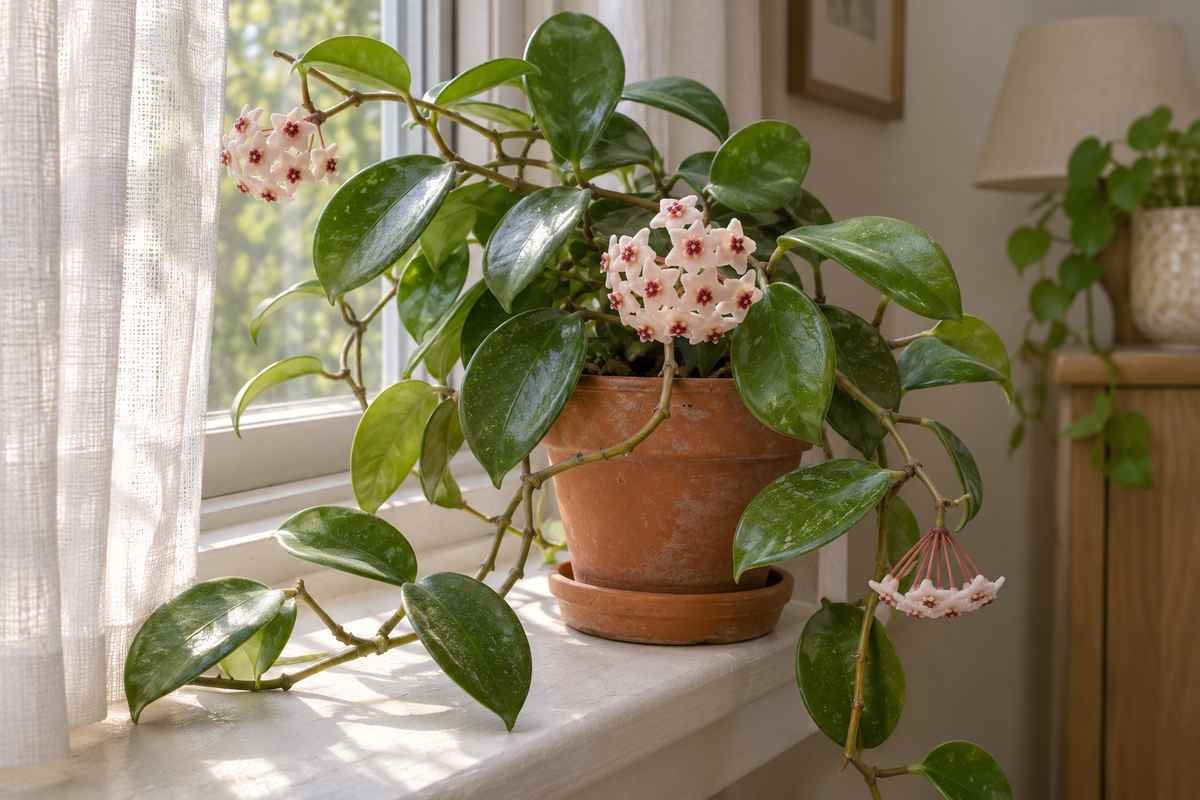
A hoya plant, or wax plant, is an epiphytic vine with thick, waxy leaves that wants bright, indirect light, a loose mix that dries out between waterings, and a snug pot. NC State Extension says most plants won’t flower until they are 2 or 3 years old, and that the old flower spurs should never be cut. The ASPCA lists the common wax plant as non-toxic to cats and dogs.
Most of what goes right with a hoya comes from leaving it alone in the right spot. Most of what goes wrong comes from too little light or too much water.
Does a hoya like sun or shade?
A hoya does best in bright, indirect light, and NC State Extension says most species take bright light, dappled shade or full morning sun, but not full sun all day.
The NC State profile of Hoya carnosa, the classic wax plant, calls bright indirect light year-round ideal. Its light rating is partial shade, which the toolbox defines as 2 to 6 hours of direct sun a day. That’s more than you’d guess. It matters, too, because light is also a big part of whether you ever see a single flower cluster on the vine.
So a hoya is not a deep-shade plant. In a north-facing apartment like the one I lived in for years, it would go on the sill itself, and a grow light would make up the difference in winter. An east window, with its morning sun, is closer to what NC State describes. The list of plants for north-facing windows is the better place to look if the sill is all the light you have.
Hoya plant care: water, potting mix and humidity
Water. Let the mix dry out between waterings. NC State says soil that’s too wet or too dry can both make the leaves drop, so neither extreme is safe. Use water at room temperature: cold water can shock the plant.
Mix and pot. In the wild, hoyas grow on other plants rather than in soil, which is why NC State recommends a loose, fast-draining potting mix high in organic matter and a container with good drainage. Wet roots are the enemy. A hoya doesn’t mind being pot-bound. Repot only when it outgrows the container, never while it’s in bud or flower, and move up no more than 2 inches. The genus page explains the reason: a pot that doesn’t keep the roots snug can hold extra water and lead to root rot.
Humidity. NC State says the wax plant loves high humidity and suggests a humidifier or a tray of wet pebbles under the pot. If your rooms run dry, raising humidity in the house walks through what actually moves the number.
Temperature. Hoyas are frost intolerant. If yours spends the summer outside on a shaded patio, bring it in once night temperatures fall below 50°F.
Why isn’t my hoya blooming?
A hoya that won’t bloom is usually too young, too dim, recently repotted into a big pot, or missing its spurs. NC State’s profile ties flowering to four things: time, bright light, a snug pot and leaving the old flower stalks in place.
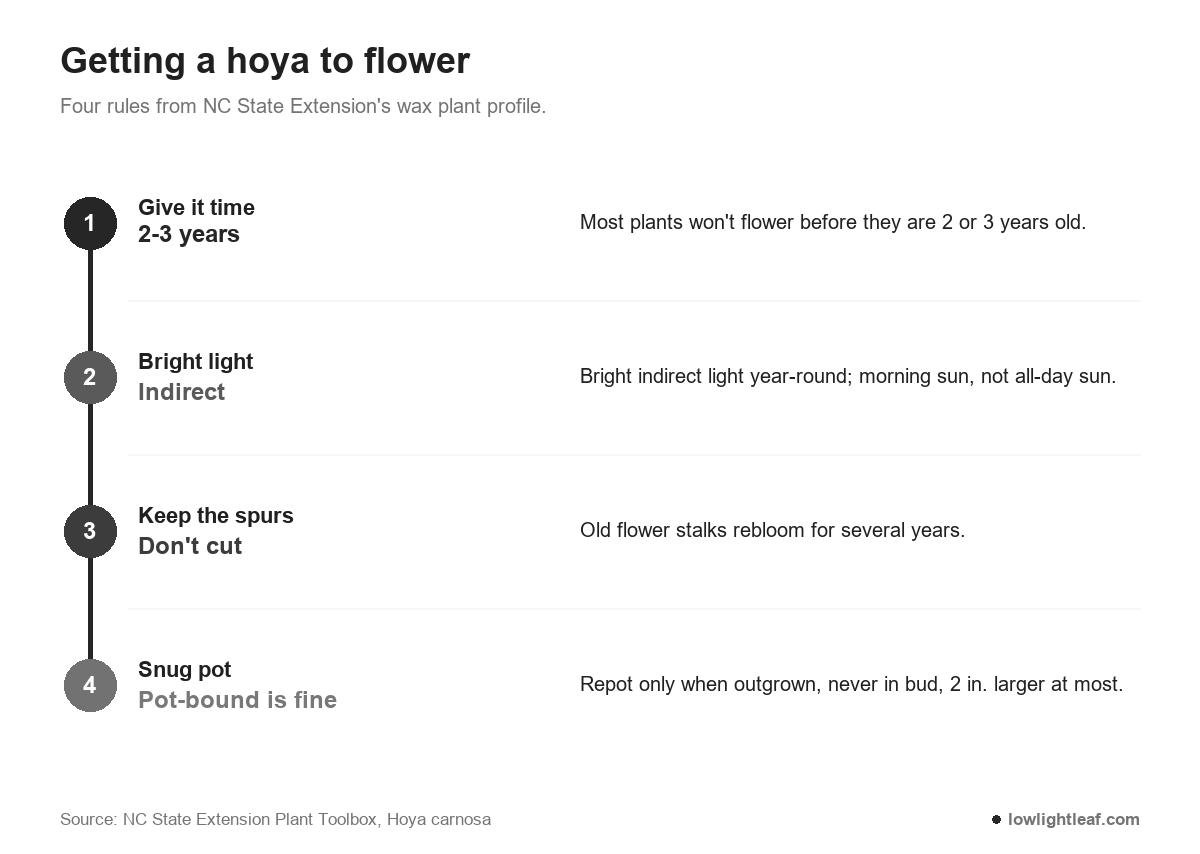
- Give it time. Most plants won’t flower until they are 2 or 3 years old, so a young cutting with no buds is normal.
- Give it light. Bright indirect light year-round, with some morning sun if you can manage it.
- Leave the spurs. After flowering, the short stalk the blooms came from, called the peduncle or spur, flowers again for several years. NC State’s warning is blunt: cutting these stems off is cutting off future flowers.
- Keep the pot snug. Don’t repot a plant in bud, and don’t jump to a much bigger pot.
When it works, NC State describes clusters of up to 30 star-shaped, fragrant flowers in white to pink, which can drip a sticky sap. Bloom can come in spring, summer or fall. Some species are shy to flower at all and are grown for their leaves.
Even so, hoyas don’t always follow the rules. An r/hoyas post that drew nearly 3,000 upvotes was about exactly that:
“Its planted in 100% miracle grow potting soil and a ceramic pot and does this. Meanwhile mine is in a clear pot with a homemade mix and not a peduncle in sight.”
– r/hoyas, October 2026 (2,914 upvotes)
The poster didn’t say where either plant sits, so there’s no telling which factor made the difference. Light and the plant’s age are where I’d look first, since those are the two things NC State ties directly to flowering.
Do hoyas like to hang or climb?
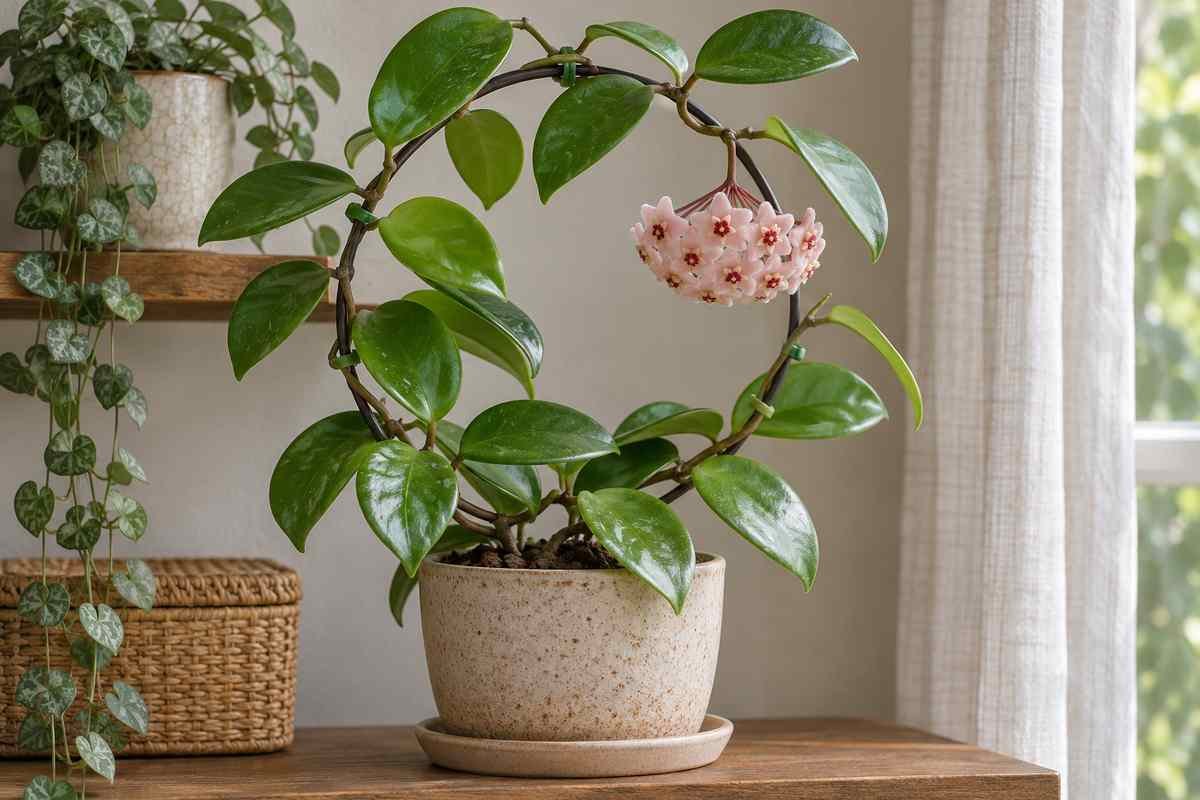
Both work. NC State calls the wax plant a great choice for hanging baskets because of its climbing habit and fast growth, while its genus page says hoyas grow better on a trellis or pole the stems can be trained over.
A basket suits a high shelf or a window frame; a small hoop or trellis keeps it compact on a sill. If you go with a basket, the hanging and trailing plants list sets hoyas beside other options for the same spot.
If a vine gets out of hand, NC State says to prune in early spring, before the fast growth starts. Just don’t trim the spurs while you’re at it.
Propagating a hoya, and the single-leaf hoya
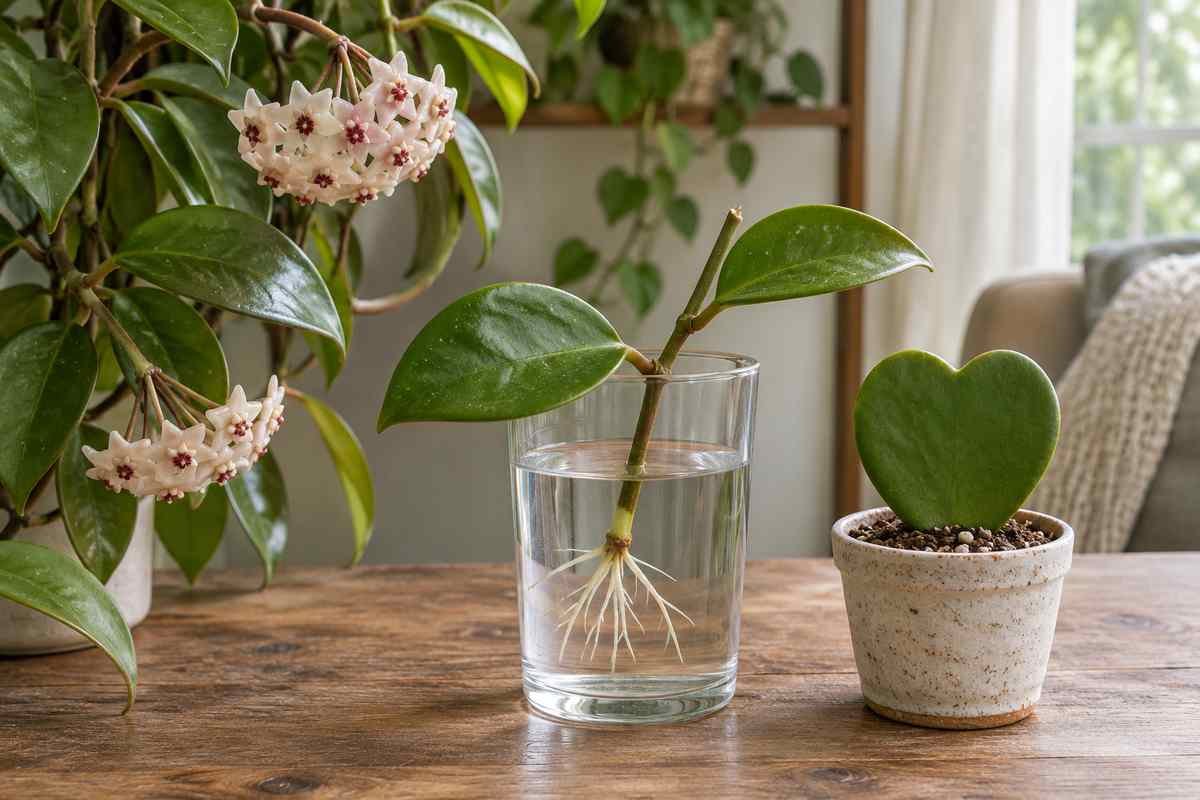
Hoyas propagate by stem cuttings, and NC State says most species root easily that way. Take a piece of stem with leaves and at least one node, the joint where a leaf meets the stem.
The node is the part that matters, and it explains the single-leaf sweetheart hoyas (Hoya kerrii). A leaf stuck in a pot can root and stay alive for a long time, but without a node it often never makes a vine. When a single-leaf plant surprised its owner by growing, one commenter set out the odds:
“It’s not a “never” so much as a “more often than not.” OP lucked into one of the ones that did have a viable node.”
– r/houseplants (97 upvotes)
If you want a hoya that trails, buy or root a piece of stem, not a lone leaf.
Pests
NC State names mealybugs as the main problem, plus fungus gnats, which come with a mix that stays too wet, and spider mites, which show up when the air is too dry. Aphids are on its genus list too. Mealybugs tuck into the leaf joints and flower clusters, and getting rid of mealybugs starts with isolating the plant. I’d treat gnats as a watering signal before a pest problem.
Is a hoya safe for cats and dogs?
Yes. The ASPCA plant list has Hoya carnosa and the sweetheart hoya (Hoya kerrii) as non-toxic to cats and dogs, and NC State tags the wax plant non-toxic for cats, dogs and horses. I look up every plant on that list before it comes home, and the hoya is one of the easy answers.
The genus has over 550 species, though, and the ASPCA doesn’t list most of them, so a rare hoya hasn’t been cleared just because the common one has. The plant toxicity checker has the wax plant entry, and the list of pet-friendly indoor plants has more options for a home with a chewer.
Give a hoya the brightest indirect spot you have, let the mix dry between drinks, keep the pot small and leave the spurs alone. Then wait. The flowers come on the plant’s schedule, not yours.

Ellie Marsh
Houseplant grower who spent years in a north-facing apartment. Writes practical care guides for low light homes, checked against extension and botanical garden sources.