A Chinese money plant (Pilea peperomioides) wants bright, indirect light a short distance from a window, a pot with a drainage hole, and water only after the top two-thirds of the mix has dried. Keep it between 65 and 80°F and turn it a quarter turn each time you water. NC State Extension calls it safe for pets and children, although the ASPCA has no entry for it.
Most of what goes wrong with a pilea shows up in its round leaves first, so it’s an easy plant to read once you know what to look for.
Is a Chinese money plant the same as a money tree?
No. The Chinese money plant is Pilea peperomioides, a small plant in the nettle family from the cool, shady mountains of Yunnan Province in southern China. The money tree is Pachira aquatica, a tropical tree in the mallow family. They share a nickname and nothing else.
Penn State Extension says the pilea’s fleshy, coin-shaped leaves gave it the “money” name, and that it has been a star houseplant since the houseplant boom of the 2010s. It usually stays 8 to 12 inches tall and wide, per NC State. If the plant on your shelf has braided trunks and hand-shaped leaves, you want the money tree plant care guide instead.
Where should I put my Chinese money plant?
Put a pilea in bright, indirect light, a short distance from a window and out of direct sun. The New York Botanical Garden’s pilea guide says it will live in semi-shade but does better close to a window, and Penn State suggests several feet back or behind a sheer curtain or blinds.
Less light shows in the shape. NYBG says a pilea grown in lower light gets leggier, with its leaves spread farther apart. Penn State says the same about leggy, elongated stems.
It also leans toward the window. NYBG’s fix is to give the pot a quarter turn every time you water, which keeps the plant symmetrical instead of lopsided.
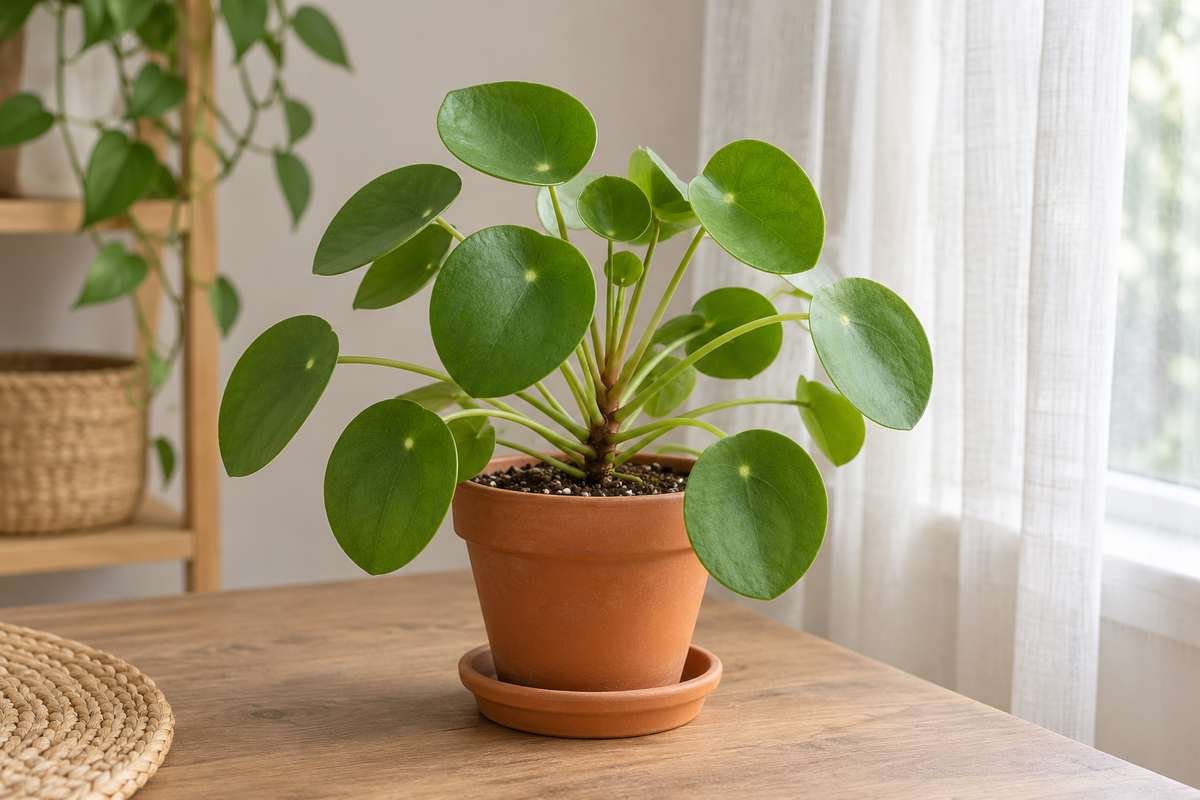
In a north-facing apartment like the one I lived in for years, a pilea would go right against the window, not across the room, and a grow light would make up the rest in winter. NYBG adds one winter caution: the glass itself can make a cold micro-climate, so move the pot back from it in winter.
Watering, soil and feeding a Chinese money plant
Water. NYBG’s rule is to water sparingly but thoroughly, moistening all the soil, and then let the top two-thirds of the mix dry before watering again. Empty the saucer once it drains, and water less in winter when the plant isn’t growing. Pileas have a small root system and don’t like staying wet.
NYBG is firm about drainage: the pot needs a hole, and a layer of pebbles in the bottom doesn’t replace one. A plant that’s been kept too wet can turn around. In an r/plantclinic thread about a struggling pilea, one reply described what worked:
“My pilea used to look like this, I repotted her into better draining soil, reaaaalllllyyy held back on the watering (wait until the middle most leaves start to droop), and popped her in a much sunnier spot. She bloomed this summer!”
– r/plantclinic (26 upvotes)
Soil. Penn State recommends a well-drained houseplant potting mix, with an equal part of cactus mix added for pileas that want sharper drainage. NYBG uses a soil-based potting mix with peat.
Temperature and humidity. NYBG gives 65 to 80°F and says not to let it fall below 55°F; Penn State agrees on nights above 55°F. Keep it away from drafts, air-conditioning vents and heat vents. NYBG suggests a pebble tray under the saucer for humidity, but Penn State warns that overly high humidity can bring bacterial leaf spot, so there’s no need to overdo it.
Feeding. NYBG feeds only in spring and summer, with a balanced organic fertilizer every other week at half strength.
Do Chinese money plants like big pots?
No. A pilea does better in a snug pot than a big one, because its root system is small. NYBG says it does fine in a 3 to 4 inch pot, and Penn State suggests a pot roughly 2 inches wider than the root ball when you repot.
The two sources set different sizes but agree on the idea: size the pot to the roots, not to the leaves. A big pot holds more wet soil around a small root system, which is the condition NYBG warns against.
Chinese money plant problems: reading the leaves
NYBG’s guide links most leaf changes to water or light.
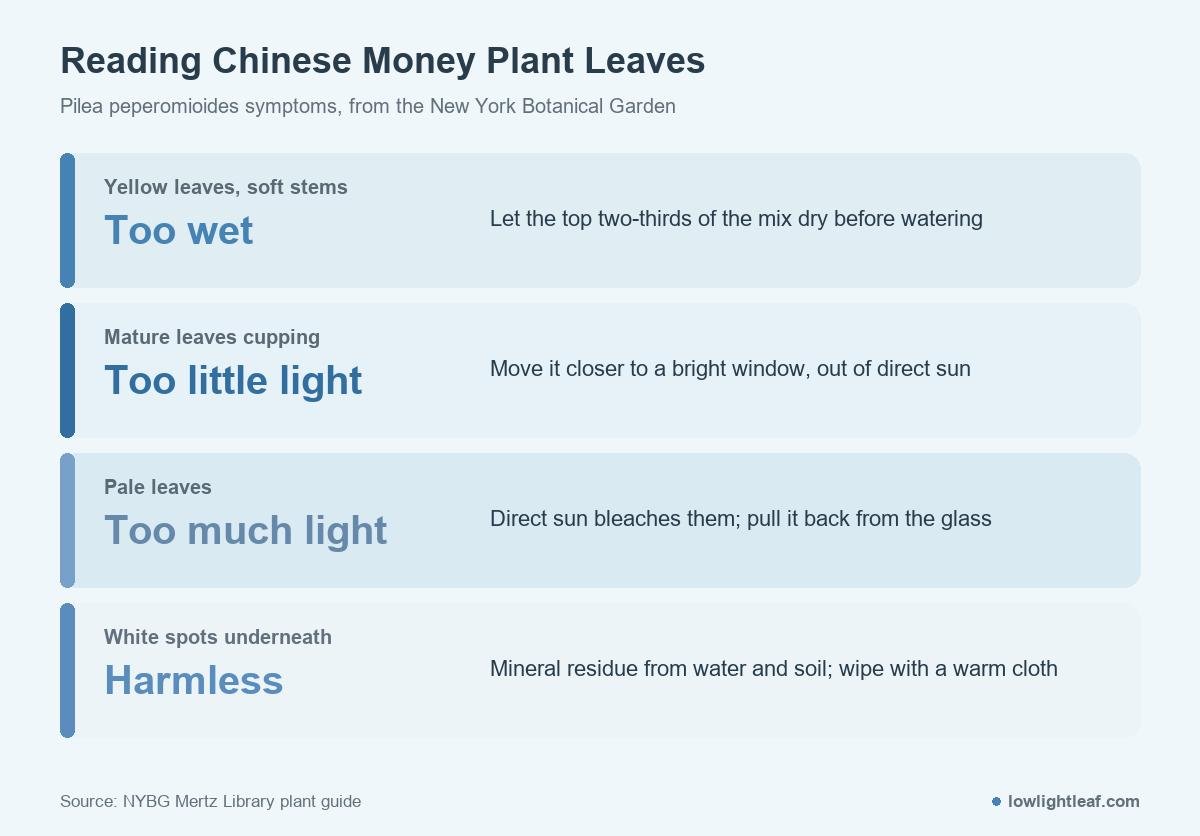
- Yellow leaves with soft stems: too wet.
- A few lower leaves yellowing: normal aging, as they prepare to drop.
- Mature leaves cupping: mostly too little light. New leaves cup as they open, so judge the older ones.
- Pale leaves: too much light.
- Leaves dropping in fall: too cold, too wet, or both.
- Long, drooping stems on a young plant: low light. On an older plant, a bare base and a looser shape are natural aging.
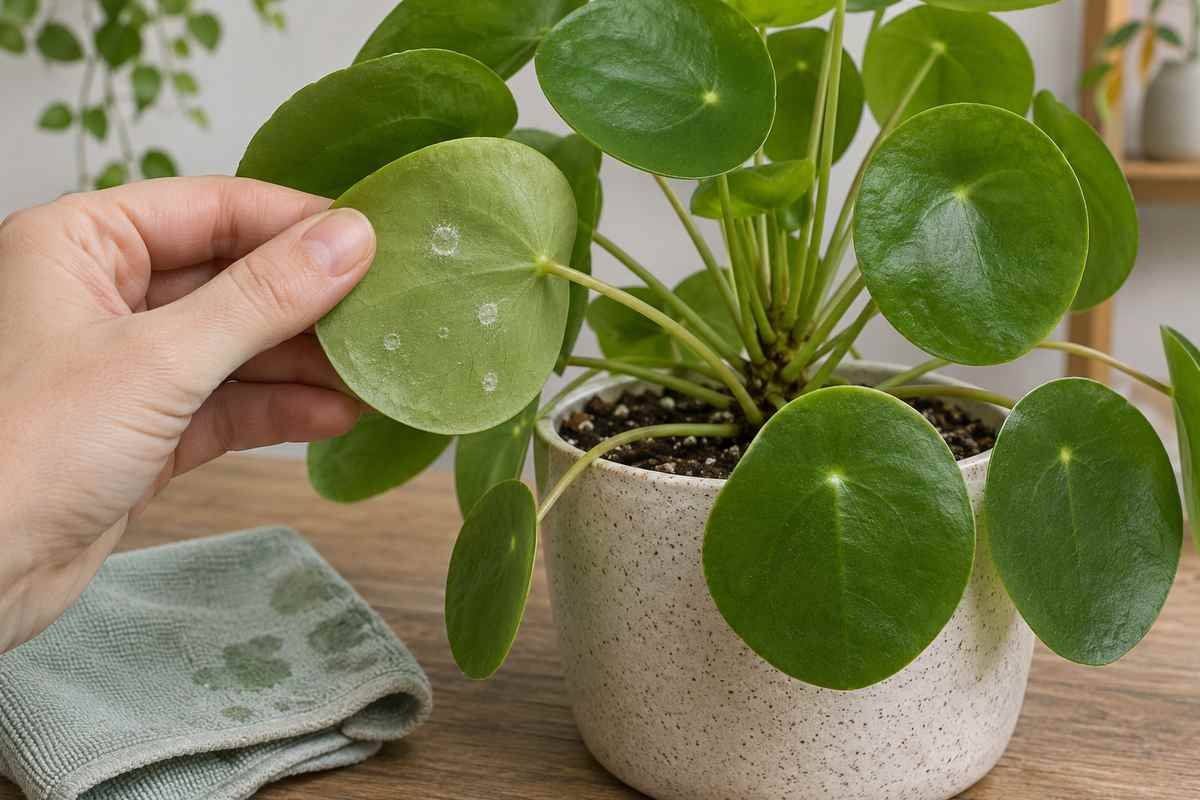
White spots under the leaves. Chalky white circles on the undersides look alarming but aren’t a pest. NYBG explains that they’re mineral residue from your water and soil, left behind where the leaf releases water vapor. Wipe them off with a cloth dipped in warm water. NYBG also says to wipe the leaves regularly, since dust makes the plant behave as if it’s getting too little light.
Pests. Penn State lists aphids, mealybugs, spider mites, scale and fungus gnats; NC State names all of those except aphids. If you’re dealing with gnats, the guide to getting rid of fungus gnats starts with the soil.
Propagating a Chinese money plant from pups
A pilea makes offsets, or pups, around its base. Penn State says these can be removed and potted separately from the parent. NC State lists pups and stem cuttings, and says spring or early summer is the best time, during active growth. NYBG suggests a tip cutting in late spring if the main plant has gone leggy.
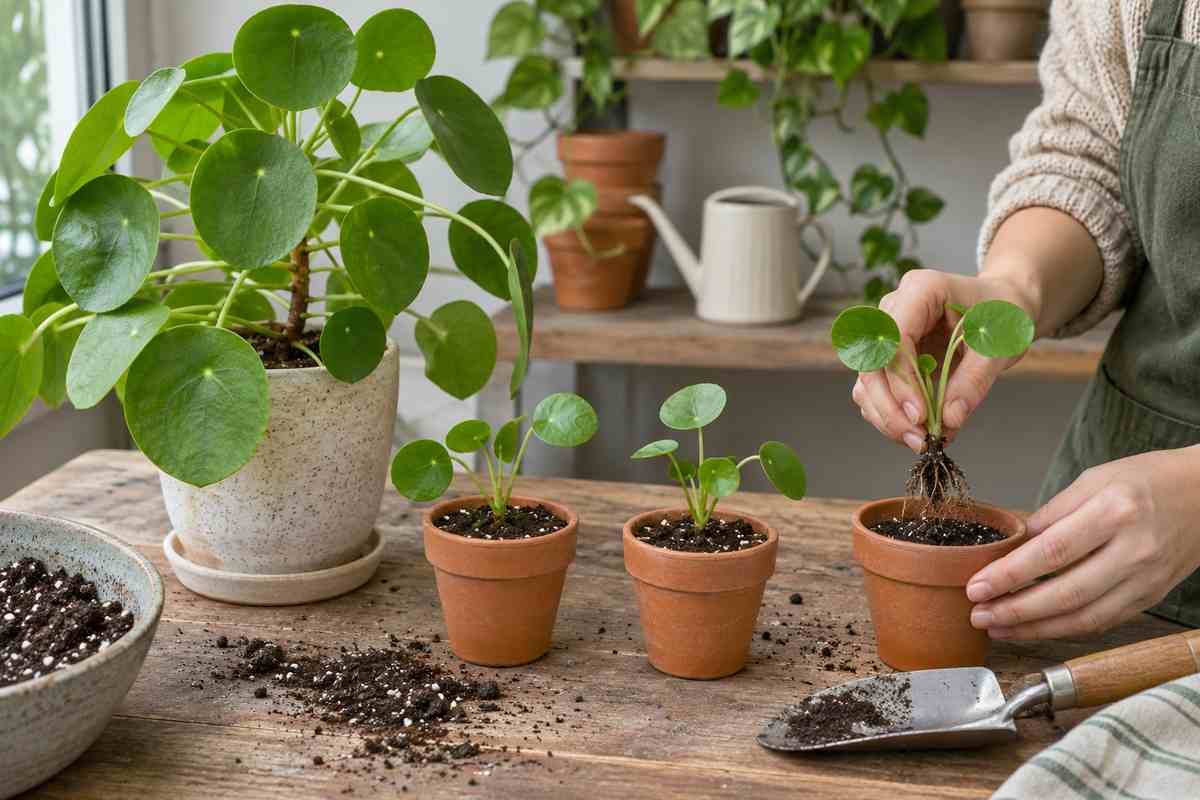
Once it settles in, the supply can feel endless:
“Anyone else feel they have been cursed with Chinese money plants. These are my latest 9 babies. I’ve probably grown and gifted over 40 that have grown from two plants over about 7 years. They just keep coming.”
– r/houseplants (171 upvotes)
Not everyone gets that. Another reply in the same thread said their plant was still tiny after five years with only a few pups, and light is the first thing I’d check in that case.
Is a Chinese money plant safe for cats and dogs?
Most likely yes. NC State Extension describes this plant as safe for pets and children and tags it pet friendly. The ASPCA, which I check every plant against because of my cat, Miso, has no entry for Pilea peperomioides, so there’s no ASPCA verdict for this exact species.
Two relatives are on the ASPCA list as non-toxic to cats and dogs: the aluminum plant (Pilea cadierei) and the friendship plant (Pilea involucrata). That points the same direction as NC State, but a relative’s listing isn’t the plant’s own. The article on whether money trees are toxic to cats sorts out the other plants sold under the money name, and the plant toxicity checker has the two pilea relatives.
Give a pilea a bright spot near the window, let it dry two-thirds of the way down, and turn it as you water. Do that and it will keep handing you pups.

Ellie Marsh
Houseplant grower who spent years in a north-facing apartment. Writes practical care guides for low light homes, checked against extension and botanical garden sources.