Last updated on November 3, 2026
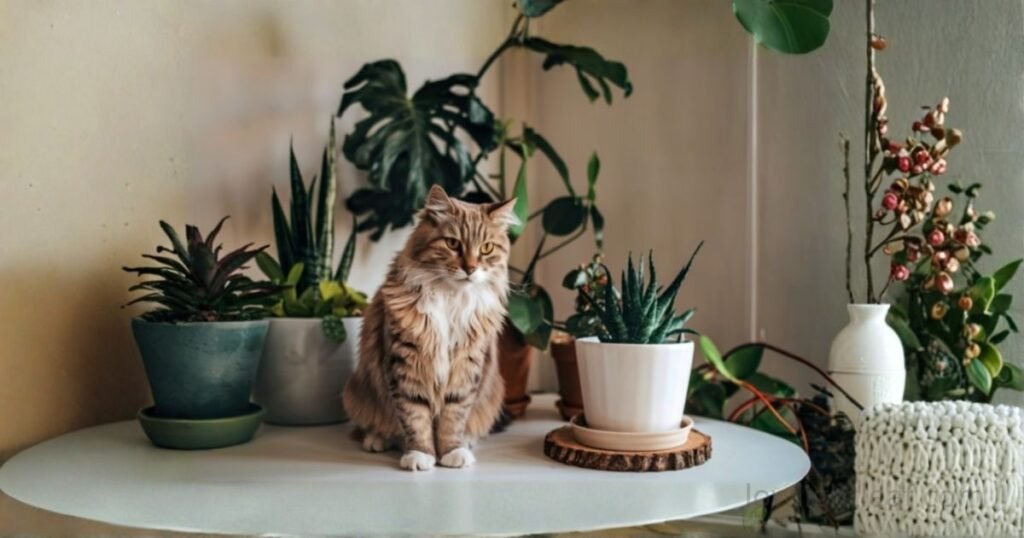
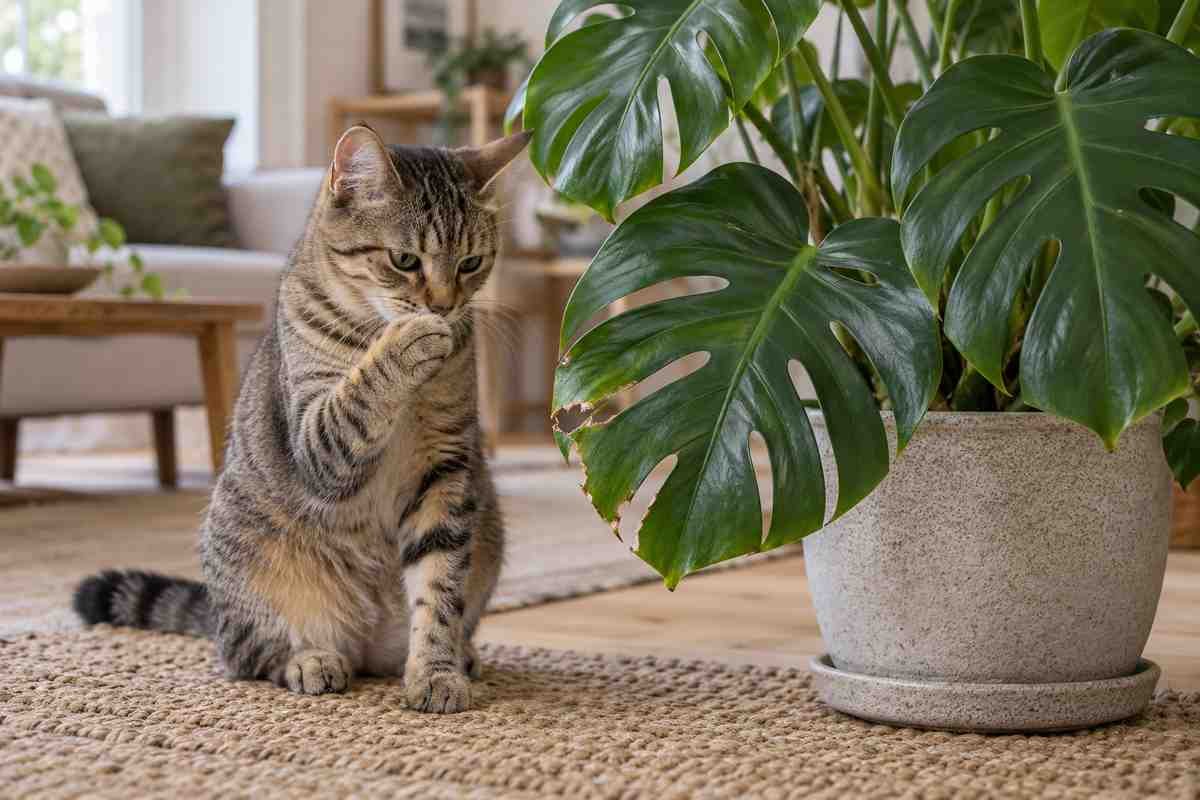
Is monstera toxic to cats? Yes. The ASPCA lists Monstera deliciosa as toxic to cats and dogs because its leaves and stems hold insoluble calcium oxalate crystals, which burn the mouth on the first bite. In most cases that means drooling, pawing at the face and maybe vomiting, not a life-threatening poisoning. The one sign that needs a vet right away is swelling that makes breathing hard.
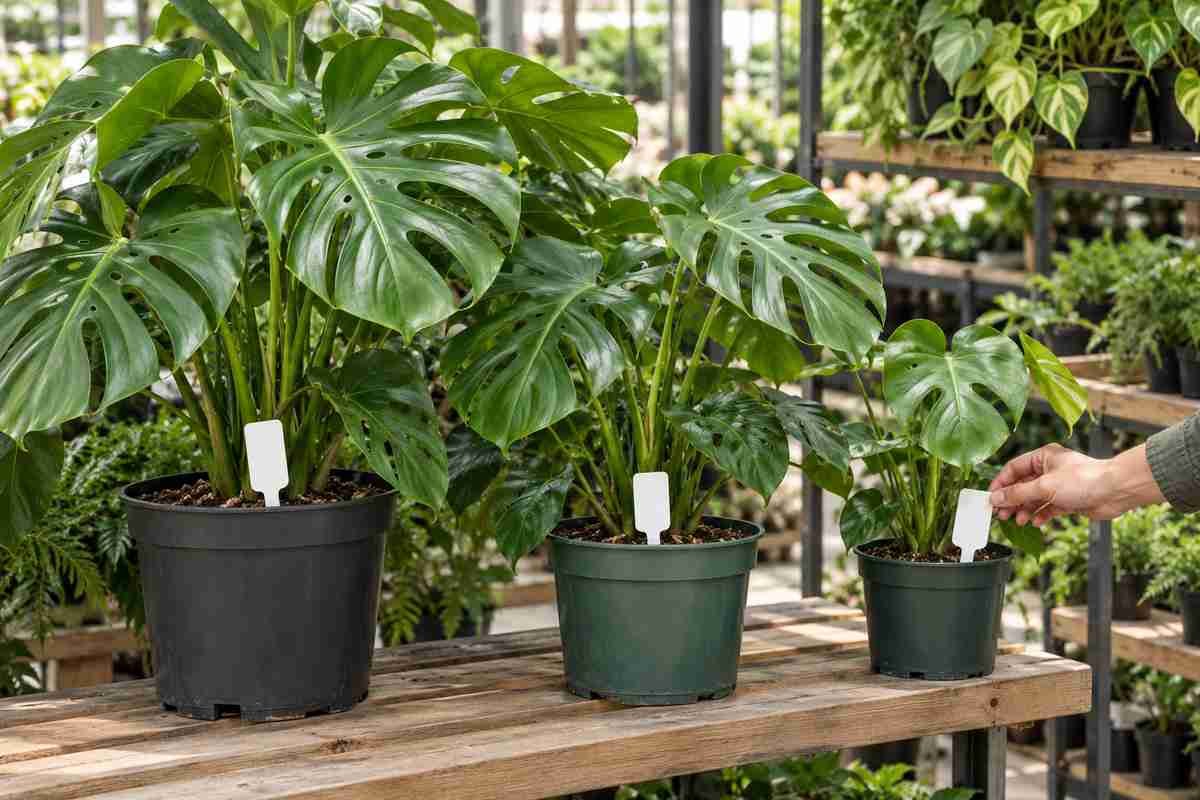
The plant also hides under other names. The ASPCA files the same species five separate times, so the tag on a pot may not say “monstera” at all.
What happens when a cat bites a monstera?
The crystals do the damage, not a slow-acting poison. Pet Poison Helpline explains for philodendron, the plant the ASPCA files monstera under as “cutleaf philodendron,” that chewing releases microscopic crystals that cause irritation and pain in the lips, mouth and throat. The ASPCA’s Swiss cheese plant entry lists these signs for cats:
- oral irritation, with intense burning of the mouth, tongue and lips
- excessive drooling
- vomiting
- difficulty swallowing
Because it hurts straight away, a lot of cats stop after one bite. NC State Extension’s plant database rates monstera’s poison severity as low and notes the symptoms come “only if eaten in large quantities.” One cat owner in r/Monstera described exactly that pattern:
“I have a cat that will chew plants, and he has bitten my monster before. He didn’t display any toxicity issues or anything, but he had left it alone after? So do with that what you will.”
– r/Monstera (13 upvotes)
That’s one cat, not a rule. Some cats go back, and a kitten chewing on a leaf every day is a different situation from a single curious bite.
When a monstera bite is an emergency
Rarely, the swelling goes further than the lips. Pet Poison Helpline says that in rare instances these crystal plants cause severe throat swelling that makes breathing difficult. A cat that is wheezing, breathing with its mouth open or struggling to swallow needs an emergency vet now, not a wait-and-see.
For everything short of that, take the leaf away, wipe any plant bits from around the mouth and keep an eye on the cat. Call your vet if the drooling or vomiting doesn’t settle, or if you don’t know how much was eaten. ASPCA Poison Control is at (888) 426-4435, and a consultation fee may apply. One monstera page that ranks for this question prints that number with the last digit wrong, so take it from the ASPCA’s own page or from here.
The names a monstera hides under
I look up every plant against the ASPCA list before it comes home to Miso, and monstera is the plant that taught me to search by the botanical name. On the ASPCA cat list, Monstera deliciosa has five separate entries: Swiss cheese plant, cutleaf philodendron, hurricane plant, ceriman and Mexican breadfruit. Every one is in the toxic column.
One nickname crosses over into a different plant. The ASPCA’s own monstera entries list “split-leaf philodendron” as another name for it, yet the same list has a separate Split Leaf Philodendron entry for Philodendron bipennifolium, where “fruit salad plant” turns up as well. It doesn’t change the answer, because that philodendron is on the toxic list too, with the same crystals. It does mean a search for the nickname can land you on a different plant’s page.
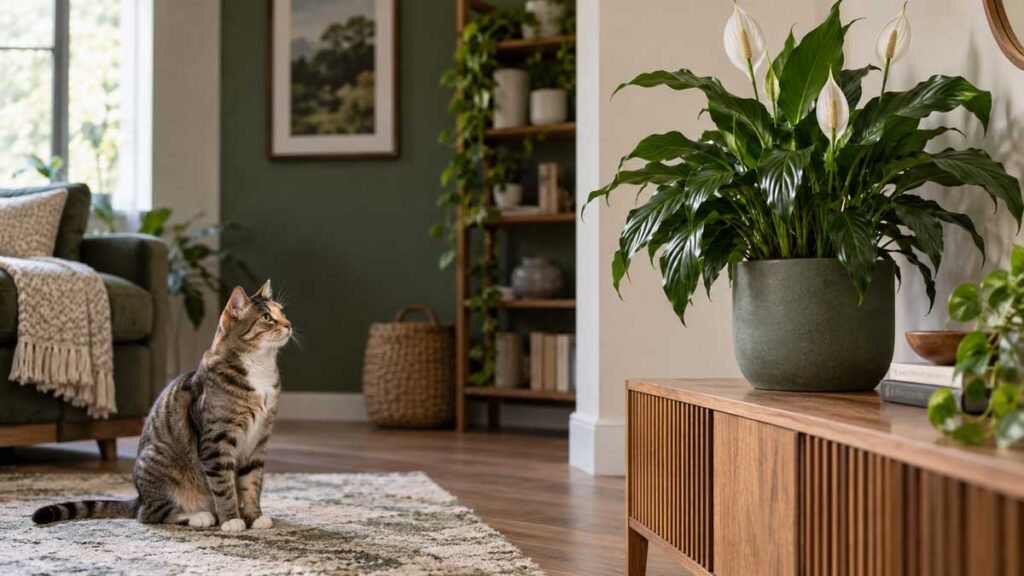
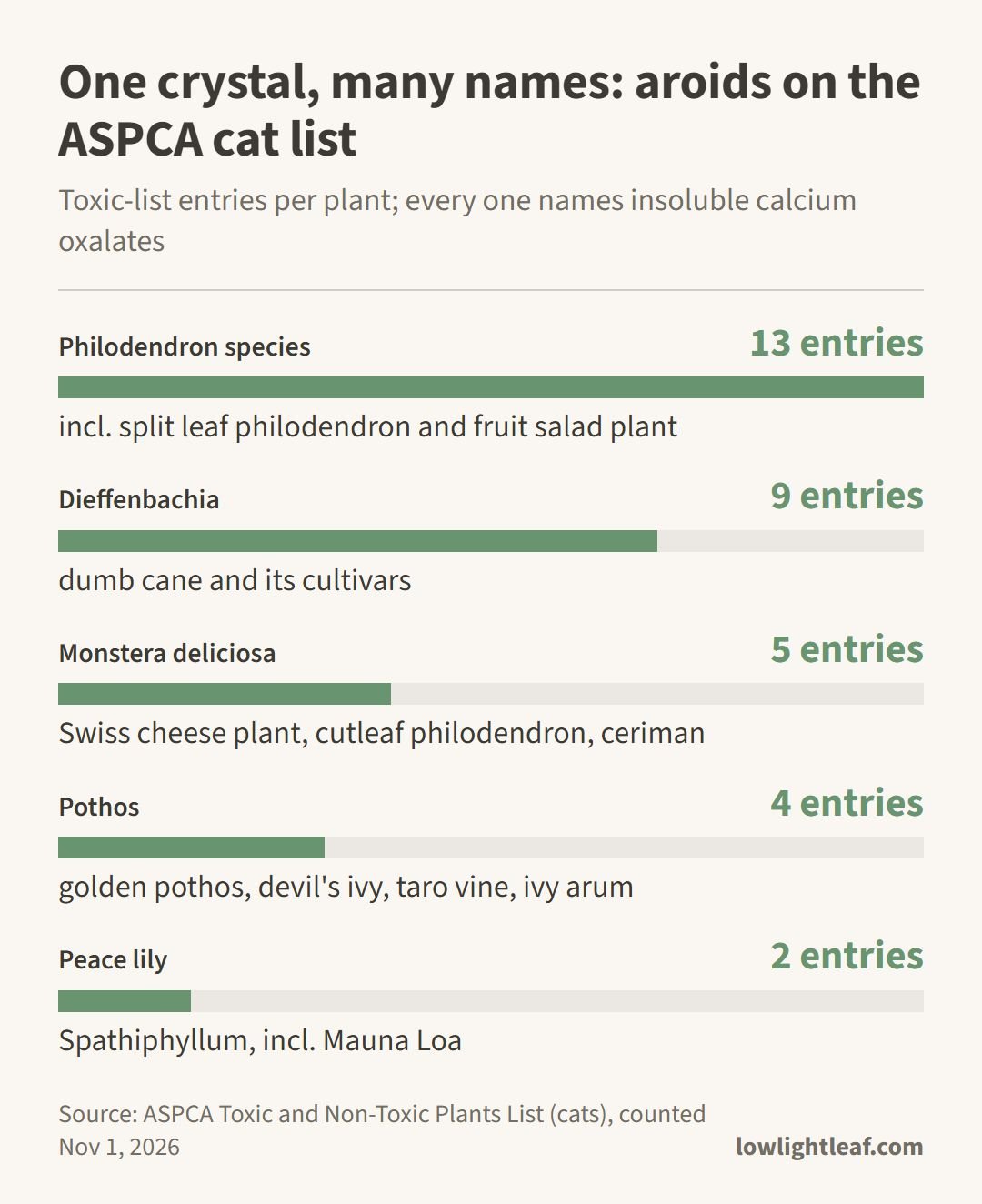
The bigger pattern is in the chart. Monstera sits in the arum family, Araceae, alongside pothos, peace lilies, philodendrons and dieffenbachia, and the ASPCA names insoluble calcium oxalates as the toxic principle for every one of them, with nearly the same list of signs. The ZZ plant is an aroid too, though the ASPCA list has no entry for it. If you already know what pothos does to cats or have read are peace lilies toxic to cats, a monstera bite plays out the same way.
The ASPCA entries also differ slightly from one another. Its ceriman entry lists monstera as toxic to horses as well, while the Swiss cheese plant entry lists only dogs and cats. For a cat owner, every version says the same thing.
Keeping a monstera in a house with a cat
It’s possible, and plenty of people do it. The trouble is that cats don’t pick plants by toxicity. The most upvoted post on this question in r/houseplants came from a new kitten owner:
“My worst fear. I was hoping and praying he’d have 0 interest in it – but sadly he is obsessed. What can I do here to keep my monstera? I don’t want him getting sick from it as they are slightly toxic to cats! It’s also the ONLY plant I own in my entire collection that is NOT cat-safe. And he chose this one!”
– r/houseplants, July 2026 (2,933 upvotes)
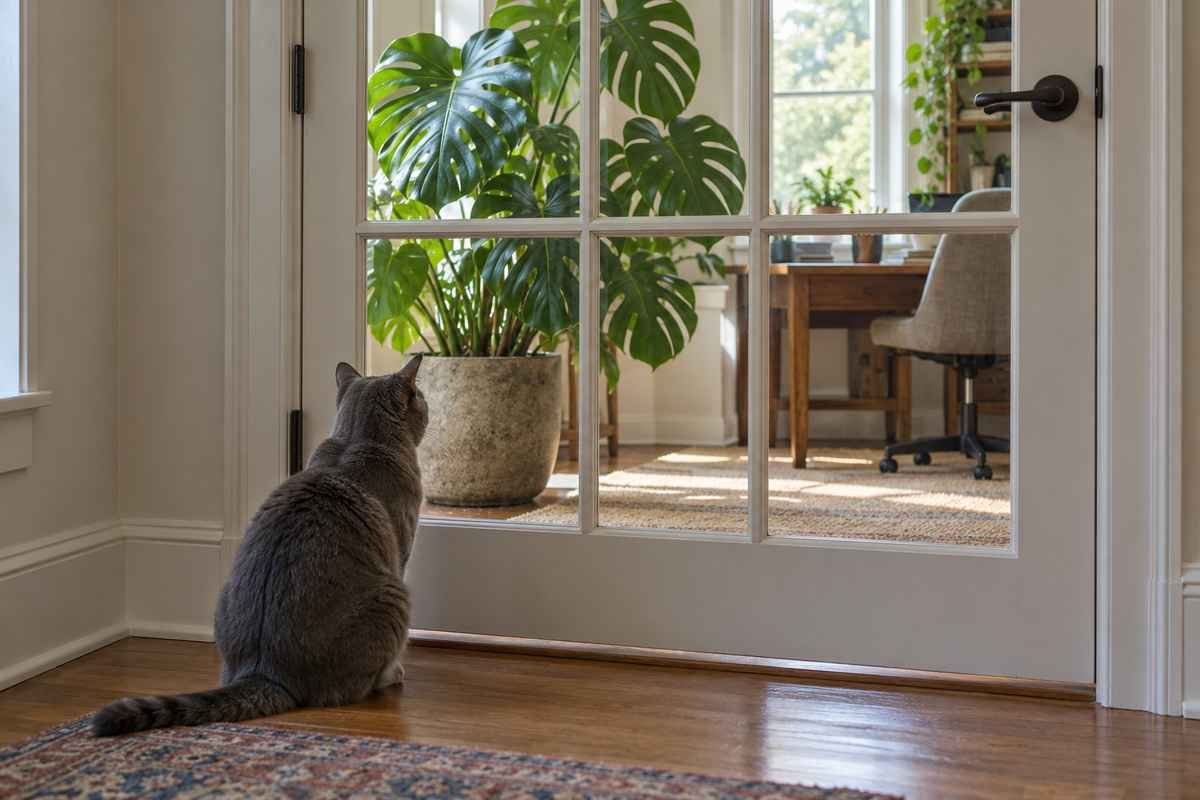
What works depends on the cat. A single bite followed by indifference needs nothing more than watching. A cat that keeps returning needs the plant out of reach: a room with a door that stays shut, or a stand tall and steady enough that a jump won’t tip it. A big monstera is hard to put out of reach, which is the honest case for trading it. If it lives in a closed room, that room still needs bright light; the monstera deliciosa care guide covers light, watering and support.
If the cat wins that argument, the swap doesn’t have to be dull. Our pet friendly indoor plants list covers options the ASPCA lists as non-toxic, and the plant toxicity checker lets you look up anything else on the shelf by name.
Is monstera toxic to cats? FAQ
Is monstera toxic to dogs?
Yes. Every ASPCA monstera entry lists it as toxic to dogs as well as cats, with the same signs: mouth irritation, drooling, vomiting and trouble swallowing. The same emergency sign applies: watch for swelling that affects breathing.
How fast do signs show after a cat eats monstera?
With monstera, the signs come with the chewing, because the crystals irritate the mouth as they’re released. Pawing at the face and drooling right after a bite are typical. Vomiting can follow. Call your vet if the signs don’t settle or anything new appears later.
Is monstera poisonous to people and babies?
NC State Extension lists it as poisonous to humans, with low severity: burning of the mouth and throat, nausea, vomiting and drooling, mainly if eaten in quantity. A baby who chews a leaf should be checked with your doctor or poison control.
Is monstera toxic to cats if they don’t eat it?
The ASPCA signs all come from chewing, so a cat sleeping next to the pot isn’t at risk from the plant itself. NC State notes the sap can irritate skin in people, so wear gloves when you prune and clear away cut pieces before the cat finds them.
Most cats learn from the first bite. The one to plan around is the cat that comes back for a second.

Ellie Marsh
Houseplant grower who spent years in a north-facing apartment. Writes practical care guides for low light homes, checked against extension and botanical garden sources.