Last updated on November 2, 2026
Yes, treat a ZZ plant as toxic to cats. NC State Extension’s plant database lists Zamioculcas zamiifolia as a problem for cats and dogs, with medium poison severity: its leaves contain calcium oxalate, and eating them in quantity can cause vomiting and diarrhea. What you won’t find is an ASPCA entry, which is why the usual quick check comes back empty.
So the ZZ plant toxic to cats question has a clear answer and an odd gap. The answer comes from an extension service and from the plant’s family. The gap is worth understanding before you decide the plant is fine.
What happens if a cat chews a ZZ plant?
Expect a sore mouth and a possible upset stomach. NC State Extension lists the symptoms as diarrhea and vomiting if the leaves are consumed in quantity, names calcium oxalate as the toxic principle and points to the leaves as the poisonous part.
ZZ is an aroid, in the same Araceae family as pothos and peace lilies, and those relatives show how the crystals work. Pet Poison Helpline explains for philodendron that chewing releases microscopic crystals that irritate and hurt the lips, mouth and throat, so drooling, gagging and vomiting are the common signs. Because that pain starts with the first bite, a cat usually gets a strong hint to stop.
One sign changes everything. Pet Poison Helpline notes that, in rare cases, these crystal plants cause throat swelling severe enough to make breathing difficult. A cat that is wheezing, breathing with its mouth open or can’t swallow needs an emergency vet straight away.
Why the ASPCA list doesn’t settle it
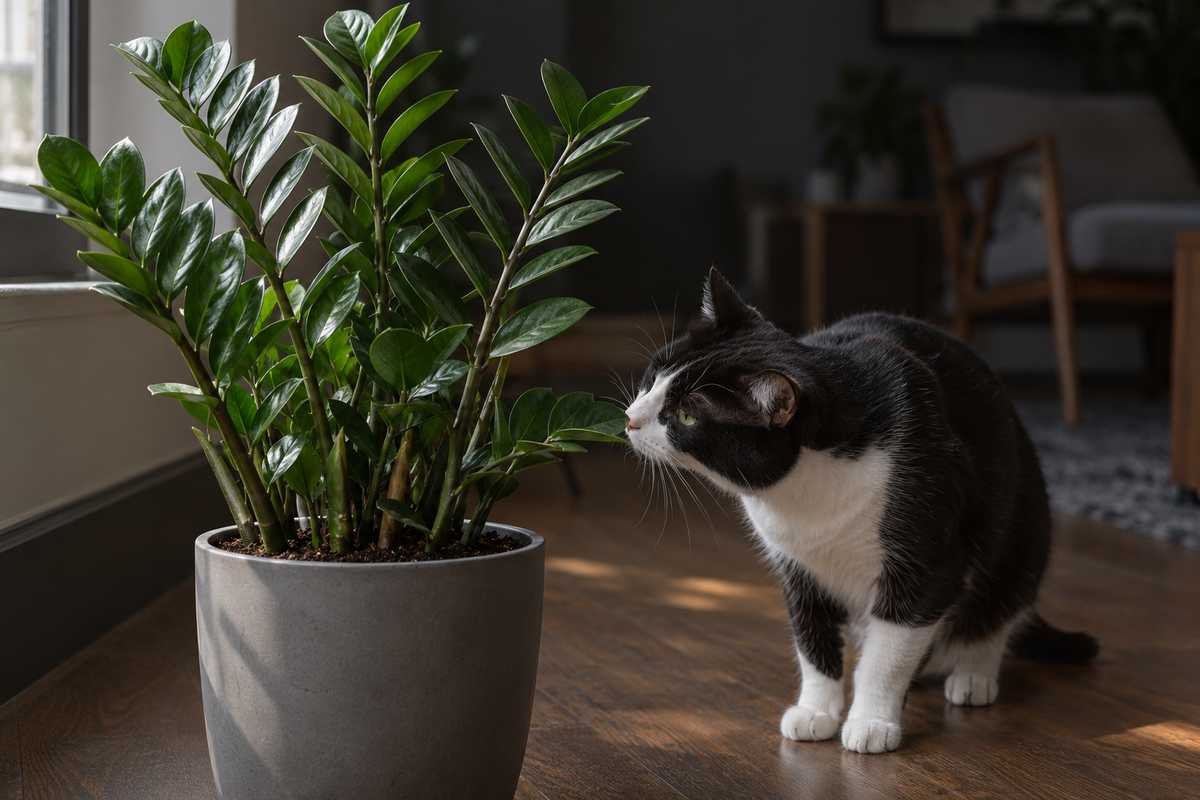
I look up every plant against the ASPCA list before it comes home to Miso, and ZZ is the one that came back blank. The ASPCA cat list has no entry under ZZ plant, Zanzibar gem, eternity plant, aroid palm or Zamioculcas, the names NC State gives for it.
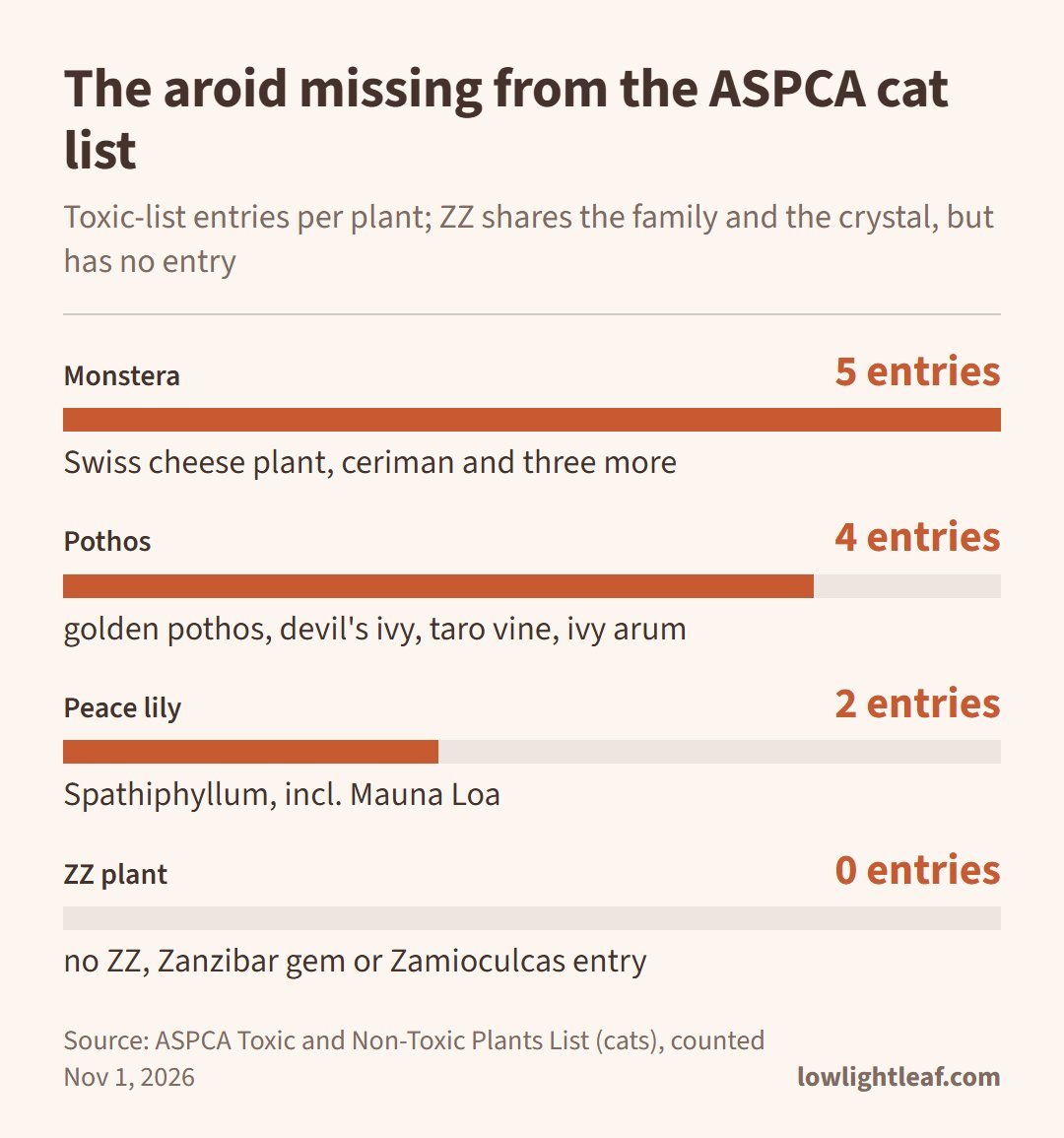
That surprises people, because a lot of pages, and Google’s own AI answer, cite the ASPCA when they call ZZ toxic. “zz plant toxic to cats aspca” is even a common follow-up search.
A missing entry isn’t a safe rating. The ASPCA says its list is a compilation of the most frequently encountered plants and isn’t meant to be all-inclusive. The plants it does list from the same family, including monstera, pothos and peace lily, all name insoluble calcium oxalates as the toxic principle, and they all sit in the toxic column.

NC State’s own ratings also put ZZ a step above one of those relatives. It rates ZZ’s poison severity as medium and monstera’s as low. Both ratings still come with the same condition: the trouble comes from eating the plant, not from having it in the room.
What to do if your cat bit a ZZ plant
A cat that bit a ZZ plant usually needs cleanup and close watching, not a rush to the clinic. Breathing trouble is the exception, and it means an emergency vet. In order:
- Move the plant and pick up any chewed pieces from the floor.
- Wipe away plant bits around the mouth if your cat lets you.
- Watch for drooling, pawing at the mouth, vomiting or diarrhea.
- Go to an emergency vet for any breathing trouble or swelling.
- Call your vet if vomiting or diarrhea keeps going, or if you don’t know how much was eaten. ASPCA Poison Control is at (888) 426-4435, and a consultation fee may apply.
Living with a ZZ plant and a cat
Plenty of cat owners end up with a ZZ before they’ve checked. Someone who was given one asked r/CatAdvice what to do, and the top reply started with “Rehome it” before getting to the part worth remembering:
“Your cat sniffing without biting is good, but cats’ behavior changes – what they ignore today they might chew tomorrow out of boredom or playfulness.”
– r/CatAdvice, February 2026 (22 upvotes)
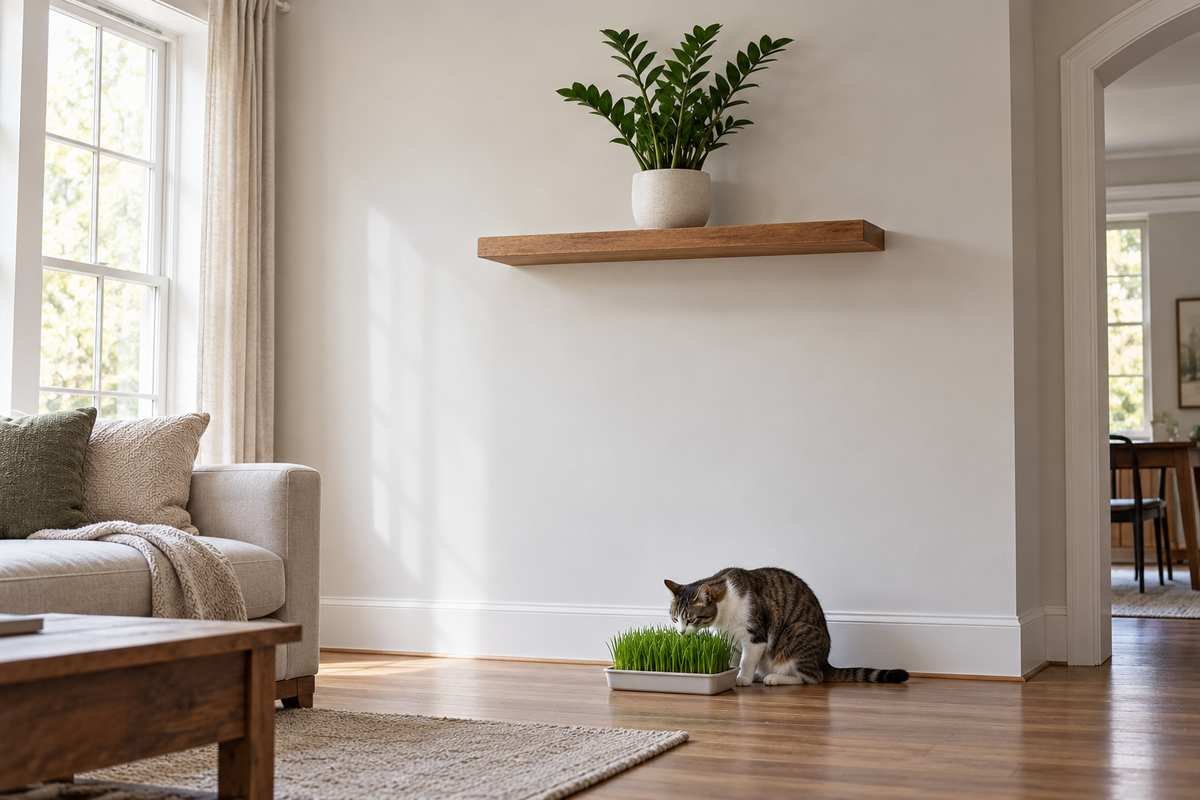
Rehoming is one answer, not the only one. NC State rates its growth as slow, so it’s easier than most to keep on a high shelf or in a room the cat doesn’t use; our ZZ plant care guide covers how little light and water it needs in a spot like that. Giving the cat something it’s allowed to chew helps too. One owner whose cat had gone for a ZZ said this about their own four cats:
“I got them their own little cat grass planters nearby and they stopped bothering with any. I now have a ton of plants and they don’t really pay mind to them anymore”
– r/houseplants, July 2026 (5 upvotes)
If you’d rather not plan around it, the pet friendly indoor plants list covers low-light options the ASPCA does list as non-toxic.
ZZ plant toxic to cats: FAQ
Are ZZ plants toxic to dogs?
Yes. NC State lists ZZ as a problem for dogs as well as cats, with the same symptoms of vomiting and diarrhea when the leaves are eaten in quantity, and the same emergency sign of swelling that affects breathing.
Is it safe to touch a ZZ plant?
For handling, NC State says ZZ doesn’t cause contact dermatitis, unlike monstera, which it says can. It does list ZZ as poisonous to humans if eaten, so keep it away from small children as well as pets, and wash your hands after repotting.
Is a ZZ plant more toxic than a snake plant?
They’re rated differently. The ASPCA lists snake plant as toxic to cats, while ZZ isn’t on its list at all; NC State calls ZZ medium severity. Our page on whether snake plant is toxic to cats covers that plant’s signs, which come from saponins rather than crystals.
When a plant isn’t on the ASPCA list, that only means the list hasn’t covered it. Treat ZZ the way NC State does: worth keeping out of a curious cat’s mouth.

Ellie Marsh
Houseplant grower who spent years in a north-facing apartment. Writes practical care guides for low light homes, checked against extension and botanical garden sources.