Last updated on November 2, 2026
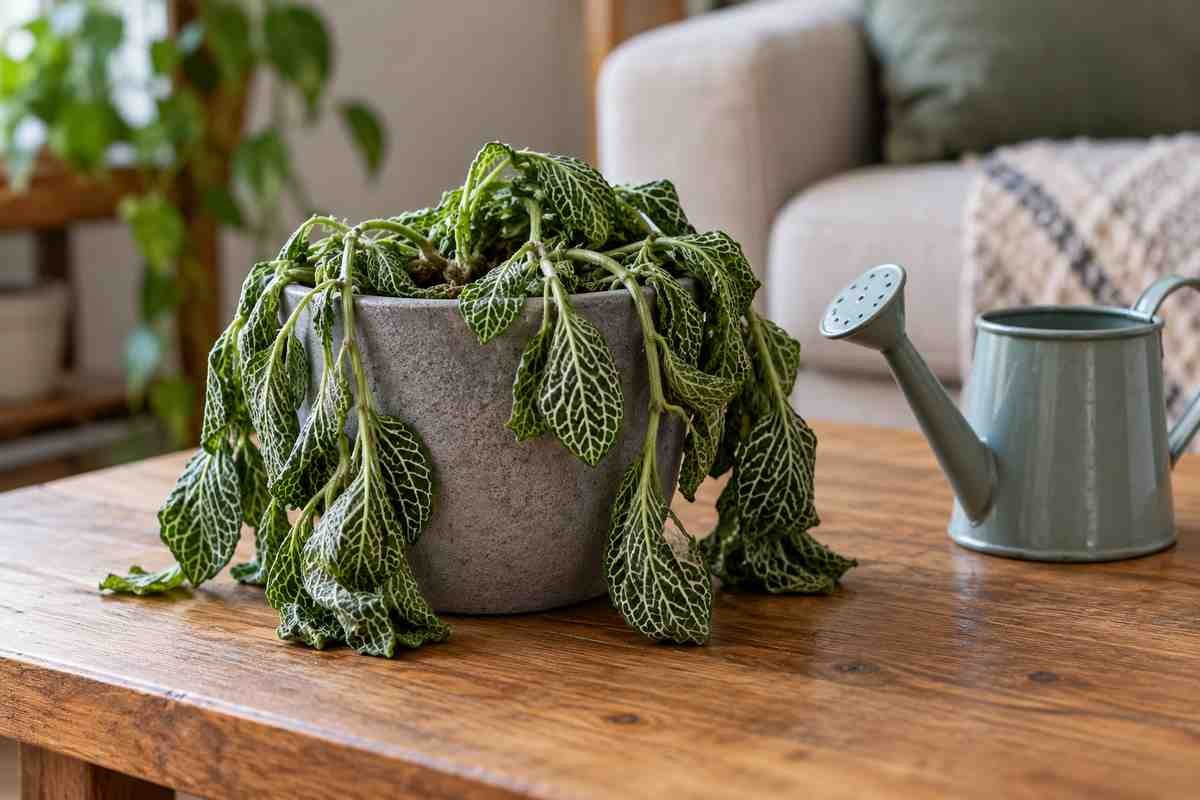
Nerve plant care means bright to medium indirect light, soil that never dries out for long, and a warm room. NC State Extension says Fittonia albivenis wilts dramatically when it dries out but recovers after a drink, and that direct sun can scorch its veined leaves.
Fainting is what gives the plant its fussy reputation. Read it as a watering signal and nerve plant care gets much simpler: steady moisture, no hot sun, no cold drafts, and a pinch now and then to keep it full.
How much light does a nerve plant need?
A nerve plant needs bright to medium indirect light, and NC State Extension says it also performs well under fluorescent lights. Its listed range runs up to partial shade, but the same entry warns that direct sun can scorch the leaves, so keep your plant out of the sun’s path.
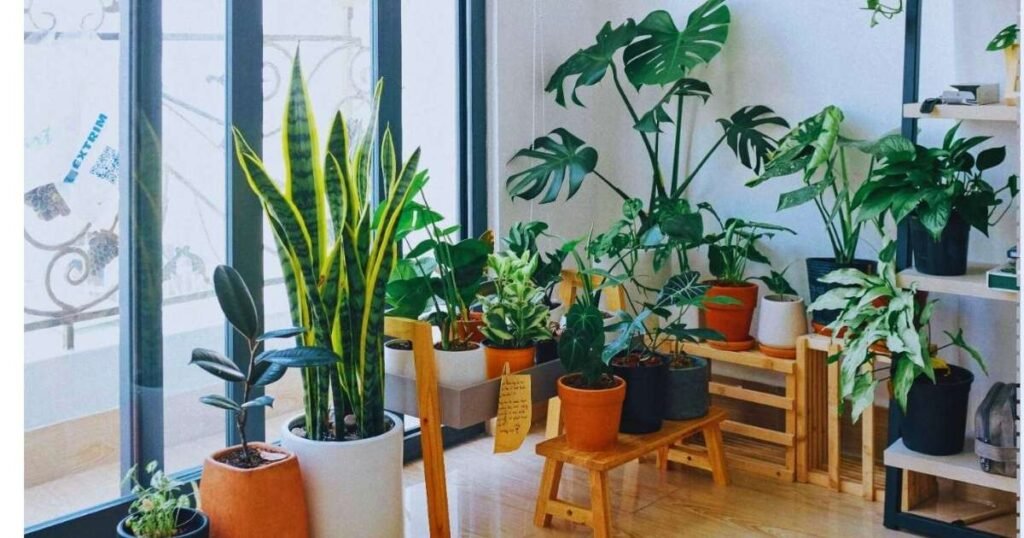
Medium-light tolerance makes it one of the more realistic colorful plants for a dim home. In my north-facing apartment it would have gone right by the window, not across the room. Our low light indoor plants list puts it in the bright-room section, next to plants that cope with a dim corner for a while but don’t color up there.
Slow growth is often a light problem. When someone on r/houseplants asked why their nerve plant hadn’t grown in months, a reply with 21 upvotes asked first how much light it was getting, adding that a recently repotted plant puts effort into its roots first. NC State also calls it slow-growing, so give it time after a move before judging it.
What a nerve plant’s leaves are telling you
A nerve plant’s leaves tell you a lot. NC State Extension lists five separate signs, and each one points you to a different fix.
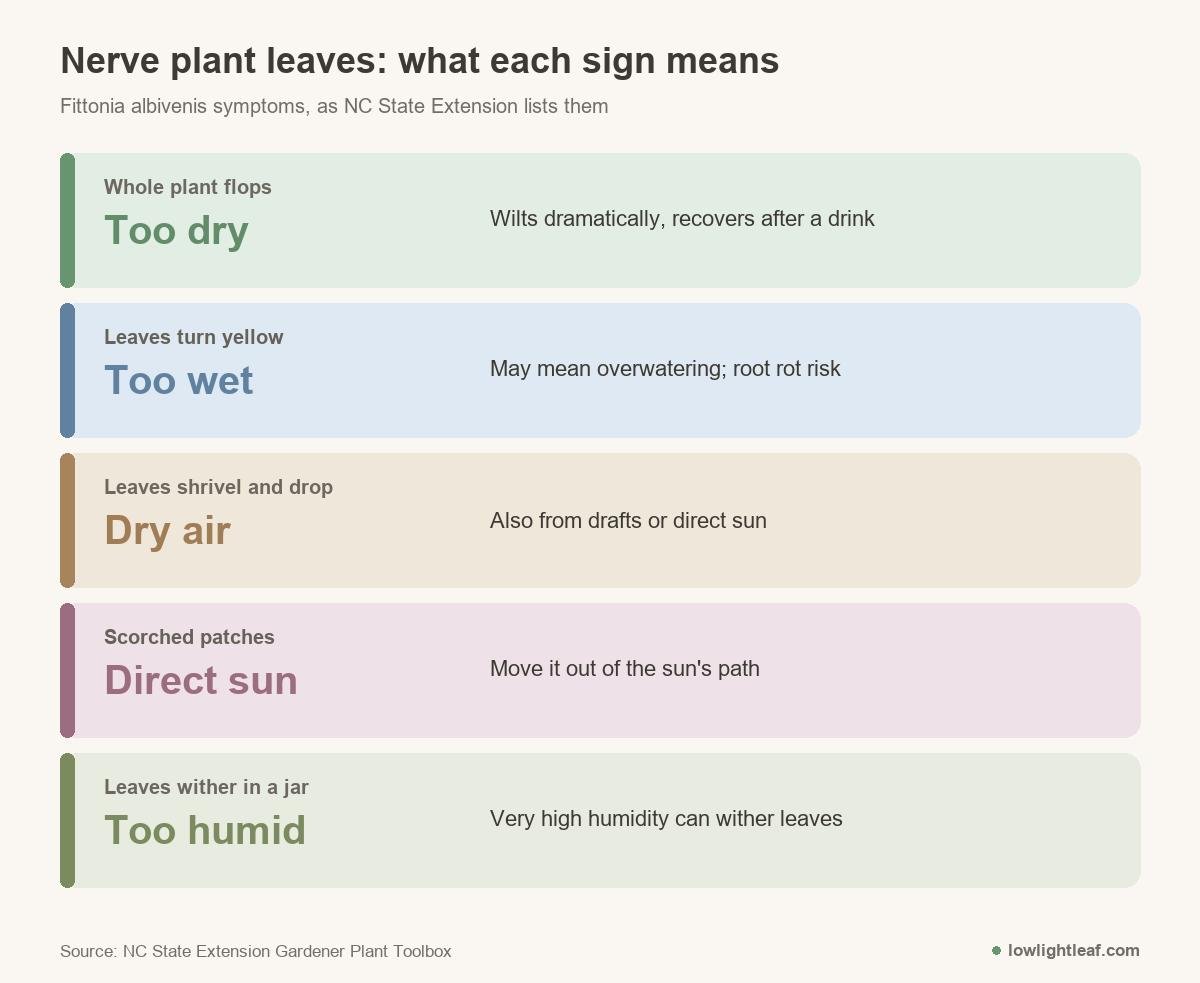
- The whole plant flops: the soil dried out. Water it and you’ll usually see it stand back up.
- Leaves turn yellow: NC State says this may indicate overwatering, which can lead to root rot.
- Leaves shrivel and drop: dry air. NC State adds that drafts and direct sun can also make leaves drop.
- Scorched patches: direct sun.
- Leaves wither in very humid air: NC State lists very high humidity as a cause too, rated against a plant that wants medium humidity.
Crispy leaves usually sit in the third group. Dry air is the usual cause, and in winter the heating often supplies it.
Bringing a fainted nerve plant back
A nerve plant that has fainted from dry soil usually recovers after a thorough watering, according to NC State Extension. Check the cause before you pour:
- Check the soil first. Dry soil means it fainted from thirst; wet soil with yellowing leaves points to overwatering instead, so don’t add more.
- Water slowly until it runs out of the drainage hole, then empty the saucer.
- Leave it out of direct sun while it recovers.
- Trim any leaves that stay crisp or brown once the rest has stood back up.
- Check the soil more often from then on, so the next drink comes before the flop.
Watering and humidity, the core of nerve plant care
NC State suggests watering about twice a week, and the RHS says to water moderately while it’s growing, keeping the soil just moist, then keep it barely moist in winter. Either way, the goal is soil that never sits dry for days and never stays soggy. With shallow roots, it can stay in a small pot, per NC State.
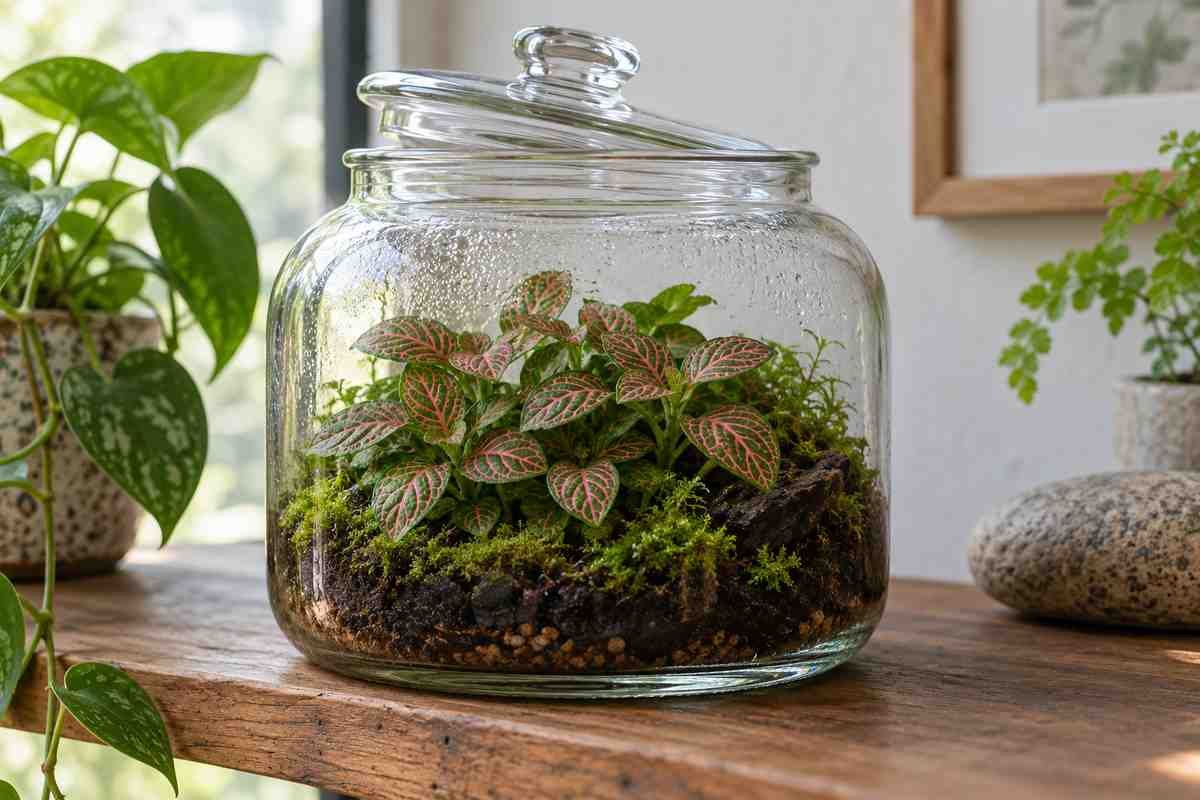
Humidity is where the plant earns its terrarium reputation. NC State rates its humidity need as medium and says dry air makes leaves shrivel and drop, and it notes that dwarf plants can be used in terrariums. One r/houseplants reply puts the appeal simply:
“These adore humidity and hate to dry out. Not ideal if you’re a somewhat lazy waterer like me. I pop mine into a terrarium jar (open or closed) and they do great.”
– r/houseplants, May 2026 (4 upvotes)
A closed jar can overshoot, though. NC State also says very high humidity can make the leaves wither, and the RHS lists grey mould among its diseases. If your closed terrarium stays fogged all day, open the lid for a while; closed terrarium plants explains how to read the glass. Outside a jar, how to increase humidity in house air covers trays, grouping and humidifiers. If you run a humidifier near a cold window, the dew point calculator shows when the glass will start to drip.
Keep a nerve plant warm in winter
A nerve plant needs a warm room all year. Its RHS hardiness rating, H1A, means under glass all year at above 15°C, which is 59°F. NC State describes average to cool room temperature as fine and lists it as hardy only in zones 11 and 12, so outdoors it is a summer plant almost everywhere in the US.
One r/houseplants reply describes how a cool house plays out:
“Same, they always thrive in the summer, but as soon as the winter hits they die. I had one die off and then come back in little sprouts the next spring, but that was a fluke 😞 I think I just keep my house too cold. Anyways I replaced it with a rex begonia, and she’s thriving”
– r/houseplants, March 2026 (4 upvotes)
Winter is the hard half of nerve plant care. If you keep the house cool at night, move the plant off cold windowsills and away from doors and vents. Cold drafts and dry heated air together cause the leaf drop NC State describes.
Pinching and cuttings
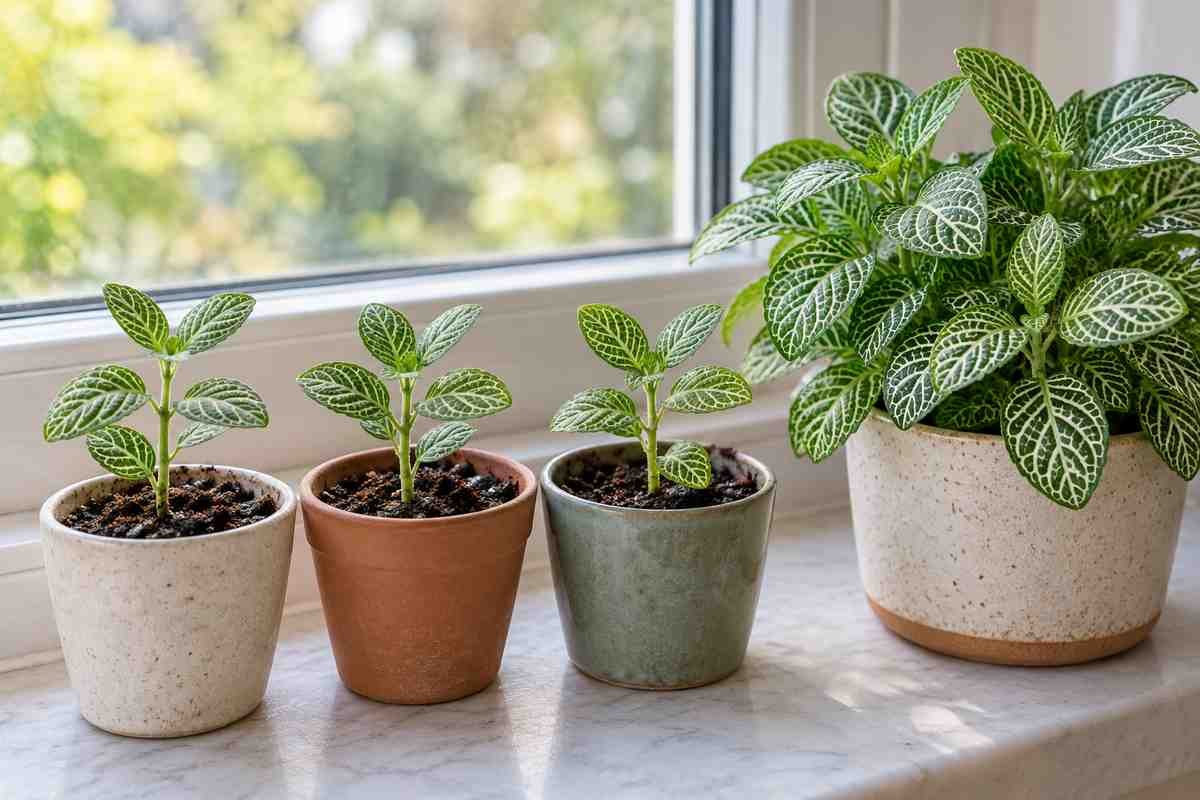
NC State says pinching the stems keeps a nerve plant bushy and full. When you see stems start to trail, pinch just above a pair of leaves.
Pinched tips double as cuttings. RHS advice is tip cuttings with 3 or 4 pairs of leaves in spring, and NC State notes that the creeping stems will root. A rooted tip is cheap insurance, because a cold snap or a dry week can take the parent.
Is a nerve plant safe for cats?
Yes. The ASPCA lists the nerve plant as non-toxic to cats, dogs and horses, under Fittonia verschaffeltii, with jewel plant, mosaic plant and silver threads among its other names. NC State tags Fittonia albivenis as non-toxic too. You can check other plants in the plant toxicity checker. Its acanthus-family relative, the polka dot plant, is on the ASPCA’s non-toxic list too.
As for flowers, NC State says the small white flowers are insignificant and that indoor plants typically don’t flower at all. Grow it for the leaves.

Ellie Marsh
Houseplant grower who spent years in a north-facing apartment. Writes practical care guides for low light homes, checked against extension and botanical garden sources.