Last updated on September 27, 2026
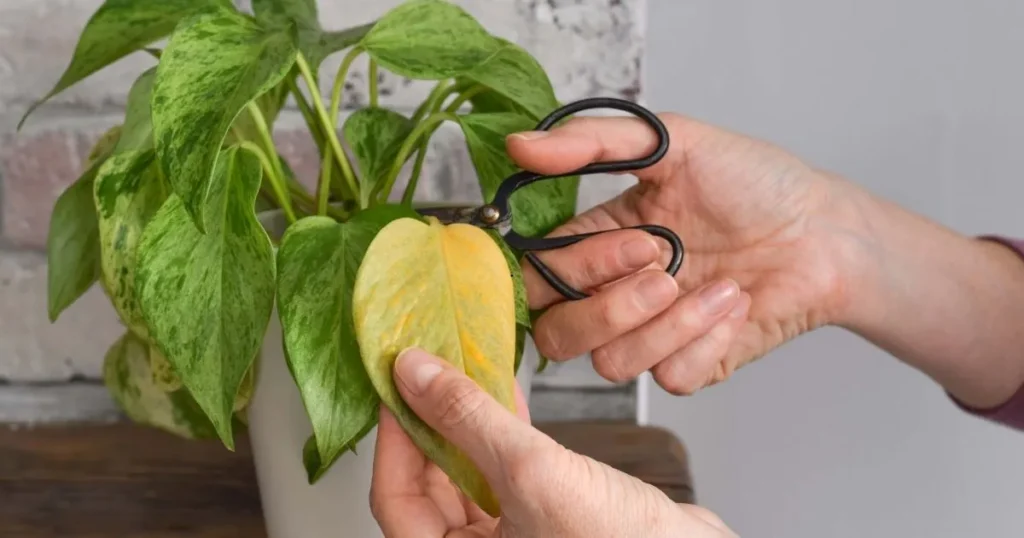
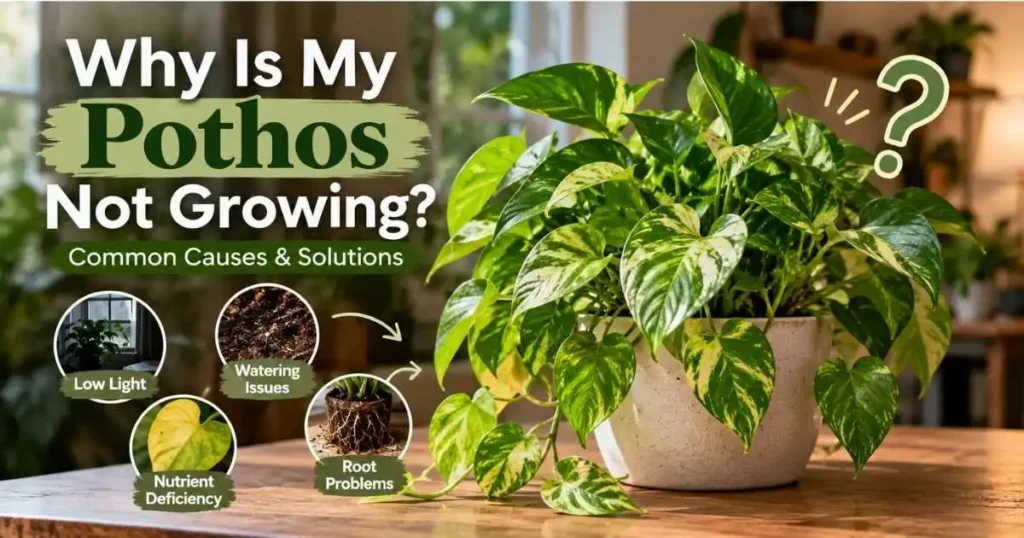
If you’re wondering why your pothos not growing, don’t assume something is seriously wrong. Growth can stall because of low light, watering problems, poor soil or nutrient deficiency, overfertilizing, root problems, temperature stress, seasonal slowdown, or pests and sometimes, more than one is working against the plant at once.
The good news is that a pothos can look perfectly healthy while growth quietly slows down. Green leaves don’t always mean ideal growing conditions. When the plant is using most of its resources to maintain existing foliage, new leaves and longer vines can take a back seat.
The fastest way to get growth moving again is to identify the symptom first, then match it to the likely cause. Use the quick guide below to see where your pothos fits before changing its care.
| If You’re Seeing… | Most Likely Cause |
|---|---|
| No new leaves at all | Low light, nutrient shortage, or seasonal slowdown |
| Small or pale new leaves | Light limitation, root restriction, or nutrient depletion |
| Plant looks healthy but shows no new growth | Seasonal slowdown or an environmental limit |
| Growth stalled right after repotting | Often normal while roots re-establish |
| Long vines with no new leaves along them | Reaching for light or overdue for pruning |
Is Your Pothos Really Not Growing?
Not every slow-growing pothos has a problem. Growth depends on light, temperature, cultivar, and plant maturity, so there isn’t one weekly growth rate that every pothos should meet. The better question is whether there is any sign of steady new growth under favorable growing conditions.
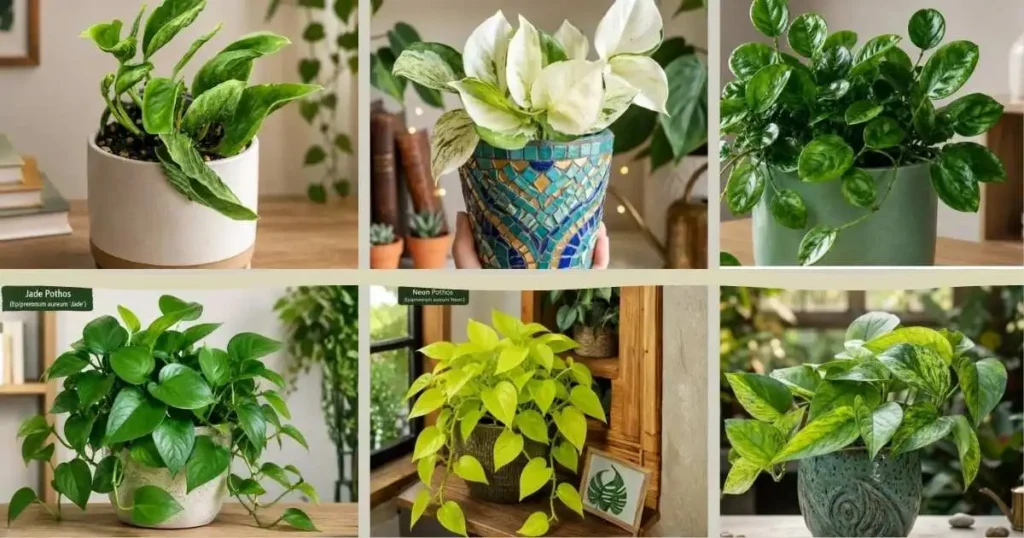
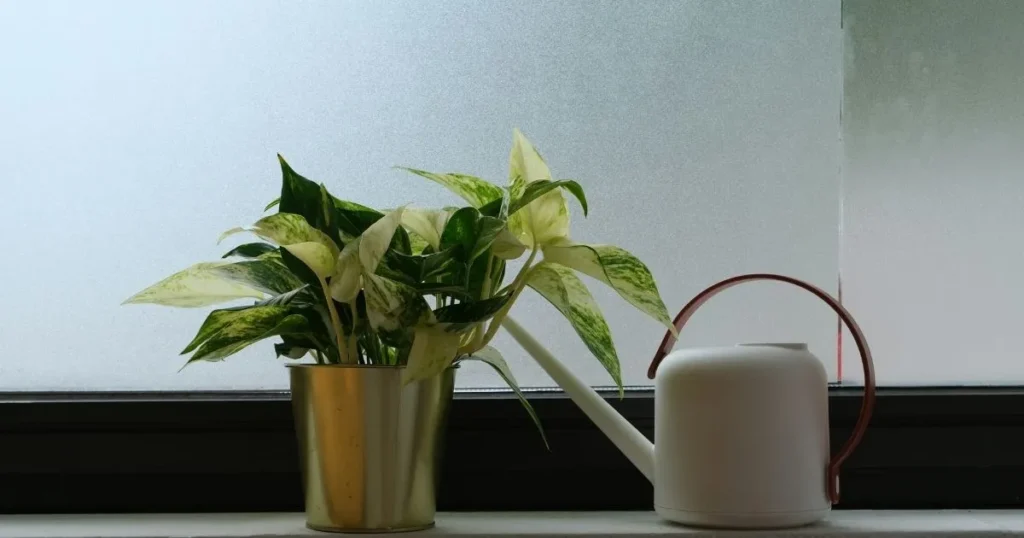
Cultivar also affects growth rate. Pothos varieties with different growth rates include faster-growing types such as Golden and Neon, while heavily variegated types such as Marble Queen and Snow Queen tend to be slower because their white leaf areas contain less chlorophyll and contribute less to photosynthesis.
This distinction between naturally slower growth and a genuine growth problem also applies to other houseplants, including Snake Plants that are not growing as expected.
Why Is Your Pothos Not Growing? Common Causes
A pothos can stop producing new leaves or extending its vines when light, moisture, nutrition, or root health falls outside what supports active growth. These factors can also interact, so the visible symptom does not always point to a single cause.
Before troubleshooting individual causes, it can help to start with a Pothos plant overview and growing guide so you have the broader picture of how the plant grows indoors.
Not Enough Light
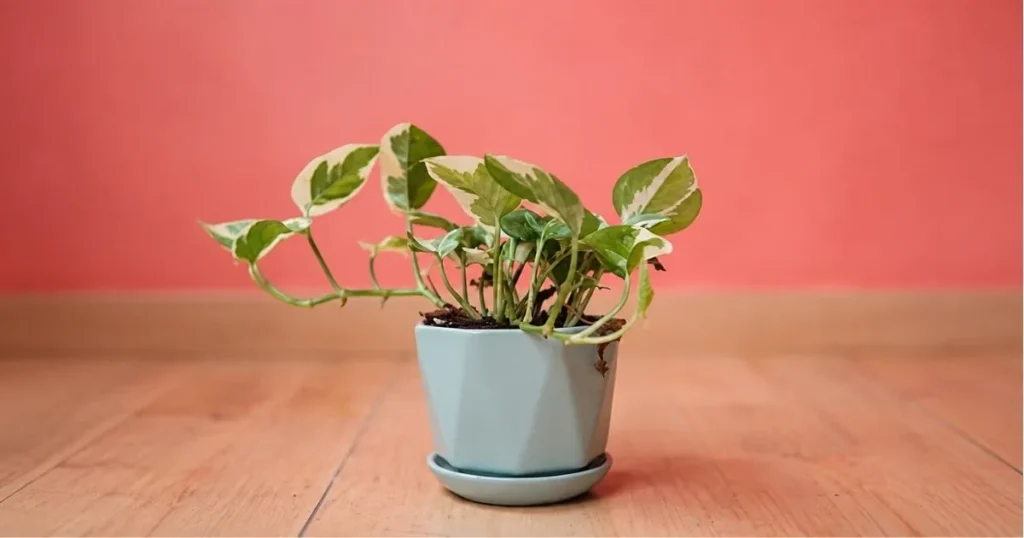
Low light can keep a pothos alive while still limiting new growth. Tolerating low light and growing vigorously in it are very different things. When light is limited, photosynthesis slows, leaving less energy available for new leaves, leaf expansion, and vine extension.
Look for smaller new leaves, fading variegation, and elongated vines or wider spacing between leaves. A vine leaning or stretching toward the nearest window is another useful clue that light may be limiting growth.
What to do: Follow the right Pothos light requirements by keeping the plant in bright, indirect light while protecting the leaves from harsh direct sun. An east-facing window often provides suitable light; south- or west-facing windows may require more distance or a sheer curtain. Where natural light is limited, a suitable full-spectrum grow light can provide more consistent exposure when used according to the manufacturer’s guidance.
Watering Problems
Both consistently wet soil and repeated drying can slow pothos growth. The bigger problem is often an unstable moisture pattern, where the mix repeatedly swings between soaked and bone dry. Poor moisture management can stress fine root hairs, reducing the plant’s ability to take up water and nutrients and, in persistently wet conditions, limiting the oxygen available around the roots. If yellowing also appears, what to do when Pothos leaves turn yellow can help you distinguish a watering-related issue from other causes.
What to do: Water when the top layer of soil has dried, then water thoroughly enough for excess moisture to drain from the bottom. Make sure the container has drainage holes. The goal isn’t a rigid watering schedule; it’s a more consistent moisture cycle based on Pothos watering needs when growth slows and the plant’s environment.
Poor Soil, Nutrient Deficiency, or Overfertilizing
Poor soil conditions can restrict growth even when light and watering seem reasonable. Nutrient depletion can become more likely as a plant grows in the same potting mix over time, while compacted soil can interfere with drainage and root aeration. At the other extreme, excess fertilizer can cause salt buildup that damages root tips and creates another growth setback.
What to do: If nutrient deficiency is suspected, use a balanced fertilizer according to the product label rather than increasing the dose. If the mix is compacted or staying wet, review how to choose the right soil for a Pothos plant before adjusting other aspects of care. Avoid feeding stressed roots until moisture and root health have been ruled out.
Root Problems
Root problems can stall above-soil growth even when the foliage still looks relatively healthy. A rootbound pothos has roots filling most of the available space, while an oversized pot can leave a large volume of mix around a small root system and keep the plant focused on root establishment. Damaged or rotting roots create a different problem by reducing the plant’s ability to absorb water and nutrients.
Signs of a root issue include circling roots, roots emerging from drainage holes, persistently wet soil, wilting despite moist soil, or roots that are black, mushy, or foul-smelling.
What to do: Check the roots directly if light, watering, and soil conditions don’t explain the slowdown. Healthy roots are generally firm, while damaged roots tend to be soft or mushy. Texture and smell are more useful diagnostic clues than color alone.
Other Causes Worth Checking
Temperature Stress
Temperature can slow pothos growth even when the leaves still look healthy. Pothos generally performs best in warm, stable indoor conditions and may slow down when exposed to cold windows, drafts, or strong air-conditioning. Because temperature stress can appear before obvious leaf damage, check the plant’s location as well as the room’s general temperature.
What to do: Move the plant away from cold glass, drafts, or direct airflow from heating and cooling vents. A more stable location can help growth resume once temperature is no longer limiting it.
Seasonal Slowdown
Slower growth during darker months can be a normal response rather than a sign of poor care. Reduced natural light lowers the energy available for photosynthesis, so new leaves and vine extension may naturally slow until conditions become more favorable. A similar seasonal slowdown can occur in naturally slower-growing plants and ZZ Plant growth during low-light seasons can show a similar pattern.
What to do: There is no need to force growth by increasing fertilizer or watering simply because the plant has slowed. Adjust care to the plant’s reduced activity rather than treating seasonal dormancy as a problem.
Pest Pressure
Pests can suppress new growth before the damage becomes obvious. Spider mites are a common concern, particularly in dry indoor conditions, and early signs may include dull-looking foliage, stippling, or fine webbing.
What to do: Check the undersides of leaves and around growing points for mites or other pests. If an infestation is present, treat it promptly; growth can remain suppressed until the pest pressure is under control.
Seasonal slowdown can vary by location, too. A pothos in a cold, low-light winter climate may slow for different reasons than one growing through an intensely hot summer with strong indoor air-conditioning. The calendar matters less than the actual light and temperature around the plant.
Does Your Region or Season Explain Pothos Growth?
Pothos growth responds more to indoor conditions than the calendar itself. Daylight, indoor temperature, heating, cooling, and window exposure can all change with the season, and those changes vary by region.
A seasonal slowdown is often normal when indoor light or temperature becomes less favorable. The key is to judge growth by the plant’s actual conditions rather than assuming every region should follow the same seasonal pattern.
What Are Your Pothos Symptoms Telling You?
The pattern of new growth can reveal more than the absence of a new leaf. Look at the vine tips, nodes, leaf size, spacing, and overall vigor to determine whether the pothos is simply growing slowly or showing a more specific growth problem.
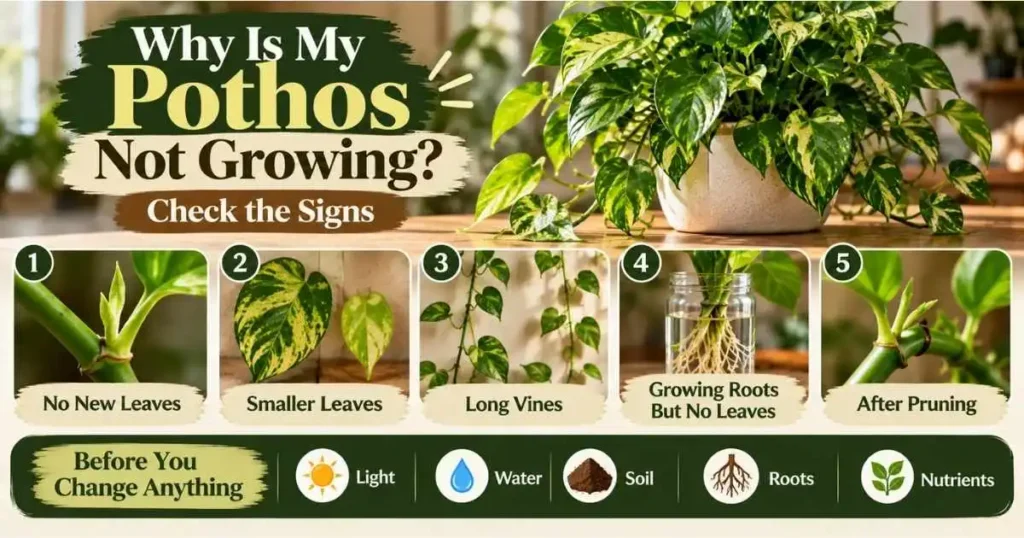
No New Leaves: Growth Points Still Matter
The clearest clue is the condition of the growth points, not simply the absence of a new leaf. If the vine tips and nodes remain plump and green rather than shriveled or brown, the plant still has the capacity to produce new growth. A completely stalled plant may simply be responding to less favorable growing conditions.
The pattern around the growth points matters, too. Healthy-looking tips with no new leaves suggest stalled growth, while shriveled, brown, or damaged tips point toward a different problem that may need closer inspection.
This kind of growth-point check is useful beyond Pothos as well; with Spider Plant growth that has stalled at the center, the absence of a new central leaf can also help distinguish slow growth from a more specific problem.
Why is my pothos not growing from the nodes?
A healthy node can remain dormant when the plant does not have enough resources for active growth. If the node is firm and green but isn’t producing a shoot, first check the plant’s light, moisture, and overall condition. A damaged, shriveled, or rotting node is different because that growth point may no longer produce healthy new growth.
Stunted Pothos Leaves: When New Growth Gets Smaller
Not every small pothos leaf is a sign of stunted growth. Juvenile leaves near a growing tip can naturally be smaller, while true stunting tends to show a pattern: each new leaf becomes smaller than the previous one, leaf spacing shortens, and overall vigor declines.
Compare a recent leaf with older mature growth rather than judging a single small leaf. A consistent drop in leaf size is more meaningful than one unusually small leaf and can indicate that the plant is not getting the conditions it needs for normal development.
Why is my pothos growing but not producing bigger leaves?
New leaves do not always become larger simply because the vine is getting longer. Leaf size can remain modest when the plant is still producing juvenile growth or when growing conditions are limiting development. Compare several newer leaves rather than judging one leaf alone, and look at the plant’s overall growth pattern before treating smaller leaves as a problem.
Long Pothos Vines but Sparse Leaves
A pothos can be growing while still looking thin and underfilled. Long stretches between leaves, widely spaced foliage, and little branching often indicate that the vine is extending without producing enough new foliage.
Improving light and pruning leggy growth can encourage a fuller shape. Simply adding more water or fertilizer will not correct a light-related growth pattern. Trim a leggy vine just above a node to encourage branching from that point rather than allowing the vine to keep extending.
Why is my pothos not growing after pruning?
A short pause after pruning can be normal, especially if you removed a large section of vine. The remaining nodes may need time to activate new shoots. Keep the plant in suitable light, maintain consistent moisture, and avoid trying to force new growth with extra fertilizer or frequent watering.
Special Pothos Growth Situations
Some growth slowdowns are tied to what happened to the plant rather than its everyday growing conditions. Repotting, propagation, and long-term water culture can each create a different reason for stalled growth.
Pothos Not Growing After Repotting
A short growth pause after repotting can be normal while the roots re-establish. Avoid rushing to fertilize during this period, especially if the plant is already stressed.
Instead, watch for signs that suggest something more than normal transplant adjustment, such as wilting despite moist soil, yellowing that spreads beyond a leaf or two, or soil that stays soggy for days. These symptoms point more toward root damage or drainage problems than a temporary growth pause.
Water-Propagated Pothos Cutting Not Growing
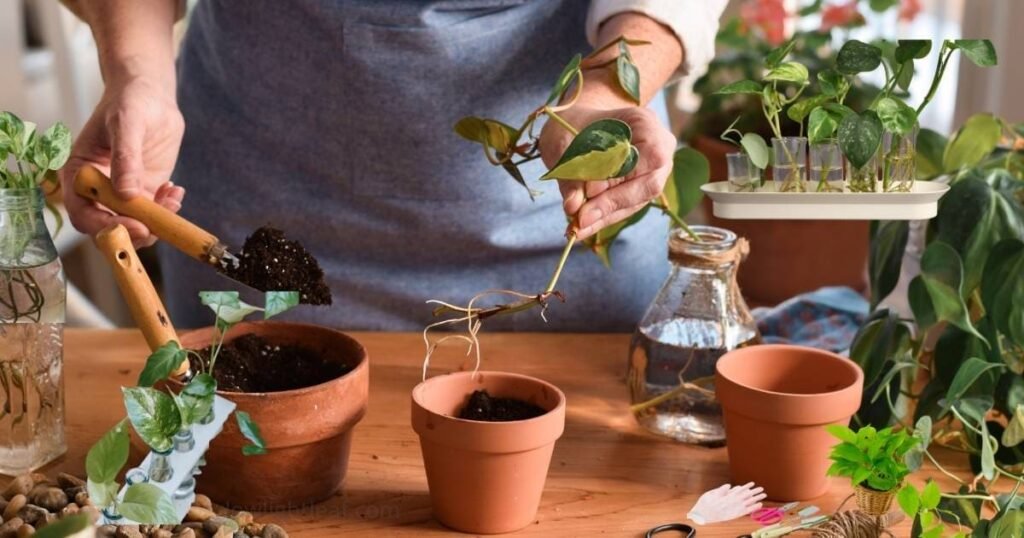
A pothos cutting that has rooted well in water can still pause after being moved into soil. The cutting is adjusting from water-based root function to absorbing moisture and nutrients from a soil mix, so a short period of slow growth can be part of the transition.
If the cutting has healthy roots and remains firm, give it time to establish rather than repeatedly disturbing it; understanding how to move a Pothos cutting from water to soil can help reduce stress during this transition. A cutting that has not produced roots at all is a different propagation problem from one that has already rooted and is adjusting to soil.
Why is my pothos growing roots but not new leaves?
Roots and shoots do not always develop at the same pace. If a cutting has healthy roots but no visible new leaf yet, give it time to establish rather than disturbing it repeatedly. Make sure the cutting still has a healthy node and receives enough light to support new growth.
Pothos Not Growing in Water or an Aquarium
Established pothos grown in water can slow when nutrients, root-zone oxygen, or growing space become limiting. Plain water provides fewer nutrients than a complete growing medium, while stagnant water and crowded roots can create additional limitations.
Refreshing the water and using a diluted fertilizer formulated for water culture can help address nutrient shortages. In an aquarium, fish waste can supply some nitrogen, but adequate light and water movement still matter for sustained growth. Beyond its ability to adapt to different growing setups, Pothos is also valued for several practical benefits of growing Pothos indoors, which help explain its popularity as a houseplant.
How to Get Your Pothos Growing Again
1. Start with the growth pattern. Use the visible symptom to decide where to investigate first: growth points, leaf size, vine spacing, or overall plant condition.
2. Check the easiest environmental factors first. Look at the plant’s distance from its light source and review the watering pattern over the past month rather than judging care from the last few days.
3. Assess the potting mix. Check whether it is old, compacted, staying wet too long, or overdue for feeding.
4. Inspect the roots if the basic conditions don’t explain the slowdown. This is especially useful when the plant has been in the same pot for a long time or shows persistent wet soil, wilting despite moisture, or other signs of root stress.
5. Correct the biggest limitation first. Don’t change everything at once. Rule out moisture and root problems before adding fertilizer, since feeding a stressed root system can add further stress instead of improving growth.
6. Keep conditions stable and give the plant time to respond. Avoid moving it repeatedly or switching between fixes too quickly; otherwise, it’s difficult to tell which change actually helped. For a broader approach, review Pothos care adjustments for healthier long-term growth and focus on keeping the plant’s basic conditions stable.
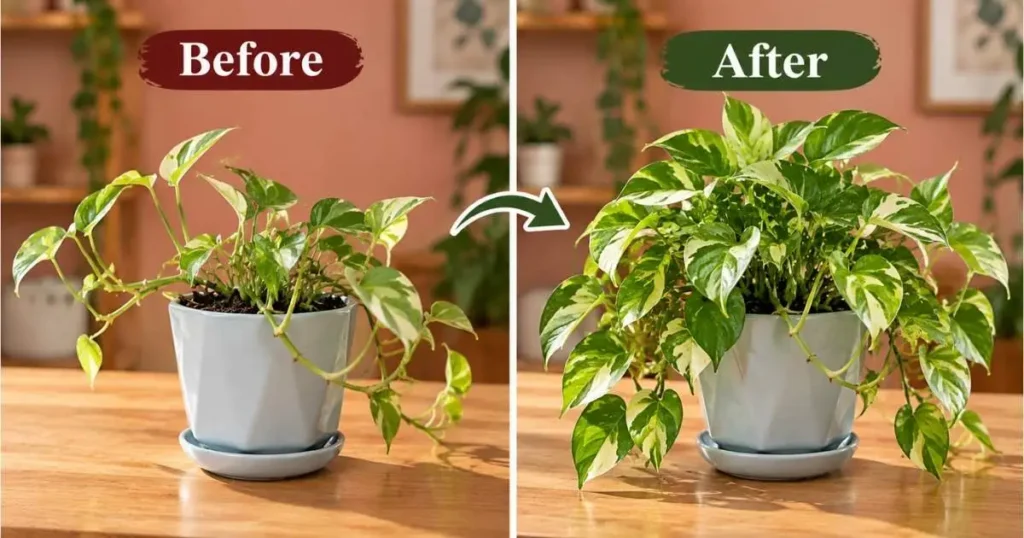
How Long Does Pothos Recovery Take?
There is no fixed recovery timeline for a pothos. How quickly growth resumes depends on what was limiting the plant, its overall condition, and the season. Early improvement may show up as firmer foliage, healthier-looking new growth, or a more active vine tip before a new leaf fully opens.
If several weeks pass after a genuine correction with no improvement, especially if other stress symptoms appear, reassess the original diagnosis rather than continuing to wait.
FAQs About Pothos Not Growing
Can a pothos stay alive without growing?
Yes. A pothos can remain green and healthy-looking for months with little visible growth, particularly in low light or during a seasonal slowdown. In that situation, the plant is maintaining existing growth rather than producing new leaves or extending its vines.
Should I fertilize a pothos that isn’t growing?
Not automatically. Fertilizer only helps when nutrient deficiency is actually limiting growth. If the underlying problem is light, root restriction, watering, or recent repotting stress, adding fertilizer will not correct it and may create further stress through salt buildup.
Can more than one growth problem happen at once?
Yes. Multiple factors can limit growth at the same time, such as low light combined with overwatering or root restriction combined with depleted nutrients. If correcting the most obvious limitation doesn’t improve growth, reassess the plant rather than assuming the first diagnosis was complete.
How long does a new pothos take to start growing after I bring it home?
A newly purchased pothos may need a few weeks to settle into its new environment before visible growth resumes. Changes in light, temperature, humidity, and handling can create a short adjustment period after leaving the nursery or store. Keep conditions stable and avoid immediately fertilizing or repotting unless there is a clear problem. Give the plant time to adjust before treating the lack of new growth as a sign that something is wrong.
Final Takeaway
A pothos that has stopped growing does not always need more water, fertilizer, or a larger pot. The important clue is what changed in the plant’s growth pattern and which condition is most likely limiting it.
Once that limitation is addressed, avoid chasing faster results with constant adjustments. Pothos growth is gradual, and steady conditions give the plant the best chance to return to healthy new growth.
Explore more:

Muddsir Munir
Houseplant enthusiast researching and writing about indoor plants, helping beginners grow spider plants, snake plants, and more with confidence.