Sansevieria Laurentii care is straightforward, but understanding this cultivar’s variegation, light needs, watering habits, growth pattern, and overall growing conditions can help you keep its distinctive yellow edges looking their best. This complete guide covers how to care for Sansevieria Laurentii, including light, watering, soil, temperature, feeding, growth, propagation, flowering, and the cultivar-specific details that matter most.
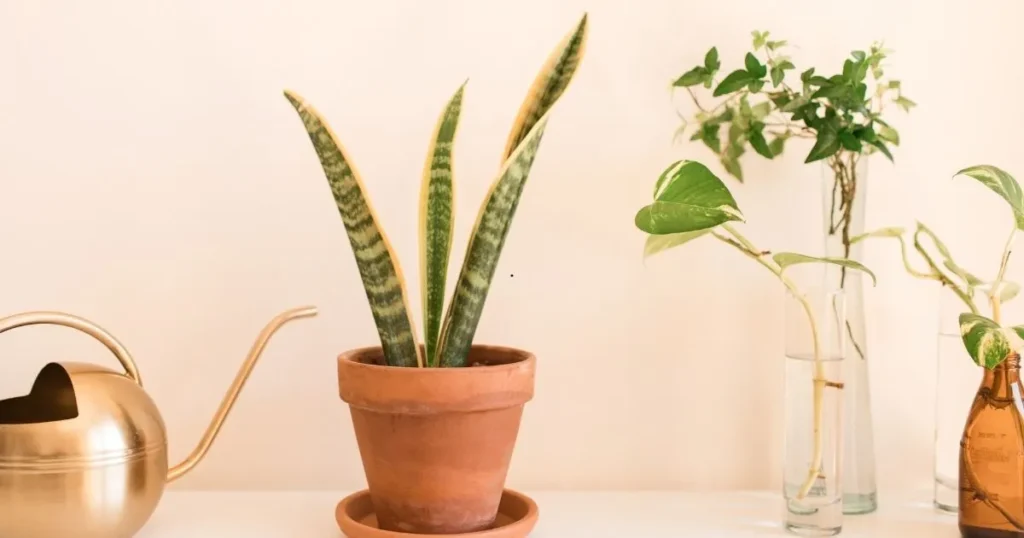
Sansevieria laurentii is the classic yellow-edged snake plant and the cultivar most people picture when they hear “mother-in-law’s tongue.” Its upright, sword-shaped leaves carry a defining trait most other snake plants don’t have: bright golden margins wrapped around a dark green center.
That variegation comes from chimeral variegation, which also explains why propagation method can affect whether new plants keep the familiar yellow margins. In this guide, you’ll learn what makes Laurentii different, from its identity and appearance to its growth, variegation, and the care details that matter most for this particular cultivar.
What Is Sansevieria Laurentii?
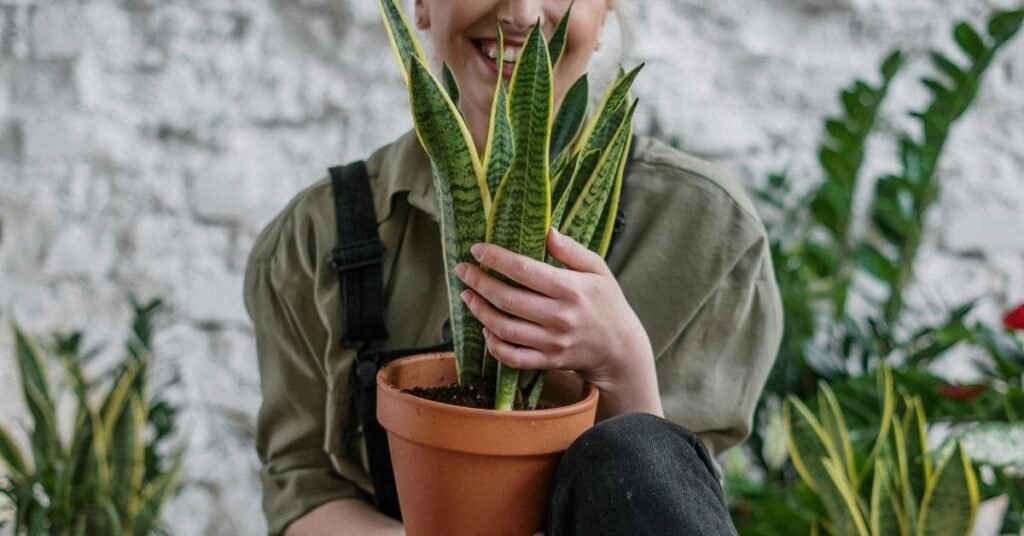
Sansevieria laurentii is a variegated cultivar of the snake plant, recognized by its yellow leaf margins and deep green leaf centers. This distinctive color pattern is what gives Laurentii its familiar yellow-edged appearance.
Sansevieria Laurentii vs. Snake Plant: Are They the Same Plant?
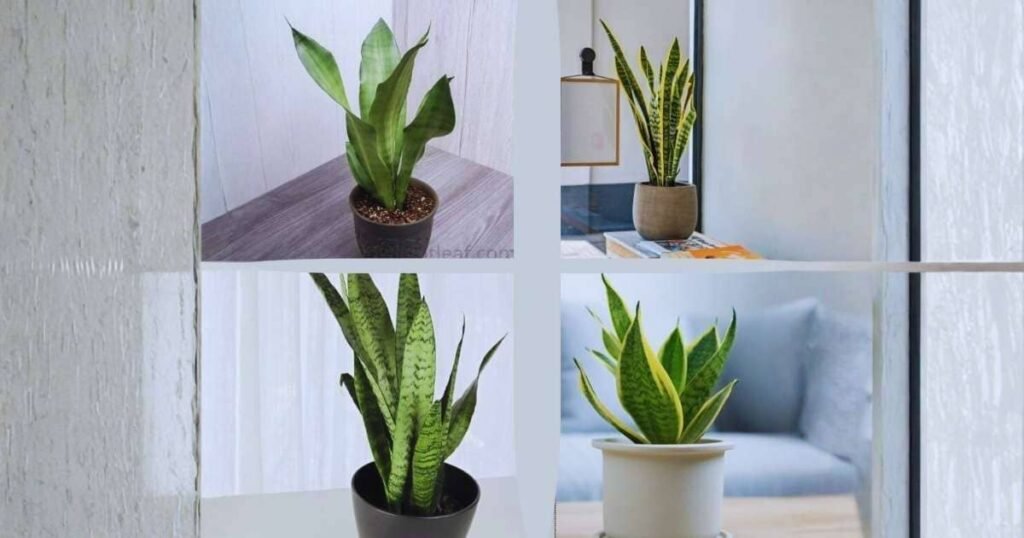
“Snake plant” is a common name used for several related plants and cultivars. Sansevieria laurentii refers to one specific cultivar with characteristic yellow-edged foliage. Every Laurentii is a snake plant, but not every snake plant is a Laurentii. If your plant has plain green leaves without yellow margins, it is more likely to be another cultivar, such as Zeylanica.
Sansevieria trifasciata Laurentii and Dracaena trifasciata Laurentii
You’ll see Laurentii labeled under two botanical names online:
- Sansevieria trifasciata ‘Laurentii’, the older and still widely used name
- Dracaena trifasciata ‘Laurentii’, the current botanical classification
Are Sansevieria trifasciata Laurentii and Dracaena trifasciata Laurentii the same plant? Yes. Both names refer to the same Laurentii cultivar. That’s why the older Sansevieria name can still appear on plant labels, nursery listings, and established care guides.
Is Laurentii a Species or a Cultivar?
Laurentii isn’t a species on its own. It is a cultivar of Dracaena trifasciata selected for its distinctive yellow-edged variegation. This distinction also matters when propagating the plant, because the method you choose influences whether new growth retains Laurentii’s characteristic coloring.
How to Identify Sansevieria Laurentii
The yellow margins are one of the quickest clues that you’re looking at Laurentii, but the leaf shape, center pattern, and upright growth habit help confirm the identification.
Yellow Margins and Green Leaf Pattern
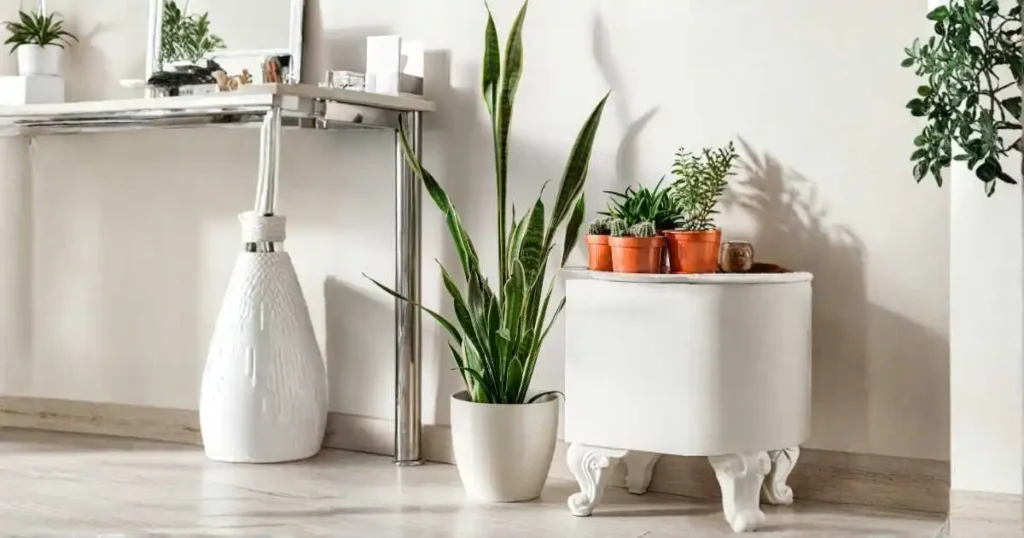
Look for a yellow to golden band along the edges of the leaves, surrounding a deep green center with subtle horizontal banding. The contrast between the bright margins and darker foliage is one of Laurentii’s most recognizable features.
Can young Laurentii leaves look different from mature leaves? They can. New leaves may appear paler or show less pronounced coloring while they develop, so a young leaf that looks slightly different is not automatically a sign of a problem.
Upright Sword-Shaped Leaves
Laurentii produces upright, sword-shaped leaves that grow from a tight rosette rather than trailing or spreading outward. The leaves remain relatively stiff and vertical, giving a mature plant its characteristic tall silhouette.
Variegation: What Makes Laurentii Recognizable?
The easiest distinction is the yellow-edged foliage. Plain green or silver-green leaves without Laurentii’s characteristic yellow margins point toward another cultivar, such as Zeylanica.
If you’re comparing two snake plants side by side, look at the leaf margins first, then the overall leaf shape and growth habit. This combination gives you a more reliable identification than color alone.
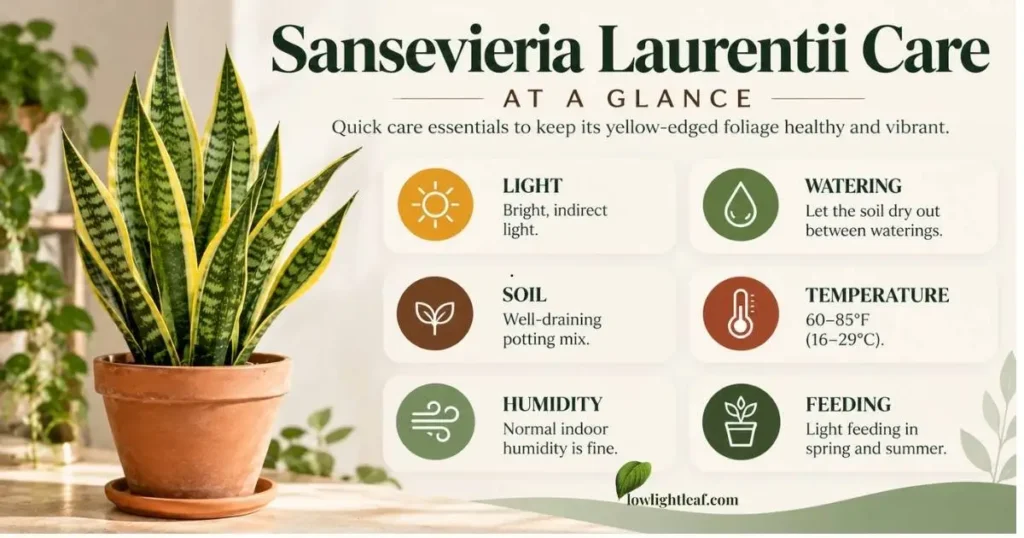
Sansevieria Laurentii Care at a Glance
Sansevieria Laurentii Care: What Is Different About This Cultivar?
Sansevieria Laurentii care follows the same drought-tolerant principles as other snake plants, but a few cultivar-specific details are worth paying attention to. The main differences relate to Laurentii’s yellow-edged variegation, tightly packed rosette, and tall upright growth. Understanding these differences helps you adjust light, watering, placement, and maintenance without treating Laurentii as a completely different type of snake plant.
Light and Variegation
Light is one of the main factors influencing how vivid Laurentii’s yellow margins look, alongside the plant’s overall growth rate. Laurentii generally tolerates lower light, but brighter indirect light helps support stronger growth and more clearly defined yellow margins, so understanding the right snake plant light requirements can make a noticeable difference.
Does Laurentii need more light than other snake plants? Not necessarily. Laurentii can tolerate lower light, but brighter indirect light generally supports stronger growth and helps its characteristic yellow margins remain more clearly expressed.
Watering Laurentii
Laurentii’s variegated foliage doesn’t change how it handles moisture. It’s just as susceptible to root rot as any other snake plant. The one detail worth flagging for this cultivar specifically: its rosette sits tightly packed, so water poured into the center can pool against the base and encourage crown rot. Water at the soil line and allow the growing medium to dry appropriately between waterings, using the condition of the soil to guide your timing instead of a fixed calendar schedule. Avoid repeatedly getting water into the center of the rosette.
For a broader understanding of watering timing, light levels, and seasonal changes, our guide to watering snake plants explains the general approach in more detail.
How often should you water Sansevieria Laurentii? Being variegated does not give Laurentii a separate watering schedule. Check the growing medium and your plant’s light conditions instead of watering on a fixed weekly routine. In brighter conditions, the medium may dry sooner, while lower-light plants generally need longer between thorough waterings.
Soil for Sansevieria Laurentii
Laurentii does not require a special soil mix. Its variegated foliage does not change the plant’s basic soil requirements. A well-draining growing medium is the important consideration, just as it is for other snake plants. The goal is to let excess moisture move away from the roots rather than remain trapped around the rhizomes.
Can you use regular snake plant soil for Laurentii? Yes. A well-draining mix suitable for snake plants is appropriate for Laurentii as well, so there is no need for a separate cultivar-specific soil formula.
Temperature and Humidity
Laurentii is comfortable with typical indoor conditions, so you do not need to create a special warm or humid environment for this cultivar. Protect it from cold drafts and sudden temperature drops, particularly during colder weather.
Does Sansevieria Laurentii need high humidity? No. Normal indoor humidity is generally sufficient, and Laurentii does not need regular misting or unusually humid conditions.
Feeding Laurentii
Laurentii does not require a special fertilizer formula. Like other Sansevieria, it can be fed during active growth, but its variegated foliage does not call for a heavier feeding routine. Because Laurentii is naturally slow-growing, heavier feeding is not a shortcut to faster or taller growth.
How often should you fertilize Sansevieria Laurentii? Extra fertilizer is not necessary to maintain Laurentii’s yellow margins. Use the normal feeding approach recommended for snake plants during active growth rather than increasing fertilizer to force faster growth.
Pests That Can Affect Sansevieria Laurentii
Sansevieria Laurentii is generally resistant to many common houseplant pests, but mealybugs, spider mites, and fungus gnats can occasionally affect the plant. Mealybugs and spider mites are mainly associated with the foliage, while fungus gnats are more closely linked to growing media that stays too moist.
The main thing to watch is the growing environment: avoid persistently wet soil, inspect the tightly packed leaf bases occasionally, and keep the foliage clean. These simple checks are part of maintaining healthy snake plants and can help you catch common problems before they become more noticeable.
Container Stability for Tall Laurentii
Because mature plants grow tall and top-heavy, a heavier pot, such as terracotta or ceramic, helps with stability more than it does with drainage. A wider, stable base becomes particularly useful as your Laurentii’s upright foliage and clump become larger.
Why can a tall Laurentii become unstable? Laurentii’s upright foliage can add height before the clump becomes wide and dense enough to balance the plant. As your plant matures, a heavier container with a stable base can help prevent the plant from tipping as the foliage and rhizome clump become larger.
Pruning and Maintaining Sansevieria Laurentii
Laurentii generally does not need regular pruning. Remove dead, damaged, or badly deteriorated leaves at the base when necessary, while healthy leaves can be left intact even when the plant becomes taller.
For routine maintenance, keep the upright leaves free of heavy dust and check the tightly packed center of the rosette for trapped water or debris. Keeping the crown clean and dry helps maintain the plant’s appearance and reduces unnecessary moisture around the leaf bases.
When should you repot Sansevieria Laurentii? Repot Laurentii when the growing container becomes unstable, the plant has become noticeably root-bound, or the rhizome clump has outgrown its available space. Because mature Laurentii can become tall and top-heavy, choosing a stable container matters alongside giving the roots enough room.
When it is time to move Laurentii into a new container, the same principles used for repotting a snake plant apply, especially choosing the right pot size and avoiding excess moisture.
Sansevieria Laurentii Size and Growth
How Tall Does Sansevieria Laurentii Get?
Most mature Laurentii plants grown indoors reach around 2 to 4 feet tall, although the exact size depends on the plant’s age and growing conditions. The RHS lists Sansevieria trifasciata var. laurentii at up to 1 metre, while other horticultural sources place established Laurentii plants around the 3 to 4-foot range.
How Does Laurentii Grow?
Laurentii is a slow-growing plant that develops gradually, producing new leaves and offsets over time. It generally grows upward before becoming noticeably wider, while new pups gradually expand the overall clump.
Under good indoor conditions, new growth may amount to roughly 4 to 8 inches per year, although the actual rate varies with light, temperature, moisture, plant maturity, and other growing conditions. Light and watering still play a role in how actively Laurentii produces new growth.
Why is my Laurentii getting taller but not wider? This can be completely normal. Laurentii’s upright leaves can increase the plant’s height without immediately increasing its overall width. Much of that width develops as rhizomes produce new pups around the base.
Rhizomes, Pups, and Mature Growth
Laurentii spreads through underground rhizomes that produce offsets, commonly called pups. As these pups develop, they increase the size and density of the clump.
Light, temperature, moisture, and the plant’s maturity can all influence how quickly new growth appears. So if your Laurentii is growing slowly, evaluate those conditions first and keep in mind that new height or pups may develop gradually. If slow growth seems unusual for your plant, the causes behind a snake plant not growing can help you work out whether the pace is simply natural or whether a growing condition needs attention.
A healthy plant can remain relatively unchanged above the soil while its rhizome system develops below it. RHS describes Sansevieria as rhizomatous and clump-forming, supporting this growth pattern.
Sansevieria Laurentii Variegation
Variegation is what gives Laurentii its signature yellow-edged appearance, but it also explains one of the most important differences between this cultivar and an ordinary green snake plant. Understanding how Laurentii’s variegation works also helps explain why the pattern behaves differently from ordinary green foliage and why propagation method matters when you want to preserve the same pattern.
Why Does Laurentii Have Yellow Edges?
Laurentii’s yellow margins come from chimeral variegation, a form of variegation involving different cell layers within the plant. This distinctive yellow-and-green pattern is a defining characteristic of the Laurentii cultivar rather than damage, discoloration, or a nutrient problem.
The yellow tissue is concentrated along the leaf margins, while the central portion remains predominantly green. This stable pattern is what gives Laurentii its characteristic yellow-edged appearance and helps distinguish it from green cultivars such as Zeylanica.
Can Sansevieria Laurentii Revert to Green?
Yes, but reversion refers mainly to new growth developing without the characteristic yellow margins. An established leaf becoming less vivid is a different issue and does not by itself indicate reversion.
Important: This matters particularly when propagating Laurentii from leaf cuttings. Because chimeral variegation is not always reproduced through leaf propagation, leaf cuttings can produce new growth that is mostly or entirely green instead of reproducing Laurentii’s yellow-edged pattern. Iowa State Extension specifically notes that variegated Sansevieria cultivars such as Laurentii do not reliably come true from leaf cuttings and recommends division to maintain the variegated pattern.
Is your Laurentii reverting or simply losing color? These are not necessarily the same thing. New growth that develops solid green can indicate reversion, while existing leaves that appear less vivid can be related to growing conditions such as insufficient light.
How Light Affects Laurentii’s Color and Pattern
Low light does not automatically cause Laurentii to revert, but it can make the yellow margins appear less vivid or pronounced and can slow overall growth. Sansevierias tolerate lower light, although RHS notes that they generally grow better in brighter locations. Laurentii can still work well as part of a collection of low-light indoor plants, provided you understand that lower light may affect the intensity of its yellow margins.
If your Laurentii’s yellow margins look noticeably less vivid, first consider the amount and quality of light it receives rather than assuming the plant has reverted. A change in color on established foliage does not mean the plant has produced a true reversion.
If your Laurentii’s existing leaves look paler than they used to, check its light conditions before assuming it has reverted. If the foliage is actually turning yellow rather than simply losing some of its color, troubleshooting yellow snake plant leaves can help you identify the underlying cause. Reversion is more specifically associated with new growth losing the characteristic variegated pattern.
Growing Sansevieria Laurentii by Climate and Region
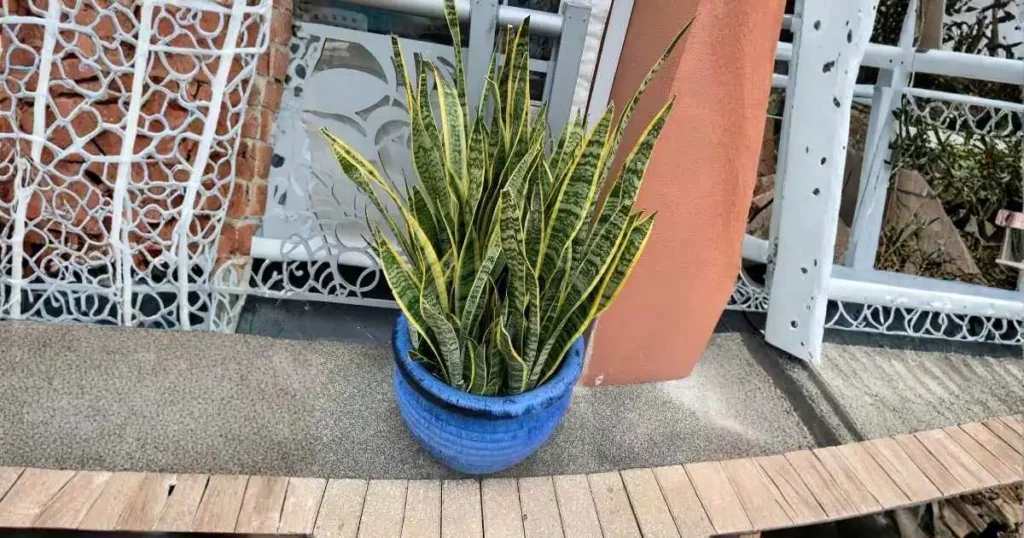
Laurentii’s care principles stay the same everywhere, but how it actually behaves, including growth speed, variegation vibrancy, and whether it can live outdoors at all, shifts noticeably depending on where you’re growing it.
Can Sansevieria Laurentii live outdoors year-round? Yes, in warm, frost-free climates where winter temperatures remain suitable. In colder regions, Laurentii can spend the warmer months outdoors but should be moved in before the first frost or damaging cold arrives.
Warm Climates: Florida, the Gulf Coast, and Southeast Asia
In USDA zones 9–11 (South Florida, coastal Texas, Southern California, and similarly warm regions), Laurentii can grow outdoors year-round, often reaching its full 4–5 foot potential faster than an indoor-only plant.
The trade-off is humidity: constant moisture in the air combined with rain exposure raises root rot risk if the plant isn’t in genuinely fast-draining soil, so outdoor Laurentii in these climates needs even stricter drainage than an indoor pot does.
Arid and Desert Regions: Southwest US, Mediterranean Climates
Hot, dry climates like Arizona, inland Southern California, or Mediterranean-type regions are close to ideal for Laurentii. The plant’s drought tolerance matches the environment naturally.
The main regional adjustment is intensity, not frequency: harsh, direct desert sun through an unshaded window can still scorch leaves and bleach variegation, so bright indirect light indoors remains important even in a naturally sunny climate.
Temperate and Cold-Winter Climates: Northern US, UK, Northern Europe
Anywhere with winters that drop consistently below 50°F (10°C), including much of the northern US, the UK, and northern Europe, Laurentii needs to be grown strictly indoors or moved in before the first frost.
The shorter, weaker daylight hours through winter can visibly soften variegation: homes in these regions also tend to run drier indoor air during winter heating season, which isn’t a problem for Laurentii’s humidity needs, but the weaker winter light can affect how vivid the plant looks until spring light returns.
Tropical and Naturally Low-Light Regions: West Africa and Similar Tropical Areas
In the native West African range of its parent species and comparable tropical zones, Laurentii often grows under filtered canopy light rather than open sun, which is part of why it tolerates dimmer indoor rooms better than many houseplants.
Expect slower growth and a slightly less vivid margin: if you’re in a climate with naturally overcast or hazy light for much of the year, the same plant may show less vivid coloration than it would somewhere sunnier. That is not necessarily a sign of a problem, but rather a regional baseline worth knowing.
Propagating Sansevieria Laurentii: Will It Keep Its Yellow Edges?
This is the most misunderstood part of growing Laurentii, and it’s worth understanding before you cut anything.
Division and Variegation
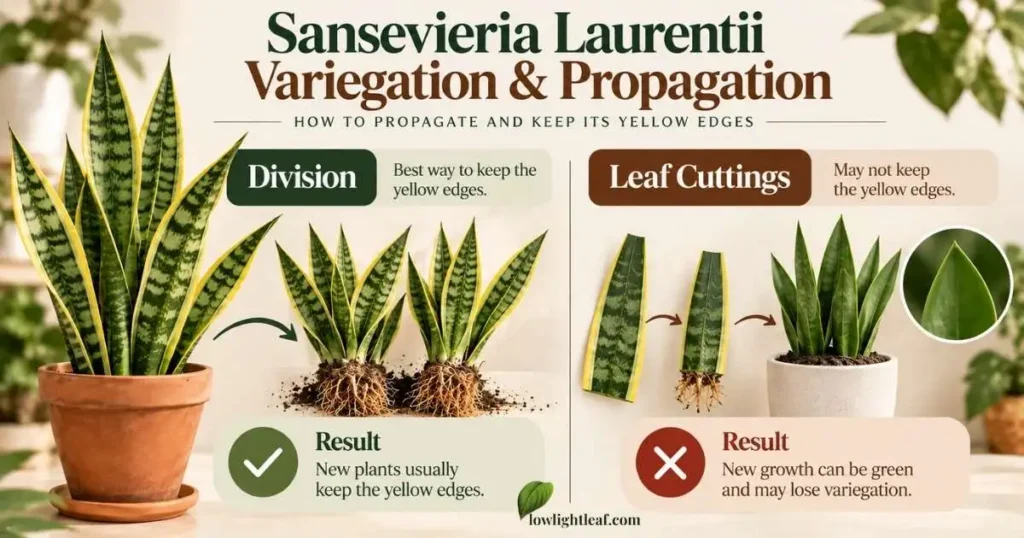
Separating a rooted rhizome section with roots attached is the most reliable way to get a new plant that looks like the parent. Because you’re dividing an already-established section rather than asking a leaf to regenerate a whole new plant, the yellow margins carry over intact.
Leaf Cuttings and Variegation Changes
Leaf cuttings can produce plants that lose the characteristic yellow margin and grow back mostly or fully green instead. This ties directly back to the chimeral nature of the variegation, because the new growth doesn’t reliably carry the same cell layers that produce the yellow edge.
Can you propagate Sansevieria Laurentii from a leaf cutting and keep the yellow edges? Not reliably. Leaf cuttings can produce new growth that is mostly or fully green instead of reproducing Laurentii’s characteristic yellow-edged pattern. If keeping the exact look of your plant matters to you, division is the safer choice for preserving its variegation.
The basic methods used in snake plant propagation techniques are familiar, but Laurentii needs extra attention because the method can affect whether its yellow-edged pattern is preserved.
Sansevieria Laurentii Flowers: Does It Bloom?
Yes. Flowering does not require a specific stress treatment, although indoor flowering is uncommon. When a mature Laurentii plant does bloom, it may send up a tall stalk bearing small, fragrant, pale flowers.
How often does Sansevieria Laurentii bloom indoors? Laurentii does not bloom on a predictable schedule indoors. Mature plants can occasionally produce flowers, but indoor flowering is uncommon and depends on the plant’s maturity and growing conditions.
How Long Does Sansevieria Laurentii Live?
With reasonable care, a Laurentii can live for decades. Healthy specimens can remain with their owners for 20 years or more, and longevity has less to do with precise care and more with consistency: stable light, infrequent but thorough watering, and avoiding both chronic overwatering and unnecessary repotting.
Laurentii vs. Similar Snake Plant Varieties
People frequently confuse Laurentii with a handful of visually similar cultivars.
The clearest tell is the margin itself: no yellow edge usually means Zeylanica, while broader and shorter foliage points toward Superba. Black Gold can also have yellow margins, but its darker foliage helps distinguish it from Laurentii. Comparing Laurentii with other snake plant varieties makes these differences in leaf color, shape, and growth habit easier to recognize.
Sansevieria Laurentii Meaning and Feng Shui
Laurentii Meaning and Symbolism
Snake plants are widely associated with resilience and protection, largely from how reliably they survive neglect. These qualities are also part of the broader benefits of growing snake plants indoors, while Laurentii’s added variegation is often read as a symbol of vitality layered onto that same reputation.
Laurentii in Feng Shui
In feng shui practice, snake plants are considered protective and are commonly placed near entryways, with their upright, sword-like leaves associated with strength. Laurentii’s bright variegation makes it a frequent choice for this kind of placement.
Where should you place Sansevieria Laurentii for feng shui? In feng shui practice, Laurentii is commonly placed near an entryway or in other areas where its upright form is associated with protection and strength. Its bright yellow-and-green variegation can also make it a visually prominent choice for these placements.
While Laurentii is easy to maintain, it is still worth understanding the potential drawbacks of snake plants before choosing one for your home, especially if pets or young children may come into contact with it.
Sansevieria Laurentii FAQs
Can Sansevieria Laurentii produce all-green pups?
Yes. A Laurentii pup can sometimes develop with reduced or absent yellow margins when the new growth does not retain the variegated tissue pattern. This is different from an older leaf simply becoming less vivid.
Does every Sansevieria Laurentii pup keep the same variegation?
Not necessarily. While division is the most reliable way to preserve Laurentii’s variegated pattern, individual new growth can still show variation in how strongly the yellow margins are expressed.
Can Sansevieria Laurentii produce flowers without being stressed?
Yes. Flowering does not require a specific stress treatment, although indoor flowering is uncommon. Mature Laurentii plants can occasionally produce a tall stalk with small, fragrant, pale flowers.
Is Sansevieria Laurentii toxic to cats and dogs?
Yes. Laurentii contains saponins that can cause mouth irritation, drooling, or stomach upset if chewed or ingested. Keep the plant away from pets that are likely to nibble it.
Can Sansevieria Laurentii be kept outdoors during summer?
Yes, in suitable warm conditions. Laurentii can spend the warmer months outdoors where temperatures remain safe, but it should be protected from frost and damaging cold.
Final Thoughts on Sansevieria Laurentii
Sansevieria Laurentii is more than the familiar yellow-edged snake plant. Its cultivar identity, chimeral variegation, and distinctive upright growth explain many of the traits that make it different from plain green snake plant cultivars. The most useful thing to understand is that Laurentii’s appearance is closely tied to how its variegation is maintained and reproduced. Once you understand that distinction, decisions about propagation, placement, and long-term growth become much easier to make. That is what makes Laurentii worth treating as a distinct cultivar rather than simply another name for a snake plant.
Explore more:

Muddsir Munir
Houseplant enthusiast researching and writing about indoor plants, helping beginners grow spider plants, snake plants, and more with confidence.