Last updated on November 16, 2026
Why is my ZZ plant drooping? Almost always it’s a water or light problem, and you can tell which in a minute: push a finger up to your second knuckle into the soil, then squeeze the base of a stem. Dry soil and limp stems mean thirst. Wet soil and soft, mushy stems mean too much water. Firm stems that stretch and sag in a dim spot mean the plant wants more light.
A ZZ stores water in its rhizomes and leaves, according to NC State Extension, which is why it forgives so much and why the two opposite mistakes can look alike from above. So I check before I act, because the fixes for too wet and too dry are opposites.
Why is my ZZ plant drooping? Read the pot in this order
Do these before you water, move or repot anything. The whole routine takes about two minutes, and it settles most droops.
- Soil first. Push a finger or a wooden skewer deep into the pot. Note whether it comes out dry, damp or wet.
- Then the stem base. Squeeze gently where the stems meet the soil. Firm is good. Soft or mushy is not.
- Look at the spot. Is the pot near a bright window, deep in a room, or beside a vent or cold glass?
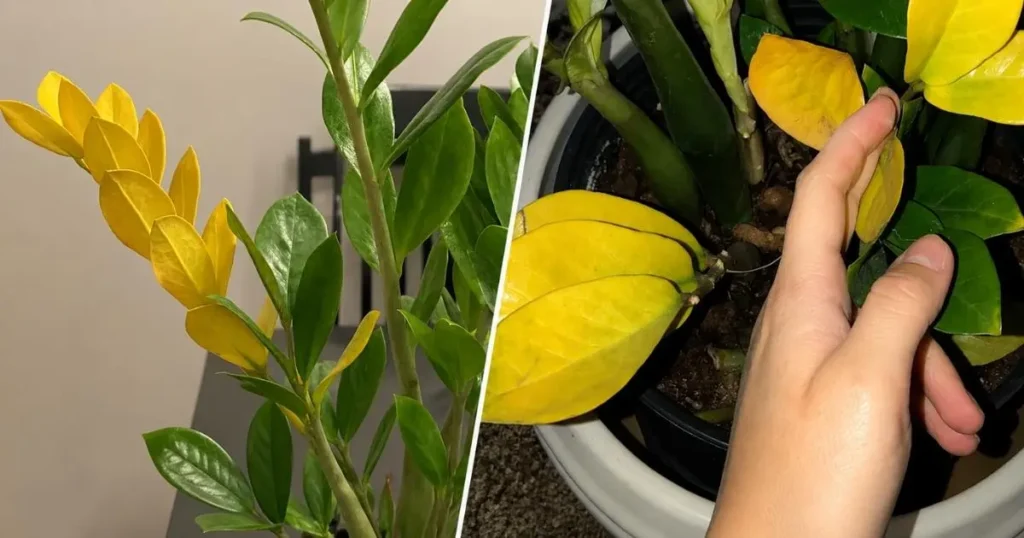
- Check the leaves last. Yellow, dry and papery, brown at the edges, or sticky all point to different causes.
The same order applies if the droop started right after repotting. Soil first.
What each reading points to
The table below pairs what you feel and see with the most likely cause and the first thing to do. The rows come from NC State Extension’s ZZ plant profile and Southern Living’s ZZ troubleshooting guide.
| What you find | Likely cause | First move | Source |
|---|---|---|---|
| Wet soil, soft stem base, leaves yellow before they fall | Too much water, maybe rot | Stop watering and check the rhizomes | Southern Living |
| Dry soil, limp wilted leaves, stems suddenly bending | Too little water | Water until it drains from the pot, then leave it alone | Southern Living |
| Firm stems, slow growth, stems stretching out | Too little light | Move closer to bright, indirect light or add a grow light | NC State, Southern Living |
| Leaves dropping after a draft or a swing in temperature | Cold or heat stress | Move it away from vents and cold glass | Southern Living |
| Faded, brown or scorched leaves near a bright window | Too much direct sun | Pull it back or filter the light | NC State, Southern Living |
| Sticky residue, webbing or spotted leaves | Pests | Wash and wipe the leaves, then treat | Southern Living |
Too much water: the one that does the damage
NC State Extension says a ZZ does not tolerate wet feet, and a pot that stays soggy is the first thing I would suspect. If the soil is wet and the stem bases are soft, stop watering. Southern Living’s advice is to let the soil dry out completely before you water again, and, if you suspect root rot, to trim any mushy or brown roots and repot in fresh soil.
I would unpot rather than wait. The rhizomes are the potato-like lumps under the soil, and what you want to find is firm ones. Mushy or brown ones mean rot. My guide to ZZ plant yellow leaves walks through that rhizome check step by step, so I won’t repeat it here.
Why soft stem bases and wet soil go together: the rhizomes and roots sit below the soil line, so rot starts out of sight, and the stem base is often the first place you can feel it. Southern Living ties yellow leaves followed by a mushy stem to overwatering for the same reason.
When you repot, the mix matters as much as the schedule. Southern Living recommends well-draining soil so the plant doesn’t sit in moisture, and my page on the best soil for ZZ plants covers what drains well.
People will give you opposite advice for the same plant. In an August 2026 r/houseplants thread about a ZZ whose new growth was changing color, one reply guessed the problem was water:
“Maybe watering too much?”
– r/houseplants (5 upvotes)
A few comments away, another person wrote “Needs water”. Both can’t be right. The pot is the tiebreaker, which is why the soil check comes first.
Too little water: easy to miss
Because a ZZ holds so much water, it is easy to forget it entirely. Southern Living says upright stems that suddenly droop may mean it isn’t getting enough water, and that a dehydrated plant shows limp, wilted, dry leaves along with dry soil. That combination is the thirsty reading. Wet soil with limp stems is a different story, and a very different fix.
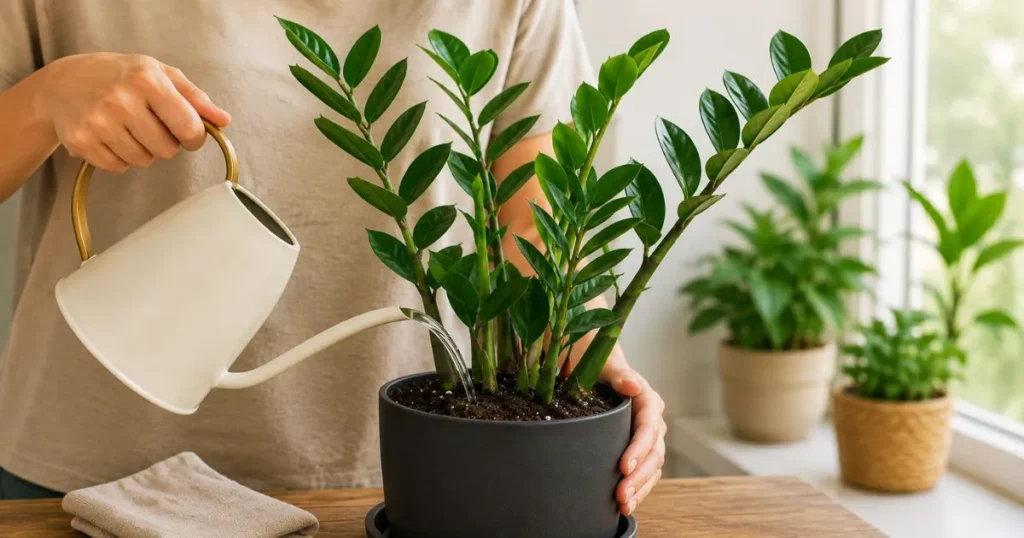
When you do water, pour on the soil at the base until it runs out the bottom, then stop. Southern Living puts the gap at two to four weeks. NC State Extension is more specific about the rhythm: water about once a month in winter and twice a month in summer, and only if the soil is completely dry.
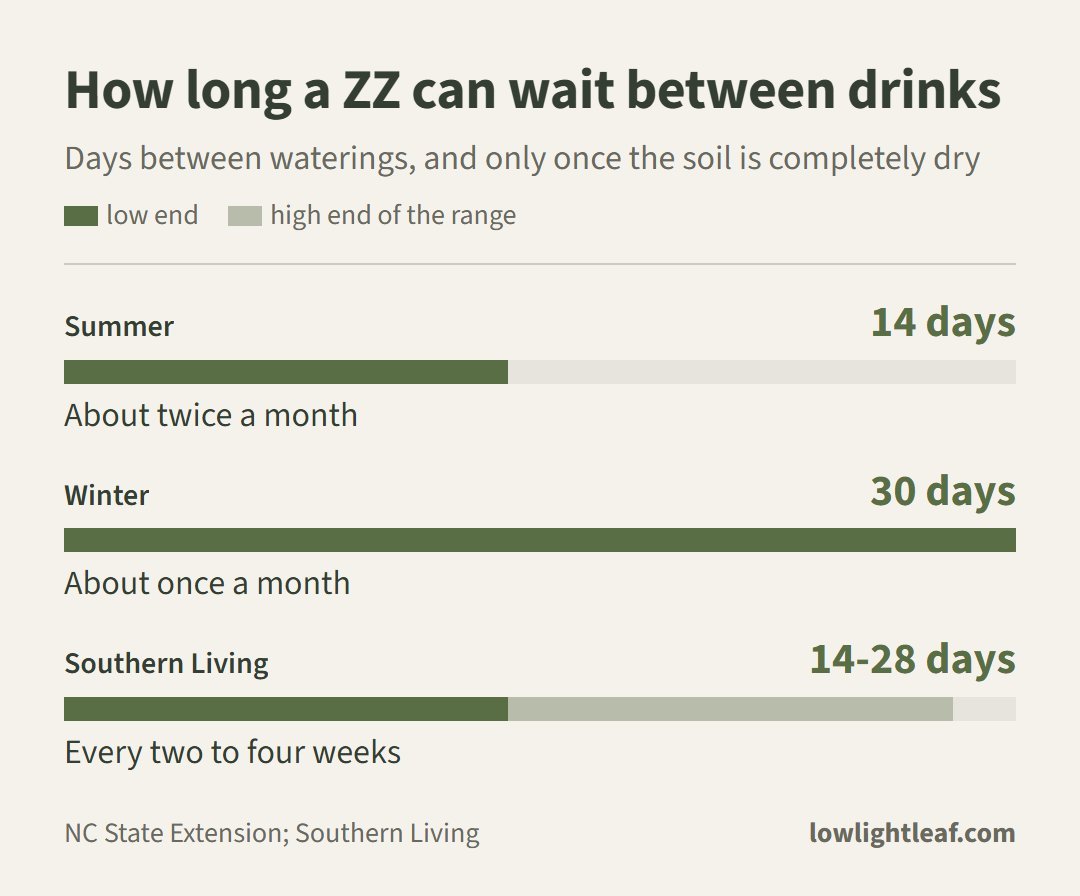
That is a ceiling on how often you water, not a calendar to follow. If the soil is still damp when the date comes round, I skip the date.
Too little light: the slow droop
Here is where the label “low light plant” does damage. NC State Extension says a ZZ tolerates very low light but does best in bright, indirect light, and those are two different things. Southern Living lists leggy growth, slow growth and yellowing leaves as signs of too little light. Stems that stretch and then flop outward are that leggy growth giving way.
The people in r/houseplants are blunter about it. In a thread about a droopy ZZ, one commenter put it this way:
“Much much more light. It takes a very long time to die in low light. But it needs good light to live and a lot of light to thrive.”
– r/houseplants (9 upvotes)
I lived in a north-facing apartment for years and now use grow lights in the darkest corners of my home, so I’m biased toward that reading. If your soil and stem base feel fine and the plant sits far from a window, move it somewhere brighter before you change anything else. Southern Living says even fluorescent lights can help in a dark room, and a grow light works if that isn’t enough.
Leaning or falling over: firm or soft at the base?
A ZZ that leans, splays or flops is the same question again: squeeze the base. Soft and mushy stems with wet soil point back to the overwatering section.
Firm stems that stretch and sag point to the leggy growth Southern Living describes for too little light, so the fix is light, not water. I don’t have a university source on staking or supporting a ZZ, so I’d fix the cause first and not prop up a plant that is still sitting in the wrong spot.
Cold, drafts and too much sun
Southern Living gives 65 to 80°F as the range a ZZ thrives in and warns that sudden temperature swings, drafts and heat sources can shock it into dropping leaves. A pot on a windowsill behind a curtain, or next to a vent that kicks on at night, fits that description.
For a hard cold limit, I couldn’t find a ZZ-specific figure from a university source, so I won’t make one up. The closest solid number is general: UF/IFAS Extension says most tropical and subtropical foliage plants are susceptible to damage below about 50°F, with rapidly wilting leaves and water-soaked areas as common chilling symptoms. Treat that as a general guide for tropical houseplants, not a ZZ test result.
The opposite problem is real too. NC State Extension notes that direct sun scalds the leaves, and Southern Living lists fading, browning and curling as the signs. If the droop shows up in a spot with hot afternoon sun, pull the pot back or filter the light with a sheer curtain.
Pests, and a note on pets
Aphids, mealybugs, scale and spider mites can all cause yellowing, spotted leaves or sticky residue on a struggling plant, according to Southern Living. If you’ve ruled out water, light and temperature, look under the leaves.
One practical point if you do end up unpotting and trimming. NC State Extension rates the ZZ plant as poisonous, with medium severity. Because of my cat Miso I check every plant against the ASPCA list before it comes home, so I keep trimmings out of reach. If you’re checking a different plant before you repot it, the plant toxicity checker lists the ASPCA’s verdict for each plant it covers.

Ellie Marsh
Houseplant grower who spent years in a north-facing apartment. Writes practical care guides for low light homes, checked against extension and botanical garden sources.