Last updated on November 24, 2026
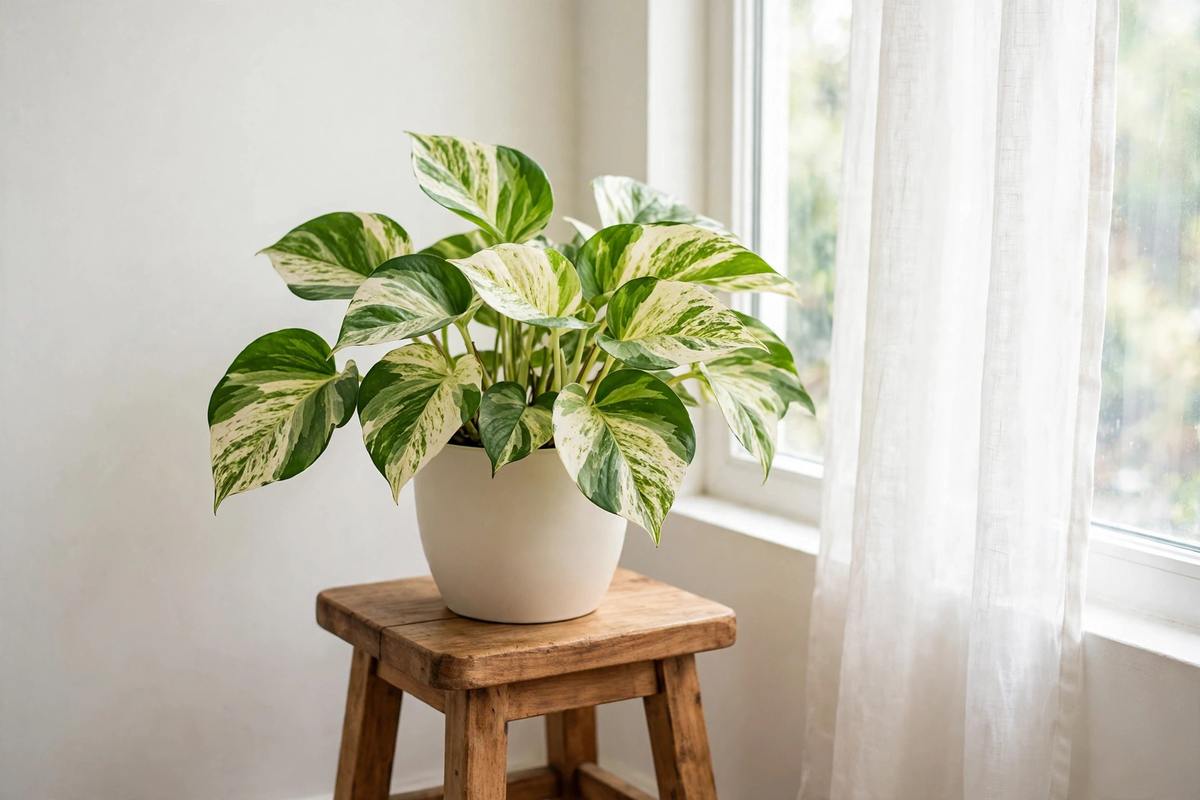
Manjula pothos is a cultivar of Epipremnum aureum with wide, ruffled leaves patched in cream and pale green. It grows like a golden pothos with one difference that decides most of its care: the cream carries no chlorophyll, so the vine needs brighter indirect light to hold the pattern, and it adds leaves more slowly.
Move it to the shelf where a golden pothos merely survives, and the vine keeps growing while the pattern fades out of the new leaves.
What a Manjula Pothos Is
Manjula is a named form of the common pothos, grown for its leaf pattern rather than for any difference in habit. Botanically it is the same species as the golden pothos: an evergreen arum-family vine from the Society Islands, with glossy heart-shaped leaves on stems that trail or climb, as NC State describes it.
The leaf is why it gets a page of its own. Manjula leaves are broader than a golden pothos and often close to as wide as they are long, with a rippled margin instead of a flat one. Cream sits in irregular wedges rather than even stripes, so one leaf can be half pale and the next mostly green with a thumb-wide streak.
- Leaf: wide and heart-shaped, with a rippled edge
- Pattern: cream to pale-green wedges, uneven leaf to leaf
- Stems: green, even under the patterned leaves
- Habit: trailing vine, 6 to 8 feet as a horizontal spread
- Growth: slower than a golden pothos, since much of each leaf makes no food
NC State gives the species that 6 to 8 foot spread as a horizontal groundcover and calls the leaves glossy and heart-shaped on cascading stems. Indoors, how much vine you get is a function of light and time rather than age.
Manjula vs Pearls and Jade vs Marble Queen
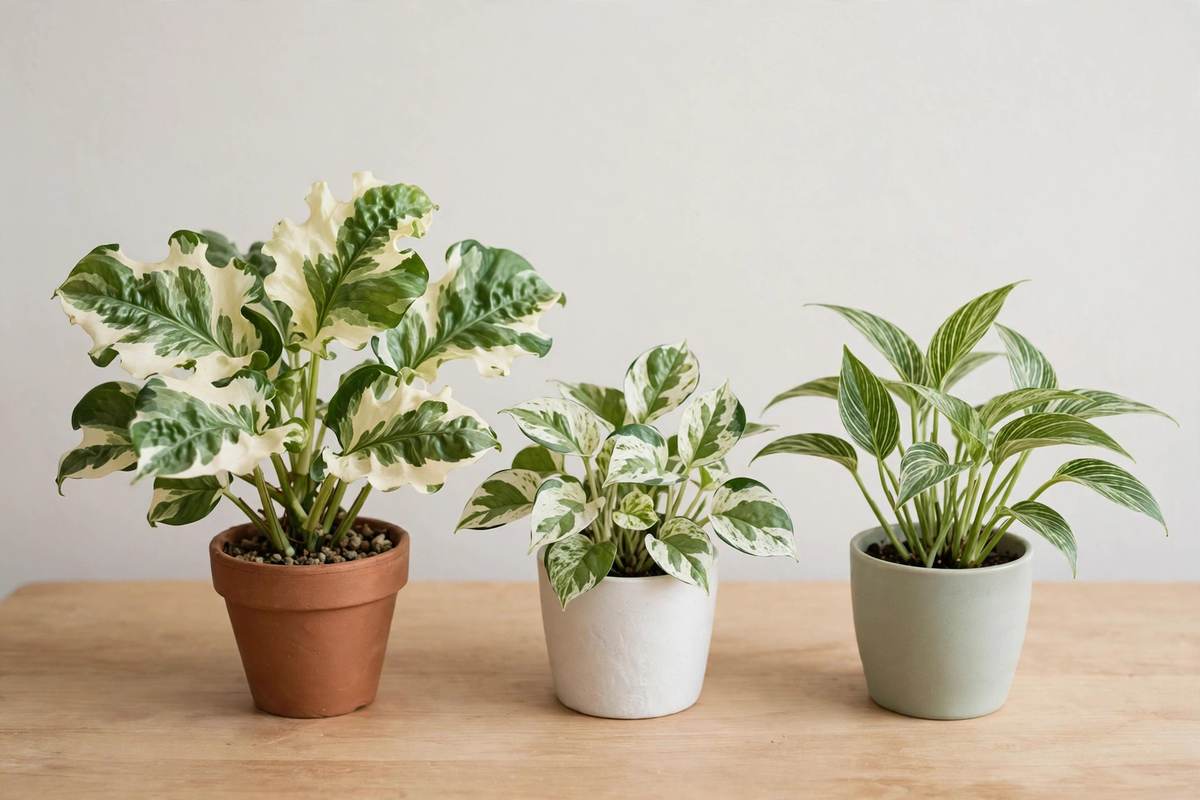
Manjula is the wide, ruffled one, with cream and pale-green wedges on green stems. Pearls and Jade shows white variegation on smaller leaves and, per NC State, off-white stems. Marble Queen is green marbled with white in finer streaks on a thinner leaf. Width, edge and stem color settle most arguments.
| Cultivar | Variegation | Leaf | Growth |
|---|---|---|---|
| Manjula | Cream and pale-green wedges, uneven | Wide, rippled margin | Slow |
| Pearls and Jade | White on green, off-white stems | Smaller, narrower | Moderate |
| Marble Queen | Green marbled with white, fine streaks | Thinner, flatter | Slow |
The off-white stem on Pearls and Jade is the cleanest single tell, because the other two keep green stems beneath their patterned leaves. Green stem, small flat leaf: more likely Marble Queen than Manjula.
“The leaf you’re holding looks like a manjula but the one to the right does not (in the first pic). Are they on separate vines?”
– r/pothos, thread on telling the two apart
Two vines in one pot is routine in the trade, and it is the usual reason a plant looks like two cultivars at once. Check each vine on its own, stem first, before deciding you were sold the wrong thing. The guide to pothos varieties covers the rest of the family, and Marble Queen has a care page of its own for comparison.
Light: The Variegation Trade-Off
Bright indirect light is the range where the pattern holds. NC State lists low light as a cause of lost variegation in pothos, and its light labels run from dappled sunlight through partial shade, two to six hours of direct sun, down to deep shade at under two hours. Manjula wants the bright end of that scale and none of the harsh end.
The white sections are the constraint. They hold no chlorophyll, so they feed nothing and they scorch faster than green tissue. A leaf that was cream last month and is bleached and papery now sat too close to glass rather than too far from it.
I use the north-facing window here as the test case: the useful spot is near the glass rather than across the room, and the vine will lean into it. Where the window is not enough, a bar-style LED above the shelf keeps the pattern. Hang it higher than the fixture’s own chart suggests, then bring it down over two or three weeks. The test is your own hand at leaf height: if the back of it feels warm after a minute, the bar is too close for a plant this white.
Pothos light requirements gives the range for the species, and the DLI calculator turns a window and a count of hours into a daily light integral if you would rather work from a figure.
Watering and Soil
Water when the surface of the mix has dried, then soak it until water leaves through the drainage hole. NC State’s guidance for the species is to let the well-drained potting medium dry out between waterings, and it names root rot and blackened leaf margins as what happens when it never does.
Underwatering and overwatering both finish in yellow leaves, which is why the two get confused. A thirsty vine goes limp and dull, the pot feels light in my hand, and the oldest leaves crisp at the edge. Too much water writes its first mark at the margin too, but the tissue goes black and soft while the mix stays damp for days after a watering.
A chunky, free-draining mix does most of the work. Best soil for pothos covers the components; what matters for this cultivar is that a slow, heavily variegated vine drinks less than a green one, so a mix that suits a golden pothos in June can sit wet too long under a Manjula in November.
Dry air is a separate issue, and NC State suggests a humidifier or a tray of wet pebbles for the species. In a heated room the tips of the oldest leaves are where it shows first.
Why Leaves Revert or Brown on a Manjula
A green leaf on this vine is reversion, and light is the usual cause. NC State names low light as a reason pothos loses variegation. Those leaves will not turn patterned again, so the fix is to cut the vine back below the green growth and raise the light on whatever follows.
Reversion starts at the growing tip. The newest leaf comes in solid green, the next one follows, and a season later half a vine is plain. Cut back to a node on the patterned part and the new shoot often returns patterned, provided the light is better than it was. I have made that cut and watched the next leaf come back cream.
Brown is a different diagnosis. Crisp brown edges and tips point to dry air or a rhythm that swings from bone dry to soaked. Bleached, papery patches on the side of a leaf facing the glass are sun damage. Black, soft margins are the overwatering signature from the section above, and they call for a look at the mix rather than a move to another window.
For yellowing that is none of these, pothos yellow leaves works through the rest of the list, from root rot to fertilizer salt build-up.
Propagation and the Patent Question
Manjula roots from a stem cutting with at least one node, in water or in damp mix, in bright indirect light. Because the vine carries so little chlorophyll, a cutting can push out all-green growth, and those shoots are the ones to remove if the pattern is what you are growing for.
The last cutting I took was a node and two leaves, cut just below the node with the lowest leaf stripped. Water rooting takes a few weeks. How to propagate pothos covers the soil method and the timings in more detail.
The other question about propagation is legal rather than horticultural. Some pothos cultivars in the US trade are protected by plant patents, and those patents cover commercial propagation, so a nursery needs authorization before it propagates and sells them. That is the scope of the rule: it is written for growers, not for the shelf at home.
Is Manjula Pothos Safe for Cats?
No. ASPCA lists pothos as toxic to cats, and to dogs, with oral irritation, drooling, vomiting and difficulty swallowing after chewing. The irritant is insoluble calcium oxalate crystals in the sap, and Manjula is the same species, so the same risk travels with it.
With Miso in the flat, every pothos here sits on a shelf she cannot reach from the couch, and I trim the trailing vines before they hang low enough to be worth a swipe. The crystals work mechanically rather than as a swallowed dose, which is why the reaction is fast and mostly in the mouth.
Is pothos toxic to cats has the symptoms and the first steps, and the plant toxicity checker is quicker when you are standing in a shop holding a plant you do not recognize.
Manjula Pothos FAQ
Is Manjula pothos rare?
Not any more. It is still uncommon beside a golden pothos on a supermarket shelf, but it has moved into mass production. A February 2026 thread in r/pothos caught the shift:
“I was browsing plants at Home Depot and saw that the company Proven Winners has started selling Manjula ‘Poonsin’ pothos at Home Depot. Really cool that some companies are mass producing these formerly niche cultivars and making them easily accessible to everyone!”
– r/pothos, February 2026 (190 upvotes)
Uncommon is the fair word now. Check the leaf before you take one home.
Does it want full sun or shade?
Neither extreme. Full midday sun bleaches the cream, and deep shade greens the new leaves out within a season. Bright indirect light, a step back from a sunny window, is where the pattern and the growth rate meet.
Can I propagate it legally?
For a vine you already own, cuttings for your own shelf are not what plant patents are about. The protection covers commercial propagation, where a nursery needs authorization to propagate and sell.
What does an overwatered Manjula look like?
Soft yellow leaves low on the vine, blackened margins, and a mix that stays damp a week after a watering. Crisp brown edges are the opposite problem.
One thing took me a while to accept: with this cultivar the fix is almost always light, and the mistakes are almost always water. Give the cream enough brightness to pay for itself, keep the mix dry between soakings, and the pattern holds through a winter on a north-facing shelf.

Ellie Marsh
Houseplant grower who spent years in a north-facing apartment. Writes practical care guides for low light homes, checked against extension and botanical garden sources.