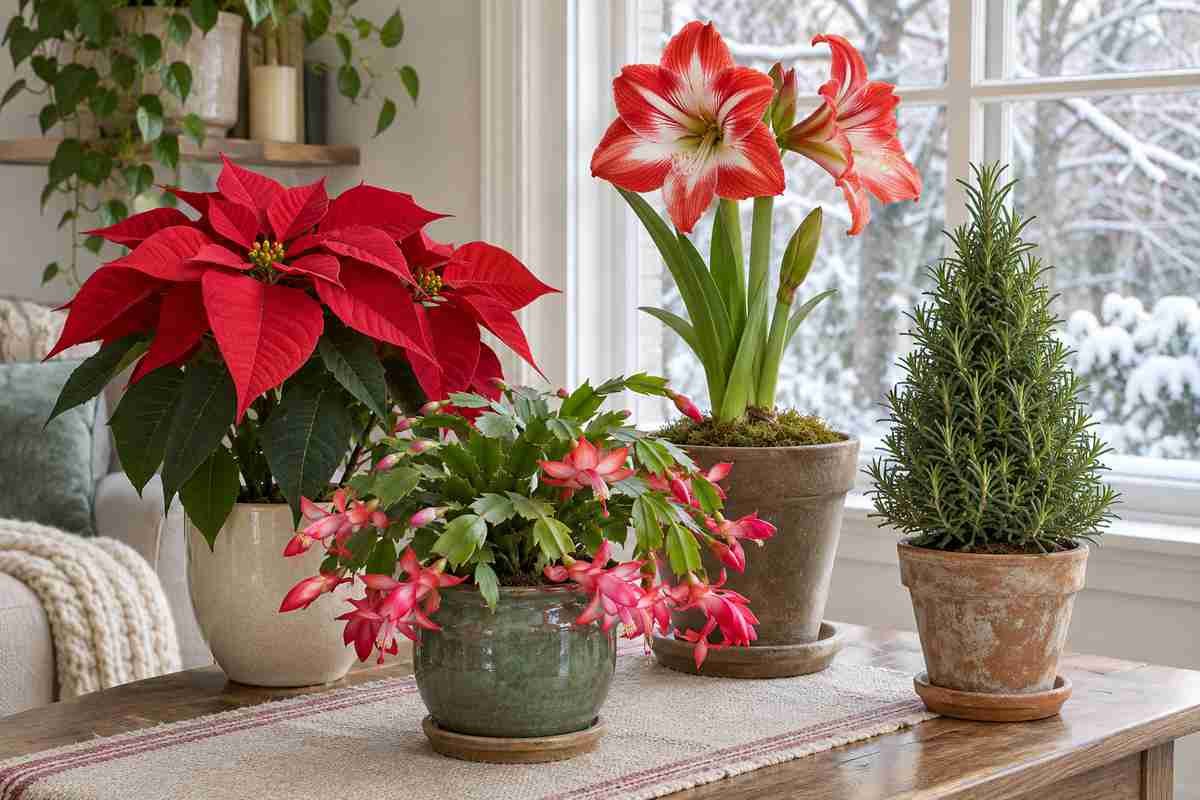
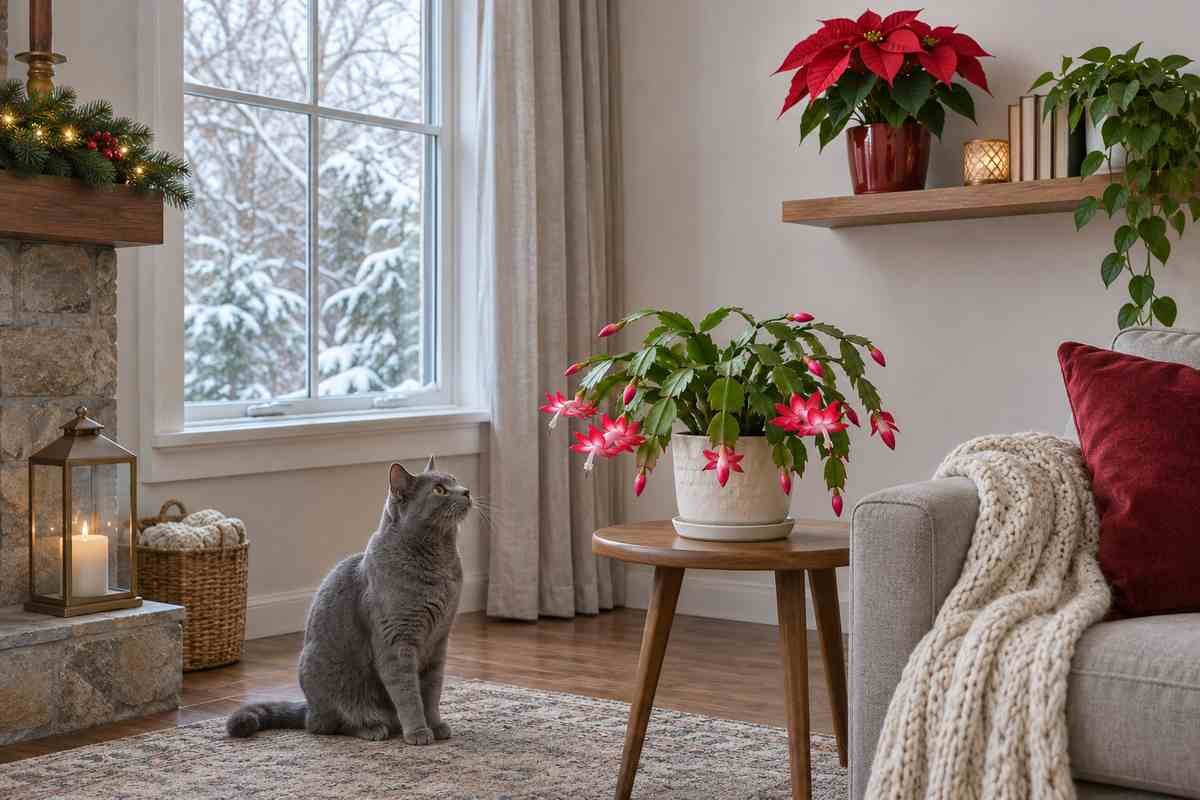
The usual Christmas plants are poinsettia, Christmas cactus, amaryllis, cyclamen, kalanchoe, Norfolk Island pine, rosemary trees and the Christmas tree itself. On the ASPCA’s plant list, Christmas cactus, Norfolk Island pine and rosemary are non-toxic to cats and dogs, while poinsettia, amaryllis, cyclamen and kalanchoe are toxic. For a dim room, the Christmas cactus copes best.
Most holiday plants are sold for how they look on a store shelf. Two questions matter more once one comes home: will your cat chew it, and is there enough light where you plan to put it?
Christmas plants at a glance
Poinsettia
Poinsettia, the best-known Christmas plant, wants bright, indirect light. Colorado State University Extension asks for at least six hours of it a day, says direct sun fades the colored bracts, and says the plant should never sit below 55°F. On the ASPCA list, poinsettia is toxic because its sap irritates the mouth and stomach, but also calls its toxicity “generally over-rated.” Keeping a poinsettia alive walks through the first week home, which is when most are lost.
Christmas cactus
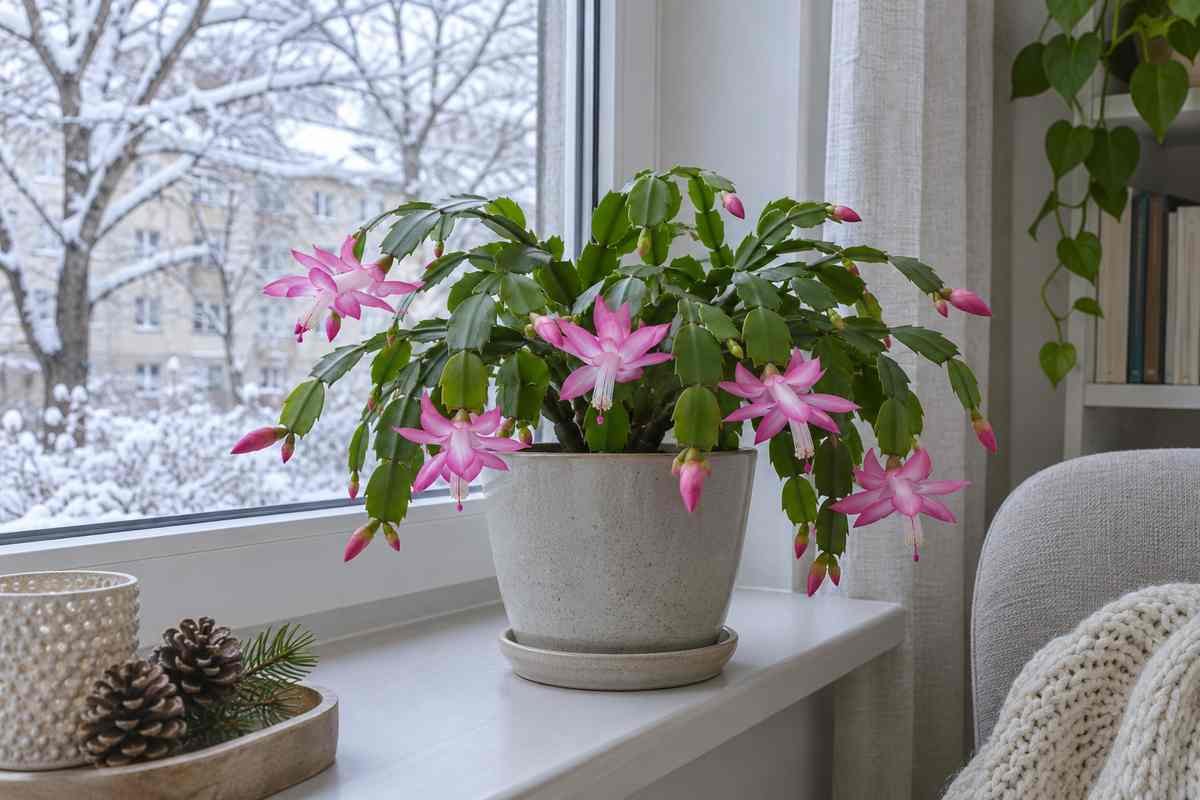
Purdue University’s consumer horticulture team says the Christmas cactus adapts to low light, though it produces fewer flowers with less. Buds set when fall nights are long or cool: about 12 hours of unbroken darkness from mid-October, or nights near 50 to 55°F. The ASPCA lists it as non-toxic to cats and dogs. Christmas cactus care has the year-round routine.
Amaryllis
An amaryllis bulb flowers indoors in winter, and University of Maryland Extension says each flower lasts about two weeks, less in a room above 65°F. Maryland also calls bright sunlight the single most important factor for getting it to bloom again. Amaryllis is toxic to cats and dogs on the ASPCA list. Amaryllis care runs from potting to a second winter of flowers.
Cyclamen
Cyclamen likes it cool. Clemson Extension puts the ideal at 60 to 65°F by day and about 50°F at night, and says the buds fail to develop above 70°F. A cool, bright entryway suits it better than a warm living room. For pets, the ASPCA lists cyclamen as toxic. See cyclamen care for watering from the edge of the pot.
Kalanchoe
The florist kalanchoe is a succulent, and NC State Extension says it needs six to eight hours of bright light a day to keep blooming, which in most homes means a south- or west-facing window. Clemson says it gets spindly in low light, and the ASPCA lists it as toxic. Kalanchoe care explains the long nights it needs to flower again.
Norfolk Island pine
That little potted “Christmas tree” is a subtropical conifer. The New York Botanical Garden says northern light is not strong enough for it and that needles fall when light is too weak, and branches it drops don’t grow back. The ASPCA lists it as non-toxic, under the name Australian pine. Norfolk Island pine care covers humidity, the other thing a heated house takes away.
Rosemary tree
Rosemary sheared into a small cone is sold as a tabletop tree. The ASPCA lists rosemary as non-toxic to cats, dogs and horses, which makes it one of the easier picks for a pet home. Whether rosemary is safe in essential-oil form is a separate question, covered in is rosemary safe for cats.
Cut Christmas tree
A cut tree is a plant too, for a few weeks. University of Illinois Extension says a fresh cut, a stand holding at least a quart of water per inch of trunk diameter and daily top-ups keep it going three to four weeks. How to keep a Christmas tree alive has the details, and are Christmas trees toxic to cats goes through the needles, stand water and tinsel.
Which Christmas plants are safe for cats and dogs?
Christmas cactus, Norfolk Island pine, rosemary and moth orchids are non-toxic to cats and dogs on the ASPCA list. Poinsettia, amaryllis, cyclamen, kalanchoe, English ivy and the Christmas rose (a hellebore) are toxic.
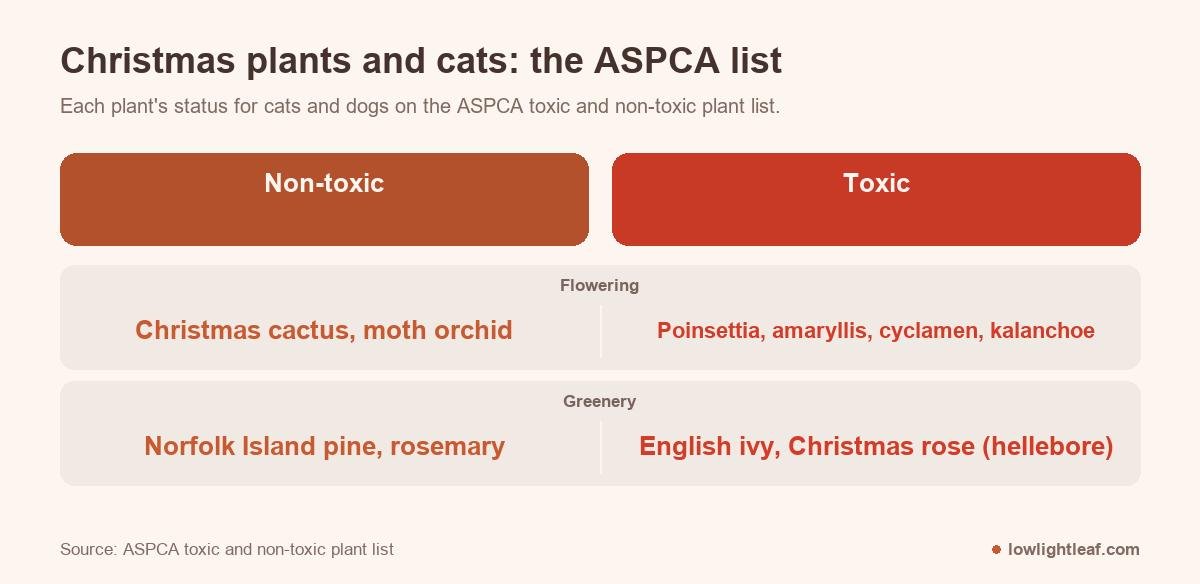
“Toxic” covers a wide range. The ASPCA describes poinsettia as mildly irritating, while it lists cardiac glycosides among the toxins in the Christmas rose. The safest plan with a chewer is to buy from the non-toxic side, or keep the toxic plants somewhere a pet truly can’t reach, which the ASPCA itself suggests for holiday decorations. I look up every plant on the ASPCA plant list before it comes through the door, and the plant toxicity checker pulls the same entries into one search.
A real tree brings hazards that have nothing to do with the plant itself: stand water, which the ASPCA says can breed bacteria, and tinsel, which it warns can block the digestive tract. If a pet eats something and seems unwell, call your veterinarian or ASPCA Animal Poison Control at (888) 426-4435.
The best Christmas plants for a dim room
Christmas cactus is the best holiday plant for a dim room, because Purdue says it adapts to low light and only flowers less. Everything else on the list wants more light than most dim rooms give.
Here’s how the rest line up, from most tolerant to least:
- Christmas cactus: adapts to low light, fewer flowers (Purdue).
- Poinsettia: six hours of bright, indirect light a day (Colorado State), so close to the window.
- Cyclamen: bright light but cool; Clemson says home light is usually too low to rebloom one.
- Norfolk Island pine: NYBG says northern light is not enough.
- Amaryllis and kalanchoe: the sunniest window you have.
In the north-facing apartment I lived in for years, the Christmas cactus is the one I’d have bought without a second thought. The others would have needed a grow light to last past January, or a plan to treat them as a few weeks of color.
Keeping Christmas plants after the holidays
Most of these plants can be kept for years if you give them the same light they needed in December, and a few need a specific trigger to flower again:
- Christmas cactus reblooms with long or cool fall nights, as above. Getting a Christmas cactus to bloom gives the dates.
- Amaryllis needs its leaves and bright sun after flowering to rebuild the bulb, per Maryland.
- Kalanchoe needs about six weeks of long, unbroken nights in fall.
- Cyclamen heads into dormancy in late spring, and Clemson calls reblooming one at home difficult.
A poinsettia doesn’t have to go out with the wrapping paper. One r/plants member who has kept theirs for about six years answered a question about how:
“The main thing is to give it as much light as possible. That and don’t freak out if it loses most of it’s leaves in the late winter…. that’s fairly normal!”
– r/plants (51 upvotes)
The light part lines up with Colorado State’s six-hour minimum. The leaf drop is that grower’s experience, not an extension finding, but it’s a useful warning before you give up on the plant in February.
Pick a Christmas plant for the room it’s going into and the pets that live there, not for the store display. With a cat and a dim window, the Christmas cactus wins on both counts.

Ellie Marsh
Houseplant grower who spent years in a north-facing apartment. Writes practical care guides for low light homes, checked against extension and botanical garden sources.