Last updated on November 5, 2026
Aerial roots are roots that grow from a plant’s stem above the soil instead of underground. On a monstera, pothos, philodendron or orchid they are normal, and they usually mean the plant is healthy enough to climb or reach for water. You can leave them, guide them into the soil or onto a support, or trim the ones in your way.
Which of those makes sense depends on the plant and on where the root is. A low root on a monstera, a high one on a pothos and a gray-green one spilling out of an orchid pot each call for something different.
Why do houseplants grow aerial roots?
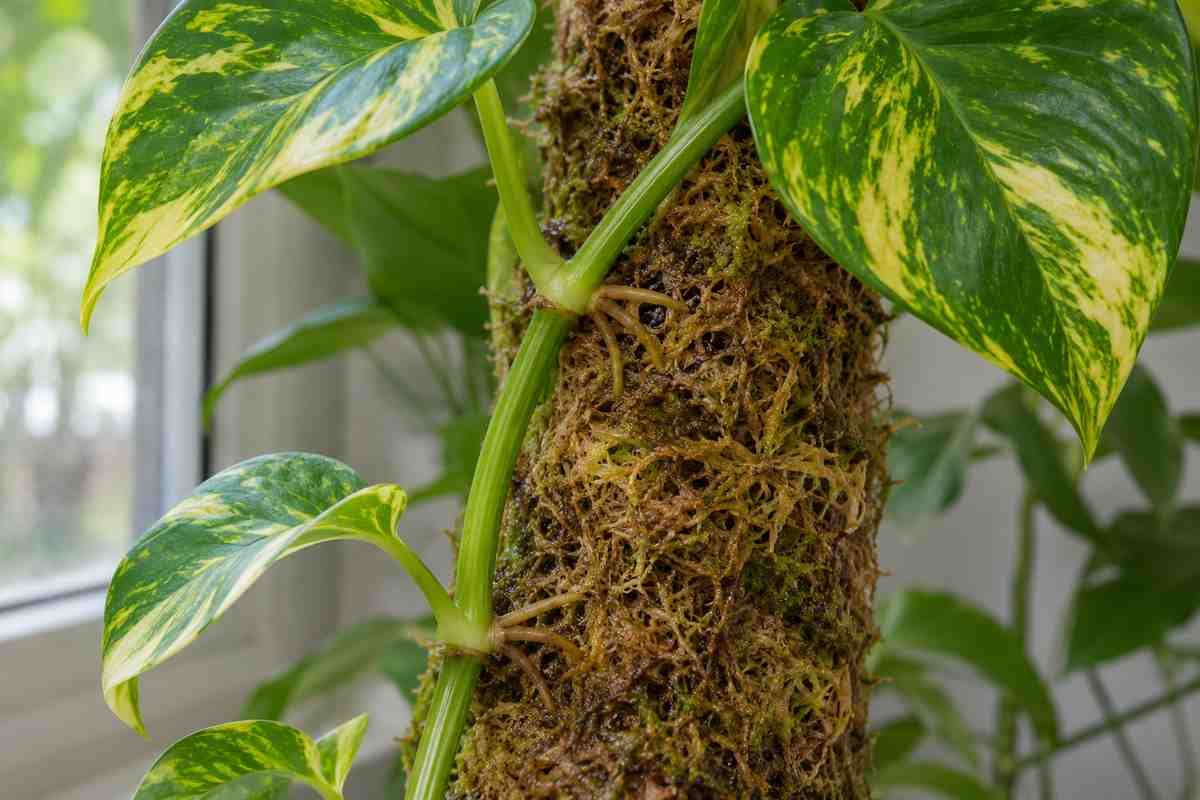
Houseplants grow aerial roots mainly to climb and to take in water. NC State Extension says pothos vines “climb by brown aerial roots,” and that given a support and enough light, the plant starts producing large, mature leaves. Penn State Extension notes that monstera’s roots attach to trees in the wild.
There is also a survival reason. In 2022 a team led by Idan Efroni at the Hebrew University of Jerusalem published a study in Science on how plants make roots in the air. Breaking stems down to single cells, they found extremely rare cells that switch root growth on when conditions are right. In the university’s release, Efroni put the benefit plainly: “In the event that the underground roots are flooded or damaged, the plant can grow aerial roots and survive the assault.”
I’d keep that second point in mind if a plant suddenly sprouts a lot of them. Above-ground roots can be a plant working around trouble below ground, and the orchid reply quoted further down ties a mass of them to tired potting mix.
Outdoors, these roots do other jobs too. Simple English Wikipedia sorts them into roots for support (ivy on a wall, a banyan dropping roots from its branches), roots for breathing in waterlogged ground (black mangroves) and roots that help a plant spread (spider plant plantlets). Prop roots, stilt roots and buttress roots are mostly tree terms and rarely matter on a windowsill.
Which houseplants have aerial roots?
The houseplants most likely to grow them are climbing aroids, like monstera, pothos and philodendron, plus epiphytic orchids such as the moth orchid. Here’s what the roots are doing on each.
- Monstera deliciosa: long, cord-like roots that grab a support. UW-Madison Extension suggests a moss-covered or bark support and watering that support too, so the roots clinging to it can take up water and nutrients. My monstera care page covers the pole side in more detail.
- Pothos (Epipremnum aureum): short brown roots at the nodes, the bumps where leaves join the stem. They hold the vine to whatever it climbs.
- Heartleaf philodendron (Philodendron hederaceum): NC State describes slender stems “with adventitious roots,” the same kind of node roots pothos makes.
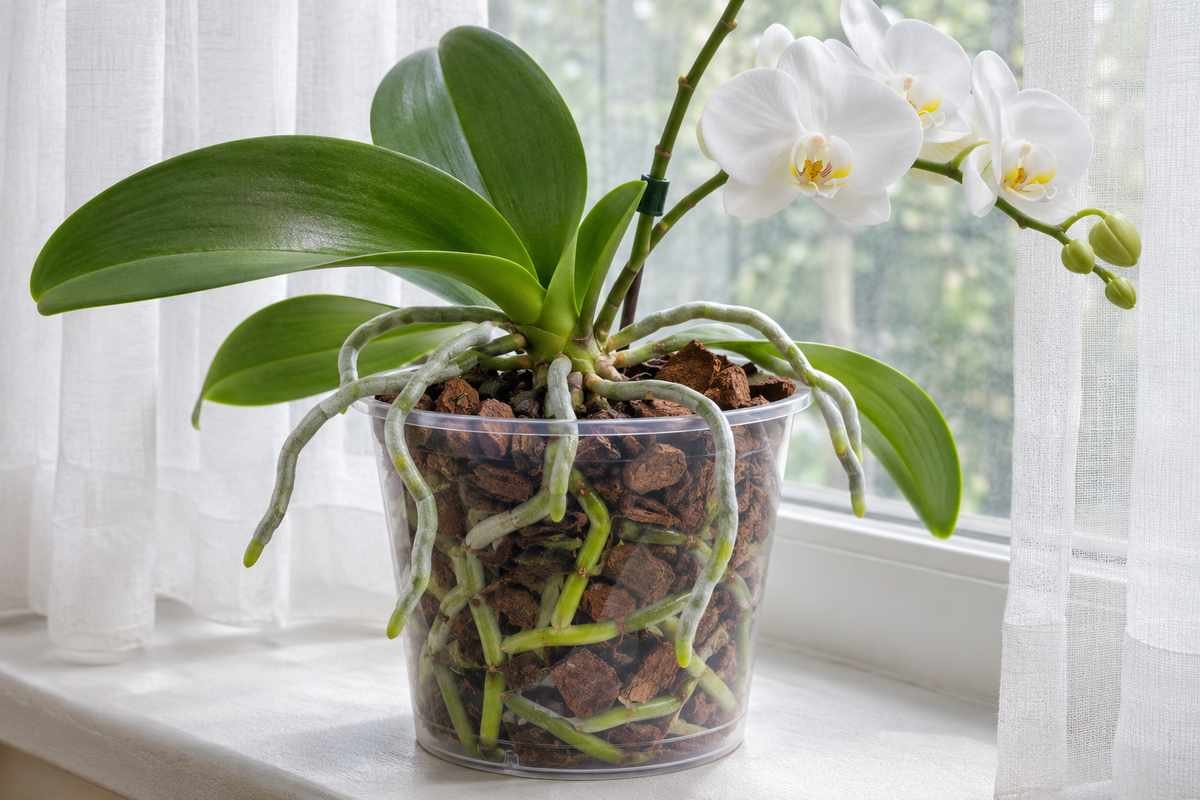
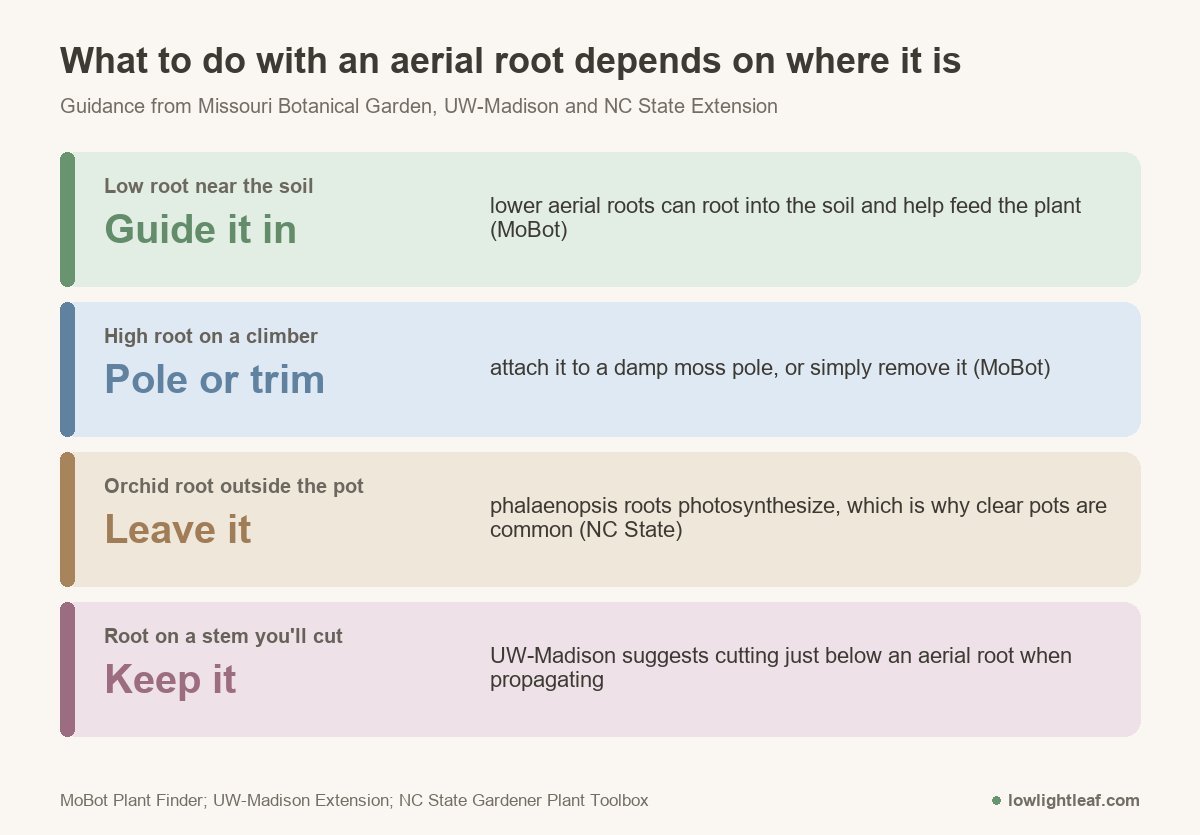
- Moth orchid (Phalaenopsis): thick, silvery or green roots that wander over the pot rim. NC State notes the roots can photosynthesize, which is why moth orchids are often sold in clear pots.
- Bengal fig ‘Audrey’ (Ficus benghalensis): the Bengal fig is famous for hanging roots that turn into woody trunks in the wild, but NC State says the popular houseplant cultivar ‘Audrey’ doesn’t produce them indoors. Don’t expect a banyan on a bookshelf.
Should you cut aerial roots?
You can cut aerial roots on most climbing houseplants, but you rarely need to, and healthy orchid roots should stay. The Missouri Botanical Garden’s guidance for monstera sorts it by position: lower roots can be rooted into the soil to help nourish the plant, and upper ones can be attached to a moss pole or simply removed.
Orchids are the exception I’d be strictest about. One r/orchids reply put it bluntly:
“I wouldn’t. Trimming off healthy aerial roots because they’re slightly wrinkly is like setting fire to $100 bills because they’re wrinkled. However, when a phal grows that many aerial roots, it’s usually because the substrate needs refreshing. When was the last time it was repotted?”
– r/orchids, August 2026 (249 upvotes)
Since moth orchid roots photosynthesize, a healthy one outside the pot is still doing work. Another reply in the same thread suggested wetting those roots on watering days rather than cutting them. If the plant is pushing out a big mass of them, look at the bark mix, and my notes on getting an orchid to rebloom include when repotting fits into the year.
Can I cut the aerial roots off my philodendron?
Yes, a philodendron aerial root that’s in your way can be cut. Missouri Botanical Garden’s monstera guidance says the upper ones can simply be removed, and monstera and philodendron are close relatives in the arum family. Use clean scissors and cut close to the stem.
Cut fewer if you plan to take cuttings later, since a stem section that already carries a root is the easy one to propagate.
Will aerial roots grow in soil?
Low-hanging air roots can grow into soil. Missouri Botanical Garden says the low ones on a monstera can be rooted into the soil to help feed the plant, so tuck a root that already reaches the pot under the surface rather than forcing a high one down. If it won’t reach, a damp moss pole is the better place for it.
Propagating from an aerial root
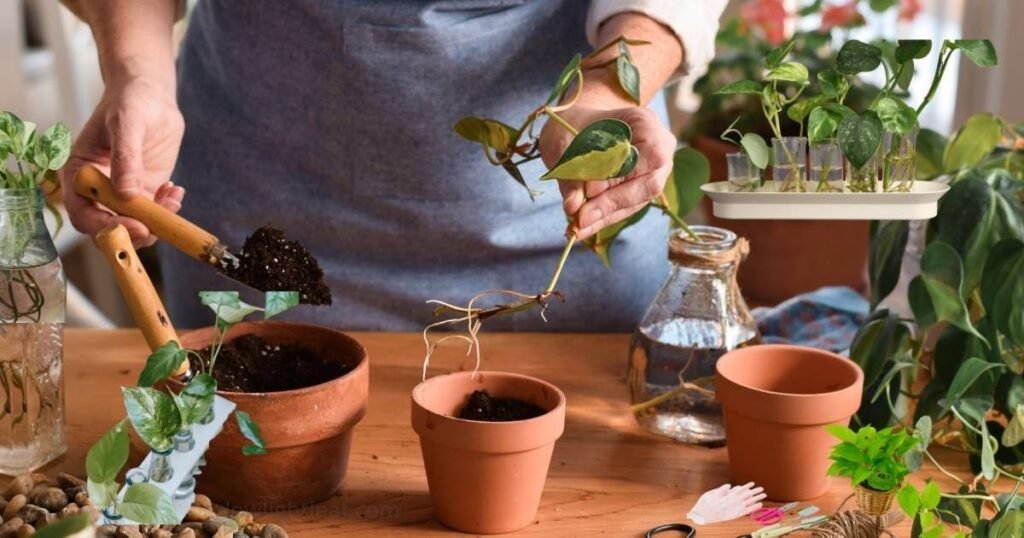
A stem cutting with an aerial root already on it is the most reliable way to start a new monstera, pothos or philodendron. UW-Madison Extension tells monstera growers to cut just below an aerial root, so the root comes with the cutting.
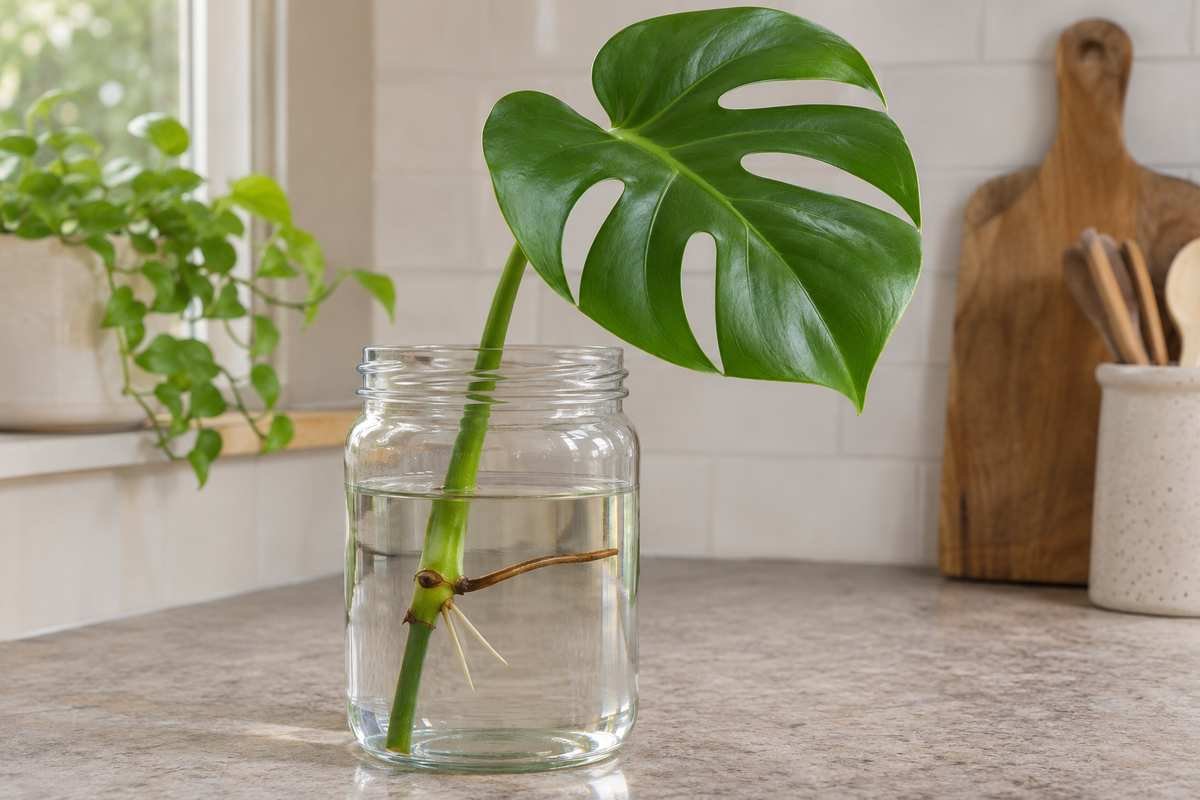
The node matters more than the root. University of Minnesota Extension says a monstera cutting only works if it includes a node, and that a rooted node can take 2 to 3 months to put out a new leaf, so a slow start isn’t a failure. NC State says pothos vines root easily in water.
Water rooting works for both. My list of plants that grow in water covers which ones can stay in a jar for good and which ones should move to soil once the roots are established.
A root that has latched onto a pole or a wall is the plant telling you it wants to climb. Give it something to climb, and the leaves usually get bigger.

Ellie Marsh
Houseplant grower who spent years in a north-facing apartment. Writes practical care guides for low light homes, checked against extension and botanical garden sources.