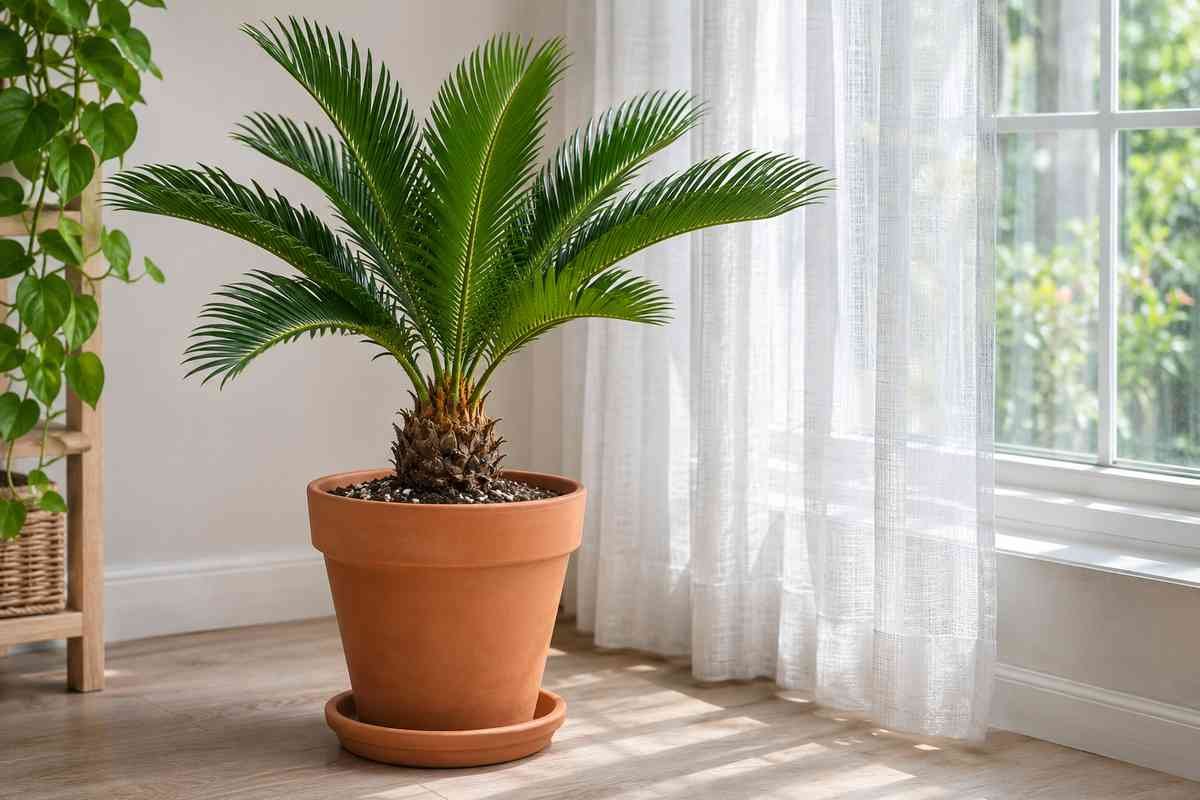
The sago palm (Cycas revoluta) isn’t a palm at all. It’s a slow-growing cycad that wants bright light with some direct sun, soil that dries between waterings, and protection from hard frost. It’s also one of the most toxic plants you can keep around pets: the ASPCA lists it as toxic to dogs, cats and horses.
It’s an easy plant to keep alive. The hard part is keeping it away from anything that chews.
What is a sago palm?
A sago palm is a cycad, a cone-bearing plant that reproduces more like a pine than a palm tree. The NC State Extension plant toolbox notes that it doesn’t flower; it makes cones with exposed seeds, the way pines and firs do.
UF/IFAS describes it the same way: a gymnosperm, unrelated to true palms despite the stiff, feathery fronds. Palm growers are tired of explaining it, too:
“Here’s the obligatory “sagos are not palms they are cycads” comment”
– r/palmtalk (27 upvotes)
The difference matters for care. Palm advice about fast growth and heavy feeding doesn’t fit a plant that adds a few inches a year.
Sago palm care at a glance
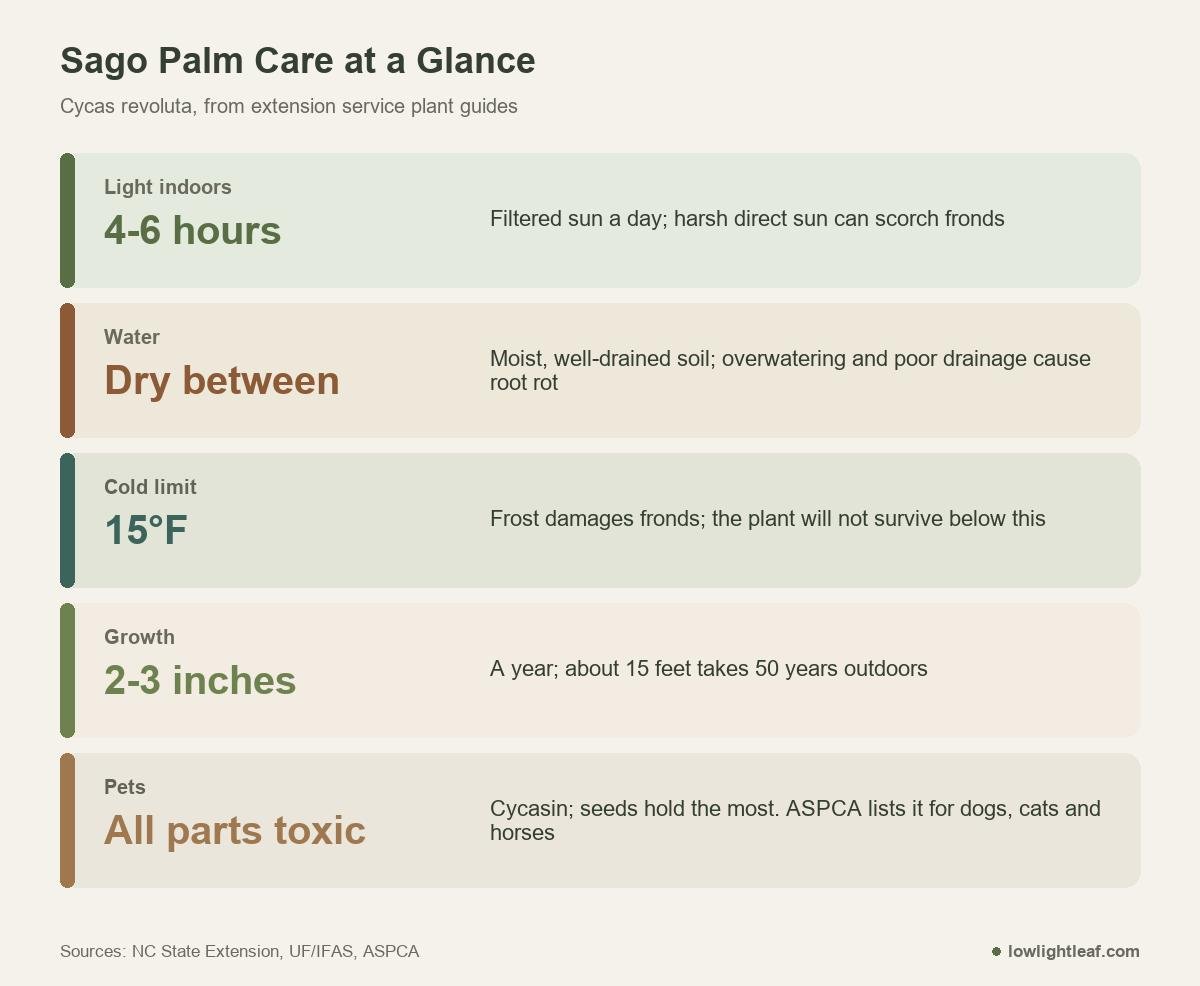
Light. NC State rates it for partial shade, meaning 2 to 6 hours of direct sun, and recommends 4-6 hours of filtered sunlight a day indoors. Harsh sun can damage the fronds. UF/IFAS adds that plants grown in partial shade make larger leaves, so it tolerates less than full sun.
Indoors, that means your brightest window, or a grow light. My apartment faces north, and that’s not enough light for a sago without help; the guide to grow lights for indoor plants covers distance and hours if you’re in the same spot.
Water. Let the soil go dry between waterings. NC State wants the soil moist but well drained and says the plant won’t tolerate overwatering or poor drainage, though it’s drought tolerant once established. The RHS advice for pots is to water moderately in the growing season and sparingly the rest of the year.
Since poor drainage is one of the two things NC State says it can’t tolerate, a pot with drainage holes isn’t optional for this plant.
Soil. Sandy or loamy, fast draining, acidic to neutral pH, per NC State. If you’re mixing your own, the potting soil calculator will tell you how much a given pot needs.
Cold. Frost damages the foliage, and NC State says the plant won’t survive below 15°F. UF/IFAS Extension in Baker County is a little more generous, putting the limit nearer 10°F with leaf burn starting somewhere in the 20s. The sources differ. I’d treat the mid-teens as the line and bring potted plants in before any hard freeze.
How fast does a sago palm grow?
A sago palm grows about 2-3 inches a year, according to UF/IFAS Extension in Baker County, and UF/IFAS says it can take 50 years to reach roughly 15 feet. NC State gives a typical size of 3 to 10 feet tall and wide, with indoor plants staying smaller.
That pace means a small sago stays small on a windowsill for years, and repotting is rarely urgent.
Are sago palms hard to care for?
Sago palms aren’t hard to care for: NC State calls the maintenance low. The three things that go wrong are wet soil, which causes root rot, cold below the mid-teens, and scale insects, especially cycad aulacaspis scale, which NC State says can cause serious damage.
NC State also lists mealybugs and spider mites, and FAMU Extension names the same scale and mealybugs. If mealybugs are the problem, the guide on how to get rid of mealybugs covers them step by step.
Yellow fronds, pruning and fertilizer
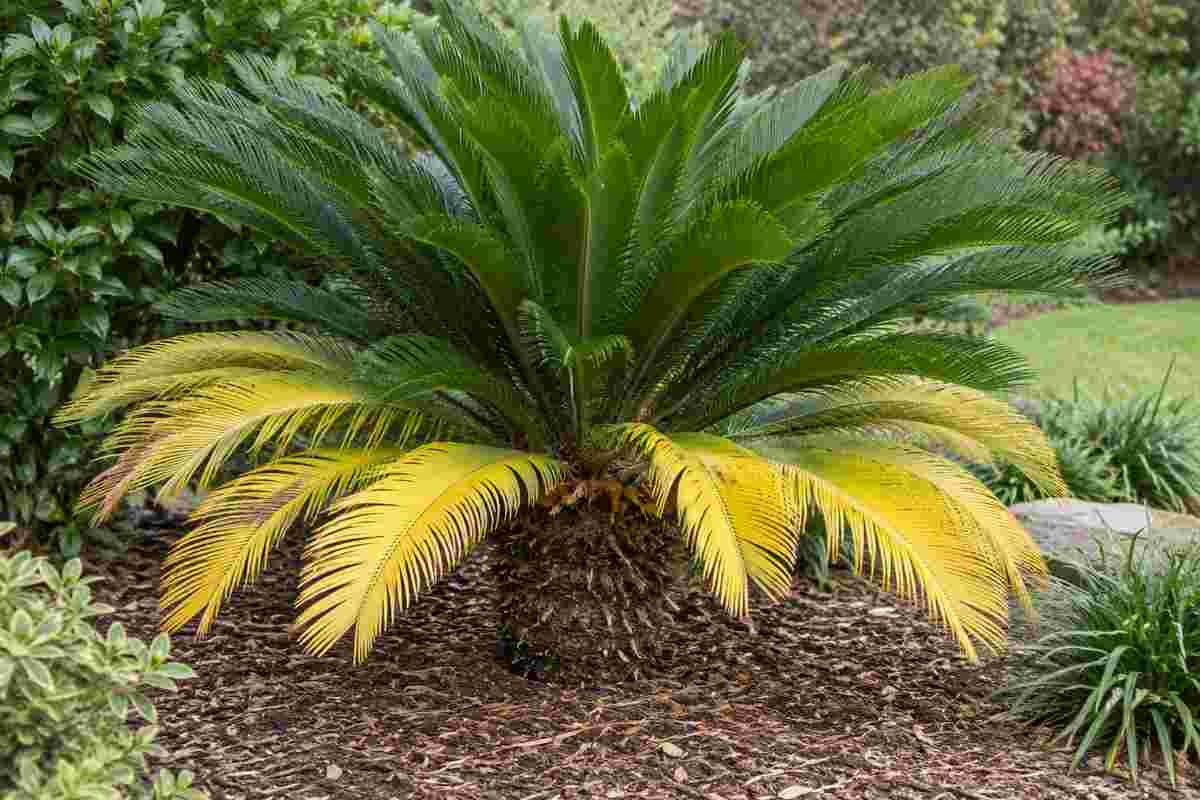
Where the yellow shows up tells you the cause. FAMU Extension separates two nutrient problems:
- Older, lower fronds turning yellow: magnesium deficiency. FAMU’s advice is to leave those fronds on until they die.
- The newest fronds coming in yellow or brown and distorted: manganese deficiency.
For both, FAMU recommends a palm fertilizer that includes magnesium rather than a general houseplant feed. If the yellowing doesn’t match either pattern, the site’s guide to yellow leaves walks through watering and light causes first.
Pruning. Cut only fronds that are fully dead or discolored, once a year, as UF/IFAS Extension in Baker County suggests. NC State says the same: pruning is for removing dead fronds. The RHS says no pruning is required at all. Gloves help, since the leaflets end in sharp spines. One r/palmtalk reply gave a useful limit: keep the remaining leaves coming out at least perpendicular to the trunk, rather than stripping it into a tuft.
Propagating a sago palm from pups or seed
Sago palms make offsets, called pups or suckers, at the base, and NC State lists both suckers and seed as ways to propagate. Neither is fast. In a UC Master Gardener blog for Solano County, Karen Metz wrote that her pups took 9 to 12 months to root and her seeds more than 9 months to germinate.
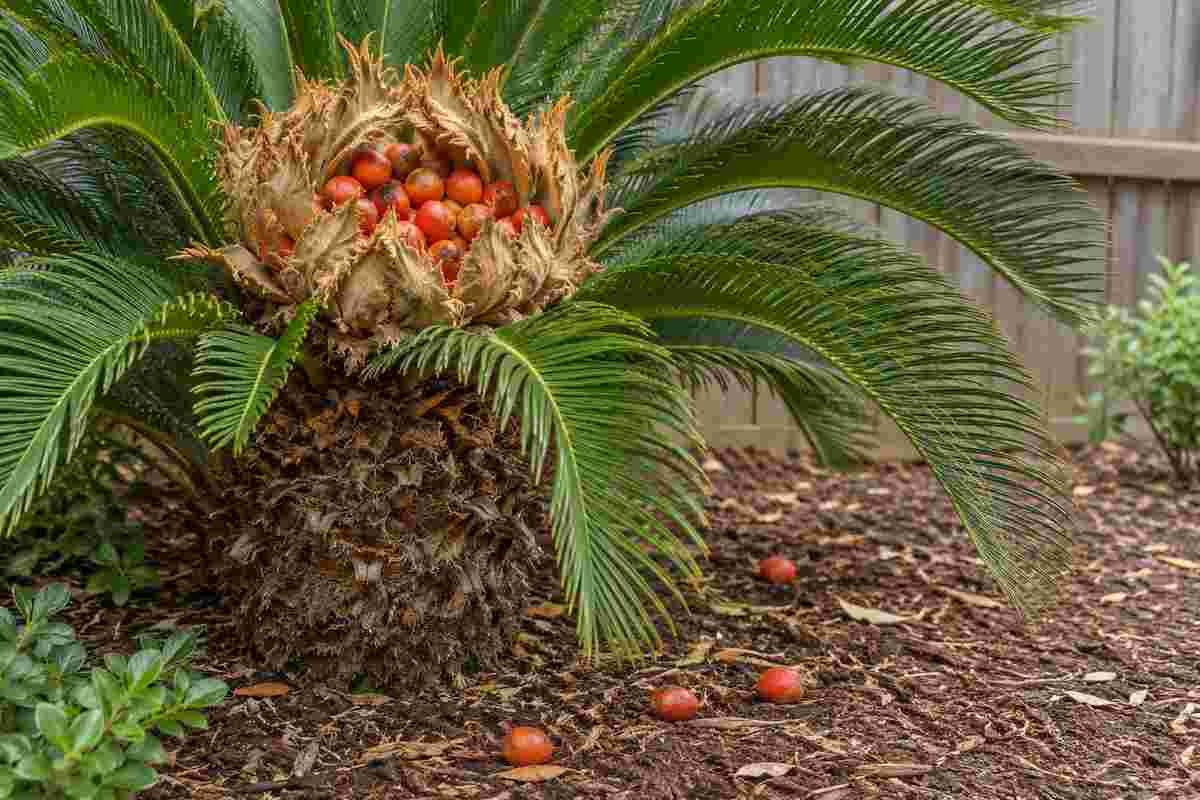
Metz also notes that male and female cones grow on separate plants, so seed needs both. If you have pets, remember that the seeds are the most poisonous part of the plant.
Is a sago palm toxic to pets?
Yes. The ASPCA sago palm entry lists it as toxic to dogs, cats and horses because of cycasin, with signs that run from vomiting and black, tarry stool to bruising, liver failure and death. NC State and Pet Poison Helpline both say all parts are toxic and the seeds most of all.
The ASPCA’s entry also covers the coontie palm, cardboard palm and other cycads and zamias, so a plant sold under one of those names isn’t a safer swap. NC State lists the signs pet owners tend to notice: nosebleeds, bruising and blood in the stool.
Outdoor sagos catch people out because the plant was there first. One owner posted after a yard project:
“We are doing some landscaping and had it pulled out and my wife caught our 5-month-old puppy gnawing on a piece that was left behind.”
– r/goldenretrievers, August 2026 (38 upvotes)
Cut fronds, dropped seeds and roots left after removal are all still toxic, so clear them up the same day.
If your pet chewed any part of a sago palm, call your vet, the ASPCA Animal Poison Control Center at (888) 426-4435 or Pet Poison Helpline at (855) 764-7661 right away. Don’t wait for signs to show up, and have a rough idea of what and how much was eaten.
My cat, Miso, is the reason every plant here gets checked against the ASPCA list first, and a sago palm is one I wouldn’t bring inside. The plant toxicity checker has the sago palm next to more than a hundred other houseplants if you’re choosing something pet-safe instead.
A sago palm is easy to keep alive with bright light, dry soil between drinks and no hard frost. It’s much harder to keep safe in a home with a dog or cat, and that’s the decision to make before buying one.

Ellie Marsh
Houseplant grower who spent years in a north-facing apartment. Writes practical care guides for low light homes, checked against extension and botanical garden sources.