Last updated on November 3, 2026
Is aloe vera toxic to cats? Yes, the plant is. The ASPCA lists aloe vera as toxic to cats, dogs and horses because of the saponins and anthraquinones in the leaf, and the signs it gives are vomiting, lethargy and diarrhea. That same ASPCA entry adds that the gel inside the leaf is considered edible, which is why “aloe” can be both a warning and an ingredient.
For most cats, an aloe nibble is a stomach problem rather than an emergency. How worried to be depends on which part of the plant was involved, and on whether it was a plant at all.
What happens if a cat eats aloe vera?
Expect an upset gut. Pet Poison Helpline explains that aloes contain anthraquinone glycosides, which are purgatives, the kind of compound that makes the bowels move, so eating the plant causes vomiting and diarrhea. For cats, the ASPCA aloe entry lists the same signs and adds lethargy.
NC State Extension’s plant database rates aloe’s poison severity as low and names the leaves as the poisonous part. Its symptom list also includes abdominal cramping and red urine, which is worth knowing so a change in the litter box doesn’t come as a shock. It also lists skin irritation from the plant’s latex.
Aloe’s ASPCA signs don’t include the mouth pain it lists for monstera or pothos. With those plants, the burn on the first bite often stops the chewing; nothing in aloe’s listing suggests that kind of built-in warning.
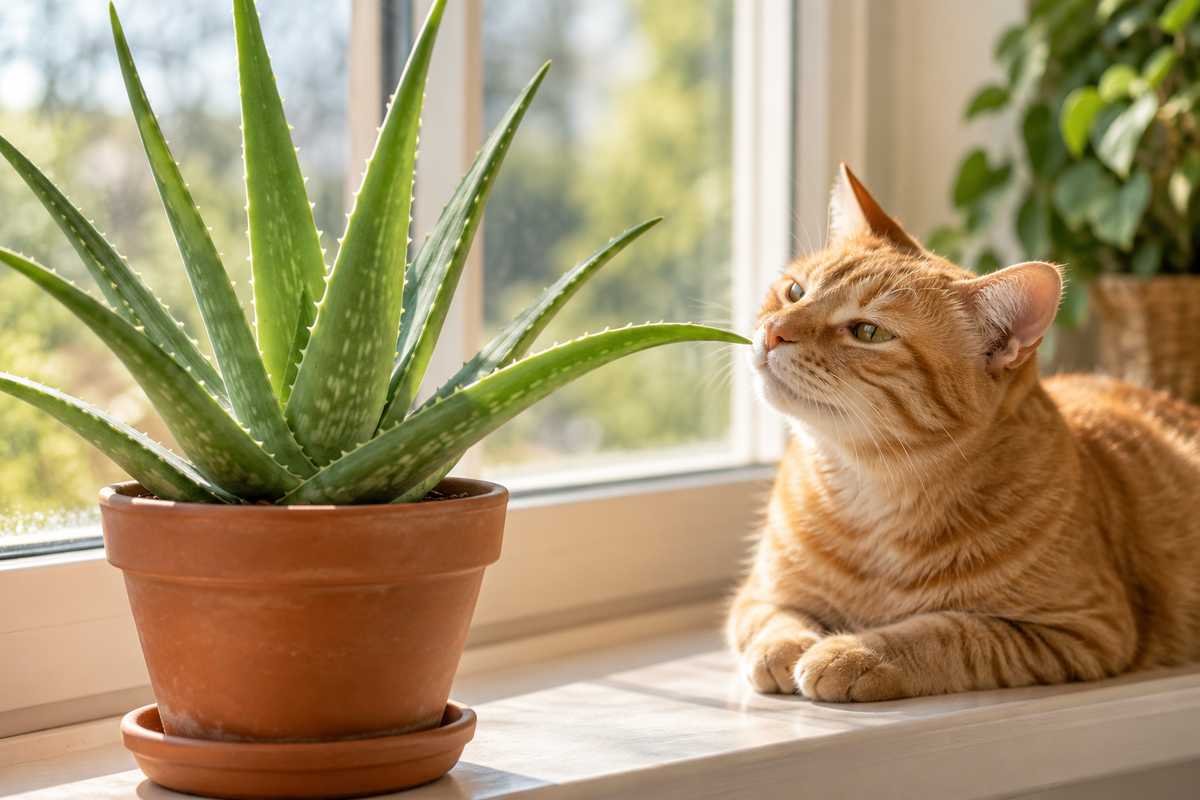
The plant, the gel and the bottle
These three are different questions:
- The plant. Leaf, rind and latex are what the ASPCA and NC State list as toxic.
- The gel inside. According to the ASPCA, the clear gel is considered edible. A lick of gel from a cut leaf isn’t what the toxicity listing is about.
- A bottle of after-sun gel. That’s a product, not the plant, and the aloe is only one ingredient. Read the label, and if your cat ate a meaningful amount of something you can’t identify, call your vet with the bottle in hand.
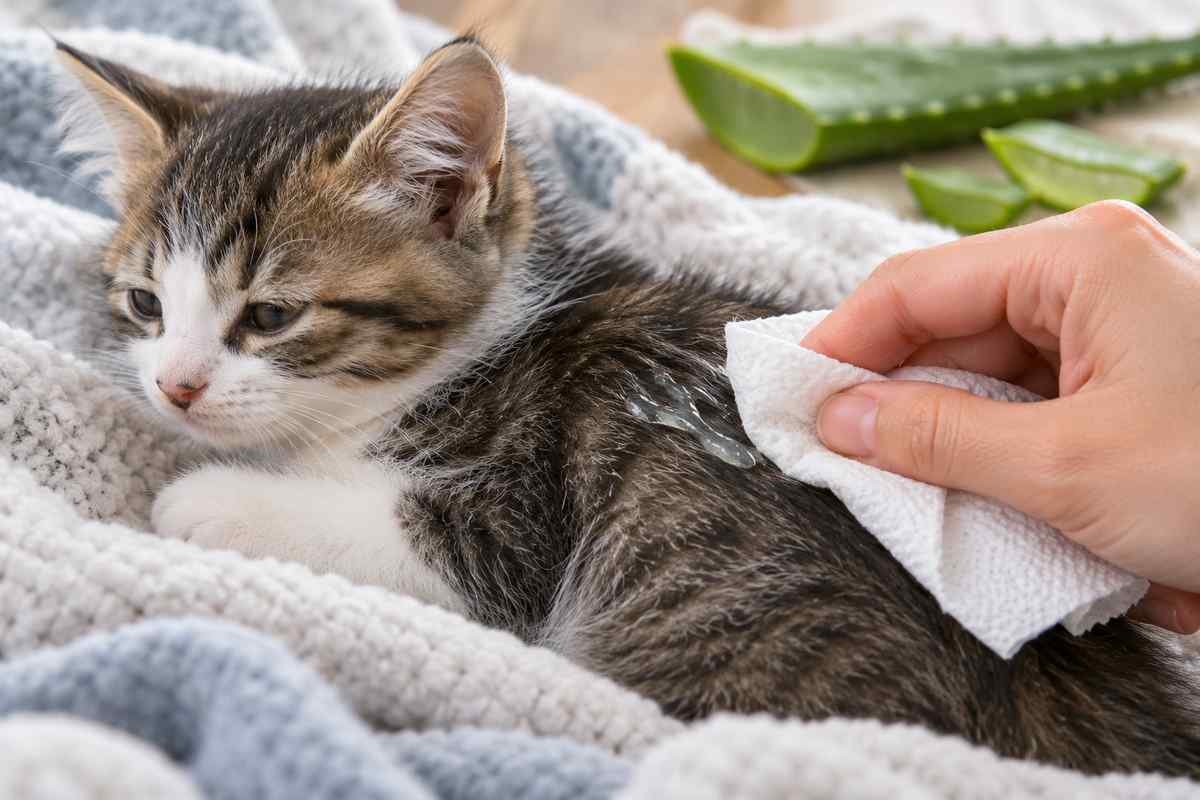
Gel landing on fur is the usual accident. One owner in r/Pets dropped sunburn gel on a 3-month-old kitten and panicked into a vinegar bath. A reply set it straight:
“I am sure the vinegar bath was more damaging, even if only emotionally for your cat. Why vinegar? You could have just used a Kleenex to wipe it off the fur and followed up with a damp Kleenex (or paper towel).”
– r/Pets (3 upvotes)
Wiping it off before the cat grooms it is the sensible move. Next, read the bottle’s ingredients, since that’s what your cat would actually swallow.
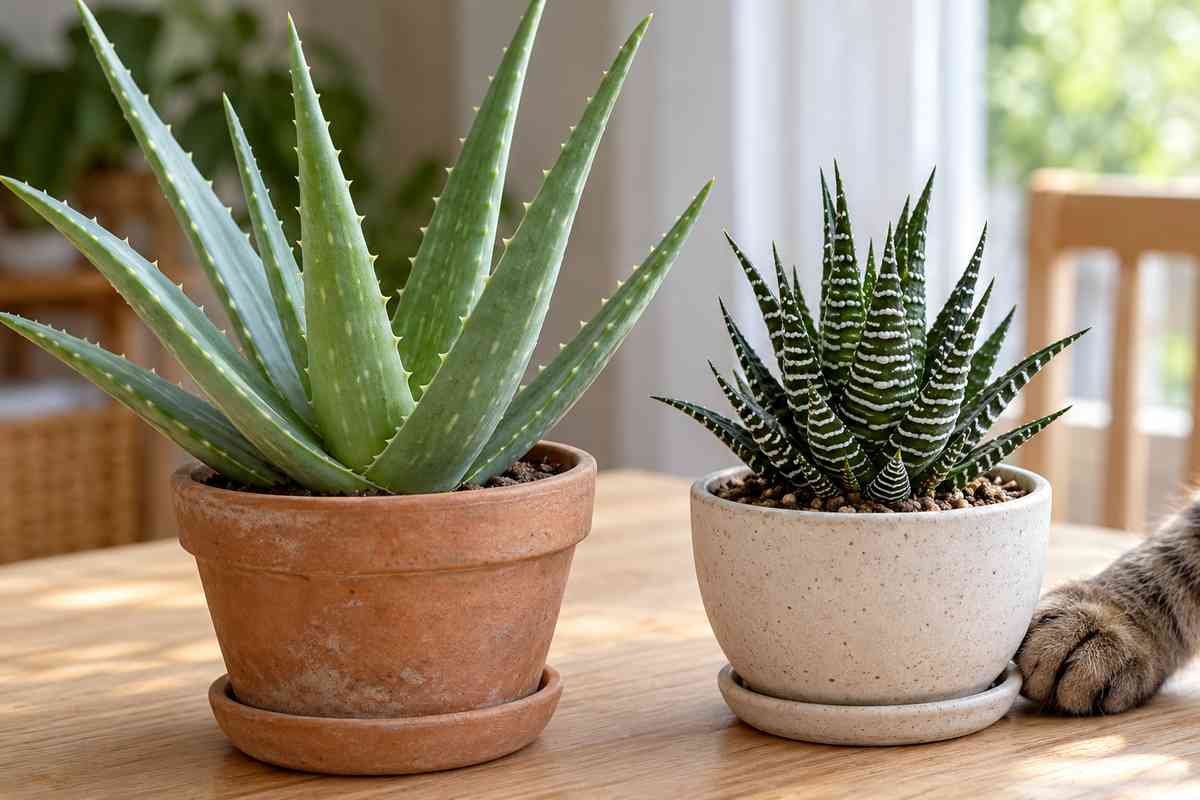
Aloe look-alikes that are safe for cats
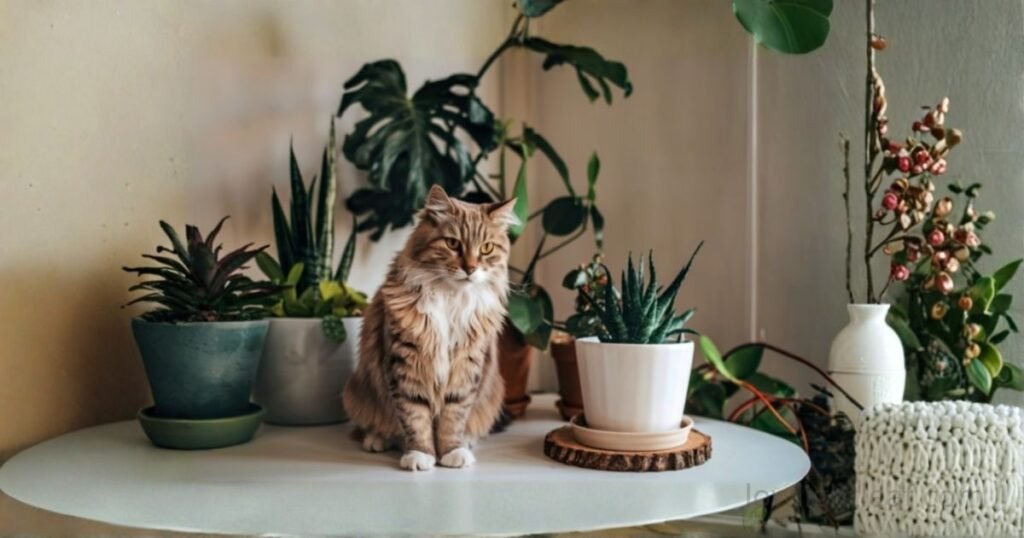
I check every plant against the ASPCA list before Miso gets near it, and aloe is a case where the list offers a near-twin with a clean listing. Haworthia, a small spiky rosette with a similar look, is listed non-toxic to cats in every form the ASPCA covers.
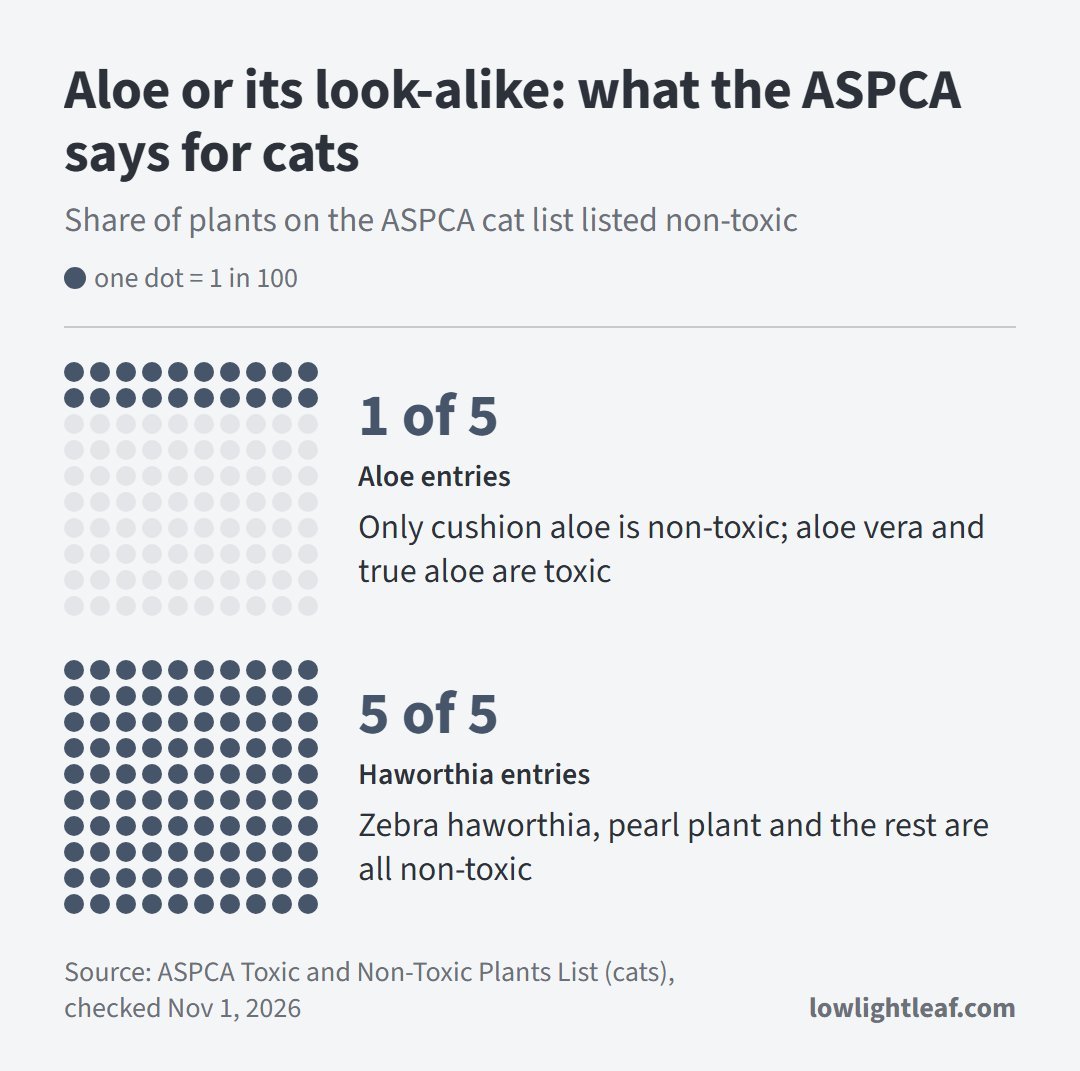
On the aloe side, four of the five entries are toxic: aloe, Barbados aloe, medicine plant and true aloe. Cushion aloe is the exception, which the ASPCA lists as Aloe retusa and rates non-toxic to cats, dogs and horses. On the haworthia side, all five are non-toxic, including zebra haworthia and the pearl plant.
Echeverias, the soft rosettes sold as hens and chickens or painted lady, are on the non-toxic list as well. That gives a cat owner who likes the look of a windowsill of succulents several ASPCA-cleared options, as long as the tag’s botanical name matches. The plant toxicity checker is the quick way to confirm one. Our succulents and cats guide lists the common toxic and safe ones side by side.
What to do if your cat ate aloe
If your cat ate aloe leaf, most cases mean cleanup and watching the litter box and the food bowl, with a call to the vet if signs keep going. Here’s the order:
- Move the plant and clear up chewed pieces.
- Note roughly how much is missing from the leaf.
- Watch for vomiting, diarrhea, lethargy and red-tinged urine.
- Call your vet if the vomiting or diarrhea doesn’t stop, if your cat seems very flat, or if a kitten ate a large piece. ASPCA Poison Control is at (888) 426-4435, and a consultation fee may apply.
Keeping aloe in a house with a cat
A cat that ignores your aloe today may not ignore it next month. In r/CatAdvice, one owner described giving up mildly toxic plants after exactly that:
“I had to get rid of mine. She left them alone for a while, then started getting interested in them. Then threw up a few times.”
– r/CatAdvice (3 upvotes)
Light is a second problem. NC State lists aloe for full sun or partial shade, meaning at least a couple of hours of direct sun. In a dim room like my old north-facing apartment, an aloe has to go on the brightest windowsill, which in a lot of homes is also the cat’s lookout. If you’re growing in low light anyway, our low light succulents guide covers options that cope better, and the haworthia above is one a cat owner can keep with less worry.
Is aloe vera toxic to cats? FAQ
Is aloe vera toxic to dogs?
Yes. The ASPCA lists aloe as toxic to dogs with the same signs, vomiting, lethargy and diarrhea, and the same note that the gel is considered edible. NC State also lists it as a problem for dogs.
Is aloe vera toxic to humans?
NC State lists the plant as poisonous to humans with low severity, and notes the latex can irritate skin. Those notes cover the plant, not a finished skincare product, which is a question for the product’s label.
How long does it take for aloe to affect a cat?
Neither the ASPCA nor Pet Poison Helpline gives a timeline for aloe. Both list digestive signs, so watch for vomiting and diarrhea after any chewing, and call your vet if they appear and don’t settle.
Keep the leaf away from your cat. If you love the look, a haworthia gives you most of it with a non-toxic listing.

Ellie Marsh
Houseplant grower who spent years in a north-facing apartment. Writes practical care guides for low light homes, checked against extension and botanical garden sources.